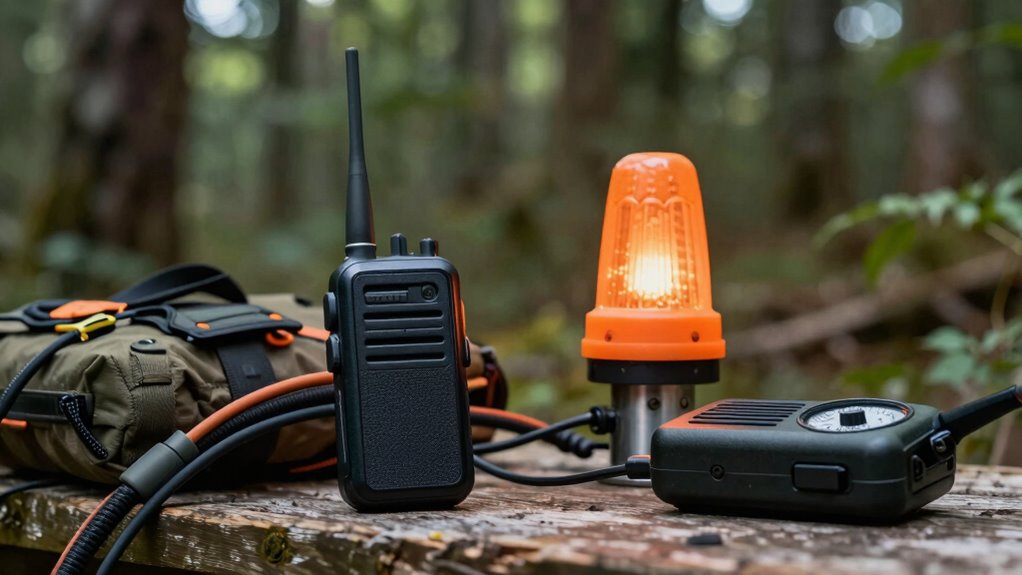

Satellite messengers, beacons, and radios each serve unique roles in remote areas. Satellite messengers let you send messages, share your location, and navigate even without cell coverage. Beacons focus solely on emergency alerts, quickly signaling rescue teams with your location. Radios provide real-time voice communication over limited ranges, ideal for local coordination. Knowing how each device works helps you stay safe. If you want to discover more about their specific uses, keep exploring these options.

Get the latest gadgets delivered free with Prime
- Fast, free delivery on millions of items
- Prime Video, Amazon Music and more included
- Member-only deals all year
Key Takeaways
- Satellite messengers enable two-way communication and GPS tracking in remote areas; beacons only broadcast distress signals, while radios facilitate real-time voice communication.
- Beacons are quick-deploy emergency devices transmitting location data but lack two-way messaging capabilities.
- Radios operate over specific frequencies for immediate, local voice communication but do not work outside their range or without cellular coverage.
- Satellite messengers provide global coverage for messaging and navigation, unlike radios and beacons with limited or no coverage.
- Each device serves a unique purpose: messaging and navigation (satellite messengers), emergency signaling (beacons), and real-time voice communication (radios).
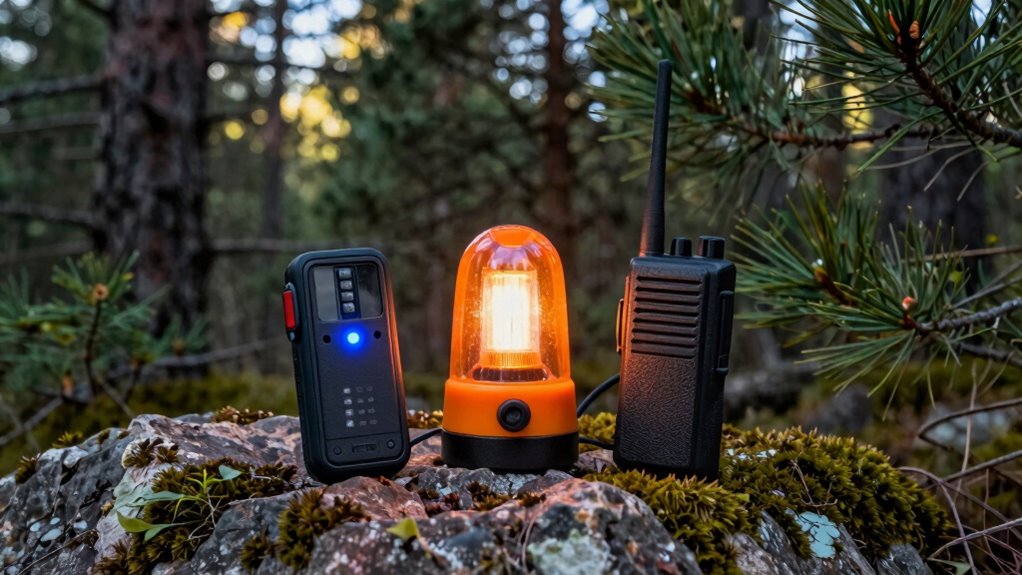
When you’re venturing into remote areas, understanding the distinct roles of satellite messengers, beacons, and radios can make all the difference in ensuring your safety. Each device serves a specific purpose, especially when it comes to emergency signaling and navigation aids. Knowing what each does helps you choose the right tool for your adventure, preventing confusion and ensuring help arrives quickly if needed. Satellite messengers are versatile devices designed for two-way communication in areas without cellular coverage. They allow you to send and receive messages, making them essential for emergency signaling. If you’re injured, lost, or facing danger, you can use a satellite messenger to alert rescue services or loved ones with your location included. Many models also feature GPS tracking, so others can see your position in real time. These devices serve as navigation aids too, helping you plot routes and mark waypoints when exploring unfamiliar terrain. Their ability to communicate globally makes them invaluable for remote adventures, ensuring you stay connected even in the most isolated spots. Additionally, some models incorporate global coverage, making them reliable tools for communication in virtually any location. Beacons, on the other hand, are primarily designed for emergency signaling. When activated, they transmit a distress signal to alert search and rescue teams. Unlike satellite messengers, beacons usually don’t support two-way communication; they’re meant to broadcast your location to responders who can then attempt a rescue. Beacons are compact, lightweight, and easy to activate, making them ideal for quick deployment during emergencies. They’re the go-to device if you’re in a situation where immediate rescue is critical, such as after a fall or if you’re stranded without a way to call for help. While they don’t offer navigation aids for day-to-day travel, their purpose is clear: to get rescuers to your exact location as quickly as possible. Radios are traditional communication tools that operate over specific frequencies, often used in coordinated groups or teams. They excel at real-time voice communication, especially in environments like mountain rescues, expeditions, or boating. Radios are effective navigation aids when set to the correct channels, allowing groups to stay in contact and coordinate movements. They don’t rely on satellite coverage, making them useful within certain ranges. However, their effectiveness diminishes with distance and terrain obstacles. Radios are also great for emergency signaling within a local area, providing immediate communication without depending on external networks. Understanding these differences can help you select the most suitable device for your specific needs and scenarios.
satellite messenger with GPS tracking
As an affiliate, we earn on qualifying purchases.
As an affiliate, we earn on qualifying purchases.
Frequently Asked Questions
How Do Satellite Messengers Work Without Cellular Coverage?
Satellite messengers work without cellular coverage because they rely on satellite signal propagation. When you activate the device, it sends a message directly to satellites orbiting Earth, bypassing cellular networks. These signals are then relayed to ground stations, which forward your message to rescue services or loved ones. Activation methods are simple, often involving a button press or app, ensuring you can communicate even in remote areas where cellular signals don’t reach.
Can Beacons Send Signals to Multiple Devices Simultaneously?
Think of beacons as lighthouse keepers shining signals into the night; they can indeed send emergency signaling to multiple devices at once. This capability depends on the beacon’s design and device compatibility, allowing it to broadcast alerts to all compatible receivers nearby. It’s like a symphony of safety, where one signal orchestrates responses across various devices, ensuring everyone gets the message promptly during emergencies.
What Is the Battery Life Comparison Between Radios and Satellite Devices?
Radios typically have longer battery longevity compared to satellite devices because they consume less power, especially during regular use. Satellite devices, on the other hand, have higher power consumption due to complex signal processing and global coverage features, which can shorten their battery life. If you’re planning extended outdoor activities, you’ll find radios more reliable for longer durations without frequent recharging, whereas satellite devices may need more frequent power management.
Are Satellite Radios Legal to Use in All Countries?
Satellite radios aren’t legal to use in all countries due to regulatory restrictions and licensing requirements. You need to check each country’s laws before operating these devices, as some nations prohibit or restrict their use to protect communication networks. Failing to comply can lead to fines or confiscation. Always research local regulations and obtain necessary licenses to guarantee lawful use of satellite radios during your travels.
How Do Weather Conditions Affect Beacon and Satellite Device Performance?
Weather conditions can considerably influence your beacon and satellite device performance. Heavy rain, snow, or dense cloud cover create weather impact, weakening signals and causing delays. Storms and lightning may lead to signal interference, making communication less reliable when you need it most. To guarantee ideal performance, operate your device in clear weather whenever possible, and be prepared for potential disruptions during adverse weather conditions.
emergency beacon for outdoor safety
As an affiliate, we earn on qualifying purchases.
As an affiliate, we earn on qualifying purchases.
Conclusion
Understanding the differences between satellite messengers, beacons, and radios is like knowing the tools in your survival kit—you pick the right one for the job. Each device plays its part in keeping you safe and connected, like a trusted crew member guiding you through unknown waters. By choosing wisely, you guarantee you’re prepared for any adventure or emergency that comes your way, turning what could be chaos into a well-orchestrated symphony of safety.
As an affiliate, we earn on qualifying purchases.
satellite communication device for remote areas
As an affiliate, we earn on qualifying purchases.
As an affiliate, we earn on qualifying purchases.
Fall Picks
fall essentials
As an affiliate, we earn on qualifying purchases.