

Every family should have a backup communication plan that includes a ready emergency contact list, backup devices like battery-powered radios and walkie-talkies, and a designated safe meeting point. Keep printed and digital copies of essential information, and regularly test your tools and update contacts. Make sure everyone knows how to use backup devices and follows the plan. Want to learn how to create a seamless, effective system? Keep going to discover what steps you should take next.

Get the latest gadgets delivered free with Prime
- Fast, free delivery on millions of items
- Prime Video, Amazon Music and more included
- Member-only deals all year
Key Takeaways
- Maintain an up-to-date emergency contact list accessible in both physical and digital formats.
- Use multiple communication methods like radios, walkie-talkies, and satellite phones for redundancy.
- Designate a clear, known meeting point outside the home for family reunification.
- Regularly practice using backup tools and review the emergency communication plan with all members.
- Keep critical information stored securely and ensure everyone understands emergency procedures.
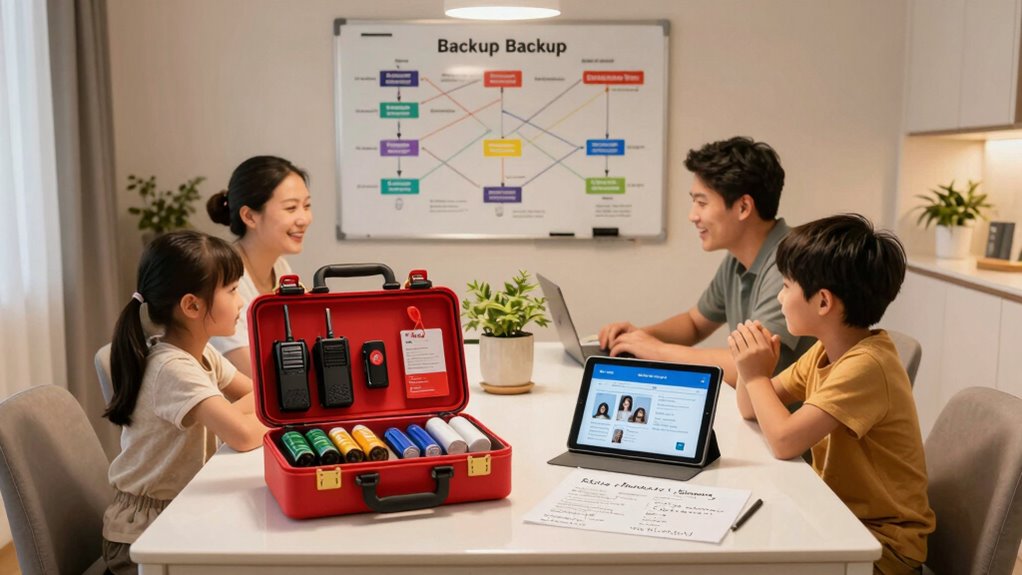
Have you ever been caught off guard when your primary communication channels fail? It’s a sudden, unsettling feeling—your phone dies, your internet drops, or a power outage knocks out your usual methods of staying in touch. That’s why having a solid backup communication plan is essential for every family. The first step is to compile a list of emergency contacts. These should include not only family members but also neighbors, friends, and local emergency services. Keep this list in multiple places—printed and digital—so you can access it even if one method is compromised. Having quick access to emergency contacts guarantees that you can reach someone immediately if needed, whether it’s to confirm everyone’s safety or to coordinate help.
Next, consider technology alternatives that serve as dependable backups. Relying solely on your smartphone or internet can leave you vulnerable in a crisis. Invest in a battery-powered or hand-crank radio to receive alerts during power outages. Walkie-talkies or two-way radios are also invaluable for short-distance communication, especially if cell networks are overwhelmed or down. Keep spare batteries for all devices, and verify they’re easily accessible. You might also explore satellite phones if you live in remote areas where traditional networks are unreliable. These devices don’t depend on local infrastructure, giving you a pivotal line of communication when others fail. Additionally, reliable communication devices play a crucial role in ensuring your safety during emergencies. It’s also beneficial to familiarize yourself with the different types of emergency communication tools so you can select the best options for your situation. Regularly practicing how to use these tools ensures everyone remains confident and prepared in an actual emergency.
It’s also wise to establish a designated meeting point outside your home or neighborhood. In emergencies, you might not be able to return home or reach your usual location. Having a predetermined safe place makes it easier to reunite with family members or coordinate plans. Make sure everyone in your household knows the plan and practices it periodically. Additionally, consider setting up a shared digital document or app that contains all your emergency contacts, backup numbers, and instructions. This way, everyone can access critical information on their devices, even if traditional communication channels aren’t available. It’s important to also keep a hard copy of this information in a safe, easily accessible location. To further enhance your preparedness, educate your family on how to use these backup tools effectively and recognize warning signs during emergencies. Being aware of potential communication failures can help you respond more swiftly and effectively during a crisis.
Finally, remember that a backup plan isn’t just about technology—it’s about preparation and clarity. Regularly review and update your contacts, test your devices, and discuss the plan with your family. Be proactive in ensuring everyone understands what to do and how to communicate if the unexpected happens. When you’re prepared with multiple layers of communication options and clear plans, you’ll feel more confident facing any emergency. Having these measures in place means you’re less likely to feel helpless when your primary channels fail, and you’ll be better equipped to protect your loved ones during a crisis.
As an affiliate, we earn on qualifying purchases.
Frequently Asked Questions
How Often Should I Review and Update the Backup Communication Plan?
You should review and update your backup communication plan at least twice a year to stay aligned with your family’s emergency preparedness and safety needs. Regular updates guarantee everyone knows their roles, contact info stays current, and new safety protocols are included. Changes like new members or technology updates also warrant a review. Staying proactive helps you respond swiftly during emergencies, keeping your family safe and prepared.
What Tools or Apps Are Best for Emergency Family Communication?
You should use apps like Life360 or WhatsApp to keep emergency contacts and communication protocols organized. These tools allow you to share real-time location, send quick messages, and establish clear protocols for emergencies. They help guarantee everyone stays connected, knows what to do, and can reach each other easily during crises. Regularly update contact lists and practice using these apps to keep your family prepared and communication seamless.
How Can I Ensure All Family Members Understand the Plan?
You can guarantee all family members understand the plan through family training sessions, where you explain each step clearly and practice scenarios together. Use clear messaging, avoiding jargon, so everyone knows what to do. Reinforce understanding with written instructions and regular check-ins. Encourage questions and feedback during training, making sure everyone feels confident. Consistent practice keeps the plan fresh in everyone’s minds, increasing the chances of effective communication during emergencies.
What Should I Do if a Family Member Is Unreachable During an Emergency?
If a family member is unreachable during an emergency, you should follow your communication hierarchy, starting with emergency contacts you’ve identified. Attempt to reach them through multiple methods, like calls, texts, or messages via alternative contacts. If you can’t connect, notify other family members or designated emergency contacts to keep everyone informed. Keep a list of backup contacts and update it regularly to guarantee everyone stays connected during emergencies.
How Do I Coordinate Communication With Extended Family or Friends?
You should establish a clear communication hierarchy with your extended family and friends, designating primary and backup emergency contacts. Share this hierarchy with everyone involved, so they know who to call first and how to pass messages along. Regularly update contact information, and make certain everyone understands the plan. This way, in emergencies, communication flows smoothly, minimizing confusion and ensuring everyone stays informed and connected.
walkie-talkies for family communication
As an affiliate, we earn on qualifying purchases.
As an affiliate, we earn on qualifying purchases.
Conclusion
Think of your backup communication plan as a lifeboat in a storm—ready to keep everyone afloat when the waves of chaos hit. By having a clear, simple plan in place, you guarantee your family stays connected, no matter what surprises come your way. It’s your safety net, catching you when the main thread frays. With this plan, you’re not just prepared; you’re anchoring your family’s peace of mind in the face of uncertainty.
satellite phone for remote areas
As an affiliate, we earn on qualifying purchases.
As an affiliate, we earn on qualifying purchases.
family emergency contact organizer
As an affiliate, we earn on qualifying purchases.
As an affiliate, we earn on qualifying purchases.
Halloween Picks
halloween
As an affiliate, we earn on qualifying purchases.