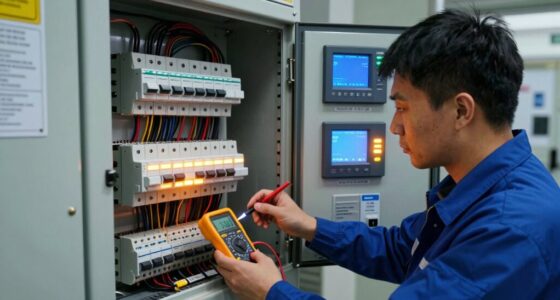

Your backup power planning should start by identifying what’s most important—such as safety, critical operations, and sensitive equipment—rather than jumping straight to product choices. Focusing on your priorities helps you develop an effective and cost-efficient strategy that truly meets your needs. It prevents wasting money on unnecessary features and guarantees you’re prepared for real risks. If you keep exploring, you’ll discover how aligning your resources with your priorities makes your system more resilient and reliable.

Get the latest gadgets delivered free with Prime
- Fast, free delivery on millions of items
- Prime Video, Amazon Music and more included
- Member-only deals all year
Key Takeaways
- Focusing on priorities ensures backup systems meet critical safety, security, and operational needs effectively.
- Prioritizing needs prevents overspending on unnecessary features or equipment.
- Identifying essential systems guides tailored, cost-effective backup solutions.
- Clear priorities help optimize resource allocation for maximum resilience and sustainability.
- Planning around priorities ensures backup power supports specific vulnerabilities and operational requirements.

Have you ever considered what happens during a power outage and how essential backup systems are? When the lights go out unexpectedly, your safety, productivity, and even your security depend on well-planned backup power. But before rushing to buy the latest generator or battery system, it’s crucial to understand that backup power planning starts with priorities, not products. The key is to identify what really matters most—whether it’s maintaining essential operations, protecting sensitive equipment, or ensuring safety protocols are met. By establishing clear priorities, you can develop a strategy that efficiently meets your needs without overspending on unnecessary features.
Emergency preparedness plays a pivotal role here. You need to ask yourself: which systems must stay active during an outage? Critical infrastructure like healthcare facilities, data centers, and emergency services require uninterrupted power to function effectively. For businesses, it might mean keeping communication lines open or safeguarding inventory. For homeowners, prioritizing essential appliances like refrigerators or medical devices ensures safety and comfort. Recognizing these priorities helps you choose backup solutions that are capable of supporting your most crucial needs, rather than simply opting for the most popular or expensive products on the market. Additionally, understanding the importance of backup power systems in ensuring safety and continuity can guide you toward more effective planning and resource allocation. Incorporating energy storage and other innovative solutions can further enhance your system’s resilience and adaptability.
Renewable integration is increasingly becoming part of backup power planning, especially as sustainability becomes a higher priority. Incorporating renewable energy sources, such as solar panels paired with battery storage, allows you to create a more resilient and environmentally friendly system. This approach not only reduces reliance on fossil fuels but also provides a sustainable way to maintain power during outages. When you set your priorities, you might decide that reducing carbon footprint and achieving energy independence are top concerns. This guides you to select renewable solutions that align with your goals, rather than blindly investing in generic backup products. Moreover, integrating renewable energy sources can enhance your system’s resilience in the face of prolonged outages caused by extreme weather events or grid failures.
Ultimately, your backup power strategy should be rooted in understanding your specific needs and circumstances. By focusing on your priorities—be it emergency preparedness, operational continuity, or sustainability—you avoid the trap of chasing after the latest product trends that may not serve your purpose. Proper planning ensures you get the right mix of systems and technologies, including renewable options, that deliver reliable power when it’s needed most. Remember, effective backup power isn’t about having the most expensive or advanced equipment; it’s about aligning your resources with what truly matters to you and your environment. A comprehensive risk assessment can help identify vulnerabilities and tailor your system accordingly, ensuring you are prepared for a variety of outage scenarios.
Products Worth Considering

Jackery HomePower 3600 Plus Portable Power Station, 3584Wh, 3600W

Anker SOLIX C200 DC Portable Power Station, 192Wh, 200W

Bose SoundLink Flex Bluetooth Speaker (2nd Gen), Portable Waterproof Speaker, Black
As an affiliate, we earn on qualifying purchases.
Frequently Asked Questions
How Do I Determine My Critical Infrastructure Needs?
You determine your critical infrastructure needs by conducting a thorough risk evaluation to identify essential systems and vulnerabilities. Focus on understanding which operations must stay active during outages. Then, allocate resources effectively to protect these priorities. By evaluating risks and prioritizing accordingly, you guarantee your backup power solutions support what’s most important, preventing unnecessary expenditures on less critical systems and optimizing your resource allocation for maximum resilience.
What Is the Typical Timeline for Backup Power Implementation?
The typical timeline for backup power implementation varies based on your needs, but it generally takes several months. You’ll start with evaluating energy storage requirements and designing systems that guarantee power redundancy. After selecting suitable equipment, installation and testing follow. Keep in mind, prioritizing your critical infrastructure helps streamline this process, making sure you get reliable backup power quickly and efficiently, minimizing downtime during outages.
How Often Should Backup Power Systems Be Tested?
You should test your backup power systems at least quarterly to guarantee reliability. Regular testing verifies emergency protocols are effective and confirms power redundancy functions correctly during outages. These tests help identify potential issues before an actual emergency occurs. By routinely checking your backup systems, you ensure they’ll activate seamlessly when needed, maintaining operational continuity and safety. Consistent testing is key to confident, prepared backup power management.
What Are Common Challenges in Prioritizing Backup Power Needs?
Prioritizing backup power needs can feel like steering through a maze of chaos. You’ll often face challenges like balancing emergency protocols with critical systems, or ensuring power redundancy without overspending. Deciding which areas need immediate backup versus long-term solutions can be tricky, especially when resources are limited. You must assess risks carefully, identify essential functions, and align your backup power strategy with overall safety and operational priorities to avoid costly mistakes.
How Do Budget Constraints Affect Backup Power Planning?
Budget constraints greatly influence your backup power planning by forcing you to focus on cost considerations and resource allocation. You need to prioritize essential systems and find cost-effective solutions that maximize reliability within your budget. Careful resource allocation helps you choose the right equipment, balance upfront costs with long-term savings, and guarantee critical operations stay protected without overspending. This strategic approach ensures your backup power plan is both effective and financially feasible.
Conclusion
Remember, backup power planning isn’t about chasing the latest gadgets. It’s about understanding your true priorities and aligning your resources accordingly. Think of it as charting a course through stormy seas—you need a steady hand and a clear destination, not just the brightest lighthouse. When you focus on what truly matters, you’ll build a resilient system that stands strong in any storm. Priorities light the way to reliable power when it matters most.