
📊 Full opportunity report: Could Your Next Walk Come With Its Own Narration? on IdeaNavigator AI — validation score, market gap, and execution plan.

Get the latest gadgets delivered free with Prime
- Fast, free delivery on millions of items
- Prime Video, Amazon Music and more included
- Member-only deals all year
TL;DR
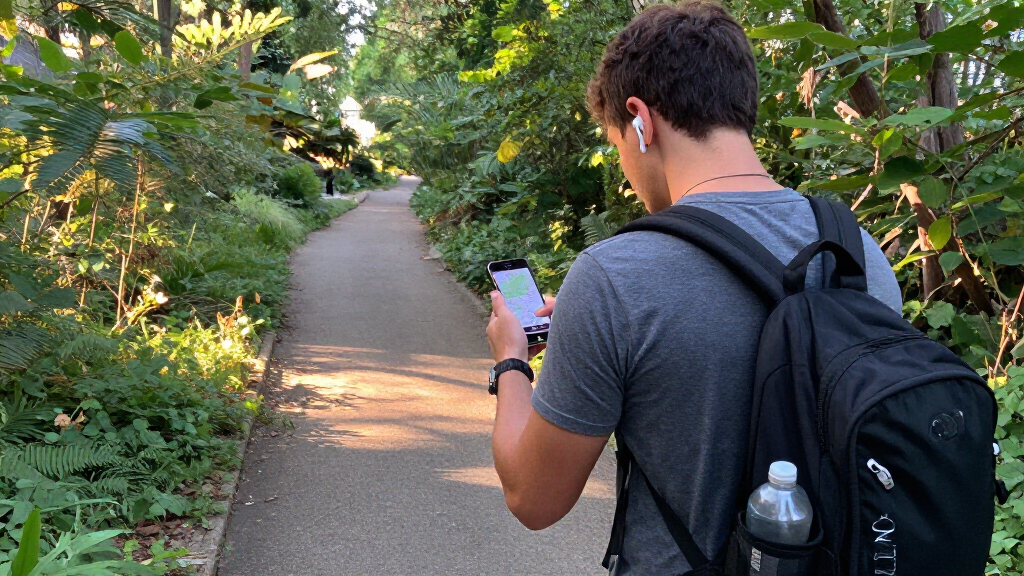
IdeaNavigator AI has outlined a concept for an app that generates audio narration as people walk, using route and location data to describe local history, buildings and other details. The proposal recommends testing the idea in two cities, measuring repeat use at four weeks and checking narration accuracy; no launched product or test results are reported.
IdeaNavigator AI has proposed an audio walking app that would generate narration as users move along a route, describing nearby history, architecture and other details. The concept is aimed at people who want their own neighborhoods and travel walks narrated, but it is a product proposal, not a reported launch; no operating app, user results or confirmed partnerships are identified.
The proposed app would start with a user beginning a walk. It would then draw on location and route information to provide narration as the person reaches corners, buildings or landmarks. Suggested content includes local history, architecture and less obvious details, with optional themed modes for history, architecture and nature. Users could also save favorite routes.
IdeaNavigator AI argues that modern language models could generate location-grounded narration on demand from open data, including historical, architectural and place records. The proposal presents that approach as a way to reduce the cost of producing audio for each route. This is a claim about the opportunity, not evidence that the system has been built, that its information is reliable, or that generation costs are low enough for a commercial service.
The suggested business model combines a consumer subscription with a licensing tier for tourism boards. To test demand, the proposal recommends launching in two cities, tracking how often users walk with the app and how many remain active at week four, and auditing the accuracy of narration across a sample of routes. No cities, pricing, sample size or performance targets are specified.
Could Your Next Walk Come With Its Own Narration?
An early proposal imagines an app that narrates local history, architecture and overlooked details as you walk. Its two-city pilot is a recommendation; no launched product or test results are reported.
Generate location-aware audio from route information and open place records, with optional history, architecture or nature themes.
A guide that moves with you
The idea is to bring narration beyond prepared landmark tours and into ordinary streets and familiar neighborhood walks.
Start walking
A user begins a route, and the app responds as they approach corners, buildings or landmarks.
Hear what is nearby
Suggested stories cover local history, architecture and other details drawn from location and route information.
Choose a lens
Optional themed modes could focus on history, architecture or nature. Favorite routes could be saved.
From route to narration
Language models and open records are presented as a possible way to create audio on demand, rather than commission a recording for every route.
Begin a walk
The user starts moving along a chosen route.
Read the setting
Location and route data identify nearby places.
Build a story
Open historical, architectural and place records inform narration.
Listen and save
Audio plays along the way; a route may be saved for later.
Beyond landmark tours
The proposal sees everyday walks as an under-served setting between general audio and tours made for established visitor areas.
Potential, still unproven
Fluent audio alone would not make a useful guide. Stories need to be accurate, relevant and timed well without distracting or overwhelming walkers.
Illustrative dimensions to evaluate, not measured scores or product results.
What a pilot could measure
IdeaNavigator AI recommends testing in two cities. No locations, sample size, benchmarks or performance targets are specified.
Walks per week
Track how often people choose to walk with the app after trying it.
Active at week four
Measure how many users return. This may signal early repeat use, but cannot establish long-term demand.
Audit route accuracy
Check narration across a sample of routes for factual errors and quality issues.
Key details remain unknown
The proposal sketches an opportunity, but does not establish that the system has been built or that a partner has committed.
Accuracy and data
No model, data provider or verification process is named. Handling missing, conflicting or outdated public records remains unexplained.
Privacy and access
Location sharing, route-data handling, offline use and connectivity requirements are not described.
Demand and economics
Subscription pricing, operating costs, user acquisition and market size are absent. Cost savings from generated narration are a claim, not demonstrated evidence.
Partners and launch
No developer, funding, release schedule, named cities or tourism-board partner is identified. A tourism-board licensing tier is only suggested.
A working prototype or announced pilot
Useful evidence would name the product team and cities, explain route and participant selection, define an active user, report week-four retention, and describe how factual accuracy was checked. Until then, this remains an early-stage concept.
Key questions
The available information describes a proposal and suggested minimum product, not a confirmed service.
Is the app available now?
No released app or download link is identified. The material describes a concept, not a confirmed launch.
What could it narrate?
Nearby history, buildings and other local details, with suggested history, architecture and nature modes.
How would the idea be tested?
A proposed two-city test would track walks per week, week-four retention and accuracy across a sample of routes. No results are reported.
What remains unclear?
Developer, launch date, city selection, pricing, tourism partners, fact-checking, location privacy and handling of data gaps.
Testing Repeat Use Beyond Tourists
The idea targets a gap between general audio listening and conventional guided tours. A podcast typically does not respond to a listener’s location, while many audio tours focus on established visitor areas. If an app could produce useful narration across ordinary streets, it might make local discovery available during routine walks as well as trips.
That potential depends on more than generating fluent audio. The service would need to provide accurate, relevant information at the right point in a walk without distracting or overwhelming users. Retention at week four could offer an early indication of whether people return after trying it, while route audits could expose factual errors. Those measures would not by themselves establish long-term demand or commercial viability, but they address two central risks in the proposal.
The suggested tourism-board tier also points to a possible institutional customer alongside individual subscribers. Whether public tourism organizations would pay for a general-purpose system, and whether a subscription would appeal to residents who can already walk familiar routes without narration, remain open questions. The concept’s relevance will depend on evidence from actual use, not the breadth of its proposed features.
Products Worth Considering

Jackery Explorer 2000 v2 Portable Power Station with Two 200W Solar Panels

Bose SoundLink Plus Portable Bluetooth Speaker, Black

Bose QuietComfort Wireless Noise-Cancelling Headphones, Petal Pink
As an affiliate, we earn on qualifying purchases.
From Landmark Tours to Local Routes
The concept is framed around the limits of existing audio options: podcasts are not usually tied to a listener’s surroundings, and traditional guided audio is often made for specific landmarks or visitor districts. IdeaNavigator AI describes everyday streets as an under-served setting, where buildings and local records may provide material for narration but are not covered by a prepared tour.
Its proposed technical shift is the use of language models to assemble narration from open location-related data when a walk takes place, rather than commissioning a separate recording for every route. The proposal does not name a model, data provider or mapping service, and it does not explain how the system would verify details or handle gaps and conflicts in public records. These are material implementation questions, not established capabilities of a released product.
The recommendation to begin in two cities suggests a limited pilot rather than immediate broad availability. A small test could help compare repeat usage and factual quality across routes, but the proposal does not state which cities would be chosen or whether their data coverage would represent other places.
Accuracy, Data and Demand Questions
No product launch, developer, funding, release schedule or completed pilot is identified. It is therefore unclear whether development has begun or whether any organization has committed to testing or licensing the concept. The two-city plan is a recommendation, not a confirmed deployment.
The proposal also leaves open how narration would be checked against trustworthy records, how it would respond when data are missing or contradictory, and how frequently content would be refreshed. It does not specify whether users would need to share location continuously, how their route data would be handled, or whether the app would work without a reliable connection. Those details could affect both trust and practical use.
There are no figures for subscription pricing, operating costs, user acquisition, or the size of the potential market. The suggested four-week retention measure and accuracy audit are useful test categories, but no benchmarks or results are supplied. Claims that on-demand generation reduces production costs and that walking is an overlooked audio market remain unverified assessments.
A Pilot Would Test the Concept
The next evidence to look for would be a named product team, a working prototype or an announced pilot. If a two-city test proceeds, the key reported details would include the locations, how routes and participants were selected, the definition of an active user, the week-four retention results and the method used to check factual accuracy.
Until those details emerge, the app should be treated as an early-stage product idea. IdeaNavigator AI’s proposal lays out a possible workflow and validation plan, but it does not confirm that consumers can download the app, that tourism boards are participating, or that the proposed service has demonstrated repeat use or reliable narration.
Source: IdeaNavigator AI
Key Questions
Is the narrated walking app available now?
The proposal does not identify a released app or provide a download link. It describes a concept and suggested minimum product, not a confirmed launch.
What would the app narrate during a walk?
The proposed narration would draw on location and route information to discuss history, buildings and other local details. Suggested modes include history, architecture and nature.
How would the idea be tested?
IdeaNavigator AI recommends a two-city test that measures walks per week and retention at week four, alongside an audit of narration accuracy on a sample of routes. No test results are reported.
What remains unknown about the proposal?
There is no confirmed developer, launch date, city selection, pricing or tourism-board partner. The proposal also does not explain how the app would verify generated details or manage location privacy and data gaps.
Source: IdeaNavigator AI