
TL;DR
South Korea has brought Hangang, its sixth national supercomputer, into full operation. The government says it is 24 times faster in theoretical computing performance than its predecessor and plans to connect it with a quantum computer in the first half of 2027. Hangang’s expected global ranking and the results of the planned hybrid system have not yet been confirmed.
South Korea has brought Hangang, its sixth national supercomputer, into full operation and plans to connect it with a quantum computer in the first half of 2027, according to the Ministry of Science and ICT and the Korea Institute of Science and Technology Information. The system is intended to expand computing resources for research and industry, while the proposed link would combine conventional high-performance computing with quantum processing.

Get the latest gadgets delivered free with Prime
- Fast, free delivery on millions of items
- Prime Video, Amazon Music and more included
- Member-only deals all year
The ministry and KISTI held a launch ceremony on November 2 at KISTI headquarters in Daejeon. Hangang succeeds Nurion, the previous national system introduced in 2018. The government expects Hangang to place among the world’s top 10 supercomputers, but that is a projection rather than a confirmed ranking; the source report said the relevant global rankings were due at the International Supercomputing Conference early in November.
According to Seoul Economic Daily’s report, Hangang has 8,496 GPUs and 9,936 CPUs, including Nvidia GH200 chips that combine a central processing unit and a graphics processing unit. Its stated theoretical computing performance is 24 times that of Nurion. The report also gives storage capacity as 10 times higher and network performance as four times higher than the predecessor. These figures describe comparisons with Nurion, not measured gains for any particular research task.
Hangang has been operating in a trial service in October and November, supporting about 190 projects, including 20 grand challenge projects and 17 national strategic projects. Applications made so far represent about 85% of the capacity the system can provide, according to the report. The government plans to allocate 55% of resources to research and development innovation, 30% to national strategic projects and 15% to industrial innovation research. Official service is scheduled to begin on December 16.
More Computing for National Research
Hangang gives South Korean researchers and participating businesses access to a national computing resource with substantially higher stated capacity than Nurion. Supercomputers can support work that requires large-scale calculations, including scientific modeling and AI-related research. The government has described Hangang as infrastructure for bringing AI together with science and technology; what that means in practice will depend on how the system is used and what results projects produce.
The allocation plan also sets aside 15% of capacity for industrial innovation research, with support focused on small and medium-sized enterprises and intended to encourage commercialization. That creates a route for companies to seek computing resources, although the source material does not specify application criteria, the number of firms expected to participate or the commercial outcomes anticipated.
The planned quantum connection is a separate step from the launch. If implemented, the hybrid arrangement would connect conventional high-performance computing with quantum processing. The agencies have not yet reported a completed integration or demonstrated performance gains from such a system. The announcement matters as a plan for future research infrastructure, not as evidence that quantum computing is already improving Hangang’s output.
Products Worth Considering

Bose Lifestyle Ultra Wireless Home Speaker, White Smoke

DJI Osmo Action 4 Essential Combo Waterproof 4K Action Camera

Bose QuietComfort Headphones (2nd Gen), Wireless Noise-Cancelling Over-Ear Headphones, Black
As an affiliate, we earn on qualifying purchases.
From Nurion to Hangang
Hangang follows Nurion, launched in 2018, as South Korea’s sixth national supercomputer. The reported performance, storage and network comparisons are relative to that predecessor. The machine’s full operation follows a trial period that has already taken in research and strategic projects, with the wider official service scheduled to start in December.
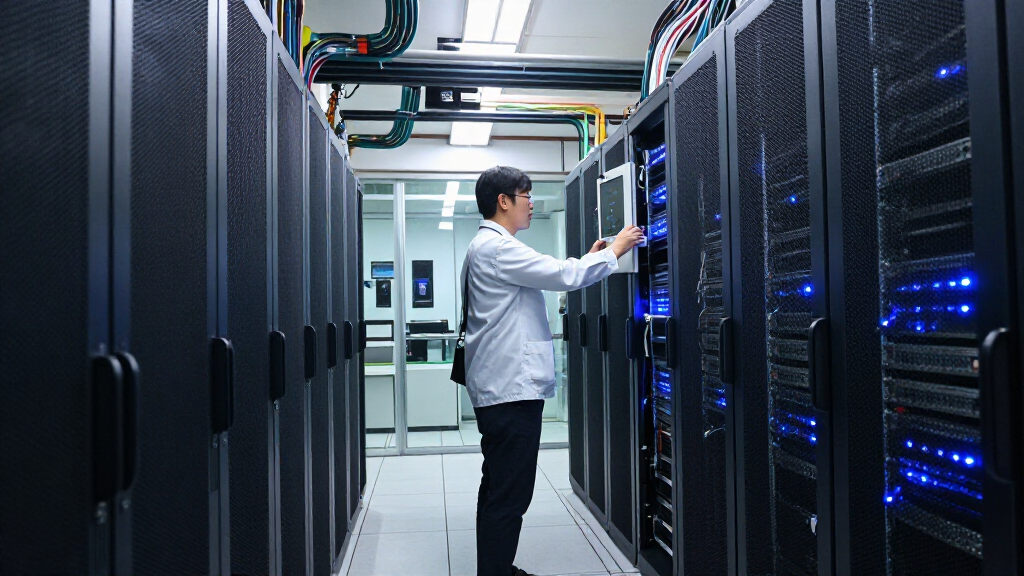
The new system also changes its cooling approach. KISTI Supercomputing Infrastructure Center head Hong Tae-young said Nurion circulated cold water to the back of equipment cabinets, while Hangang circulates water over the chips themselves. He said nearly all of Hangang’s equipment was built for direct liquid cooling and that its power usage effectiveness, or PUE, improved to about 1.15 from 1.35 on Nurion. PUE is an indicator of facility energy use relative to computing equipment; the report does not provide the measurement conditions or a separate estimate of electricity savings.
Security and access are also part of the operational plan. Hong said KISTI is installing high-level security solutions on the main servers users connect to, and that the institute has used one-time-password two-factor authentication since the early 2010s. He said stronger internal security can reduce performance, so work on security measures will continue. KISTI President Lee Sik described the strategy as tightly blocking threats at the system’s entry point.
““With the fifth system, cold water circulated only as far as the back of the cabinet to absorb heat, but in the sixth system water circulates over the chips themselves, raising cooling efficiency.””
— Hong Tae-young, head of KISTI’s Supercomputing Infrastructure Center
Ranking and Quantum Results Pending
Hangang’s global ranking has not been confirmed in the source material. The government expects a top-10 position, but the reported ranking was still forthcoming at the time of the launch report. The comparison figures also do not establish how much faster the machine will make specific scientific or industrial work.
The government’s target to connect Hangang with a quantum computer in the first half of 2027 remains a plan. The source does not identify the quantum computer, explain how the technical connection will work, set out which applications will use it or provide a schedule for tests. No demonstrated improvement in calculation or optimization from the proposed hybrid system is reported. It is also unclear how the planned resource shares will translate into individual project allocations, or what security measures KISTI will add as operations continue.
Service Begins in December
KISTI’s next stated milestone is the start of official Hangang service on December 16, 2026, following the October-November trial. The institute says it will focus on stable operations and user support. The government also intends to direct computing resources to research and development, strategic national projects and industrial innovation, including work by small and medium-sized businesses.
The global ranking expected in early November will provide an external point of comparison for the system’s scale. After that, the stated quantum-integration target is the first half of 2027. Further details would be needed to establish the partner system, technical timetable and tests for the connection. Until those are disclosed, the hybrid system should be treated as a planned development rather than an operational service.
Key Questions
What is Hangang?
Hangang is South Korea’s sixth national supercomputer, operated by KISTI. It entered full operation after a trial service and succeeds Nurion, which was introduced in 2018.
How powerful is Hangang compared with Nurion?
The source report says Hangang’s theoretical computing performance is 24 times higher than Nurion’s, with 10 times the storage capacity and four times the network performance. Those are reported system comparisons, not measured improvements for every task.
When will Hangang’s official service begin?
Official service is scheduled to begin on December 16, 2026. A trial running in October and November was already supporting about 190 projects, according to the report.
When is the quantum computer connection planned?
The government plans to connect Hangang with a quantum computer in the first half of 2027. The source does not identify the quantum system or report that integration has been completed.
Has Hangang been confirmed as a top-10 supercomputer?
No. The government expects Hangang to rank among the world’s top 10, but the source material does not confirm its position. The relevant ranking was expected at an international supercomputing conference in early November.
Source: thequantuminsider.com