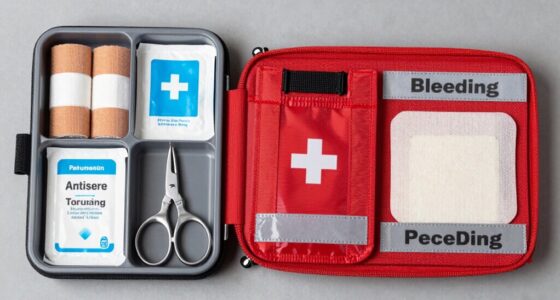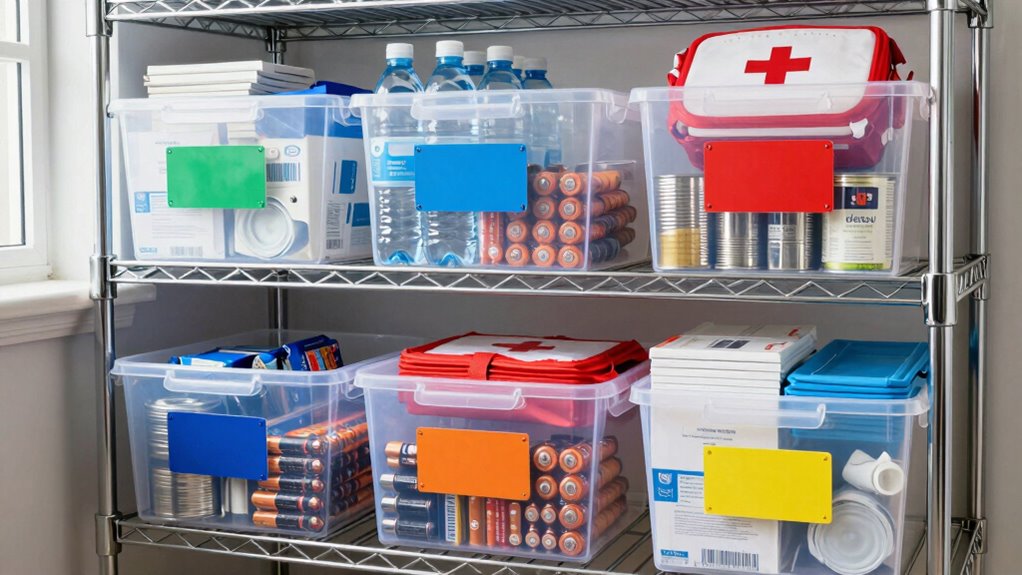

To keep your emergency supplies usable, store them in airtight, food-grade containers in a cool, dark, dry place away from chemicals. Regularly check for signs of spoilage or pests, and rotate stock with clear labels and dates. Maintain cleanliness by disinfecting storage areas and utensils, and handle supplies with sanitized tools. Proper organization and vigilance guarantee your supplies stay safe and ready. Keep exploring for more tips to optimize your emergency preparedness.

Get the latest gadgets delivered free — and shop member deals
- Fast, free delivery on millions of items
- Access to Prime Big Deal Days deals on October 6–7
- Prime Video, Amazon Music and more included
Key Takeaways
- Use airtight, food-grade containers to prevent contamination and preserve freshness.
- Label supplies with dates and rotate stock regularly to ensure usability.
- Store in a cool, dark, and dry environment to slow spoilage and nutrient loss.
- Keep storage areas clean and disinfected, inspecting supplies often for signs of spoilage or pests.
- Handle food with sanitized utensils and avoid direct contact to maintain hygiene and safety.
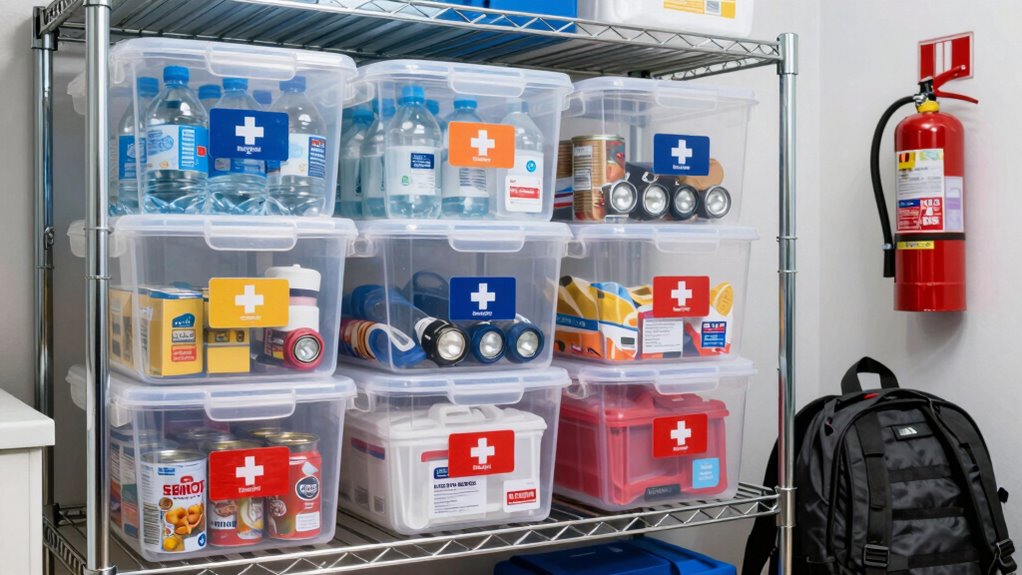
Storing emergency supplies properly is vital to guarantee you’re prepared when disaster strikes. When it comes to food, proper food preservation methods ensure your supplies stay safe and edible for extended periods. You want to avoid spoilage, which can lead to health risks, by regularly rotating your stock and using airtight containers that prevent moisture and pests from contaminating your food. Clear labeling with dates helps you keep track of freshness, so you know when to replace items. Additionally, choosing non-perishable foods like canned goods, dried fruits, and grains makes storage easier and more reliable. Remember, proper food preservation isn’t just about the food itself; sanitation practices play an essential role in maintaining the overall safety of your supplies. Always wash your hands thoroughly before handling food or storage containers to prevent contamination. Keep storage areas clean and dry, and regularly disinfect shelves and containers to inhibit mold growth and pest infestations. Using food-grade storage containers that are easy to clean and seal tightly can prevent contamination and extend the shelf life of your supplies. In addition, store food supplies in a cool, dark place as heat and light accelerate spoilage and degrade nutritional value. Avoid storing emergency food near chemicals or cleaning supplies, which could leak and contaminate your food. Proper sanitation practices also involve inspecting your supplies periodically for signs of spoilage or pests, and removing any compromised items immediately. This proactive approach helps preserve the integrity of your entire stockpile. Regularly monitoring storage conditions can help detect issues early before they compromise your supplies. Maintaining optimal temperature control is crucial for preventing spoilage and ensuring long-term usability. When handling your supplies, always use clean utensils and avoid touching food directly with your hands—this minimizes the risk of introducing bacteria or other pathogens. If you use can openers, keep them sanitized, and always reseal opened cans or transfer their contents into proper storage containers. Maintaining a routine of sanitation and food preservation ensures your emergency supplies remain safe and usable when you need them most. Additionally, understanding food storage techniques can greatly enhance the longevity of your supplies. Proper temperature control and pest prevention are critical elements that contribute to maintaining food quality over time. Incorporating proper storage practices can further protect your supplies from environmental damage. By paying attention to these details, you’re not only extending the shelf life of your supplies but also safeguarding your health during stressful situations. Remember, a little effort in storage and sanitation now can save you significant trouble later. Properly stored, well-preserved, and sanitized supplies give you peace of mind, knowing that when disaster strikes, you’ll have reliable, safe food and essentials ready to go. Staying organized and vigilant about sanitation practices will make all the difference in turning emergency supplies into a dependable resource when it’s most critical.
airtight food storage containers for emergency supplies
As an affiliate, we earn on qualifying purchases.
As an affiliate, we earn on qualifying purchases.
Frequently Asked Questions
How Often Should I Rotate Emergency Supplies?
You should rotate your emergency supplies every 6 to 12 months to guarantee food preservation and freshness. Check expiration dates regularly and replace items before they expire. Store supplies at a consistent temperature, ideally in a cool, dry place, to maintain their quality. Keep an eye on packaging for damage or spoilage, and update your stock as needed. Regular rotation guarantees your supplies stay safe and ready when you need them most.
What Are the Best Containers for Storing Emergency Supplies?
You should choose sturdy, weatherproof containers like plastic bins with tight-fitting lids for storing emergency supplies. These containers offer durability and protect against moisture and pests. Use clear bins so you can easily see contents, and apply labeling techniques—like waterproof labels or permanent markers—to organize items efficiently. This way, your supplies stay intact and accessible when you need them most, reducing stress during emergencies.
How Do I Organize Supplies for Quick Access?
To organize supplies for quick access, start with effective inventory management by categorizing items based on urgency and type. Use clear labeling systems on containers and shelves, so you instantly know where everything is. Keep frequently used supplies at eye level or in easily accessible bins. Regularly review and update your inventory to guarantee nothing expires or gets misplaced, making sure your emergency supplies are always ready when you need them.
Should I Include Personal Medications in Emergency Kits?
Yes, including personal medication in your emergency kit is essential. You should store safety-sensitive supplies securely, guaranteeing they’re accessible when needed. Personal medication, like prescriptions and essential health aids, can be lifesavers during emergencies. Keep them in a waterproof, clearly labeled container, and regularly check expiration dates. Proper storage safeguards your health, ensures quick access, and prevents panic or problems when emergencies strike, providing peace of mind amid chaos.
How Can I Prevent Spoilage of Perishable Items?
To prevent spoilage of perishable items, focus on food preservation techniques and temperature control. Store perishables in a cool, dark place, ideally between 35-40°F, using a refrigerator or insulated cooler with ice packs. Keep items sealed tightly to prevent contamination and regularly check expiration dates. Proper temperature control slows bacteria growth, ensuring your supplies stay safe and usable during emergencies. Always rotate supplies to maintain freshness.
food-grade storage bins for long-term food storage
As an affiliate, we earn on qualifying purchases.
As an affiliate, we earn on qualifying purchases.
Conclusion
Storing emergency supplies is like tending a garden—you need to nurture and care for it so it’s ready when you need it most. Keep things organized, check expiration dates, and store them where they’re easy to reach. Think of your supplies as a safety net woven with care and attention. When disaster strikes, you’ll be glad you’ve cultivated this preparedness, turning chaos into calm—your hidden treasure chest waiting to catch you when the storm hits.
As an affiliate, we earn on qualifying purchases.
disinfectant spray for storage areas
As an affiliate, we earn on qualifying purchases.
As an affiliate, we earn on qualifying purchases.
Fall Picks
fall essentials
As an affiliate, we earn on qualifying purchases.