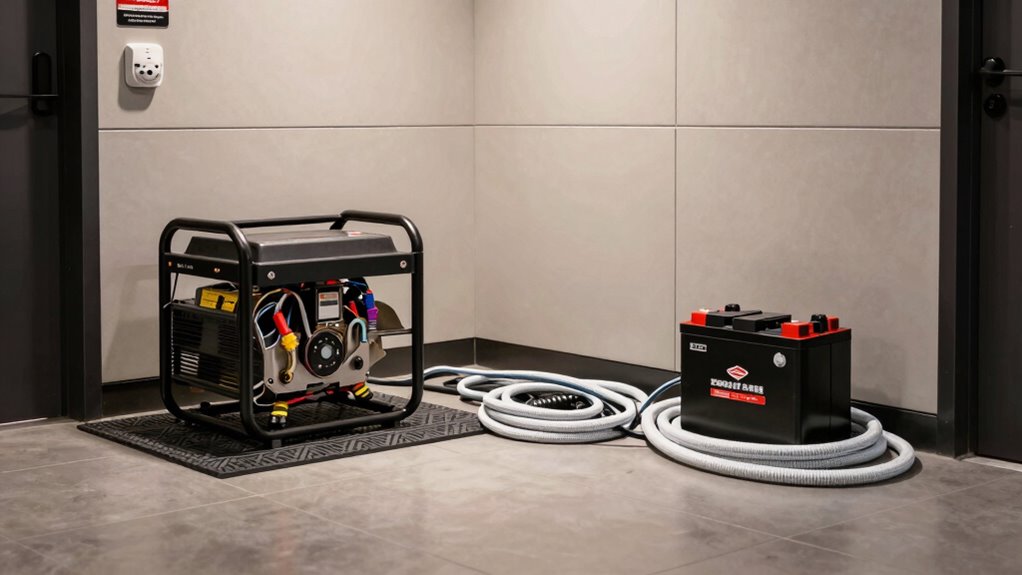
Using backup power equipment indoors can be safe if you follow strict precautions. Always operate generators outside or in well-ventilated areas, never inside enclosed spaces, and use carbon monoxide detectors to monitor fumes. Keep equipment on level ground, ensure proper ventilation, and maintain regular safety checks and maintenance. Proper handling of fuel and awareness of CO poisoning symptoms are essential. To learn detailed safety tips, keep exploring how to prevent indoor hazards effectively.
Key Takeaways
- Always operate generators outdoors or in well-ventilated areas to prevent dangerous CO buildup indoors.
- Install carbon monoxide detectors inside to monitor and alert for unsafe levels during backup power use.
- Use exhaust fans and venting ducts to direct fumes outside and maintain proper airflow in indoor spaces.
- Regularly inspect and maintain backup systems, batteries, and ventilation to ensure safe operation and minimize hazards.
- Avoid running backup power equipment in enclosed spaces; prioritize outdoor use and ensure proper safety precautions at all times.
Can You Use Backup Power Equipment Safely Indoors?
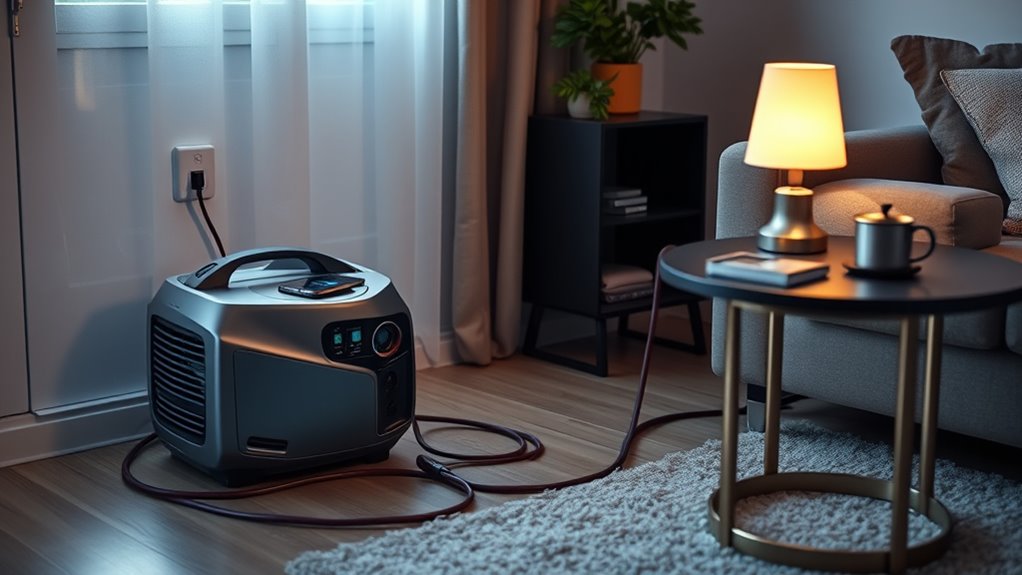
Using backup power equipment indoors can be dangerous if you’re not careful. Generator safety is vital because improper use can lead to carbon monoxide poisoning, fires, or electrical hazards. Never run a generator inside your home or garage, even if doors are open, as fumes can quickly accumulate. When considering battery storage systems, make sure they’re installed and maintained correctly to prevent leaks, overheating, or electrical fires. Always follow manufacturer instructions for safe operation. Proper ventilation and placement are essential to prevent dangerous fumes and heat buildup. Additionally, understanding the heat distribution and proper ventilation techniques can help minimize potential hazards associated with indoor backup power use. Being aware of electrical safety practices is crucial to avoid shocks or fires when handling backup power equipment indoors. Ensuring correct system maintenance can further reduce risks and prolong the lifespan of your backup systems. Regular inspections can help prevent accidents and ensure safe operation over time, especially considering fire risks associated with improper handling or component failure.
How to Choose Safe Indoor Backup Power Equipment

Choosing the right backup power equipment for indoor use requires careful consideration of safety features and specifications. You need to prioritize portable safety and ensure the equipment is suitable for indoor environments. When selecting equipment, look for units with built-in safety features like automatic shutoff, carbon monoxide detection, and overload protection. Proper equipment selection minimizes risks and keeps your indoor space safe during outages. Consider the size and power capacity to match your needs without overloading circuits. Additionally, choose equipment with clear instructions and safety certifications. Portable safety should be at the forefront—pick devices designed for indoor use, avoiding those with exhaust fumes or dangerous emissions. Being diligent in your equipment selection helps you maintain a safe, reliable backup power solution indoors. Vetted Always verify that your modern kitchen technology adheres to safety standards to prevent hazards during power outages. Also, selecting equipment with appropriate safety certifications ensures compliance with safety regulations and reduces potential risks. To further enhance safety, regularly inspect and maintain your backup equipment and consult safety guidelines specific to indoor power sources. Regularly reviewing filter maintenance practices for backup equipment can prevent potential malfunctions and ensure optimal operation.
How to Ventilate Indoor Generators and Batteries Safely
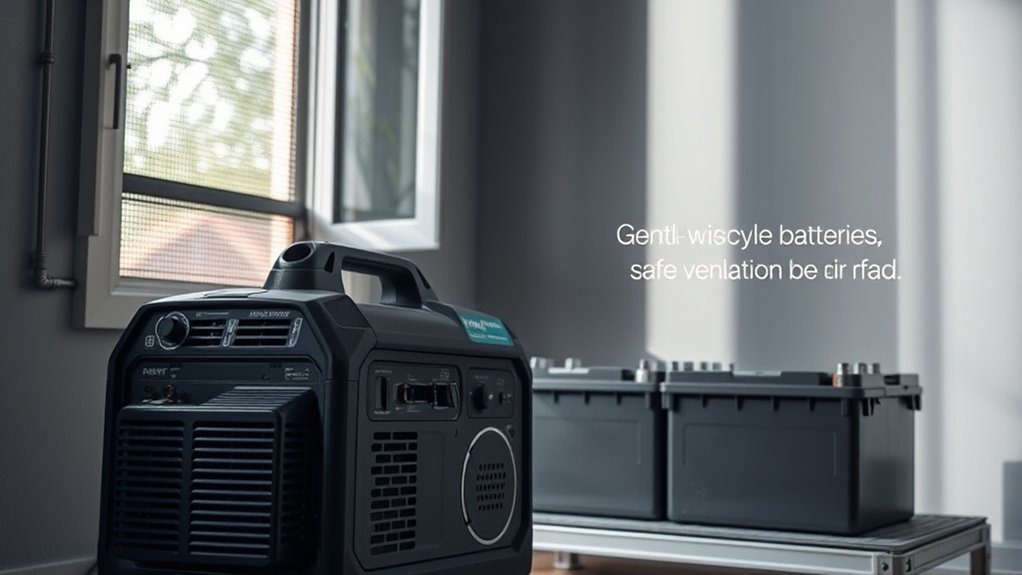
Proper ventilation is essential when operating indoor generators and batteries to prevent the buildup of dangerous fumes and gases. To guarantee safety, use effective ventilation techniques such as installing exhaust fans or venting ducts to direct fumes outside. Keep windows and doors open whenever possible to promote airflow, and consider using air purifiers designed for hazardous fumes. Regularly monitor your generator and battery area for signs of excess heat or gas accumulation. Good battery management also plays a crucial role; avoid overcharging and ensure batteries are kept in well-ventilated spaces to reduce the risk of gas buildup. Additionally, understanding safe installation practices can help minimize hazards related to indoor power equipment. Implementing proper airflow management is essential for maintaining a safe environment around indoor power sources. Properly designed ventilation systems can significantly improve indoor air quality by removing hazardous fumes more effectively. Ensuring that ventilation systems are regularly maintained and inspected can help prevent fume buildup and maintain a safe indoor environment. Also, incorporating ventilation system maintenance into your routine can further enhance safety by ensuring all components operate efficiently. By maintaining proper ventilation and practicing sound battery management, you markedly decrease the chance of hazardous fumes accumulating indoors.
How to Safely Operate Generators Inside Your Home

When operating a generator indoors, proper ventilation is crucial to prevent dangerous buildup of carbon monoxide. Always use carbon monoxide detectors to alert you to unsafe levels, and never run the generator in enclosed spaces. Additionally, ensure your safety checklist is complete, including proper placement and secure cords, to minimize risks and protect your household during outages. Proper knowledge of power sources like generators requires careful handling to avoid hazards, especially when used in residential environments. Being aware of energetic alignment principles can also help you approach generator use with a focused and safe mindset. Understanding navigation and mapping techniques can assist in planning safe generator placement and ensuring clear access to power connections. Proper knowledge of backyard transformation essentials can help you create a safer outdoor space for generator use, such as designated areas away from living spaces.
Proper Ventilation Practices
Operating a generator indoors can be extremely dangerous if proper ventilation isn’t maintained, as it allows deadly carbon monoxide fumes to build up quickly. To guarantee safety, follow strict ventilation procedures to prevent harmful buildup. Effective airflow management is key; keep generator exhausts away from windows, doors, and vents. Always operate your generator in a well-ventilated area, ideally outdoors or in a garage with open doors. Regularly check for proper airflow, and never block exhaust outlets. Use fans or vents to direct fumes away from your living space. Ensure your generator is placed on level ground to prevent exhaust leaks. Remember, good ventilation isn’t just about placement; it’s about continuous airflow management to keep deadly gases out of your home. Incorporating proper ventilation practices ensures safe operation and minimizes health risks. Additionally, understanding home security measures can provide peace of mind during power outages, ensuring safety from both environmental hazards and potential intruders. Maintaining awareness of indoor safety protocols can further help prevent accidents related to generator use.
Use Carbon Monoxide Detectors
To stay safe when using a generator indoors, you need dependable ways to detect dangerous levels of carbon monoxide. Installing portable safety devices like carbon monoxide detectors is crucial for emergency preparedness. These detectors alert you immediately if CO levels rise, giving you time to shut down the generator and ventilate the area. Place detectors near sleeping areas and on each level of your home for thorough coverage. Regularly test and maintain your detectors to ensure they function properly. Relying solely on your senses isn’t enough; CO is odorless and colorless. Using detectors provides peace of mind and enhances your safety during power outages. Incorporating this simple but essential step into your emergency preparedness plan to prevent poisoning and protect your loved ones. Ensuring proper ventilation and understanding air quality factors can help minimize risks when operating backup power equipment indoors. Additionally, understanding heat pump features and maintenance needs can help keep your home’s heating system running efficiently during emergencies. Proper knowledge of backup power safety protocols is vital for comprehensive preparedness.
Avoid Enclosed Spaces
Using a generator indoors can be extremely dangerous because it produces carbon monoxide, a colorless and odorless gas that can quickly cause poisoning. To stay safe, avoid operating your generator in enclosed spaces like garages, basements, or sheds. Proper ventilation strategies are essential; guarantee fresh air flows freely around the equipment. Always place your generator outdoors, away from windows, doors, and vents to prevent deadly fumes from entering your home. Adequate equipment placement minimizes risks and improves ventilation. Remember these key points:
- Keep the generator outside, in open air
- Never run it in enclosed areas
- Position the generator downwind from your home
- Use extension cords to bring power inside safely
Following these steps helps prevent carbon monoxide buildup and ensures safe operation.
Recognizing and Preventing Indoor Carbon Monoxide Risks
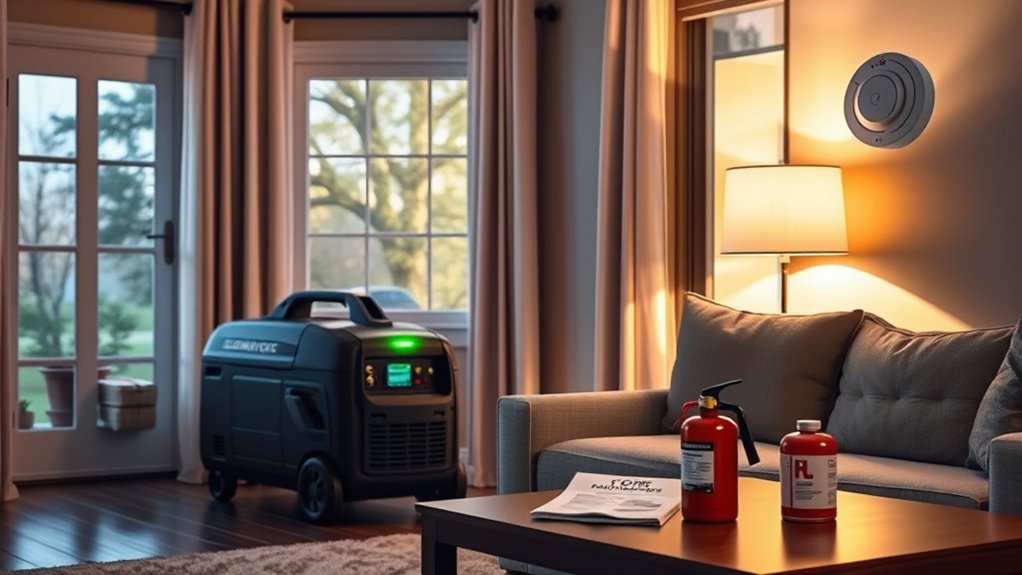
Indoor carbon monoxide (CO) risks often go unnoticed until it’s too late, but recognizing the signs and sources can save lives. You should prioritize indoor safety by ensuring your backup power equipment is used properly and placed outdoors or in well-ventilated areas. Poor equipment maintenance can lead to CO buildup indoors, so regularly inspect and service your generator, following the manufacturer’s instructions. Never operate a generator indoors or in enclosed spaces, as CO is colorless and odorless, making it difficult to detect. Be alert for symptoms like headaches, dizziness, or nausea, which could indicate CO poisoning. Taking these precautions helps prevent dangerous indoor CO exposure, keeping you and your loved ones safe during power outages.
Maintenance Tips to Keep Your Indoor Backup Power Safe

To keep your indoor backup power safe, you need to perform regular maintenance checks to spot potential issues early. Make sure you follow proper ventilation practices to prevent dangerous buildup of fumes. Also, handle fuel safely by storing and refueling in well-ventilated areas away from ignition sources.
Regular Maintenance Checks
Regular maintenance checks are essential to guarantee your backup power equipment remains reliable and safe. Regular inspections help identify issues with battery storage and ensure electrical safety. By routinely testing your system, you prevent unexpected failures during emergencies and prolong equipment lifespan. Check for corrosion, loose connections, and worn components. Keep batteries clean and ensure they’re properly charged. Confirm that safety features, like circuit breakers, are functioning correctly. Additionally, review wiring for damage or wear. Performing these checks often can catch minor problems before they escalate. Remember, a well-maintained system reduces fire hazards and electrical risks. Staying proactive with maintenance not only guarantees reliable power when needed but also keeps your indoor environment safe for everyone.
- Inspect batteries for corrosion and proper charge
- Tighten all electrical connections
- Test safety features regularly
- Remove dust and debris from equipment
Proper Ventilation Practices
Proper ventilation is essential for maintaining safe and efficient backup power systems installed indoors. Following ventilation best practices ensures that harmful exhaust gases, such as carbon monoxide, don’t accumulate and compromise indoor air quality. Always position your generator in a well-ventilated area, ideally outdoors or in dedicated, ventilated enclosures, to prevent dangerous gas build-up. Keep vents and exhaust outlets clear of obstructions to allow proper airflow. Regularly inspect ventilation pathways to ensure they remain unobstructed and functioning correctly. Good ventilation also helps disperse heat generated during operation, reducing the risk of overheating. By maintaining proper ventilation practices, you protect indoor air quality, safeguard your health, and ensure your backup power system operates safely and reliably during outages.
Safe Fuel Handling
Handling fuel safely is essential for preventing accidents and ensuring your indoor backup power system remains secure. Proper fuel handling minimizes fire risks and protects your health. Always store fuel in approved containers and keep them in well-ventilated, cool areas away from heat sources. Regular safety training helps you recognize hazards and respond effectively to spills or leaks. When filling your generator, do so slowly to prevent splashes, and never smoke near fuel. Keep fuel containers tightly sealed after use, and dispose of any old or contaminated fuel properly. Remember, proper fuel storage and safety training are key to maintaining a safe indoor environment. Staying vigilant helps prevent dangerous incidents and keeps your backup power system reliable.
How Often Should You Inspect Your Indoor Equipment?
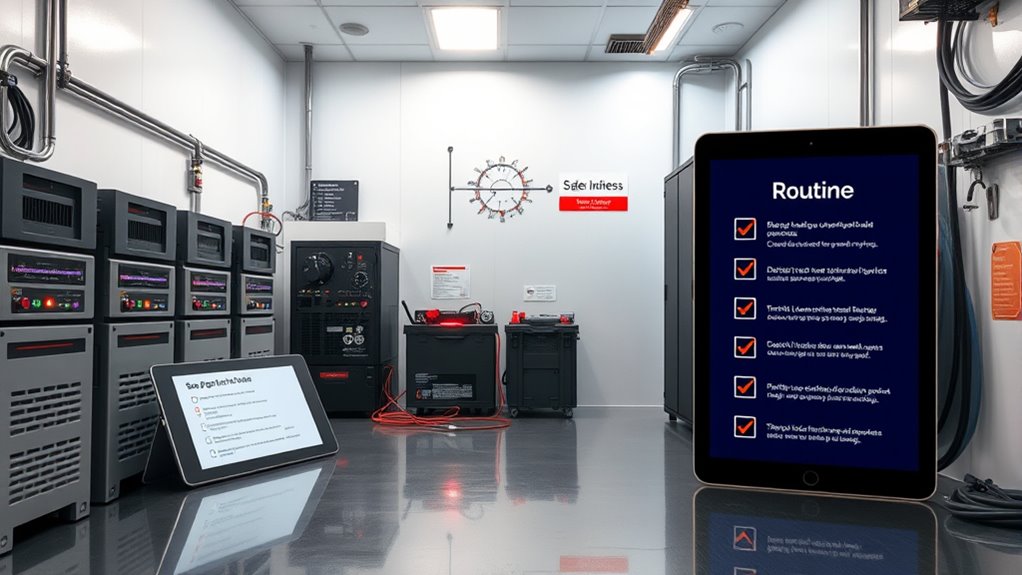
To guarantee your indoor backup power equipment functions reliably when you need it most, you should inspect it regularly. Weekly checks are ideal to maintain good indoor air quality and ensure your emergency preparedness. During inspections, look for signs of corrosion, loose connections, or damaged cords. Test the equipment’s functionality by running it briefly, making sure it operates smoothly without unusual sounds or odors. Keep the area around the equipment clean and free of debris to prevent obstructions. Regular inspections help you identify potential issues early, reducing risks of carbon monoxide buildup or other hazards. Consistent maintenance not only ensures your equipment’s reliability but also creates a safer indoor environment during power outages. Make inspections part of your routine to stay prepared.
What Are the Signs of Carbon Monoxide Poisoning?
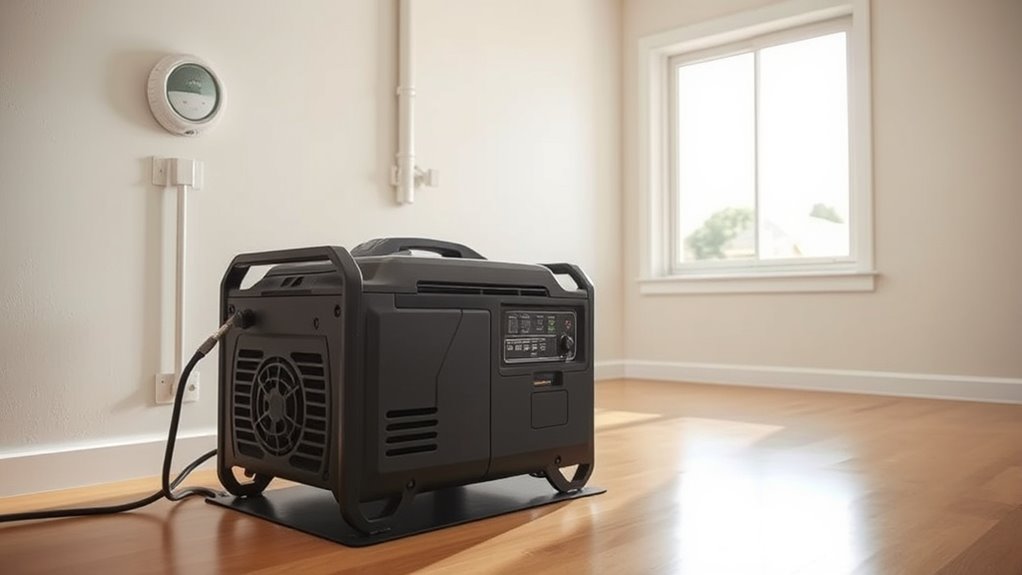
Carbon monoxide (CO) poisoning can occur silently, making it crucial to recognize the early warning signs. When using backup power equipment indoors, toxic fumes can build up quickly, so staying alert is essential. Common signs include headaches, dizziness, weakness, and nausea. You might also experience confusion or shortness of breath. These symptoms often resemble flu but without a fever, so don’t ignore them. If you notice any of these signs, get fresh air immediately and seek emergency preparedness measures. Remember, CO poisoning can escalate rapidly, so early detection is critical. Always make certain your equipment is properly ventilated and functioning correctly to prevent dangerous exposure. Recognizing these signs helps protect you and your loved ones from the hidden dangers of toxic fumes.
Frequently Asked Questions
Can Portable Generators Be Safely Used Indoors During Power Outages?
You shouldn’t use portable generators indoors during power outages because of the serious carbon monoxide hazards. These fumes can quickly build up in enclosed spaces, risking poisoning. Always guarantee proper ventilation if you must operate a generator outside, keeping it away from windows and vents. Never run a generator indoors or in enclosed areas, and follow all safety guidelines to protect yourself and your loved ones.
Are There Specific Indoor-Safe Batteries Designed for Backup Power?
Yes, there are indoor-safe batteries designed for backup power that prioritize indoor ventilation and battery safety. These batteries often feature advanced safety features like thermal management and venting systems to prevent hazardous buildup of gases. When using such batteries indoors, guarantee proper ventilation and follow manufacturer instructions closely. This helps protect you from potential risks, ensuring reliable power without compromising your safety or indoor air quality.
What Safety Equipment Should Be Used When Operating Indoor Backup Generators?
When operating indoor backup generators, you should wear personal protective equipment like gloves, goggles, and a respirator to prevent injury from fumes and sparks. Make certain proper ventilation and keep a fire extinguisher nearby. This is essential for emergency preparedness, reducing risks of carbon monoxide poisoning and accidents. Always follow manufacturer instructions and safety guidelines to protect yourself and others during generator use indoors.
How Do Indoor Backup Power Options Affect Indoor Air Quality?
Indoor backup power options can negatively impact your indoor air quality due to ventilation concerns and high emission levels. When you operate these generators indoors, harmful fumes like carbon monoxide build up quickly, risking health hazards. To protect yourself, guarantee proper ventilation and use carbon monoxide detectors. Always follow safety guidelines, and avoid running generators indoors unless specifically designed for indoor use with adequate exhaust systems.
What Are the Legal Regulations for Indoor Backup Power Use?
Think of legal regulations as the map guiding your backup power journey. You must guarantee legal compliance by following specific permit requirements for indoor use. Check with local authorities or fire departments to understand the rules, such as proper ventilation and safety standards. Ignoring these regulations is like sailing without a compass—risking fines, safety hazards, or worse. Stay informed, get permits, and keep your indoor environment safe.
Conclusion
Remember, safeguarding your home with backup power is like guarding a precious flame—always keep it in a well-ventilated space, away from your family’s breath. Proper maintenance and vigilant monitoring are your shields against unseen dangers like carbon monoxide. When you follow these safety steps, you create a safe haven where your backup power hums quietly, ensuring your home stays warm and secure—never risking a silent threat lurking in the shadows.