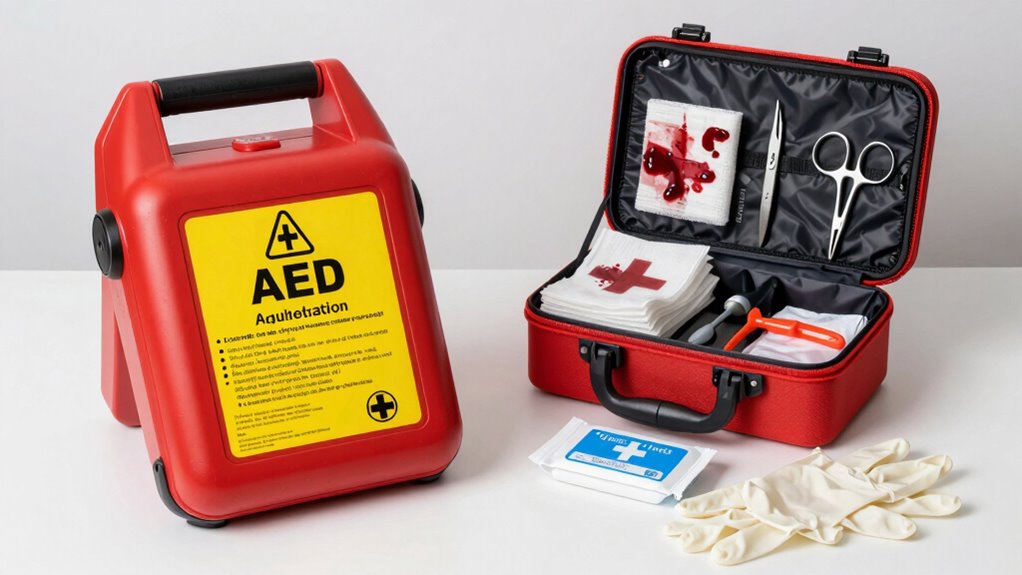

AEDs, trauma kits, and first aid kits address different emergencies you might face. AEDs help when someone has a cardiac arrest by analyzing heart rhythms and delivering shocks if needed. Trauma kits are essential for severe injuries like heavy bleeding or broken bones, allowing you to control damage quickly. First aid kits handle minor injuries such as cuts or burns, helping you manage everyday accidents. Keep understanding how each tool works to be better prepared when seconds count.

Get the latest gadgets delivered free with Prime
- Fast, free delivery on millions of items
- Prime Video, Amazon Music and more included
- Member-only deals all year
Key Takeaways
- AEDs specifically treat cardiac emergencies like sudden cardiac arrest with electric shocks to restore normal heartbeat.
- Trauma kits address severe injuries such as heavy bleeding and broken bones, providing immediate life-saving tools.
- First aid kits handle minor injuries like cuts, burns, and sprains, enabling quick and effective initial care.
- Each kit targets different emergency types, ensuring comprehensive preparedness for various situations.
- Proper training ensures the correct use of AEDs, trauma, and first aid supplies, improving emergency response outcomes.
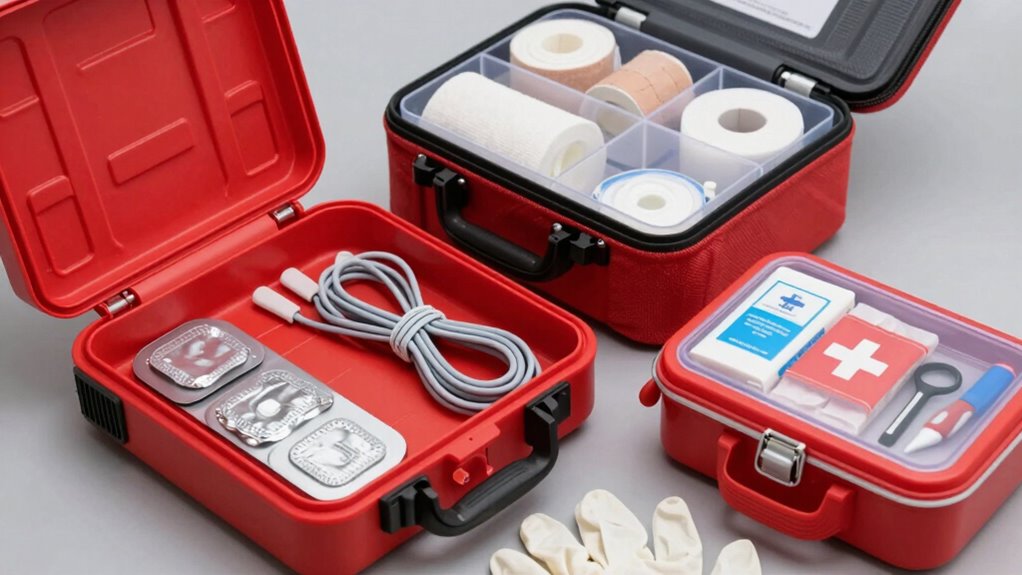
Having the right emergency equipment can make all the difference in saving lives during accidents or medical emergencies. Whether you’re at home, work, or out in the community, being prepared with AEDs, trauma kits, and first aid kits is essential. Each of these tools addresses different types of emergencies, and understanding their roles helps you respond quickly and effectively. Good emergency preparedness involves not only having these supplies on hand but also knowing how to use them. That’s where first responder training comes into play, giving you the confidence and skills needed to act decisively when seconds count.
An Automated External Defibrillator (AED) is designed specifically for cardiac emergencies. When someone experiences sudden cardiac arrest, every second matters. An AED analyzes the heart’s rhythm and, if necessary, delivers an electric shock to restore a normal heartbeat. Because AEDs are user-friendly, even those without medical training can operate them with clear voice prompts. Having an AED nearby can drastically improve survival chances, especially in public spaces like schools, gyms, and airports. Regularly maintaining and checking the device ensures it’s ready when needed, emphasizing the importance of emergency preparedness. Additionally, understanding the proper placement of AEDs in accessible locations can significantly impact response times during cardiac incidents.
AEDs save lives during cardiac emergencies; simple to operate with voice prompts, especially in public spaces.
Trauma kits are tailored for severe injuries, such as deep cuts, heavy bleeding, or broken bones. These kits typically include tourniquets, bandages, antiseptics, and other essential supplies to control bleeding and prevent infection. In situations like accidents or natural disasters, trauma kits allow you to provide immediate care before professional help arrives. Proper first responder training teaches you how to use these supplies effectively—applying tourniquets, dressing wounds, and stabilizing injuries. Knowing how to handle trauma situations minimizes damage and increases the injured person’s chances of recovery. emergency response principles, including quick assessment and prioritization of injuries, are vital for effective intervention.
First aid kits are more general, covering everyday injuries like minor cuts, burns, or sprains. They’re an indispensable part of emergency preparedness because they’re versatile and easy to use. Stocked with antiseptic wipes, adhesive bandages, scissors, and pain relievers, they help manage less severe issues quickly. While first aid kits are straightforward, training ensures you recognize the severity of injuries and respond appropriately. Whether it’s administering CPR or treating a burn, knowing basic first aid skills empowers you to act confidently and calmly. Properly organizing your first aid kit ensures that supplies are easily accessible when emergencies occur. Recognizing the importance of medical supplies in first aid kits can make a significant difference in response efficiency.
Together, AEDs, trauma kits, and first aid kits address different emergencies, making them essential for safety. Training in emergency response ensures you’re ready to use these tools correctly, improving outcomes in critical moments. By investing in proper preparedness and education, you become a crucial link in the chain of survival—ready to make a difference when it matters most.
automatic external defibrillator AED for home
As an affiliate, we earn on qualifying purchases.
As an affiliate, we earn on qualifying purchases.
Frequently Asked Questions
How Often Should AED Batteries Be Replaced?
You should replace the batteries in your Automated Defibrillator (AED) every 4 to 5 years, or sooner if indicated by the manufacturer. Regularly check the device’s status indicator and follow emergency protocols to make sure it’s ready for use. Keeping batteries fresh guarantees the AED functions properly during an emergency, helping you stay prepared to save a life when it matters most. Always follow the manufacturer’s specific recommendations for your AED model.
Are Trauma Kits Suitable for Home Use?
Yes, trauma kits are suitable for home use and enhance your home safety and emergency preparedness. They contain essential supplies for handling injuries like cuts, burns, or sprains, making them a valuable addition to your first aid resources. Keeping a trauma kit at home guarantees you’re ready to respond quickly to emergencies, providing peace of mind and potentially saving lives during accidents or injuries.
What Training Is Needed to Operate an AED?
Like a seasoned hero in a story, you need proper training to operate an AED confidently. You should learn CPR techniques and how to use the device correctly. Most AEDs are designed for easy use, often with voice prompts guiding you. Training also covers AED maintenance, ensuring it’s ready when needed. By practicing these skills, you can save a life in an emergency, just like a true hero.
Can First Aid Kits Be Customized for Specific Needs?
Yes, you can customize first aid kits for specific needs. By adding personalized supplies and specialized contents, you guarantee the kit addresses particular emergencies you might face, such as allergies, asthma, or sports injuries. Tailoring your kit helps you respond more effectively, providing quick access to essential items. This customization makes your first aid kit more practical and efficient, giving you confidence to handle unique situations confidently.
How Do I Dispose of Expired Medical Supplies?
Did you know that nearly 1.6 million tons of medical waste are generated annually in the U.S.? To dispose of expired medical supplies, you need to follow proper disposal procedures to prevent environmental harm and health risks. Check with local regulations for medical waste guidelines, and never toss supplies in regular trash. Instead, take them to authorized disposal centers or arrange for proper medical waste pickup to guarantee safe, legal disposal.
comprehensive trauma first aid kit
As an affiliate, we earn on qualifying purchases.
As an affiliate, we earn on qualifying purchases.
Conclusion
Now that you understand the distinct roles of AEDs, trauma kits, and first aid kits, are you truly prepared for any emergency? Each tool is essential, but knowing when and how to use them makes all the difference. Don’t wait until it’s too late—equip yourself and your loved ones with the right supplies. Are you ready to take action and ensure safety in any situation? Remember, preparedness can save lives.
personal first aid kit for minor injuries
As an affiliate, we earn on qualifying purchases.
As an affiliate, we earn on qualifying purchases.
As an affiliate, we earn on qualifying purchases.
Fall Picks
fall essentials
As an affiliate, we earn on qualifying purchases.