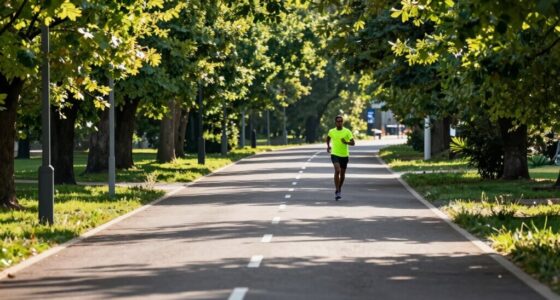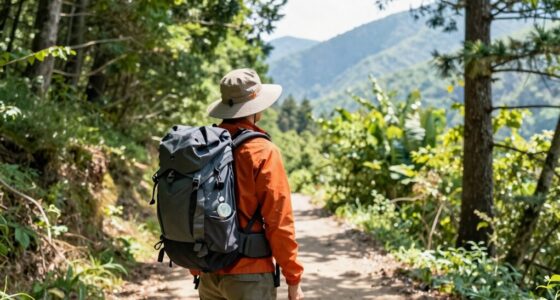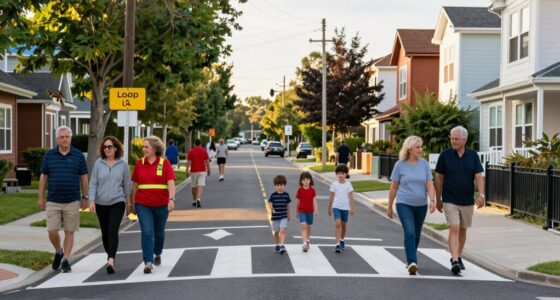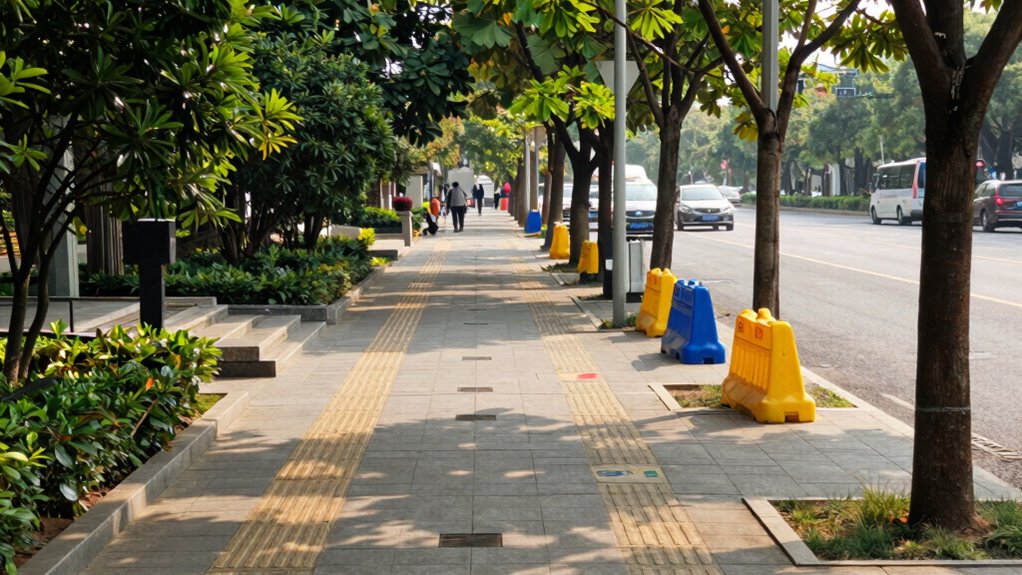

To create safer walking routes without adding time, start by improving lighting along your existing paths with street or solar pathway lights to boost visibility. Keep walkways clear of debris and trim overgrown bushes for better safety and comfort. Add simple signage or notices that highlight hazards or crossing points to raise awareness. Focus on small, manageable changes like these to enhance safety effortlessly. If you keep exploring, you’ll discover even more ways to make your routes safer without extra effort or time.
Key Takeaways
- Improve lighting along existing routes to enhance visibility without altering walking distance.
- Install clear signage to highlight hazards and safe crossing points efficiently.
- Maintain pathways by trimming overgrown vegetation and fixing uneven surfaces regularly.
- Organize community efforts to identify and address safety concerns quickly.
- Promote safe walking behaviors, such as staying in well-lit areas and avoiding shortcuts.
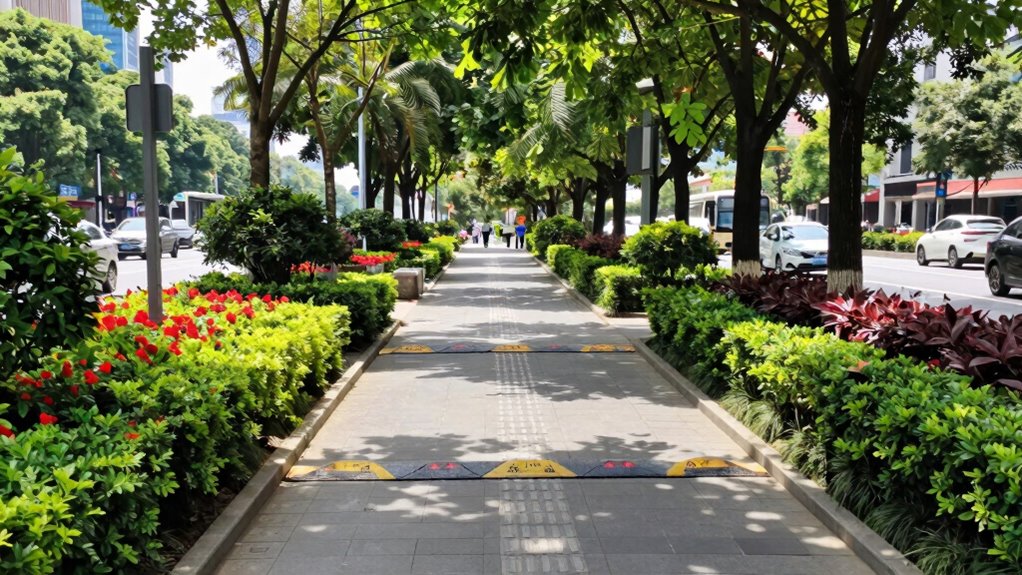
Creating safer walking routes doesn’t have to mean sacrificing your time. Small, strategic changes can make a big difference in how safe and inviting your neighborhood feels. One effective approach is fostering community engagement. When residents come together to identify problem areas and propose solutions, they create a sense of ownership and responsibility. Organize quick neighborhood meetings or online surveys to gather input on specific safety concerns. Engaging with local organizations or neighborhood watch groups can also amplify your efforts, making safety a shared priority. When people feel involved, they’re more likely to look out for each other and support safety initiatives. This sense of community can lead to organic improvements that don’t require extensive planning or time-consuming projects. Promoting biodiversity in your neighborhood can also improve natural surveillance and create a healthier environment, further contributing to safety.
Community involvement fosters safer, more inviting neighborhoods through shared ownership and simple, effective safety improvements.
Alongside community involvement, implementing lighting improvements is one of the fastest ways to enhance safety without adding to your schedule. Poor lighting is a common factor in accidents and crime, so upgrading streetlights or adding solar-powered pathway lights can markedly reduce risks. These improvements increase visibility for pedestrians, making it easier to spot hazards or potential threats. You don’t need to wait for large infrastructure projects; many municipalities offer quick install options or grants for lighting upgrades. By suggesting and supporting these initiatives, you contribute to safer routes without extensive effort. Additionally, well-lit pathways encourage more walking, which benefits everyone’s health and community cohesion.
Another quick win is maintaining existing infrastructure. Regularly trimming overgrown bushes, clearing debris, and fixing uneven surfaces can dramatically improve walkability and safety. These tasks are straightforward and can often be done with minimal time or resources if coordinated through community groups or local volunteers. When pathways are clear and even, the likelihood of trips and falls decreases, and pedestrians feel more confident walking at any time of day or night.
You can also promote safety through simple signage—like clear directional signs or warning notices about uneven pavement or crossing points. These are inexpensive and easy to install, yet they make pedestrians more aware of potential hazards. Promoting awareness about safe walking practices, such as sticking to well-lit areas and avoiding shortcuts through isolated areas, can also empower residents and visitors alike.
In essence, creating safer walking routes is about making smart, manageable adjustments that foster a sense of community and improve visibility. By engaging neighbors, advocating for lighting improvements, maintaining existing paths, and adding clear signage, you can enhance safety without adding extra hours to your day. These small, focused actions build a stronger, safer neighborhood where everyone can enjoy walking freely and confidently.

DERAYSION 12 Pack Solar Lights Outdoor, Solar Pathway Lights Auto On/Off Waterproof Garden Landscape Lighting for Path, Yard, Walkway, Driveway Decor
Our Solar Outdoor Lights is the perfect solution for adding beauty and illumination to your garden. Warm white…
As an affiliate, we earn on qualifying purchases.
As an affiliate, we earn on qualifying purchases.
Frequently Asked Questions
How Do Weather Conditions Affect Safe Walking Routes?
Weather conditions substantially impact your safety on walking routes. Weather hazards like rain, snow, or ice can cause slippery surfaces, increasing fall risks. Seasonal changes, such as reduced daylight in winter, also affect visibility, making it harder to see hazards or oncoming traffic. To stay safe, choose routes that are well-maintained, avoid walking during severe weather, and wear appropriate footwear to minimize the dangers posed by these weather hazards.
What Tools Can Help Identify High-Risk Areas?
Imagine a crystal ball revealing your safest routes—tools like pedestrian signage and lighting improvements are your modern-day magic. They highlight high-risk areas, guiding you away from dark alleys and confusing crossings. Local government maps, safety audits, and mobile apps also pinpoint danger zones. By investing in these tools, you gain a clearer picture of hazards, making your walk safer without wasting extra time.
How Can Community Feedback Improve Route Safety?
Community feedback plays a crucial role in improving route safety by providing firsthand insights into potential hazards and areas needing attention. Your active involvement through community engagement helps identify overlooked risks and prioritize improvements. When feedback is effectively integrated into planning, it guarantees safety measures align with residents’ needs. This collaborative approach fosters trust, enhances safety, and creates walking routes that are both secure and convenient without adding extra time to your journey.
Are There Specific Safety Measures for Night Walking?
When walking at night, make sure your route has ample street lighting to boost personal safety and visibility. For example, a neighborhood improved safety by installing brighter, more consistent streetlights, making residents feel more secure. You can also carry a flashlight or wear reflective clothing to stay visible. These safety measures help you avoid accidents and potential threats, giving you peace of mind during nighttime walks.
How Often Should Routes Be Reassessed for Safety?
You should reassess your walking routes at least every six months to guarantee safety. Urban infrastructure and pedestrian signage need regular checks for damage or obstructions. Changes in neighborhood safety, new construction, or updated regulations also call for reassessment. By staying proactive, you can identify hazards early and maintain a safe environment for pedestrians, ensuring routes remain both secure and accessible over time.

ZSGoes 2 Pack Cool White 30W LED Flood Light Outdoor Waterproof IP65, Wall Security Landscape Lamp, Home, Square, Yard, Garage, Street, Pathway, Spike Stand, Low Voltage 12V 24V 36V 48V 60V DC AC
Safe Low Voltage, (upgrade version) 12V to 60V and AC or DC input compatible with most low voltage…
As an affiliate, we earn on qualifying purchases.
As an affiliate, we earn on qualifying purchases.
Conclusion
Creating safer walking routes doesn’t mean sacrificing time; you can achieve both with simple changes. By focusing on well-lit paths, clear signage, and obstacle removal, you enhance safety without extra travel time. Did you know that well-designed pedestrian infrastructure can reduce accidents by up to 40%? So, prioritize smart planning and small adjustments—your walks will be safer and just as quick. Making these changes benefits everyone and encourages more people to choose walking over less healthy alternatives.

Blank Arrow Signs With Stakes 6 Pack – 17 x 6 Inches Wedding Directional Yard Signs, This Way Arrow Birthday Party Signs
✅Wedding Directional Road Sign: Our directional road signs made of corrugated plastic tubes with a hardness of 1000g/m²…
As an affiliate, we earn on qualifying purchases.
As an affiliate, we earn on qualifying purchases.

2-in-1 Weed Puller Tool,Dual-Head Garden Hoe Weeder Tool with Long Handle,Heavy Duty Manganese Steel Weeding Tool for Gardening,Uprooting Weed Remover for Yard Lawn Patio and Garden
This innovative dual-head hoe garden tool combines a deep-reaching weed rake and a versatile triangular garden hoe,giving you…
As an affiliate, we earn on qualifying purchases.
As an affiliate, we earn on qualifying purchases.