To make your dog walks after dark feel more controlled, choose a sturdy, reflective leash that fits well and provides some slack for comfort. Keep your dog close and use gentle but firm grips to prevent lunges or surprises. Wear reflective gear and attach a flashlight or LED light to your dog’s collar for visibility. Stick to familiar, well-lit routes and stay alert to your surroundings. Want more tips to walk confident and safe? Keep exploring.

Get the latest gadgets delivered free with Prime
- Fast, free delivery on millions of items
- Prime Video, Amazon Music and more included
- Member-only deals all year
Key Takeaways
- Use reflective, well-fitting leashes and gear to enhance visibility and maintain control during night walks.
- Keep the leash short with some slack to prevent sudden pulls and improve command response.
- Stick to familiar, well-lit routes, avoiding quiet or hazardous areas to ensure safety.
- Carry a flashlight or LED light on the dog and wear reflective clothing for better visibility.
- Stay alert, keep a phone handy, and maintain calmness to manage your dog effectively after dark.
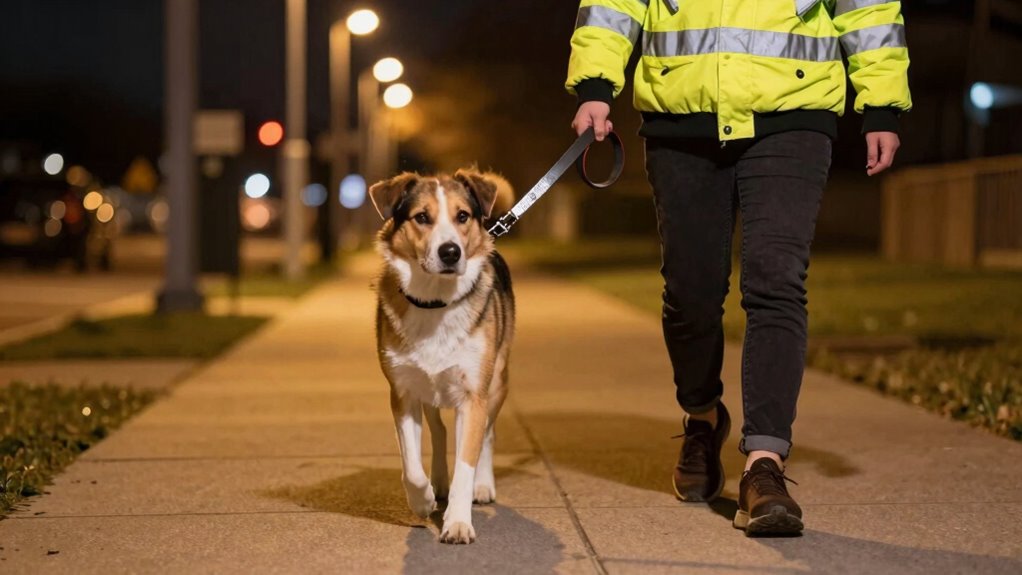
Walking your dog after dark can be challenging, especially if you want to maintain control and keep your pet safe. When visibility drops, it’s easy for your dog to become distracted or spooked by unfamiliar sounds and shadows. To guarantee your walks remain controlled and safe, you need to pay special attention to dog leash etiquette and adopt effective nighttime safety tips.
First, make sure your dog leash is appropriate for evening walks. A sturdy, well-fitting leash gives you better control over your pet’s movements. Consider using a leash that’s reflective or has reflective stitching—this increases visibility to others, such as drivers or fellow pedestrians. When you’re out after dark, the goal is to prevent your dog from darting into traffic or startling other walkers. Keep your leash short enough to maintain control but allow some slack for comfort and natural movement. This balance helps prevent sudden pulls or escapes while giving your dog some freedom to explore.
Use a sturdy, reflective leash for better control and increased visibility during evening walks.
Next, focus on dog leash etiquette. Always keep your dog close to your side and avoid letting them approach other dogs or pedestrians without permission. Maintaining a firm but gentle grip on the leash keeps your dog on a predictable path and prevents unexpected lunges or jumps. If your dog tends to pull, use training techniques to reinforce loose-leash walking, especially at night when distractions are less visible but just as tempting. Respect other walkers’ space, and be mindful of your dog’s behavior—if your pet seems anxious or overly excited, consider adjusting your route or pace. Additionally, proper leash management is crucial in maintaining control and preventing accidents during low visibility conditions. Using effective training techniques can also improve your dog’s responsiveness in these situations. Incorporating lighting gear such as LED collars or reflective vests can significantly enhance your dog’s visibility during walks. Incorporating visual cues like hand signals or commands can also help your dog respond more reliably in low-light conditions.
Nighttime safety tips extend beyond leash management. Wear reflective gear yourself—vests, armbands, or shoes with reflective accents—so you’re visible to cars and cyclists. Carry a flashlight or use a clip-on LED light on your dog’s collar or harness to illuminate your path and make your dog more visible. Avoid quiet, poorly lit areas where your dog could slip away or encounter hazards. Stick to familiar routes and avoid areas with heavy traffic or thick foliage where your pet could get tangled or lost. Additionally, using gadget reviews on your walk, such as LED collars or reflective gear, can enhance safety.
Finally, stay alert and attentive. Keep your phone handy in case you need to call for help, and be mindful of your surroundings. Your calm demeanor will help your dog feel more secure, making control easier. By combining good dog leash etiquette with practical nighttime safety tips, you’ll make your after-dark walks safer, more controlled, and more enjoyable for both you and your pet.
Frequently Asked Questions
What Safety Gear Is Best for Nighttime Dog Walks?
For nighttime dog walks, the best safety gear includes a sturdy dog harness and an LED collar. The harness gives you better control and keeps your dog secure, while the LED collar makes your pup highly visible in low light. Together, they guarantee your dog stays safe, seen, and manageable during evening strolls. Make sure both fit well, and keep the LED collar charged for maximum visibility.
How Can I Train My Dog to Stay Close in the Dark?
You can train your dog to stay close in the dark through consistent training and proper leash techniques. Use a short leash to maintain control, and reward your dog with treats when they stay near you. Practice daily, gradually increasing the distance and duration of walks. Reinforcing commands like “heel” or “stay” helps build their focus and trust. Over time, your dog will become more comfortable staying close, even in low-light conditions.
Are Reflective Accessories Effective for Nighttime Visibility?
Reflective accessories are highly effective for nighttime visibility. Imagine your dog’s reflective clothing or LED collars glowing brightly in the dark, making them easily seen from afar. Even with streetlights, these accessories catch the light, ensuring you spot your pup quickly. They boost safety by alerting drivers and pedestrians to your presence. So, don’t overlook reflective clothing or LED collars—these simple tools keep your dog visible and your walks safer after dark.
How Do I Handle Unexpected Nighttime Distractions?
When unexpected nighttime distractions occur, stay calm and use consistent training to manage your dog’s behavior. Apply leash techniques like gentle tugs and pauses to redirect their focus. Maintaining training consistency helps your dog understand boundaries, even in sudden situations. Keep a firm, steady hold on the leash and calmly guide your dog away from distractions, reinforcing good behavior with praise. This approach keeps walks controlled and safe after dark.
What Should I Do if My Dog Gets Spooked After Dark?
If your dog gets spooked after dark, stay calm and speak softly to reassure them. Use positive reinforcement to reinforce confident dog behavior and prevent fear. Keep the walk short and avoid forcing them into scary situations. Gradually expose your dog to darker environments, using treats and praise to build fear prevention skills. Consistent, gentle guidance helps your dog feel safer, making nighttime walks more controlled and less stressful.
Conclusion
By implementing these tips, you’ll turn your after-dark walks into a well-choreographed dance rather than a wild free-for-all. Keep your dog close, use clear commands, and stay alert — think of yourself as the conductor guiding a symphony in the dark. With patience and consistency, your walks will become a peaceful, controlled routine that brings safety and harmony to both of you, even when the stars are shining brightest.
Halloween Picks
halloween
As an affiliate, we earn on qualifying purchases.