When walking your dog, stay alert for loose dogs and stick to well-lit, familiar routes at night. Keep your dog on a secure leash, wear reflective gear, and carry safety tools like a whistle or spray. If approached by an aggressive dog, stay calm, stand still, and avoid eye contact. Maintaining a confident, relaxed demeanor helps prevent escalation. For more tips to keep your walks safe and stress-free, continue exploring essential strategies.
Key Takeaways
- Stay calm, avoid eye contact, and back away slowly if approached by loose or aggressive dogs.
- Use reflective gear, bright accessories, and proper lighting to enhance visibility during night walks.
- Recognize dog body language to identify signs of aggression or fear and respond with calm, relaxed behavior.
- Carry deterrents like a whistle or spray and be aware of local leash laws to prevent encounters with loose dogs.
- Stick to well-lit, familiar routes and maintain a confident, steady demeanor to reduce anxiety for both you and your dog.

SafetyPUP XD Dog Reflective Vest – Hi-Vis Fluorescent Visibility that Helps to Safeguard Your Pet On/Off Leash in Urban & Rural Areas (Yellow, Large)
SIZING – Large Vest Fits Dogs 61lbs – 100 lbs; Top of Shoulders/Base of Neck Measuring a Diameter…
As an affiliate, we earn on qualifying purchases.
As an affiliate, we earn on qualifying purchases.
How to Prepare for a Safe Dog Walk
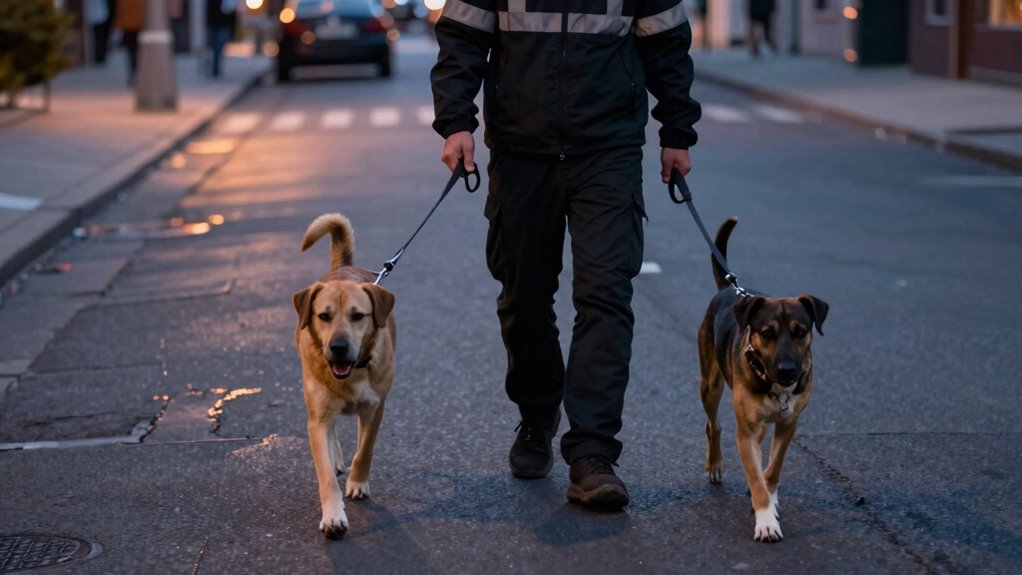
Before heading out for a walk, it’s crucial to check that you have everything you need to keep both you and your dog safe. Start by practicing proper leash techniques to maintain control and prevent unexpected escapes. A secure, well-fitted leash and collar are essential, allowing you to respond quickly if needed. Additionally, use effective dog socialization strategies beforehand to help your dog feel comfortable around other animals and people. Proper socialization reduces the risk of reactive behavior during walks. Make sure your dog is up-to-date on vaccinations and is comfortable walking on a leash. Carry essentials like waste bags and water. Preparing with proper leash techniques and socialization strategies ensures a safer, more enjoyable walk for you and your furry friend. Being aware of your surroundings and recognizing potential hazards, such as loose dogs, can further enhance your safety during walks. It’s also helpful to be familiar with essential oils for dog health, which can be useful in certain situations to support your pet’s well-being. Additionally, understanding industry trends can help you stay informed about best practices and safety tips for dog walking. Staying informed about vetted safety products can also help you choose reliable gear that keeps both you and your dog secure during outings. Regularly updating your knowledge on backyard transformation essentials can also inspire new ways to create a safe and enjoyable environment at home for your pet.

Citronella Dog Deterrent Spray, Dog Spray Self Defense, Training and Barking, Long-Range Dog Repellent, Portable Canister (0.5oz / 2oz)
Humane Behavior Interruption: Helps redirect barking, lunging, or jumping using a short burst of plant-based citronella scent. Designed…
As an affiliate, we earn on qualifying purchases.
As an affiliate, we earn on qualifying purchases.
Recognizing and Avoiding Loose Dogs During Your Walk
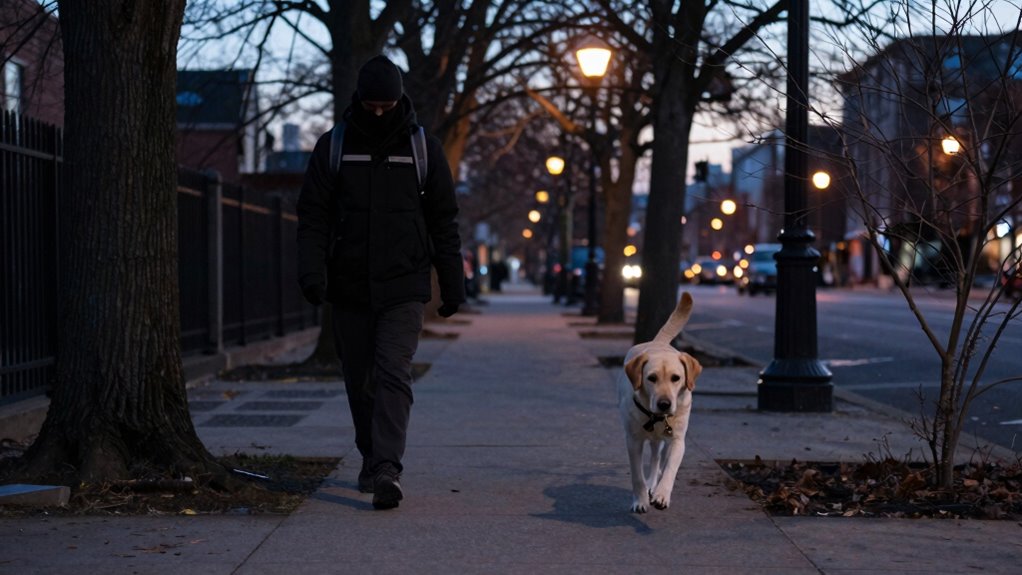
Recognizing loose dogs early is crucial for your safety during walks. Pay attention to signs of dogs that are off-leash or not following proper dog park etiquette, such as wandering close to the street or approaching without warning. Keep an eye out for dogs that seem agitated or are barking excessively, as these may be signs they’re not under control. Understanding leash laws in your area helps you anticipate where loose dogs might be, especially in parks or open spaces. If you see a loose dog approaching, stay calm, avoid eye contact, and slowly back away. Carrying a whistle or a deterrent spray can help if you need to create distance quickly. Recognizing these signs allows you to avoid potential threats and stay safe during your walk. Additionally, being aware of home security features can help you feel more prepared and confident when walking in unfamiliar or isolated areas. Being aware of local regulations can also guide you on how to respond appropriately to loose dogs and ensure your safety. Knowing dog behavior signals can further help you interpret a dog’s intentions before it gets too close. Developing an understanding of animal behavior cues can enhance your ability to assess a dog’s mood from a safe distance, especially in outdoor environments.
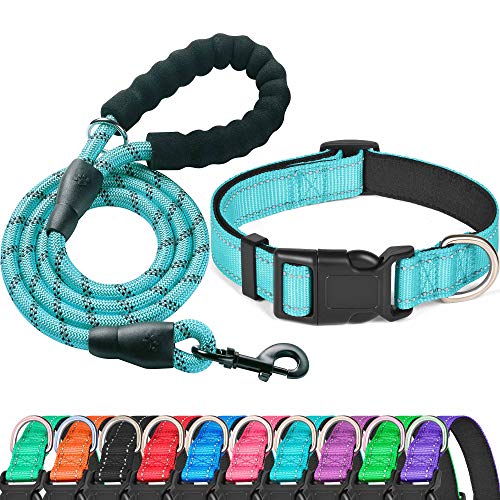
Ladoogo Reflective Dog Collar Padded with Soft Neoprene Breathable Adjustable Nylon Dog Collars for Small Medium Large Dogs (Medium (Pack of 1), Blue Collar+Leash)
COMFORT: the Ladoogo dog collar is padded with soft neoprene. Extremely comfortable and breathable. Care your dog neck
As an affiliate, we earn on qualifying purchases.
As an affiliate, we earn on qualifying purchases.
Tips for Staying Safe When Walking at Night
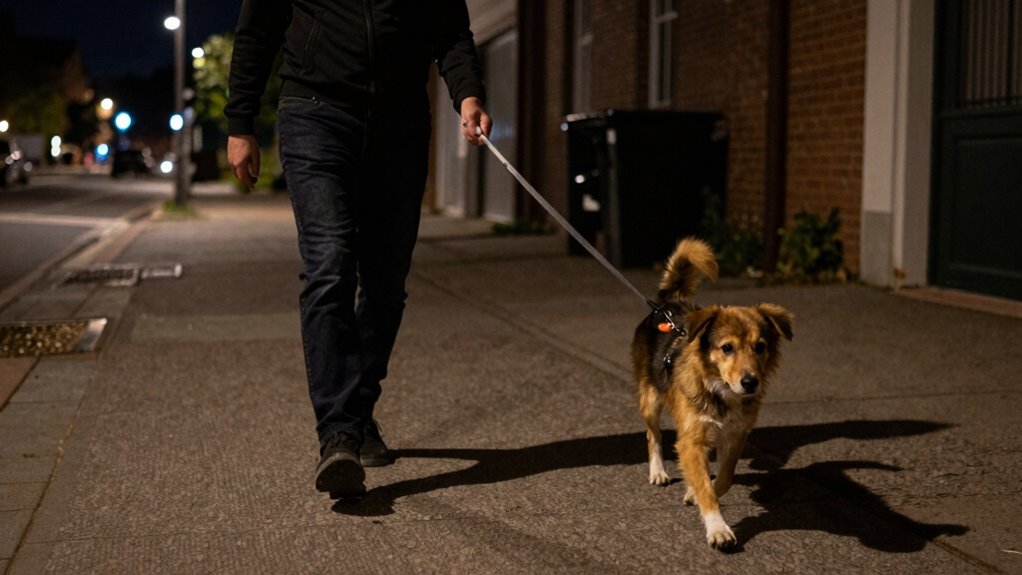
Walking at night can be enjoyable, but it also requires extra precautions to stay safe. To protect yourself, follow these tips:
Walking at night is enjoyable—stay safe by staying visible and aware of your surroundings.
- Always adhere to dog leash laws—keep your dog on a leash to prevent unexpected encounters.
- Wear reflective clothing or accessories to increase visibility for drivers and passersby.
- Carry a flashlight or use your phone’s light to illuminate dark areas and spot potential hazards.
- Stick to well-lit, familiar routes to reduce the risk of accidents or confrontations.
- Be aware of loose dogs in the area, as they can pose a threat to pedestrians and disrupt your walk.
- Understand the importance of project management support in ensuring safety and preparedness during your walks.
- Regularly check your surroundings for potential hazards, such as uneven pavement or stray animals, to stay alert during your walk. Recognizing the importance of site safety protocols can also help you respond effectively to unexpected situations.
- Familiarize yourself with modern toilet features, such as dual-flush systems, which can help you conserve water during outdoor activities if needed.
These simple steps help you stay aware of your surroundings and avoid dangerous situations. Remember, being visible and prepared is key to a safe night walk with your dog.

Canine Body Language: A Photographic Guide Interpreting the Native Language of the Domestic Dog
Used Book in Good Condition
As an affiliate, we earn on qualifying purchases.
As an affiliate, we earn on qualifying purchases.
What to Do If a Loose or Aggressive Dog Approaches
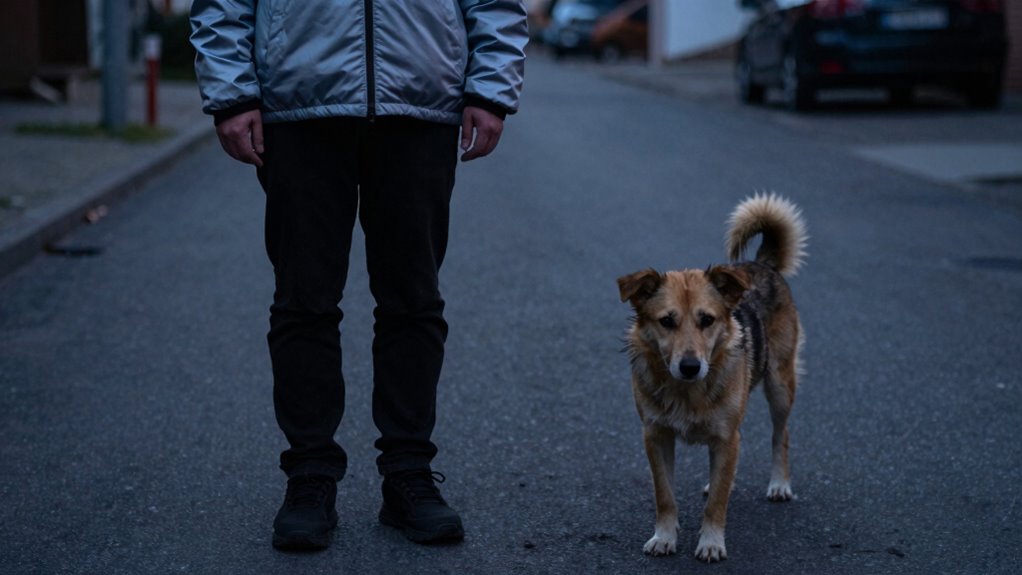
If an aggressive or loose dog comes near, your first step is to stay calm and avoid panicking. Stand still and keep your eyes averted to prevent provoking it further. By staying composed, you reduce the chances of escalation and keep yourself safer. Remaining aware of your surroundings can help you identify potential escape routes or objects to use as barriers if necessary. Additionally, understanding dog behavior can aid in recognizing signs of aggression and responding appropriately. Remember that dog temperament varies by breed and individual, which can influence how a dog might react in such situations. Recognizing warning signs of aggression early can help you react more effectively and avoid dangerous encounters. Being familiar with crisis response strategies can further improve your safety during unexpected encounters.
Stay Calm and Still
When a loose or aggressive dog approaches, staying calm and still can make all the difference. Your relaxed posture signals confidence and discourages hostility. Observe the dog’s body language: a wagging tail and loose stance suggest friendliness, while stiff muscles and raised hackles indicate aggression. Keep your leash etiquette firm but gentle, avoiding sudden movements that could escalate the situation. Remember that support breakfast and modern safety protocols are essential for managing unpredictable encounters safely. To stay safe: 1. Stand still, don’t run or make threats. 2. Keep your hands relaxed at your sides. 3. Avoid direct eye contact—look slightly away. 4. Use a calm voice if you need to speak, but don’t yell. Remaining composed communicates that you pose no threat, reducing the dog’s urge to attack. Additionally, understanding that cloud computing principles emphasize the importance of operational resilience can remind you to maintain a calm demeanor in stressful situations.
Avoid Eye Contact
Avoid making direct eye contact with an aggressive dog, as it can be perceived as a challenge or threat. Instead, focus on keeping your gaze soft and averted, which helps minimize the dog’s aggressive signals. Dog eye contact can escalate tension, so look slightly away or towards the ground without appearing scared. Watching the dog’s body language carefully is essential; if it shows signs of aggression—raised hackles, growling, stiff posture—do not turn your back or run. Remain calm, still, and avoid sudden movements. Your goal is to prevent provoking the dog further. By avoiding direct eye contact and observing the dog’s signals, you reduce the risk of escalating the situation and increase your chances of staying safe. Incorporating passive voice detection tools can assist in refining your responses and maintaining a confident stance.
Must-Have Safety Gear for Dog Walks
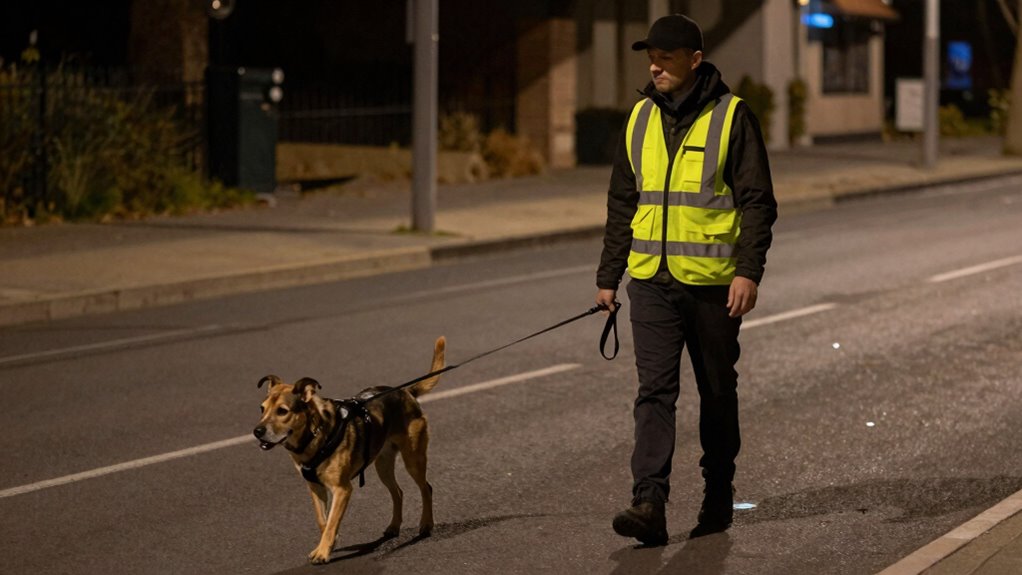
Having the right safety gear can make all the difference during your dog walks, helping you stay prepared for unexpected situations. Essential gear includes items that enhance control and visibility.
- Reflective collar or harness for collar safety, making you and your dog visible in low light.
- Sturdy leash with a secure clip to practice proper leash techniques and prevent escapes.
- Bright LED flashlight or glow-in-the-dark accessories for dark streets.
- Personal safety items, like a whistle or pepper spray, in case of emergencies.
Choosing the right gear ensures you maintain control and stay alert. Proper collar safety and leash techniques keep your dog secure, reducing risks from loose dogs or traffic. Always prioritize visibility and preparedness for a safer walk.
Building Confidence for Safer Dog Walking
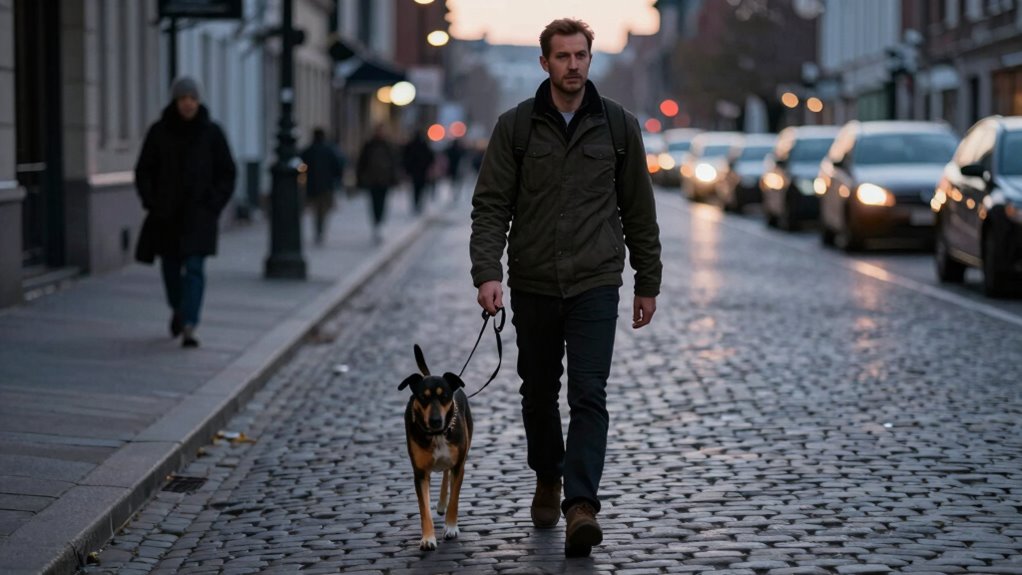
To walk your dog safely, you need to stay calm and confident. Your calm demeanor helps your dog feel secure and less anxious. Using clear commands consistently builds trust and makes both of you more prepared for any situation.
Practice Calm Demeanor
Practicing a calm demeanor while walking your dog can considerably boost both your confidence and your pet’s sense of safety. When you stay relaxed, your dog picks up on your calm energy, reducing their anxiety. To reinforce this, consider these steps:
- Maintain steady, confident movements to demonstrate control.
- Follow dog park etiquette by respecting others’ space and being courteous.
- Enforce leash laws consistently, showing you’re in control of your dog.
- Avoid abrupt reactions to surprises, instead responding calmly to unexpected encounters.
Use Clear Commands
Using clear commands during walks helps reinforce your dog’s understanding of what you expect and builds their confidence. Consistent leash techniques, like using a firm but calm tone, make your commands more effective. When you give clear cues such as “heel,” “sit,” or “stay,” your dog learns to associate specific behaviors with your words. This reduces confusion and helps manage their dog behavior, especially around distractions or other dogs. Avoid vague or inconsistent signals, which can cause hesitation or misbehavior. Instead, use simple, precise commands and reward compliance. Over time, your dog will become more confident and responsive, making walks safer and more enjoyable for both of you. Clear communication strengthens trust and encourages calm, controlled behavior during your outings.
Frequently Asked Questions
How Can I Tell if a Dog Is Aggressive Before Approaching?
You can tell if a dog is aggressive before approaching by observing its body language and warning signs. Look for stiff posture, raised hackles, bared teeth, growling, and intense staring. If the dog backs away or shows signs of fear, it’s best to keep your distance. Stay calm, avoid direct eye contact, and don’t make sudden movements. Recognizing these warning signs helps you stay safe and avoid provoking aggression.
What Are the Best Ways to Calm a Frightened or Aggressive Dog?
If a dog feels frightened or aggressive, you can calm it by observing its body language—look for raised hackles or stiff posture. Use calming techniques like speaking softly, avoiding eye contact, and giving the dog space. Keep your movements slow and non-threatening, and let the dog approach at its own pace. These steps help reduce anxiety and build trust, making both of you feel safer.
Are There Specific Breeds More Prone to Loose or Aggressive Behavior?
Certain breeds, based on breed tendencies and breed identification, are more prone to loose or aggressive behavior. For example, some terriers and guard dogs have a natural instinct to be territorial or alert, which can lead to aggressive responses if not properly trained. However, individual temperament varies widely. You should always evaluate each dog on its own, regardless of breed, and make sure proper training and socialization to promote safe, calm walks.
How Should I Handle a Situation With Multiple Loose Dogs?
When facing multiple loose dogs, stay calm and avoid sudden movements. About 60% of dog bites occur during group encounters, so group management is vital. Stop walking, stand still, and avoid eye contact. Use a firm voice to command them to stay back. Remember your emergency protocols—call animal control if needed. Your calm, confident response can help de-escalate the situation and keep everyone safe.
What Are Legal Responsibilities if My Dog Injures Someone?
If your dog injures someone, you’re legally responsible for damages. You should have liability insurance to cover potential claims, and promptly report the incident following local reporting procedures. Be honest and cooperative with authorities, and seek legal advice if needed. Taking these steps helps protect you financially and guarantees you handle the situation responsibly, demonstrating your commitment to safety and accountability as a dog owner.
Conclusion
Think of your dog walk like steering a small boat through unpredictable waters. With the right safety gear, awareness, and calm responses, you become the steady captain maneuvering around rough waves—loose dogs or dark streets. Each step you take is a gentle oar stroke, guiding you safely home. Stay prepared, stay confident, and enjoy your journey together, knowing you’re in control of your voyage, no matter what currents or shadows come your way.