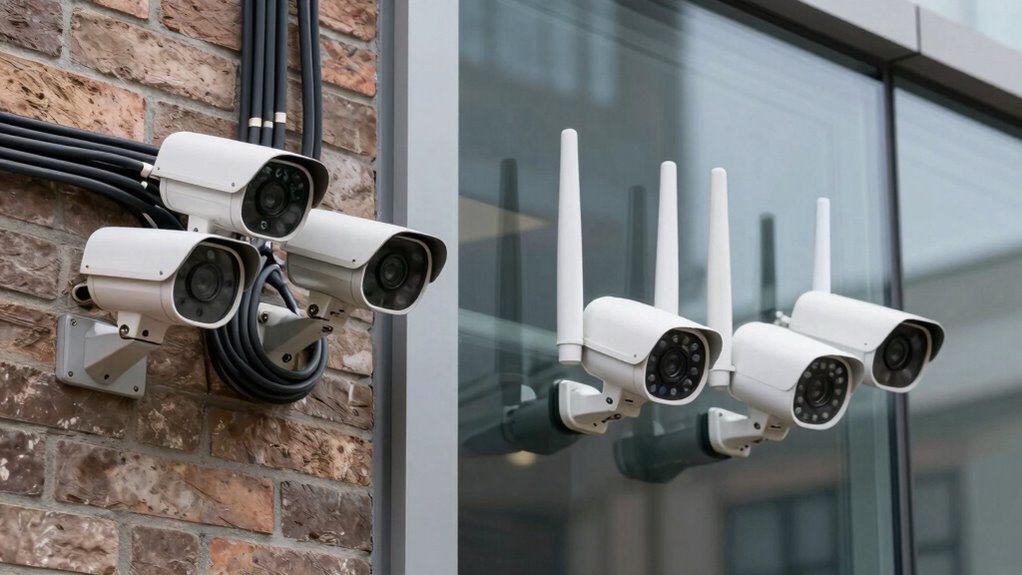

The main difference between wired and wireless camera setups lies in how they transmit power and data. Wired cameras rely on physical cables, offering stable, interference-resistant connections but can be harder to install. Wireless cameras use Wi-Fi or other signals, making setup simpler and more flexible, especially in hard-to-cable spots. They can also run on batteries or solar power, reducing maintenance. To discover which option best fits your needs, explore the details further.
Key Takeaways
- Wired cameras rely on physical cables for power and data, offering stable and interference-resistant connections.
- Wireless cameras transmit footage via Wi-Fi, providing easier installation and greater placement flexibility.
- Wired setups are ideal for permanent, high-security installations due to their stability; wireless setups suit flexible or hard-to-cable locations.
- Wireless cameras often include battery or solar power options, reducing wiring needs and maintenance.
- Both systems can utilize cloud or local storage, but wireless cameras typically support automatic cloud backups for added security.
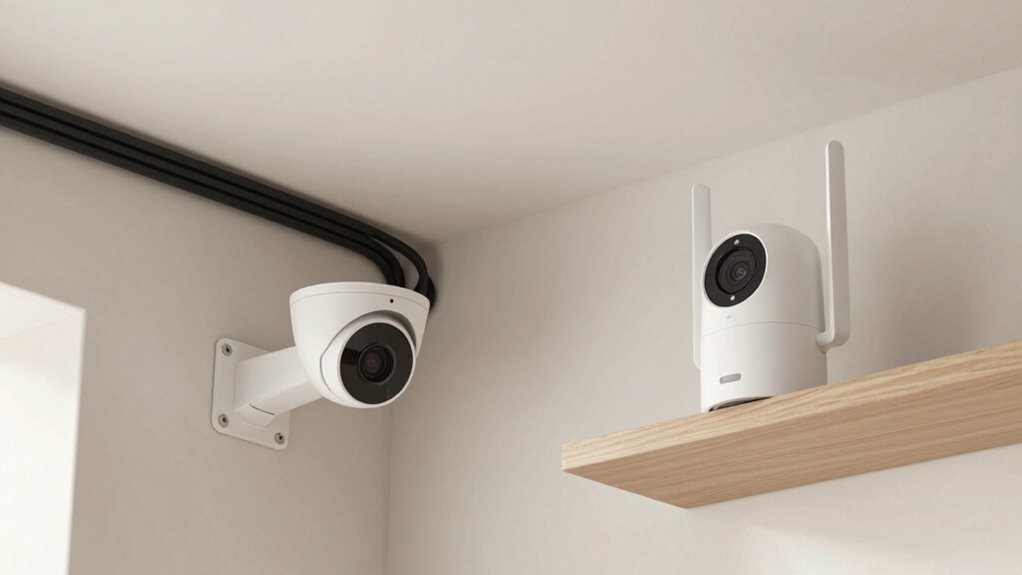
When choosing a security camera system, understanding the differences between wired and wireless setups is essential. One of the most significant distinctions lies in how each system transmits power and data. Wired cameras rely on physical cables, often connected to a power source and a recording device like a DVR or NVR. This setup typically offers a more stable connection, less prone to interference, which can be indispensable for continuous surveillance. Wireless cameras, on the other hand, use Wi-Fi or other wireless signals to transmit footage, eliminating the need for extensive cabling. This makes installation simpler and more flexible, especially in locations where running cables isn’t feasible.
If you’re reflecting on a wireless setup, you’ll want to think about how the cameras are powered. Many wireless cameras run on batteries, but that means you’ll need to replace or recharge them regularly. However, some models now incorporate solar power options, making them more sustainable and reducing maintenance needs. Solar-powered wireless cameras can be placed in areas with ample sunlight, providing a continuous power source without relying on electrical wiring. This setup is ideal if you’re aiming for a more eco-friendly solution or want to minimize installation costs.
When it comes to storage options, both wired and wireless cameras can leverage cloud storage or local recording. Cloud storage allows you to access footage remotely via the internet, which is especially convenient if you want to monitor your property on the go. Many wireless cameras are designed with this feature built-in, making it easy to set up automatic uploads to a cloud service. Wired systems, traditionally, rely on physical recorders, but modern setups often also support cloud storage integration. Using cloud storage with wireless cameras offers the advantage of off-site backups, protecting your footage against theft or damage to the physical devices. Additionally, the security of your footage depends on network security, which is crucial for both wired and wireless systems. Ensuring proper encryption methods are in place can further prevent unauthorized access. It’s important to regularly update your network firmware to maintain security and protect against vulnerabilities.
Another factor to keep in mind is network security. Wireless cameras transmit data over Wi-Fi, so securing your network with strong passwords and encryption is imperative to prevent unauthorized access. Wired systems, while less susceptible to hacking over the network, still require diligent security measures. Both systems can benefit from cloud storage providers that utilize encryption to protect your footage. Incorporating regular security assessments can further help identify and address potential vulnerabilities in your security setup.
Ultimately, your choice depends on your specific needs and environment. Wired cameras offer stability and reliability, making them suitable for permanent, high-security installations. Wireless cameras provide flexibility and easier installation, often with options like solar power and cloud storage that cater to convenience and sustainability. Weighing these differences will help you select the setup that best aligns with your security goals.

Hiseeu Solar Camera Wireless Outdoor, Home Security Camera System, 2.4G & 5G WiFi, Solar-Powered 4MP 4 Cam-Kit, Color Night Vision, 360° View, Pan & Tilt, 1TB HDD Local Recording, No Subscription
Wire-free Solar Powered: Higher capacity solar panels come with security cameras to provide 1-day recording which only needs…
As an affiliate, we earn on qualifying purchases.
As an affiliate, we earn on qualifying purchases.
Frequently Asked Questions
How Do Wired and Wireless Cameras Compare in Maintenance Needs?
Wired cameras generally require more maintenance due to their installation complexity and cable management, but they tend to be more reliable over time. Wireless cameras need less upkeep since they’re easier to install and reposition, but you might face occasional connectivity issues. Camera placement affects maintenance—wired setups need careful planning for cable routes, while wireless cameras offer more flexibility but may need regular battery or signal checks.
Are Wireless Cameras More Vulnerable to Hacking Than Wired Ones?
Wireless cameras are generally more vulnerable to hacking than wired ones because they rely on Wi-Fi networks, which face higher security risks. Studies show that 60% of IoT devices, including wireless cameras, are susceptible to hacking vulnerabilities. This increased risk means you need strong passwords and secure networks to protect your surveillance system. Wired cameras tend to be less exposed to hacking, offering a more secure setup overall.
What Are the Best Camera Types for Outdoor Security?
For outdoor security, you should choose cameras with high image resolution and strategic camera placement. Bullet cameras are ideal for long-range viewing, while dome cameras blend discreetly into surroundings. Opt for weatherproof, durable models with night vision to handle varying conditions. Wireless options offer easy installation, but wired cameras provide more reliable power and connectivity. Focus on placing cameras at entry points, driveways, and vulnerable areas for maximum coverage.
How Does Power Consumption Differ Between Wired and Wireless Cameras?
Think of power consumption as a race between wired and wireless cameras. Wired models draw constant power, offering steady signal stability but higher energy use, which can drain your energy source faster. Wireless cameras rely on batteries, so their battery life varies based on usage and signal strength. They consume less power overall, but if the signal weakens, they may drain batteries faster. You must balance power needs with your security priorities.
Can Wireless Cameras Operate Without Wi-Fi?
Wireless cameras generally can’t operate without Wi-Fi unless they have a built-in battery and a cellular connection. However, without Wi-Fi, their battery life might reduce because they rely on it to transmit footage. Signal interference from other devices can also disrupt their operation. So, if you want reliable, continuous footage, it’s best to guarantee a strong Wi-Fi connection or consider cameras with cellular capabilities.

ANNKE 3K Lite Wired Security Camera System Outdoor with AI Human/Vehicle Detection, 8CH H.265+ DVR and 8 x 1920TVL 2MP IP67 Home CCTV Cameras with Smart Dual Light, Color Night Vision, 1TB Hard Drive
AI Motion Detection 2.0 – Driving AI to the next level, human&vehicle detection and flexible detection area are…
As an affiliate, we earn on qualifying purchases.
As an affiliate, we earn on qualifying purchases.
Conclusion
When choosing between wired and wireless cameras, consider your specific needs and environment. Wired setups offer reliability and higher quality, while wireless options provide flexibility and easier installation. Notably, a recent survey found that 78% of homeowners prefer wireless cameras for their convenience, yet 65% still opt for wired systems for critical security points. Understanding these stats can help you make an informed decision, ensuring your security setup aligns perfectly with your lifestyle and property.

2026 Enhanced 2K UHD Security Cameras Wireless Outdoor – Free Cloud & SD Storage, Dual-Band WiFi 2.4G/5G, Full-Color Night Vision, 6-Month Battery, Motion Alerts, IP66 Weatherproof, 2-Way Talk
📌【Why Choose Us?】 Millions of families trust realhide for hassle-free, reliable home security. From easy setup to long-lasting…
As an affiliate, we earn on qualifying purchases.
As an affiliate, we earn on qualifying purchases.

2026 Upgraded 2K Security Cameras Wireless Outdoor, Free Cloud Storage, 1-6 Months Battery Life, Waterproof, 2-Way Talk, AI Motion Detection Spotlight Siren Alarm Cameras for Home Security
🏆 【Improved Features for 2026】 2K UHD video & full-color night vision, free cloud storage, support for 2.4G…
As an affiliate, we earn on qualifying purchases.
As an affiliate, we earn on qualifying purchases.