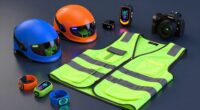
To reduce false alarms without losing protection, start by properly calibrating and adjusting your sensors’ sensitivity to match your environment. Place sensors strategically away from heat sources, vents, or moving objects like curtains or pets. Regularly review and update your system settings, and educate household members on proper use to prevent accidental triggers. Consider upgrading to advanced, smart detection systems with machine learning features for better accuracy. Keep these tips in mind, and you’ll find ways to improve your system’s reliability and effectiveness.
Key Takeaways
- Regularly calibrate sensors to ensure accurate detection and minimize false triggers.
- Adjust alarm sensitivity settings to balance responsiveness and false alarm prevention.
- Strategically place sensors away from heat sources, vents, or areas with frequent environmental movement.
- Educate household members on proper system use to prevent accidental triggers.
- Invest in smart, machine learning-enabled systems for improved threat discrimination and reduced false alarms.
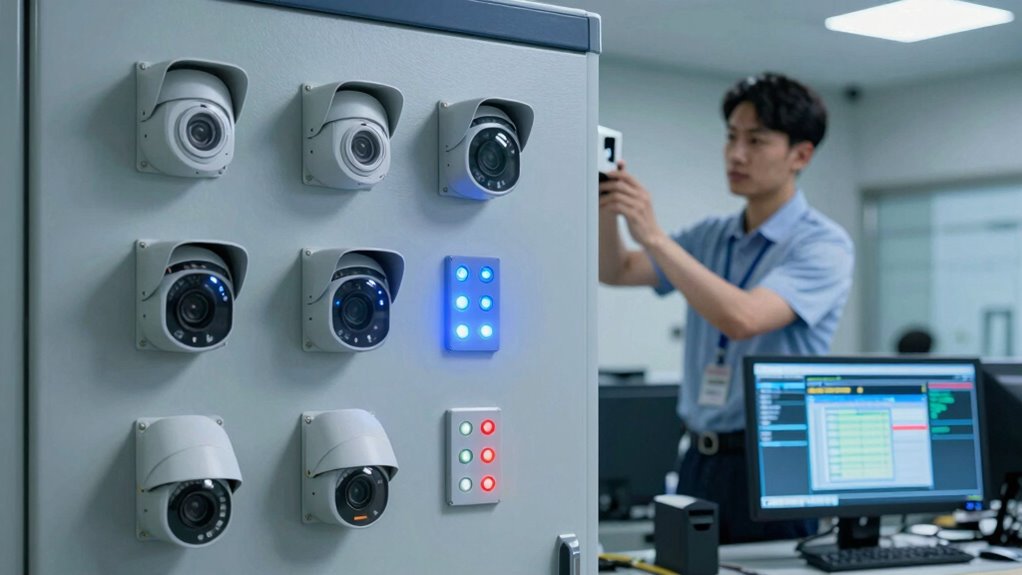
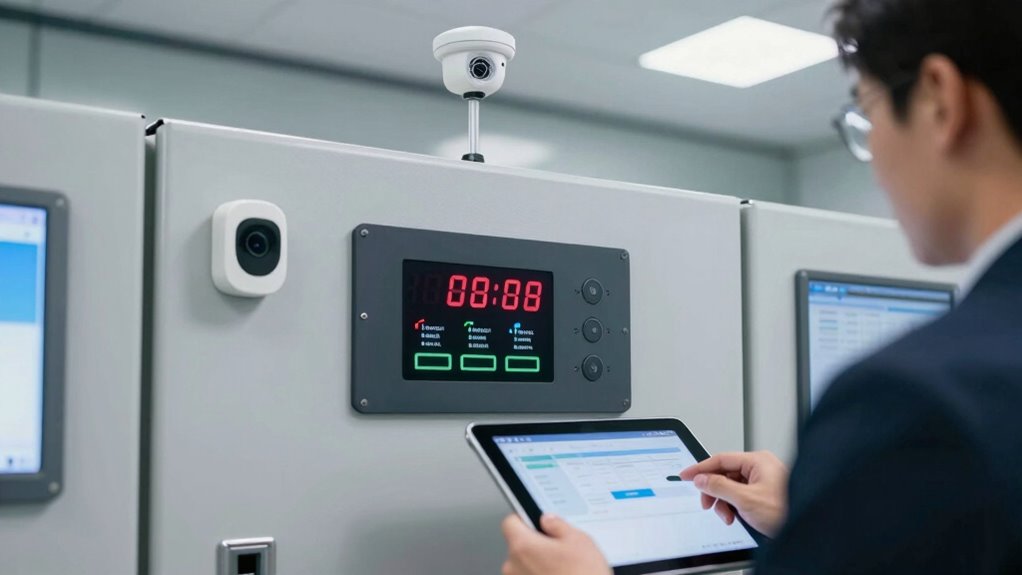
False alarms can be frustrating and costly, but there are effective ways to minimize them. One of the most important steps you can take is guaranteeing your security system is properly calibrated. Sensor calibration is vital because it guarantees that sensors respond accurately to real threats and not to everyday movements or environmental changes. Overly sensitive sensors might trigger alarms from harmless activities, while sensors that aren’t sensitive enough could fail to detect genuine intrusions. Regularly checking and calibrating your sensors helps maintain the right balance, reducing unnecessary alarms without compromising security. Additionally, sensor calibration accuracy plays a crucial role in ensuring your system functions optimally. Proper calibration also involves considering the sensor placement**, which can significantly influence false alarm rates and overall system effectiveness. Alarm sensitivity plays a key role in preventing false alarms. If your alarm system is set too high, even minor disturbances like a gust of wind or pet movement can activate it. Conversely, if it’s too low, it might not respond to actual threats. You need to adjust your alarm sensitivity to match your environment and specific needs. Many modern systems allow you to customize this setting, enabling you to fine-tune the response. For example, if you have pets, setting your motion detectors to ignore small movements can prevent false triggers while still alerting you to intruders. Another effective strategy involves reviewing and updating your system’s settings regularly. Environmental factors can change over time—seasonal weather shifts, new construction nearby, or even changing landscaping can all influence sensor performance. Periodic reassessment helps guarantee your system remains optimized. Additionally, educating household members about how the alarm system functions can prevent accidental triggers. If everyone understands which behaviors might set off the alarm, you can avoid actions that might cause false alarms. Proper placement of sensors is also key. Installing motion detectors and other sensors in appropriate locations minimizes false triggers caused by pets, curtains, or moving objects. Avoid placing sensors near heat sources or vents, as fluctuations in temperature can sometimes cause false alarms. If your system includes glass break sensors, ensure they are positioned correctly to prevent triggering from loud noises that aren’t related to a break-in. Finally, consider investing in newer technology that offers smarter detection features. Many advanced systems incorporate machine learning to distinguish between real threats and false triggers more effectively. These systems often come with automatic calibration options, reducing the need for manual adjustments. Smart detection technology can enhance your system’s accuracy and efficiency. By combining precise sensor calibration, adjustable alarm sensitivity, strategic placement, and modern technology, you can substantially reduce false alarms while maintaining reliable protection** for your home or business.

WiFi Motion Sensor, Smart PIR Motion Detector with Real-Time App Alerts, 128° Wide Angle & 8m Range, No Hub Required, Works with Smart Life/Tuya, Battery or USB Powered for Home Security Automation
【NO HUB REQUIRED】Connects directly to 2.4GHz WiFi—no gateways needed. Features Bluetooth-assisted pairing for a faster and more stable…
As an affiliate, we earn on qualifying purchases.
As an affiliate, we earn on qualifying purchases.
Frequently Asked Questions
What Are Common Causes of False Alarms in Security Systems?
False alarms often happen due to sensor calibration issues or user errors. If sensors aren’t properly calibrated, they may trigger false alerts from minor disturbances like wind or pets. Additionally, lack of user training can cause you to accidentally activate or deactivate the system incorrectly. Regularly calibrate your sensors and guarantee proper user training to minimize false alarms while maintaining effective protection. This way, you avoid unnecessary disruptions and keep your system reliable.
How Can Sensor Placement Impact False Alarm Rates?
Think of your sensors as vigilant guards; their placement greatly influences false alarms. Proper calibration and strategic placement optimization guarantee they only react to genuine threats. If sensors are positioned too close to windows or vents, they might trigger falsely due to drafts or outdoor noise. By carefully choosing locations away from potential false triggers and regularly calibrating, you create a finely tuned system that maintains protection without unnecessary alarms.
Are There Specific Alarm System Features That Minimize False Alarms?
Yes, certain alarm system features help minimize false alarms. Smart technology, like advanced motion sensors and integrated cameras, can distinguish between real threats and everyday activities. Additionally, user education is vital; understanding how to properly set and maintain your system reduces accidental triggers. Combining these features with regular updates and clear instructions guarantees your alarm system stays reliable without unnecessary false alarms, maintaining ideal protection.
How Often Should Alarm System Settings Be Reviewed for Accuracy?
You should review your alarm system settings at least every six months to guarantee accuracy. During these reviews, focus on alarm calibration to prevent false alarms and confirm that sensors function properly. Additionally, provide user training so everyone knows how to operate the system correctly, minimizing accidental triggers. Regularly updating and testing your system helps maintain reliable protection without increasing false alarms, keeping your home secure and alarms trustworthy.
Can False Alarms Be Reduced Without Professional Help?
Sure, you can reduce false alarms without professional help—just don’t expect a magic wand. By educating yourself on your system’s quirks and regularly updating its software, you become the hero of your security story. Keep sensors clean, double-check motion zones, and verify user settings are correct. With a bit of effort, you’ll cut down false alarms and keep your peace of mind intact—no fancy technician required.

Driveway Alarm- 1/2 Mile Long Range Wireless Driveway Alarm Outdoor Weather Resistant Motion Sensor&Detector-DIY Security Alert-Monitor&Protect Outdoor/Indoor Property – 1 Receiver and 2 Sensors
WIDE RANGE OF APPLICATIONS : The wireless weather resistant driveway alarm motion sensor can be used to monitor&protect…
As an affiliate, we earn on qualifying purchases.
As an affiliate, we earn on qualifying purchases.
Conclusion
Just like Icarus learned too close to the sun can bring trouble, tweaking your alarm system requires balance. By fine-tuning sensors, regular maintenance, and understanding your setup, you can keep false alarms at bay without sacrificing protection. Remember, a well-calibrated system is your modern-day shield—less noise, more security. Embrace these tips and enjoy peace of mind, knowing your home stands resilient, just like a fortress guarding its treasures against unwarranted threats.

THIRDREALITY Zigbee Motion Sensor, Pet Friendly, Compatible with Home Assistant, SmartThings, Aeotec, Homey, Hubitat or Echo Devices with Built-in Zigbee Hub
ZIGBEE STANDARD COMPATIBLE MOTION SENSOR: A Zigbee Hub is required. Compatible with Zigbee hubs and Echo devices with…
As an affiliate, we earn on qualifying purchases.
As an affiliate, we earn on qualifying purchases.
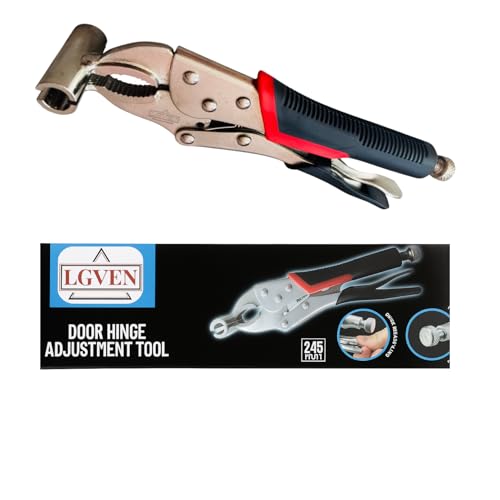
Door Hinge Adjustment Tool, Heavy Duty Hinges Gap Wrench, Easy Calibration Hinge Repair Tool for Residential, Fire & Security Doors
Door Hinge Adjustment Tool – Quickly fixes sagging, misaligned, or noisy doors by adjusting hinge gaps with precision.
As an affiliate, we earn on qualifying purchases.
As an affiliate, we earn on qualifying purchases.