📊 Full opportunity report: Organize Your Hormone Therapy Records With A TRT Tracker on IdeaNavigator AI — validation score, market gap, and execution plan.

Get the latest gadgets delivered free with Prime
- Fast, free delivery on millions of items
- Prime Video, Amazon Music and more included
- Member-only deals all year
TL;DR
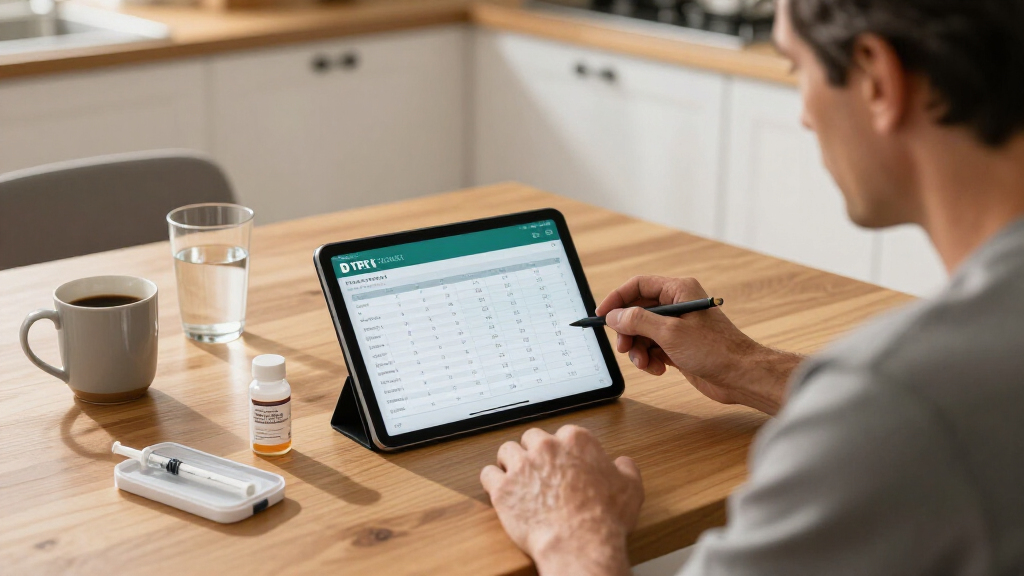
IdeaNavigator AI has published a product concept for a TRT lab and symptom tracker that would import lab PDFs, chart hormone panels against dose changes, and collect daily symptom check-ins. The proposal targets men managing testosterone replacement therapy across fragmented clinic portals. It remains an unvalidated idea with no product, users, or clinical endorsement.
A new product proposal from IdeaNavigator AI calls for a lab and symptom tracker for men on testosterone replacement therapy (TRT), an app that would import lab results, chart hormone panels over time against dose changes, and log daily symptoms so patients and clinicians can base protocol decisions on recorded trends rather than impressions. The proposal, framed as a narrow “first-win” workflow for a single buyer — a man self-managing TRT labs and dosing — is a concept at the validation stage, not a released product, and has no announced users, clinical partners, or revenue to date.
According to the proposal, the core problem is fragmentation. TRT patients juggle periodic labs, dose adjustments, and symptom fluctuations spread across clinic portals, PDF exports, and memory. Because no single record connects how a patient feels to what his hormone levels actually were at the time, the proposal argues, protocol changes often happen “on vibes” — informal guesswork rather than correlated data.
The minimum viable product described would have four functions: importing lab PDFs; charting hormone panels over time alongside dose changes and daily symptom check-ins; generating trend summaries patients can bring to clinic visits; and flagging values drifting outside target ranges. The proposed business model is a consumer subscription, with a second clinic-partnership tier that would give providers patient-monitoring dashboards.
The validation plan is specific: recruit roughly 300 TRT users from hormone-therapy communities and, over eight weeks, measure how many actually import lab results and how many keep up weekly symptom check-ins. Those two metrics — import rate and check-in retention — would determine whether the concept warrants further development. The target market is described as men’s health and hormone therapy apps.
Why Fragmented TRT Records Matter
The proposal lands amid a surge in TRT prescriptions and telehealth clinics, which the concept document says has created a large population of self-managing patients whose care is fragmented across multiple providers “by design.” Men who start therapy through one telehealth service and draw labs at different facilities often have no consolidated record of how dose changes corresponded to either bloodwork or how they felt.
For patients, the practical stake is decision quality. Dose adjustments in TRT are typically guided by periodic hormone panels and reported symptoms; if those two streams are never connected in one place, both patient and prescriber are working from partial information. A tool that overlays dose timelines, lab values, and symptom logs could make clinic visits more productive and reduce reliance on recall. For clinics, a monitoring dashboard tier could in principle surface out-of-range values between appointments — though this is a proposed feature, not a tested one.
The concept is also notable for its deliberately narrow scope: one buyer, one workflow, one measurable validation gate. That restraint is a stated design choice rather than a limitation acknowledged after the fact.
Telehealth Boom Behind the Idea
Direct-to-consumer men’s health platforms have expanded testosterone therapy access over the past several years, moving initial consultations and ongoing prescribing online. That shift has decoupled prescribing, lab testing, and follow-up care, which can occur through different companies and lab networks. The IdeaNavigator AI proposal identifies this structural fragmentation — rather than a lack of medical knowledge — as the gap a software product could fill.
The proposed app sits in an established category of patient-facing health tracking tools, but the concept document positions it as specifically focused on the TRT workflow: hormone panels interpreted against dose history and symptom diaries. No existing competitor is named or compared in the proposal, and no clinical advisors or partner clinics are listed.
What Is Still Unproven
No working product exists yet, according to the proposal itself. Everything described — lab PDF import, trend charting, symptom check-ins, target-range flags, and the clinic dashboard tier — is a design specification, not a shipped feature.
Key uncertainties remain open. Whether TRT patients will consistently import lab PDFs is unknown until the eight-week validation runs, and symptom check-in retention — historically difficult for health apps generally — has not been measured. No clinical endorsement, regulatory review, or medical advisory involvement is mentioned. The claim that protocol changes “happen on vibes” is the proposal’s characterization of current practice, not a documented clinical finding. Pricing, privacy handling for sensitive health data, and any integration with specific lab providers or telehealth platforms are all unspecified.
The 300-User Validation Test
The stated next step is recruiting approximately 300 TRT users from hormone-therapy communities for an eight-week validation study. The two success metrics are defined: the rate at which participants import lab results and the share who maintain weekly check-ins.
If those numbers hold up, the concept envisions building toward a consumer subscription launch and then a clinic-partnership tier. If they do not, the proposal frames the idea as a small, cheap test to abandon rather than scale. No timeline for recruitment, a launch date, or named development partners have been announced.
Key Questions
Is the TRT tracker an app I can download today?
No. It is a product proposal from IdeaNavigator AI. No working app, launch date, pricing, or download availability has been announced.
What would the app actually do?
Per the proposal, it would import lab PDFs, chart hormone panels over time against dose changes, collect daily symptom check-ins, generate trend summaries for clinic visits, and flag values drifting outside target ranges.
How would the company know the idea works?
The validation plan calls for recruiting roughly 300 TRT users from hormone-therapy communities and measuring lab-import rates and weekly check-in retention over eight weeks.
How would it make money?
The proposal describes two revenue streams: a consumer subscription for patients and a clinic-partnership tier offering patient-monitoring dashboards.
Is the claim that TRT dosing decisions happen ‘on vibes’ proven?
No. That phrasing is the proposal’s own characterization of fragmented record-keeping. It is not a peer-reviewed clinical finding, and no clinical evidence is cited to support it.
Source: IdeaNavigator AI
Halloween Picks
halloween
As an affiliate, we earn on qualifying purchases.