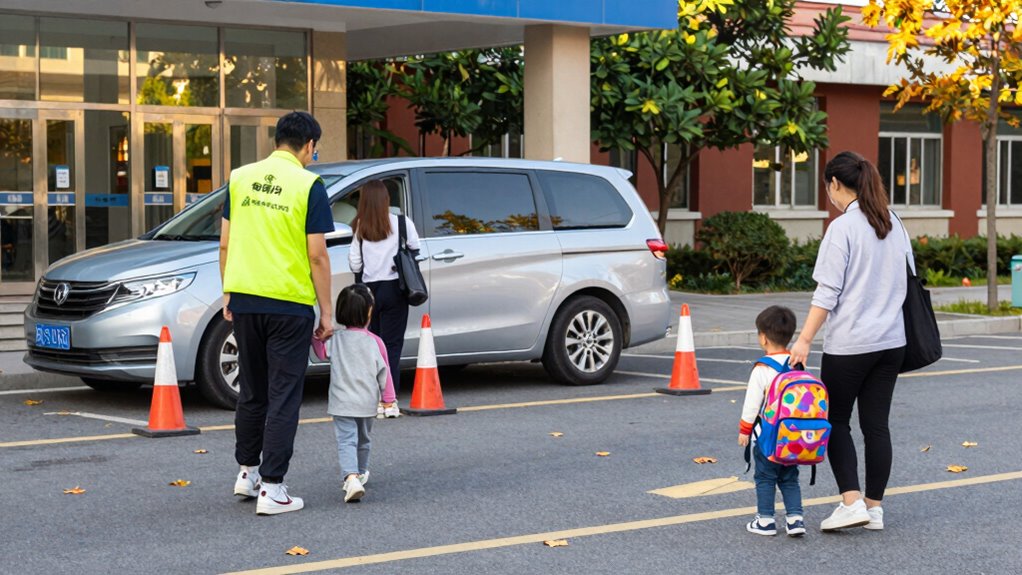

Build safer routines by arriving at consistent times and following designated drop-off and pickup zones to reduce confusion and congestion. Teach children to cross only at crosswalks and stay on sidewalks while staying alert for traffic and other pedestrians. Use clear signals and develop routines with other parents for smooth handovers. Support community safety measures like signage and crossing guards, which enhance the overall safety around schools. Keep exploring ways to make your routines even safer and more effective.

Get the latest gadgets delivered free — and shop member deals
- Fast, free delivery on millions of items
- Access to Prime Big Deal Days deals on October 6–7
- Prime Video, Amazon Music and more included
Key Takeaways
- Establish consistent arrival and departure times to minimize traffic congestion and confusion.
- Use designated drop-off and pickup zones, avoiding double parking and blocking intersections.
- Teach children safe crossing behaviors and supervise them at crosswalks or curbside.
- Communicate clear signals or hand gestures for safe vehicle entry and exit.
- Advocate for enhanced signage, crossing guards, and traffic calming measures around the school.
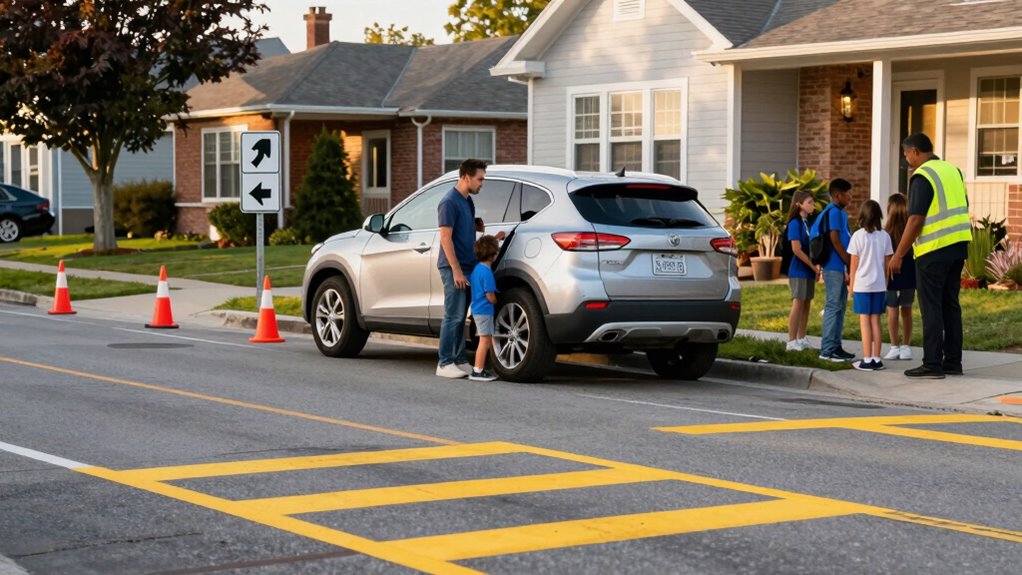
Are your school pickup and drop-off routines as safe as they could be? If not, it’s time to reassess how you manage these busy moments. With traffic congestion often pouring into school zones, it’s easy for drivers to become impatient or distracted, increasing the risk of accidents. To keep everyone safe, prioritize clear, organized routines that minimize congestion and prioritize pedestrian safety. Start by planning your schedule to arrive a little earlier or later than peak times. This reduces the number of cars in the area at once, easing traffic congestion and creating a calmer environment for everyone. When you arrive, follow the designated drop-off and pickup zones, avoiding double parking or blocking intersections. These behaviors not only contribute to traffic jams but also create unsafe conditions for children crossing the street.
Plan your arrival times and follow designated zones to ensure safer, less congested school pickups and drop-offs.
Teaching your children about pedestrian safety is equally vital. Before leaving home, remind them to look both ways and cross only at designated crosswalks or crossings supervised by an adult. Make sure they understand the importance of staying on the sidewalk and not darting into traffic unexpectedly. When you’re in the car, reinforce these lessons by demonstrating safe pedestrian behaviors and always watching for children at crosswalks or walking along the curb. Never rush through the process; patience is key to preventing accidents and making the routine safer for everyone involved. Traffic congestion can often be alleviated by implementing better traffic management strategies around schools. Additionally, understanding traffic flow patterns can help you choose the safest times to arrive and depart.
Creating a consistent routine can also help reduce chaos. If your child and you arrive at the same time each day, everyone becomes familiar with the process, which can reduce confusion and reckless behavior. Use clear signals or hand gestures to communicate with your child, so they understand when it’s safe to get in or out of the car. If you’re dropping off multiple children or coordinating with other parents, establish a set protocol to keep movements smooth and predictable. This consistency not only improves safety but also keeps the flow of traffic manageable, reducing congestion around the school.
Finally, consider engaging with your school’s safety measures or community programs aimed at improving pedestrian safety and traffic management. Participating in or advocating for better signage, crossing guards, or traffic calming measures can make a noticeable difference. The goal is to create a safe environment where children can walk, wait, and be picked up without fear of accidents or congestion. By staying organized, vigilant, and patient, you turn a stressful routine into a safer, more efficient process that benefits everyone involved.
As an affiliate, we earn on qualifying purchases.
Frequently Asked Questions
How Can I Involve My Children in Safety Routines?
You can involve your children in safety routines by explaining child safety rules clearly and making routine planning interactive. Let them help choose safe crossing spots or decide on their transportation gear, like backpacks or helmets. Encourage them to ask questions and share ideas, fostering responsibility. By actively engaging your kids in safety practices, they learn importance and become more aware, making routines more effective and safe for everyone involved.
What Should I Do During Unexpected Delays or Emergencies?
When delays strike like sudden storms, stay calm and act as the lighthouse guiding your family safely. Activate your emergency preparedness plan, ensuring everyone knows their roles, and use clear communication strategies to keep your children reassured. Keep a charged phone handy, share updates promptly, and stay visible. Your steady presence turns chaos into calm, helping your family navigate unexpected delays or emergencies with confidence and security.
Are There Specific Safety Tips for Carpooling?
When carpooling, prioritize safety by establishing clear carpool scheduling with all participants, so everyone knows pickup and drop-off times. Make certain your vehicle undergoes regular vehicle maintenance to prevent breakdowns or accidents. Always check that seat belts are functioning for every passenger, and keep a list of emergency contacts in the car. Communicate openly with fellow carpoolers about any changes or concerns to guarantee everyone’s safety and peace of mind.
How Do I Handle Conflicts With Other Parents?
When conflicts arise like storm clouds on the horizon, you steer through with calm and clear parent communication. Address issues directly, listen like a gentle stream, and seek common ground to resolve disputes. Conflict resolution becomes your compass, guiding you toward understanding rather than confrontation. Remember, fostering open dialogue and respectful exchanges helps turn turbulent waters into peaceful seas, ensuring every pickup and drop-off remains smooth and safe for everyone involved.
What Are Signs of Unsafe Behavior From Children or Drivers?
You should watch for signs of unsafe behavior, like a child running into the street without supervision or a driver not paying attention, such as distracted or speeding. Keep child supervision strict, ensuring kids stay in designated areas. Driver awareness is essential—look for erratic driving, failure to yield, or sudden stops. Staying vigilant helps prevent accidents and keeps everyone safe during school pickups and drop-offs.
As an affiliate, we earn on qualifying purchases.
Conclusion
By establishing clear routines, you reduce chaos and keep your child safe during pickups and drop-offs. Remember, over 80% of traffic accidents involving children happen near schools, so staying vigilant is essential. Stick to designated drop-off zones, make eye contact with other drivers, and avoid distractions. These simple habits can make a significant difference, turning busy moments into safer, smoother experiences for everyone involved. Safety starts with you—create those routines today.
school pickup and drop-off traffic cones
As an affiliate, we earn on qualifying purchases.
As an affiliate, we earn on qualifying purchases.
As an affiliate, we earn on qualifying purchases.
Halloween Picks
halloween
As an affiliate, we earn on qualifying purchases.