
When teaching safety skills, focus on building your child’s confidence and emphasizing their ability to make smart choices. Use positive reinforcement and genuine praise to encourage safe behaviors, avoiding fear or punishment. Create a trusting environment where they feel comfortable asking questions and learning. Connect safety lessons to broader concepts like community and environment, helping kids see safety as empowering, not intimidating. Keep exploring how to balance safety and confidence for more helpful strategies.

Get the latest gadgets delivered free with Prime
- Fast, free delivery on millions of items
- Prime Video, Amazon Music and more included
- Member-only deals all year
Key Takeaways
- Use positive language and emphasize children’s ability to make safe choices confidently.
- Incorporate safety lessons into everyday conversations to normalize safety without creating anxiety.
- Praise efforts and correct understanding to build trust and reinforce safe behaviors.
- Frame safety as empowering decision-making and risk assessment skills rather than avoidance.
- Foster a supportive environment where children feel comfortable asking questions and learning through encouragement.
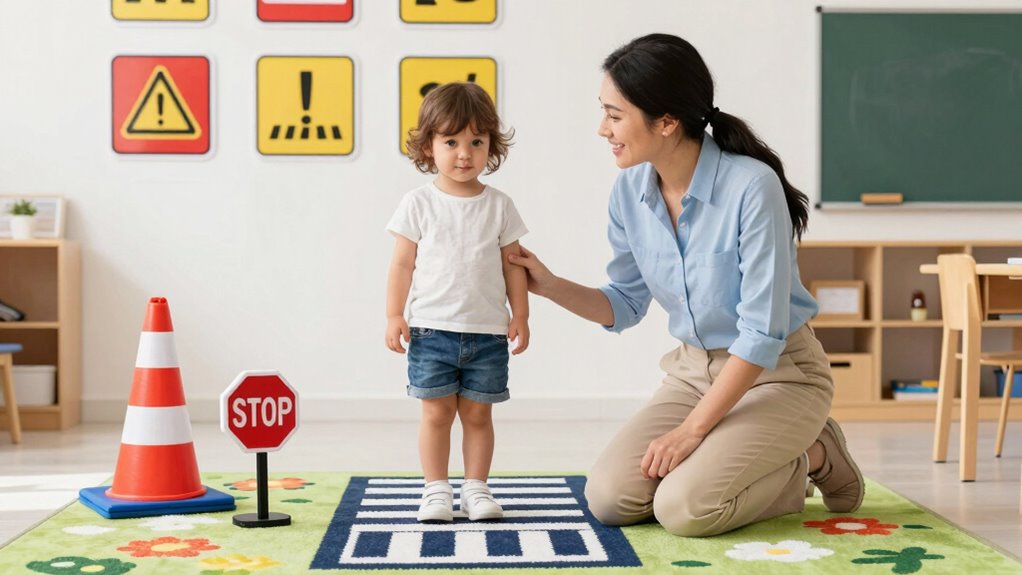
Have you ever wondered how to teach children essential safety skills without instilling unnecessary fear? It’s a delicate balance, but one that’s achievable when you focus on fostering child empowerment. Instead of scaring your child with worst-case scenarios, you can build their confidence by showing them that they have the ability to stay safe. When children feel empowered, they’re more likely to remember and apply safety rules because they see themselves as capable rather than helpless victims. It’s important to emphasize that safety is about making smart choices, not about avoiding all risks entirely. This approach helps your child develop a positive attitude toward safety, making the lessons more effective and less intimidating.
Positive reinforcement plays a vital role in this process. When your child demonstrates understanding or successfully uses safety skills, praise them specifically and enthusiastically. For example, if they correctly recall what to do if they get lost in a store, acknowledge their knowledge with genuine appreciation. This not only reinforces the behavior but also boosts their confidence. Children thrive on encouragement, and positive reinforcement makes learning about safety feel rewarding rather than scary. Instead of reacting with fear or punishment when they forget a rule, gently remind them and praise their efforts when they get it right. This fosters a trusting environment where your child feels safe to learn and ask questions. Recognizing the importance of biodiversity in our environment can also help children understand why safety and conservation go hand-in-hand. Additionally, understanding the importance of safety education can help children recognize that safety is a proactive, empowering part of their lives, not something to fear. You can further enhance their understanding by discussing how community safety efforts contribute to their well-being. Incorporating safety awareness into everyday conversations can further reinforce these lessons without overwhelming them. Teaching children about safety can also benefit from emphasizing risk assessment as a skill that helps them make informed decisions rather than fearful ones.
Products Worth Considering

LG UltraGear 27-Inch QHD OLED Gaming Monitor, 240Hz, 0.03ms, G-SYNC Compatible, FreeSync Premium Pro, HDMI 2.1

Samsung 32-Inch Odyssey OLED G8 (G80SH) 4K Gaming Monitor

Samsung 27-inch Odyssey OLED G6 QD-OLED QHD Gaming Monitor
As an affiliate, we earn on qualifying purchases.
Frequently Asked Questions
How Can I Assess a Child’s Readiness for Safety Lessons?
To assess a child’s readiness for safety lessons, observe their child development stages and look for readiness indicators like curiosity, understanding of simple rules, and ability to follow instructions. You can also ask questions to gauge their awareness of safety concepts and see if they can demonstrate basic skills. When a child shows confidence and comprehension, it’s a good sign they’re prepared to learn safety skills in a supportive, fear-free way.
What Are Common Mistakes to Avoid When Teaching Safety Skills?
You should avoid common mistakes like not modeling behavior yourself or using methods that aren’t age appropriate. If you don’t demonstrate safety skills through your actions, children may not grasp their importance. Also, using overly complex language or scenarios can confuse them. Instead, focus on clear, simple explanations and engaging, age-appropriate methods that promote understanding without instilling fear. Consistent, positive modeling helps children learn safely and confidently.
How Do I Adapt Safety Teaching for Children With Special Needs?
You adapt safety teaching for children with special needs by using sensory accommodations to cater to their sensitivities, like noise-canceling headphones or calming textures. Incorporate visual supports, such as pictures, charts, or social stories, to enhance understanding. Keep instructions clear, simple, and consistent, allowing extra time for processing. Engage them with hands-on activities and positive reinforcement, ensuring they feel safe and confident while learning essential safety skills.
What Resources Are Available for Teaching Safety Without Causing Fear?
You’ll find plenty of resources that turn safety lessons into engaging, fear-free experiences. Interactive scenarios, like role-playing or digital games, help children practice safety skills in a fun way. Pair these with positive reinforcement to encourage confidence rather than fear. Look for organizations like Safe Kids Worldwide or online platforms offering child-friendly safety materials. These tools make learning about safety feel like an adventure rather than a threat, empowering kids confidently.
How Can I Encourage Ongoing Safety Awareness in Children?
You can encourage ongoing safety awareness in children by fostering child empowerment and using positive reinforcement. Praise their efforts when they make safe choices, making them feel confident and responsible. Engage them in safety discussions and decision-making, which boosts their sense of control. Consistently reinforce safety habits with encouragement and rewards, helping them internalize safe practices without fear. This approach builds lasting awareness and empowers children to stay vigilant.
Conclusion
Think of teaching safety skills as tending a garden. When you nurture with patience and care, you cultivate confidence and awareness without sowing fear. Just as a gardener gently guides plants to thrive, you lead children to understand risks calmly and clearly. When done right, they grow resilient and cautious—not trembling under threats, but blossoming into wise guardians of their own safety. With gentle guidance, you help them flourish in a world full of possibilities.