📊 Full opportunity report: How To Use Computer Vision To Review Youth Sports Form on IdeaNavigator AI — validation score, market gap, and execution plan.

Get the latest gadgets delivered free with Prime
- Fast, free delivery on millions of items
- Prime Video, Amazon Music and more included
- Member-only deals all year
TL;DR
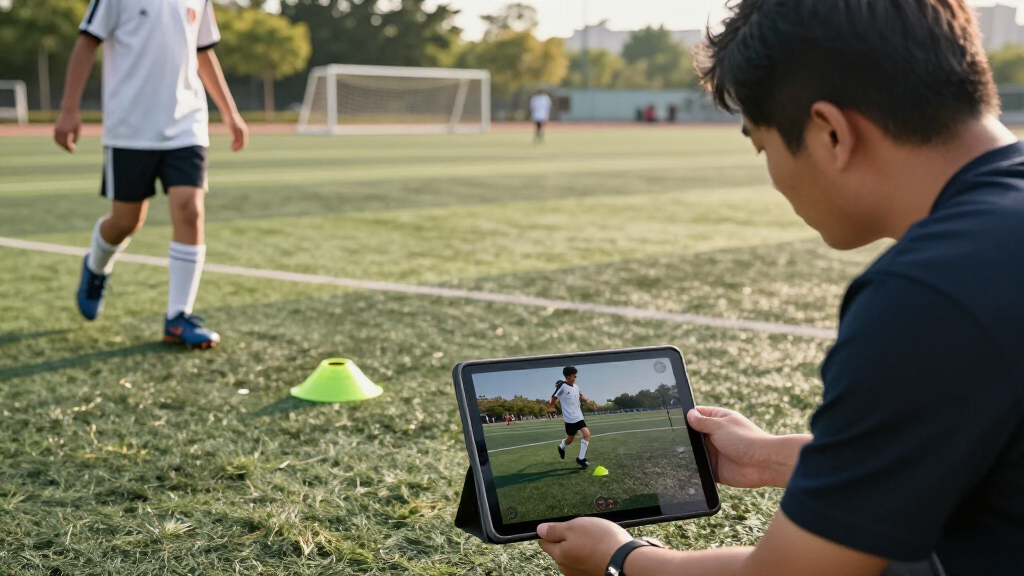
IdeaNavigator AI outlines a proposed phone-based tool that would compare a young athlete’s movements with reference mechanics and recommend a drill. The concept has not been shown to work in a completed trial; its suggested first test is a baseball-hitting pilot in which certified coaches review grades for 100 children.
IdeaNavigator AI has proposed a phone-based app that would use computer vision to review young athletes’ movements, compare them with reference mechanics and suggest a drill. The proposal recommends starting with baseball hitting and asking certified coaches to audit the app’s grades across 100 children; no completed test or performance results are reported.
The proposed workflow is aimed at parents of young athletes practicing without a private coach. A user would film a repetition, such as a swing, and the app would overlay the child’s motion against reference mechanics derived from professional athletes. It would grade selected checkpoints—including hip rotation, release angle and stride—then recommend one drill addressing the largest identified gap.
The idea is framed as a way to provide practice feedback between coaching sessions, not as a replacement for an established coaching or medical assessment. The proposal says pose-estimation models can now run on phones with accuracy sufficient for comparing movement profiles. That is a claim supporting the opportunity; no model, accuracy figure, test conditions or independent evaluation is specified.
For validation, the proposal suggests focusing on one sport and one skill first: baseball hitting. Certified coaches would compare the app’s assessments with their own judgments for 100 children. The suggested business model is a family subscription for each sport, alongside a coach tier for team use, but there is no reported product launch, pricing or evidence of demand.
Testing Feedback Beyond Private Coaching
The idea addresses a practical gap for families whose children practice without frequent individual instruction. A phone-based review tool could, if its feedback is accurate and understandable, give a parent and athlete a repeatable way to notice movement patterns and choose a focused practice drill. That possibility matters where one-on-one coaching is costly: the proposal estimates private sessions at $75 to $150, though it provides no location, date range or survey behind that estimate.
There is also a reason to be cautious. An app grade can sound authoritative even when it is based on a limited set of camera angles or reference movements. Children differ in age, body size, development and experience; a mismatch with a professional reference does not by itself establish poor technique or an injury risk. The suggested coach audit could test agreement with human assessments, but would not alone establish that the app improves performance or reduces injuries.
As an affiliate, we earn on qualifying purchases.
From Phone Video to Coach Review
The proposal combines two elements: phone-based pose estimation, which identifies body positions in video, and a feedback workflow that turns a movement comparison into a grade and a drill. Its focus is narrower than a general-purpose sports platform: it names a particular first customer, a parent whose child lacks a private coach, and recommends testing one skill before expanding to other sports.
The proposal argues that repeated practice can reinforce technique that goes uncorrected, while private coaching may be unaffordable for some families. Those points explain the intended use case, but the material does not provide research showing how often young athletes develop persistent form problems, how often those problems lead to injury, or whether the proposed product would address either outcome. Its 100-child coach review is presented as a validation plan, not a completed study.
As an affiliate, we earn on qualifying purchases.
Accuracy, Safety and Evidence Gaps
Key details remain unspecified. The proposal does not identify a product, pose-estimation system or reference-motion dataset, and it provides no measured accuracy results. It is unclear how a phone would be positioned, how the system would handle clothing or obstructed joints, or whether the grades would be calibrated for children at different ages and stages of development.
The proposed coach review could reveal whether app scores align with coaches’ assessments, but the plan does not describe how coaches would be selected, what scoring criteria they would use or how disagreements would be handled. It also does not state whether the pilot would measure changes in technique over time, performance, injuries or parent and athlete experience. No evidence is supplied that the app would prevent injuries or make private coaching unnecessary.
As an affiliate, we earn on qualifying purchases.
A Baseball Pilot Would Test the Concept
The next concrete step described is a baseball-hitting pilot involving 100 children, with certified coaches auditing the app’s grades against their assessments. No schedule, participating coaches, recruitment plan or results are available. Before families could judge the tool, its developers would need to explain how the model scores movement, how its reference profiles are selected and what limits apply to its feedback.
If the pilot goes ahead, its findings could help determine whether the concept merits broader testing or a family subscription product. Further work would be needed to test performance across ages and camera setups, assess whether prescribed drills are suitable, and establish what the feedback can and cannot say about injury risk. For now, the proposal is an early product concept rather than a demonstrated training solution.
Source: IdeaNavigator AI
As an affiliate, we earn on qualifying purchases.
Key Questions
Is there already an app available?
The material describes a proposed app concept, not a product confirmed as launched or available to families.
How would the proposed app review a child’s form?
A user would film a repetition. The app would compare the athlete’s movement with reference mechanics, grade selected checkpoints and recommend a drill for the largest identified gap.
Has the app’s accuracy been established?
No accuracy results are provided. The proposal says phone-based pose-estimation models are sufficient for this task, but does not name a model or report an independent test.
What is the proposed first test?
The suggested pilot focuses on baseball hitting, with certified coaches reviewing app grades against their own assessments for 100 children.
Would the tool replace a coach or assess injury risk?
The proposal does not establish that it can replace coaching or evaluate injury risk. It describes movement feedback and drill recommendations, while safety and effectiveness remain untested.
Source: IdeaNavigator AI
Halloween Picks
halloween
As an affiliate, we earn on qualifying purchases.