
Fire ratings show how long building materials can withstand fire exposure, helping you understand their safety level. They are based on standardized tests that assess how well materials resist heat, flames, and structural failure. “Fireproof” is a misnomer; no material is completely fireproof, but some are fire-resistant for certain durations. To truly choose safe materials, it’s important to understand what these ratings mean and their limitations, which you’ll discover if you continue exploring.
Key Takeaways
- Fire ratings indicate how long a material or structure can withstand fire exposure without failure.
- “Fireproof” is a misnomer; no material is entirely immune to fire, only rated for specific durations.
- Fire-resistant materials can endure fire for a designated period while maintaining structural integrity.
- Ratings are determined through standardized tests simulating real fire conditions, not by real-world fire exposure.
- No material is completely fireproof; safety depends on proper materials, design, and adherence to fire safety standards.
What Are Fire Ratings, and Why Do They Matter?
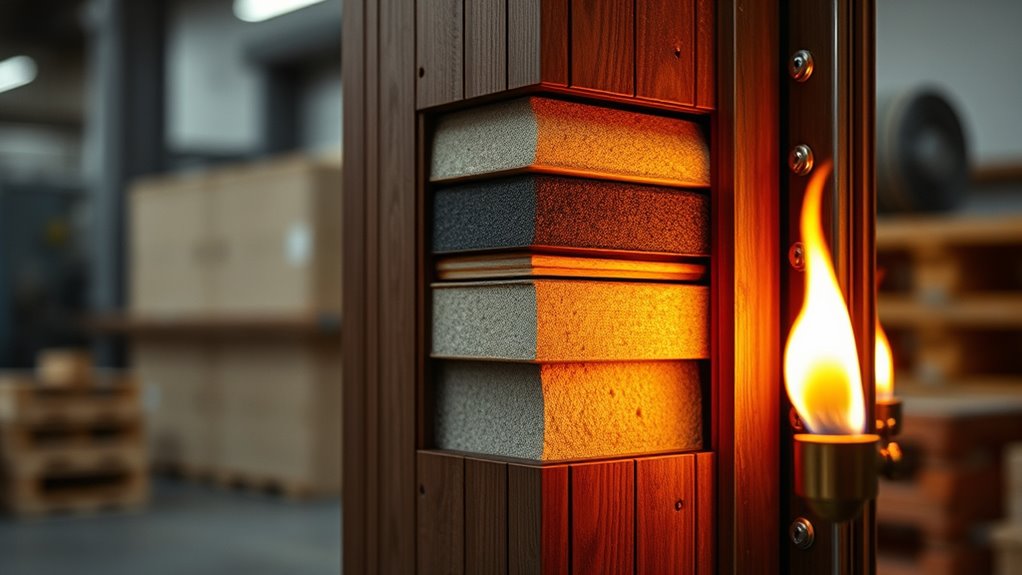
Have you ever wondered how buildings are designed to keep people safe during a fire? That’s where fire ratings come in. Fire ratings measure how long materials or structures can withstand fire exposure, which is essential for fire safety. They help architects and builders select the right materials to prevent the spread of flames and heat. Knowing a building’s fire rating is also critical for emergency preparedness, giving occupants and responders confidence that the structure can hold up long enough for safe evacuation or rescue. These ratings influence building codes and standards, ensuring safety measures are effective. Basically, fire ratings act as a benchmark for safety, helping to reduce fire-related risks and protect lives during emergencies. Additionally, understanding fireproof materials can assist in designing safer structures that meet these important standards. Incorporating fire-resistant construction techniques further enhances building safety and compliance, emphasizing the importance of fire safety standards in modern architecture. Recognizing the significance of fire testing helps ensure materials perform reliably under real fire conditions.
How Fire Resistance Ratings Are Tested and Classified
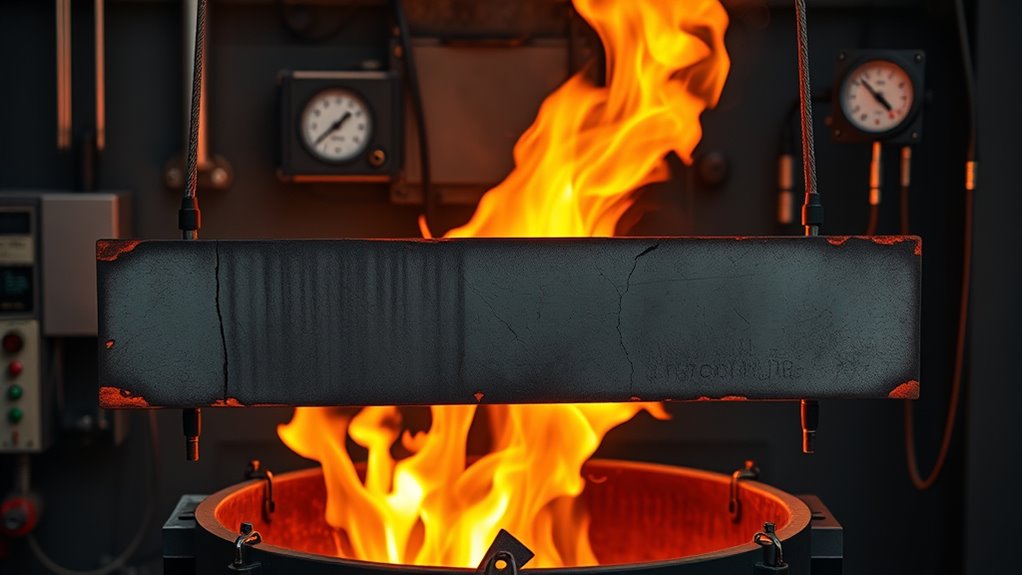
You need to understand how fire resistance ratings are established to choose the right materials. Standard testing procedures simulate real fire conditions to assess performance accurately. Based on these tests, materials are classified and rated to ensure safety and compliance. Additionally, understanding product categories can help consumers make informed decisions about safety standards and certifications. Knowing how fire ratings are determined can further clarify the level of protection provided by different materials and products. Recognizing the importance of testing protocols ensures that materials meet the necessary safety requirements for various applications. Being familiar with fire safety standards can also guide manufacturers and builders in selecting compliant and reliable materials. Incorporating testing procedures into the evaluation process guarantees that fireproof materials meet consistent safety benchmarks.
Standard Testing Procedures
How are fire resistance ratings determined? They’re established through standardized testing procedures that evaluate a material’s thermal properties and ability to withstand fire exposure. These tests follow strict guidelines set by fire safety codes to ensure consistency and reliability. You’ll typically see samples subjected to high temperatures in controlled environments, simulating real fire conditions. During testing, the material’s ability to limit heat transfer, prevent structural failure, and maintain integrity is closely monitored. Instruments measure temperature changes, deformation, and time until failure. The results help classify materials into specific fire resistance categories. These procedures ensure that materials meet safety standards and provide accurate ratings, giving you confidence in their fireproof claims and their performance during actual fires. Additionally, understanding testing procedures can help you better interpret fire ratings and choose appropriate materials for safety. When evaluating fire ratings, it’s also important to consider fire safety standards, which set the benchmarks for testing and classification. Knowing how fire resistance ratings are determined can assist in making informed decisions regarding building safety and material selection. A clear understanding of testing methods can also help identify any discrepancies or limitations in the ratings provided.
Classification and Ratings
Fire resistance ratings are determined through rigorous testing processes that classify materials based on their performance under fire conditions. These tests evaluate how well a material can withstand heat, flames, and structural stress, directly impacting fire safety. Materials are assigned ratings such as R, E, and S, which indicate their ability to resist heat transfer, maintain structural integrity, and prevent the passage of fire and smoke. Higher ratings mean greater material durability during fire events. This classification helps you understand how different materials perform in real fire scenarios, guiding you in selecting safer, more reliable options for construction and safety measures. Additionally, fire testing methods ensure consistency and accuracy in these ratings, providing a standardized way to assess fire safety and ensure that materials meet specific fire resistance criteria. Incorporating standardized testing procedures also promotes confidence in fire safety ratings across different materials and manufacturers. Moreover, ongoing advancements in testing technologies continue to improve the precision and reliability of fire resistance evaluations, ensuring that safety standards evolve with new materials and construction techniques. Furthermore, fire safety standards are regularly updated to reflect the latest research and technological innovations, helping maintain consistent safety benchmarks worldwide.
What Do UL and ASTM Fire Rating Standards Mean?
Understanding UL and ASTM fire rating standards is essential for evaluating how materials perform in fire scenarios. These standards set the benchmarks for fire safety and material durability, ensuring products meet specific safety criteria. UL (Underwriters Laboratories) testing involves exposing materials to intense fire conditions, measuring their ability to resist ignition, withstand heat, and prevent flame spread. Fire safety testing is designed to simulate real-world fire situations, providing critical data for safety assessments. Additionally, fire resistance ratings are often used to compare different materials’ performance in standardized tests. When a product receives a UL or ASTM rating, it signifies that it has been independently tested and verified for performance in fire situations. This helps you make informed decisions about the fire safety and durability of building materials, and understanding these standards is crucial for complying with fire safety regulations and ensuring public safety. Moreover, awareness of fire safety standards can guide architects and builders in selecting appropriate materials for different applications. Recognizing how testing procedures are conducted can further aid in understanding the reliability of these ratings.
What Does ‘Fireproof’ Really Mean for Building Materials?

When someone claims a building material is “fireproof,” it can be tempting to assume it will never burn or be affected by fire. However, in reality, no material is completely fireproof. Instead, “fireproof” often means the material has exceptional fire safety features, such as resisting ignition or delaying combustion. It also indicates high material durability, meaning it can withstand prolonged exposure to heat without losing its structural integrity. Additionally, understanding fire safety standards is essential for assessing how well a material performs under fire conditions. These standards help define testing procedures and performance benchmarks that materials must meet. Keep in mind that fire safety depends on various factors, including installation practices and testing standards. While these materials are designed to minimize fire risks, understanding their true capabilities helps you make informed decisions about building safety and durability, ensuring your structure performs well under fire conditions.
Fire-Resistant vs. Fireproof Materials: What’s the Difference?
While the terms “fire-resistant” and “fireproof” are often used interchangeably, they actually refer to different levels of protection. Fire resistant vs. fireproof materials differ mainly in how long they can withstand fire and their material durability. Fire-resistant materials can endure fire for a specific period, typically 1-4 hours, without losing integrity. Fireproof materials theoretically resist fire indefinitely, though true fireproofing is rare. Here’s what sets them apart:
- Duration of resistance: Fire-resistant materials are rated for limited time, fireproof claims suggest indefinite resistance.
- Material durability: Fire-resistant materials maintain strength longer under heat.
- Application scope: Fire-resistant is common for walls, doors, and insulation.
- Cost & practicality: Fireproofing is often more expensive and less practical for everyday use.
Understanding these differences helps you choose the right materials for safety and durability.
Common Fire Ratings for Walls, Doors, and Insulation
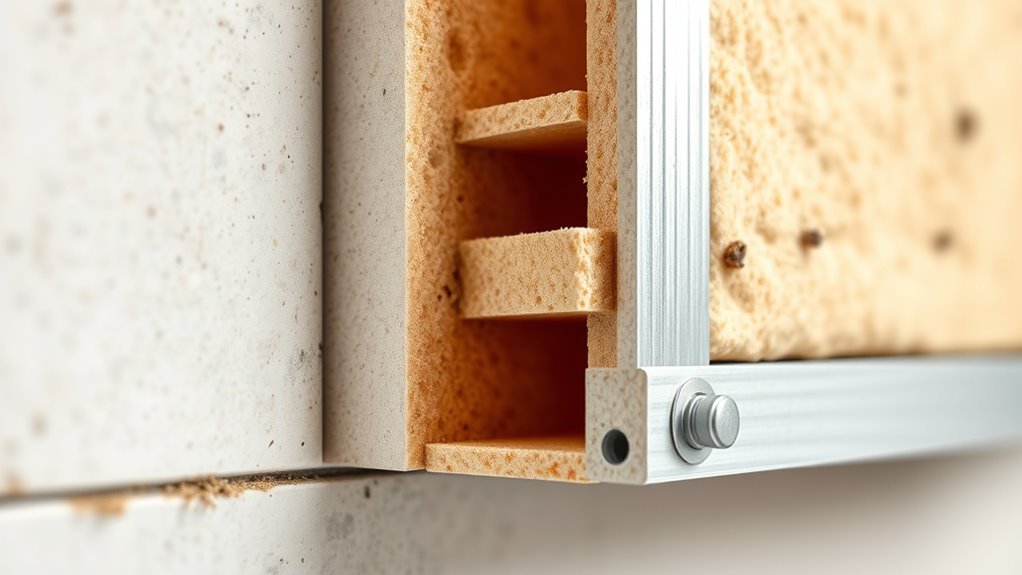
Understanding fire ratings helps you choose the right materials for safety and compliance. Walls, doors, and insulation each have specific fire resistance standards that determine how long they can withstand a fire. Knowing these ratings guarantees your space stays protected and meets building regulations.
Wall Fire Ratings
Wall fire ratings are essential for determining how well a wall assembly can withstand fire exposure and prevent the spread of flames and smoke. These ratings help ensure fire safety and material durability in your building. Common fire ratings include:
- 1-Hour Rating: Walls resist fire for at least one hour, ideal for separating different fire zones.
- 2-Hour Rating: Provides longer protection, suitable for structural walls in high-risk areas.
- Passive Fire Resistance: Walls designed to contain fire and smoke without active systems.
- Assembly Ratings: Vary based on materials used, construction methods, and insulation quality.
Understanding these ratings helps you choose the right materials and construction techniques for lasting fire safety. Higher ratings mean better material durability and greater protection during fires, giving you peace of mind.
Door Fire Resistance
Have you ever wondered how fire-resistant doors help protect buildings during a blaze? It all comes down to door construction and adherence to fire safety codes. Fire doors are specially designed with materials like steel, fire-rated glass, or intumescent seals that withstand high temperatures. These doors are tested to specific fire resistance ratings, such as 30, 60, or 90 minutes, indicating how long they can contain a fire. Building codes determine the required fire resistance for different door types and locations, ensuring safety without compromising access. Proper installation and regular maintenance are essential to keep these doors effective. Understanding these standards helps you appreciate how fire-rated doors serve as critical barriers, preventing the spread of flames and smoke during emergencies.
Insulation Fire Standards
Fire-resistant insulation and wall systems play an essential role in containing fires and protecting building occupants. To guarantee effective fire safety, insulation materials must meet specific fire standards. These standards determine how long walls, doors, and insulation can withstand fire. Here are key points to consider:
- Fire Ratings: Common ratings like 1-hour or 2-hour indicate how long insulation can resist fire exposure.
- Material Types: Fireproof insulation includes mineral wool, intumescent coatings, and foam boards tested for fire standards.
- Testing Methods: Fire safety tests, such as ASTM E119, evaluate insulation’s fire resistance and integrity.
- Code Compliance: Building codes require insulation materials to meet local fire standards to guarantee occupant safety.
Choosing the right insulation materials aligned with fire standards is vital for effective fire safety in your building.
How to Read Fire Rating Labels and Certifications

Understanding fire rating labels and certifications is crucial to guarantee the materials and products you select meet safety standards. When evaluating fire safety, look for labels that clearly display the fire resistance rating, such as hours or minutes, indicating how long a material can withstand fire. Certifications from recognized organizations, like UL or ASTM, confirm the product has been tested under specific conditions. Pay attention to symbols, numbers, and descriptive terms on the label, which help you assess suitability for your environment. Properly reading these labels ensures you choose materials that contribute to effective emergency preparedness. Knowing what the labels mean allows you to make informed decisions, enhancing safety for yourself and others during a fire incident.
Limitations of Fire Ratings: What They Don’t Guarantee
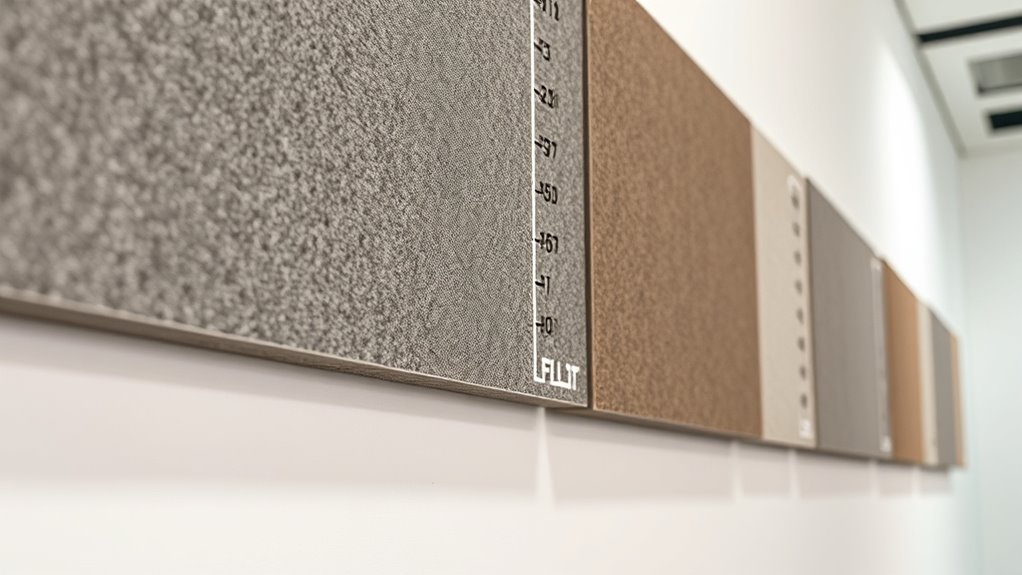
While fire ratings provide valuable information about a material’s ability to resist fire for a certain period, they don’t guarantee complete safety under all conditions. Fire safety depends on multiple factors beyond ratings. Here are four key limitations to keep in mind:
- Fire ratings don’t account for real-world conditions like airflow or humidity.
- They focus on specific tests, ignoring how materials perform over time or with wear.
- Ratings don’t guarantee material durability during prolonged fires or structural stress.
- They don’t consider how different building components work together in a fire scenario.
Ultimately, relying solely on fire ratings can give a false sense of security. For true fire safety, you need an extensive approach that considers all aspects of material durability and building design.
How to Use Fire Ratings When Choosing Safe Building Materials
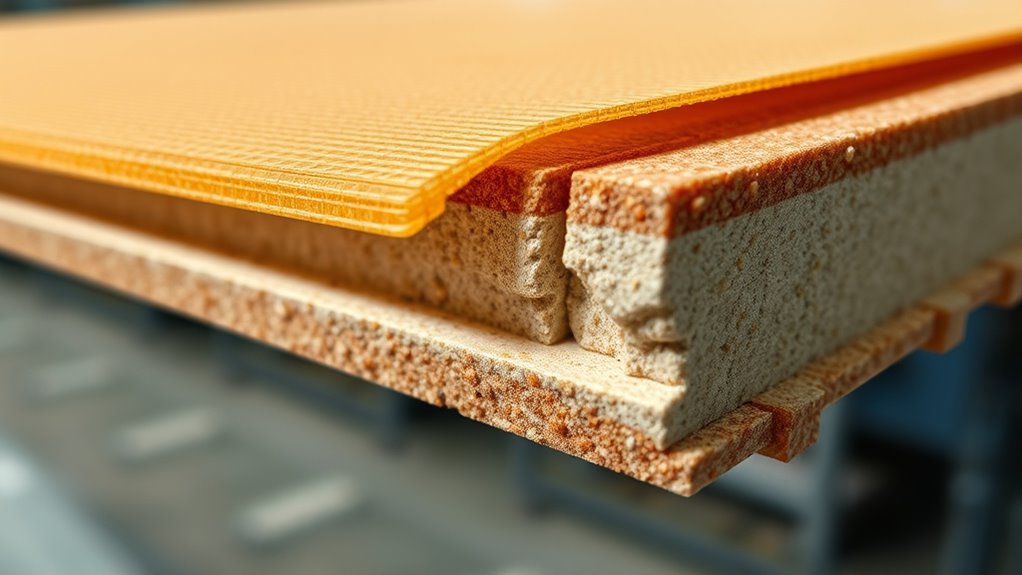
When choosing construction supplies, it’s vital to interpret fire ratings as part of a thorough safety strategy rather than relying on them alone. Fire ratings help guarantee building code compliance and support fire safety planning, but they’re just one piece of the puzzle. Use fire ratings to compare material performance and select options that match your safety goals. For example, materials with higher fire resistance may be better for walls in fire-prone areas. Consider the specific fire rating classifications and how they align with your building’s purpose.
| Fire Rating Level | Typical Use Cases |
|---|---|
| Fire-resistant | Structural supports, walls |
| Fire-retardant | Interior finishes, furniture |
| Non-combustible | Exterior cladding, panels |
| Limited combustibility | Flooring, roofing systems |
Frequently Asked Questions
How Do Fire Ratings Vary Across Different Building Types?
You’ll notice fire ratings differ across building types because fire safety and structural integrity needs vary. Commercial buildings often require higher ratings to withstand intense fires, while residential structures might have lower standards. These ratings ensure materials and constructions can maintain their integrity during a fire, protecting occupants and property. Understanding these differences helps you appreciate how building codes adapt to specific safety demands, guaranteeing ideal protection for each unique structure.
Are Fire Ratings Standard Worldwide or Country-Specific?
Did you know that over 50 countries adopt some form of international standards? Fire ratings aren’t entirely universal; they depend heavily on regional codes and regulations. While many countries align with international standards like ASTM or ISO, each region often has its own specific requirements. So, your fire rating expectations can vary widely based on local building codes, making it essential to check regional regulations for accurate safety measures.
Can Fire Ratings Change Over a Building’s Lifespan?
Fire ratings can change over a building’s lifespan due to fire rating updates and material aging. As materials degrade or are exposed to environmental factors, their ability to resist fire diminishes. You should regularly inspect and maintain fire-resistant materials to make certain they meet current safety standards. Upgrading or replacing fireproofing can help maintain the original fire rating, keeping your building safe and compliant over time.
Do Fire Ratings Account for Smoke and Toxic Gas Resistance?
You’ll find fire ratings don’t usually cover smoke resistance or toxic gas. They mainly measure how long a material withstands fire, but smoke and toxic gases can still permeate, posing serious risks. Think of it like a fortress that keeps fire out but lets smoke and dangerous gases seep through. Always check specific product ratings if smoke resistance and toxic gas containment are essential for your safety.
How Do Weather Conditions Affect Fire-Resistant Materials’ Performance?
Weather conditions can considerably impact fire-resistant materials’ performance. Exposure to moisture causes material deterioration and weakens their fireproof qualities over time. Humid or rainy weather increases moisture impact, which can lead to corrosion or mold, reducing effectiveness. Extreme heat or cold can also cause material expansion or contraction, compromising integrity. To guarantee ideal protection, you should regularly inspect and maintain fire-resistant materials, especially in harsh weather conditions.
Conclusion
Remember, fire ratings give you a helpful glimpse into a material’s resilience, but they’re not a crystal ball. Think of them as a guiding star, helping you steer toward safer choices. While no building material can promise eternal safety, understanding these ratings lets you craft a space that’s better prepared for unexpected sparks. By choosing wisely, you create a more secure environment where peace of mind can quietly bloom.