
Driving rideshare means switching between the car, pickup points, and unfamiliar drop-offs, so a safety alarm needs to stay within reach and be simple to activate. My strongest all-round pick is the TECKNET Rechargeable Personal Safety Alarm for its two activation methods and USB-C charging. The TECKNET alarm with Apple Find My adds item tracking and a flashlight, while Fauxomor’s three-pack offers a straightforward way to keep alarms in more than one place. The tradeoff is between ease of use, charging or battery upkeep, and useful extras; none of these alarms physically stops an assault or replaces emergency services.

Get the latest gadgets delivered free with Prime
- Fast, free delivery on millions of items
- Prime Video, Amazon Music and more included
- Member-only deals all year
Complete the kit



Key Takeaways
- TECKNET Rechargeable is my best overall fit for drivers who want both pull-pin and button activation, plus USB-C charging.
- TECKNET with Find My is the only listed pick that adds Apple item tracking and a flashlight to the alarm.
- Fauxomor’s three-pack suits drivers who want a simple pull-pin alarm for the car, work bag, and another everyday carry spot.
- She’s Birdie 3.0 offers a direct pull-to-activate design and a stated 120-minute continuous runtime, but no flashlight or tracker.
- Vantamo’s battery details conflict: the listing describes both a lithium-polymer battery and a C battery, so verify power requirements before choosing it.
| TECKNET Rechargeable Personal Safety Alarm with Strobe Light, Black |  | Best Overall — flexible activation for a driver’s daily carry | Alarm: 130 dB siren with strobe | Activation: Pull-pin or press-and-hold button | Charging: USB-C | VIEW ON AMAZON | See Our Full Breakdown |
| TECKNET Personal Safety Alarm Keychain with LED Flashlight and Find My Tracker |  | Best for Tracking Extras — alarm, flashlight, and Apple Find My | Alarm volume: 130 dB | Connectivity: Bluetooth LE; Apple Find My | Charging: USB-C | VIEW ON AMAZON | See Our Full Breakdown |
| Fauxomor 140 dB Personal Safety Alarm Keychains, 3-Pack |  | Best Value in Coverage — a simple three-alarm set | Pack size: 3 alarms | Alarm volume: 140 dB | Activation: Pull pin; reinsert to stop | VIEW ON AMAZON | See Our Full Breakdown |
| She’s Birdie 3.0 Personal Safety Alarm with 130 dB Siren, Strobe Light, and Rechargeable Battery, Coral Orange | 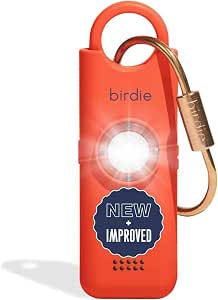 | Best for Simple Pull Activation — direct operation and stated runtime | Siren volume: 130 dB | Activation: Pull top ring; push back in to stop | Light: Flashing strobe | VIEW ON AMAZON | See Our Full Breakdown |
| Vantamo Rechargeable Personal Alarm Keychain with Strobe Light |  | Best Attachment Options — carabiner and keyring carry | Audible noise: 130 dB | Speakers: Dual | Control method: Touch | VIEW ON AMAZON | See Our Full Breakdown |
| personal safety device for rideshare driver | Dimensions | Activation |
|---|---|---|
| TECKNET Rechargeable Personal | 3.94 × 1.26 × 0.55 inches | Pull-pin or press-and-hold button |
| TECKNET Personal Safety Alarm | 1.2 × 0.59 × 3.9 inches | — |
| Fauxomor 140 dB Personal Safet | — | Pull pin; reinsert to stop |
| She’s Birdie 3.0 Personal Safe | 1.25 × 0.6 × 3.7 inches | Pull top ring; push back in to stop |
| Vantamo Rechargeable Personal | 0.98 × 0.66 × 3.81 inches | — |
More Details on Our Top Picks
TECKNET Rechargeable Personal Safety Alarm with Strobe Light, Black
This TECKNET is my leading choice for a rideshare driver who wants a small alarm that can stay on a keychain or within reach near the driver’s seat. Its strongest differentiator is two ways to activate it: pull the pin for a direct action or use the press-and-hold button when that feels more practical. A 130 dB siren and strobe provide both sound and visual attention-getting features, while the emergency light has value when checking a dark pickup area.
Compared with the similarly loud Birdie 3.0, this model gives the driver another activation route and a low-battery indicator. Its USB-C charging also avoids routine battery replacement, though it does require remembering to recharge. The listed standby time of up to 500 days is notably longer than the Find My TECKNET’s stated six to eight months, but actual use and battery condition can affect operation. The siren runtime is up to 90 minutes, shorter than Birdie’s stated 120 minutes of continuous sound and light.
The motion-sensor specification is not described as an automatic alarm trigger, so I would not rely on it as a substitute for manual activation. Warranty coverage also requires product registration. For a driver prioritizing adaptable activation and a rechargeable setup over tracking extras or a multipack, this is the clearest all-round fit.
Pros:- Two activation options, including a press-and-hold button
- 130 dB siren with strobe and emergency light
- USB-C charging and low-battery indicator
- Long stated standby time of up to 500 days
Cons:- Siren runtime is listed as up to 90 minutes per charge
- 36-month warranty requires product registration
- Requires periodic charging rather than replaceable batteries
Best for: Drivers who want a rechargeable keychain alarm with both pull-pin and button activation, plus a low-battery warning.
Not ideal for: Drivers who want item tracking, a multi-alarm set, or the longest stated continuous siren runtime.
- Alarm:130 dB siren with strobe
- Activation:Pull-pin or press-and-hold button
- Charging:USB-C
- Standby:Up to 500 days
- Siren runtime:Up to 90 minutes
- Strobe runtime:Up to 300 minutes
- Dimensions:3.94 × 1.26 × 0.55 inches
- Warranty:36 months; registration required
Our verdict“I rank this first for its combination of flexible activation, rechargeable power, and long stated standby time.”
TECKNET Personal Safety Alarm Keychain with LED Flashlight and Find My Tracker
This TECKNET is the most feature-rich choice in the group: a 130 dB alarm, LED flashlight, and Bluetooth support for Apple Find My share one compact keychain. For a rideshare driver who moves between a car, home, and pickup locations, tracking the alarm itself may help locate misplaced gear. The flashlight is also more directly useful during a dark walk to a pickup than a strobe alone, though it does not make the driver safer by itself.
Compared with the first TECKNET, this model trades the listed 500-day standby claim and two activation methods for phone-based item tracking and a dedicated flashlight. The description does not specify the alarm’s activation method, so a driver should check the product’s current instructions before relying on it in a quick-response situation. Its stated standby of six to eight months is shorter, and alarm mode is listed for up to 90 minutes per charge. Apple Find My support also means it is a better fit for compatible Apple-device users than drivers who need a phone-agnostic tracker.
USB-C charging and its small ABS body keep it suitable for everyday carry, but this option makes sense only if the extra functions match the driver’s phone and habits. I would choose the standard TECKNET for activation flexibility; I would choose this one when locating the alarm and having a flashlight matter more.
Pros:- Combines a 130 dB alarm with an LED flashlight
- Supports Bluetooth and Apple Find My
- Rechargeable through USB-C
- Compact keychain form with mode-specific runtime details
Cons:- Find My utility depends on compatible devices and app setup
- Standby is listed as six to eight months, less than the other TECKNET’s claim
- The supplied description does not specify how the alarm is activated
Best for: Rideshare drivers with compatible Apple devices who want a safety alarm that can also serve as a flashlight and tracked item.
Not ideal for: Drivers without Apple Find My access, or anyone who wants clearly stated activation steps and longer standby.
- Alarm volume:130 dB
- Connectivity:Bluetooth LE; Apple Find My
- Charging:USB-C
- Battery capacity:110 mAh
- Standby:Up to 6–8 months
- Alarm runtime:Up to 90 minutes
- Light runtime:Up to 120 minutes
- Dimensions:1.2 × 0.59 × 3.9 inches
Our verdict“I recommend it over the standard TECKNET only when Apple Find My and a flashlight are more useful than extra activation options.”
Fauxomor 140 dB Personal Safety Alarm Keychains, 3-Pack
Fauxomor takes a different approach from the single-device rechargeable picks: it supplies three lightweight pull-pin alarms, each with a stated 140 dB siren and strobe LED. A driver can keep one on their keys, another in a work bag, and a third in a regular carry spot, or share extras with family. That distributed access can matter more than adding tracking or another light mode if the main problem is having an alarm close at hand.
Its operation is straightforward: pull the pin to sound the alarm and reinsert it to stop. Compared with the TECKNET models, Fauxomor avoids charging routines because it uses replaceable batteries and lists a low-battery alert. The tradeoff is ongoing battery replacement and a 60-minute continuous-use claim, shorter than Birdie’s stated 120 minutes. A higher advertised decibel figure also should not be treated as proof of real-world superiority; environment and distance affect how an alarm is heard.
This set has fewer extras than the tracker-equipped TECKNET and no alternative button activation like the top-ranked model. For a driver who wants one uncomplicated alert at several access points, however, the pack is more practical than buying a single device with features they may not use. Check battery condition regularly, especially if an alarm remains stored in a vehicle.
Pros:- Three alarms for separate bags, keys, or drivers
- Simple pull-pin activation
- Strobe LED and stated 140 dB siren
- Replaceable batteries and low-battery alert
Cons:- Batteries need checking and eventual replacement
- Continuous-use time is listed as up to 60 minutes
- No stated flashlight or tracking function
Best for: Drivers who want a simple pull-pin alarm for multiple carry locations or to share with household members.
Not ideal for: Drivers who prefer USB-C charging, need a flashlight or tracker, or want more than one activation method.
- Pack size:3 alarms
- Alarm volume:140 dB
- Activation:Pull pin; reinsert to stop
- Light:Strobe LED
- Battery:Replaceable
- Battery life:Up to 3 years
- Continuous use:Up to 60 minutes
- Weight:0.95 oz
Our verdict“I favor this set for broad, simple coverage across several carry spots, not for advanced features or rechargeable convenience.”
She’s Birdie 3.0 Personal Safety Alarm with 130 dB Siren, Strobe Light, and Rechargeable Battery, Coral Orange
Birdie 3.0 is for drivers who value a clear physical action over multiple modes: pull the top ring to activate the 130 dB siren and flashing strobe, then push it back in to stop. Its coral-orange color may also be easier to spot in a bag or cabin than the black TECKNET options. The compact body attaches to a keychain or bag, so the driver can choose a consistent, reachable place before a shift.
The most relevant comparison is runtime. Birdie lists up to 120 minutes of continuous sound and light, compared with up to 90 minutes for the two TECKNET alarms and 60 minutes for Fauxomor. That figure does not establish how long a stored charge will last, and the supplied details do not give a standby estimate or a charging-port type. By contrast, the standard TECKNET spells out USB-C charging and a low-battery indicator, while Fauxomor offers replaceable batteries.
Birdie’s straightforward pull action may suit a driver who dislikes extra controls, but the single activation method is less flexible than the first-ranked TECKNET. Like every alarm here, it draws attention rather than physically preventing harm. I would place it above feature-heavy models for someone who values direct use and a stated longer continuous runtime, but below the TECKNET for charging detail and operating options.
Pros:- Pull ring activates siren and strobe
- Rechargeable and reusable design
- Stated continuous runtime of up to 120 minutes
- Compact body attaches to keys or a bag
Cons:- No flashlight or item-tracking feature is listed
- Only one activation method is described
- Charging port and standby time are not specified in the supplied details
Best for: Drivers who want a compact, reusable alarm with one direct pull-to-activate action and a longer stated continuous runtime.
Not ideal for: Drivers who need a flashlight, tracker, button activation, or clearly specified charging and standby details.
- Siren volume:130 dB
- Activation:Pull top ring; push back in to stop
- Light:Flashing strobe
- Battery:One rechargeable battery included
- Continuous runtime:Up to 120 minutes
- Dimensions:1.25 × 0.6 × 3.7 inches
- Weight:0.05 kg
- Color:Coral orange
Our verdict“I would pick Birdie for uncomplicated pull activation and its stated runtime, while choosing the standard TECKNET for more operating and charging detail.”
Vantamo Rechargeable Personal Alarm Keychain with Strobe Light
Vantamo’s clearest advantage is how it attaches: the package includes a keyring and carabiner, giving a driver more ways to keep the alarm accessible on a bag, backpack, or belt loop. Its dual speakers are rated at 130 dB, and a strobe light plus low-battery indicator give it the same basic alert-and-check features found on the stronger all-round choices. For a driver who wants to clip an alarm to a work bag rather than add another item to their keys, that hardware has a practical role.
Compared with Birdie, Vantamo supplies more attachment options but has less clear battery information. The listing describes a lithium-polymer battery and also says a C battery is required and included; it mentions USB-C charger and power-bank compatibility without resolving that mismatch. I would confirm the power setup with the seller or current product documentation before relying on it for regular shifts. The first TECKNET is a safer pick for buyers who want explicit USB-C charging and two stated activation methods.
Vantamo’s listed touch control may appeal to someone who wants a button-style interaction, but the supplied details do not explain the exact activation sequence. No runtime or standby figure is provided here either. This makes it a reasonable carry-focused option, not my first choice for drivers who prioritize clear upkeep instructions and predictable readiness.
Pros:- Dual speakers rated at 130 dB
- Includes both a keyring and carabiner
- Strobe light and low-battery indicator
- Compact dimensions for everyday carry
Cons:- Battery listing conflicts between lithium-polymer and C battery details
- No runtime or standby duration is provided in the supplied specs
- Touch-control activation sequence is not clearly described
Best for: Drivers who want to clip an alarm to a bag or belt and value included carabiner and keyring attachment options.
Not ideal for: Drivers who want unambiguous battery specifications, published runtime figures, or clearly described activation steps.
- Audible noise:130 dB
- Speakers:Dual
- Control method:Touch
- Battery details:Listing mentions lithium polymer and one C battery
- Charging compatibility:USB-C charger or power bank listed
- Accessories:Keyring and carabiner
- Dimensions:0.98 × 0.66 × 3.81 inches
- Color:Charcoal
Our verdict“I rank Vantamo fifth because its attachment options are useful, but unclear power details make the other picks easier to recommend for dependable shift preparation.”

How We Picked
I ranked these devices for the routine a rideshare driver actually faces: keeping a small alert tool close, using it quickly in a stressful moment, and managing it between shifts. I gave more weight to clear activation, carry options, and practical power details than to feature count alone. A loud siren and flashing light can draw attention, but published decibel figures do not tell a driver how a device will sound in every setting.
I also compared whether each alarm is rechargeable or uses replaceable batteries, how long the stated runtime lasts, and whether extras such as a flashlight or phone-based tracking add meaningful utility. The TECKNET rechargeable model ranks first for its two activation methods and USB-C charging. The tracker-equipped TECKNET earns a distinct role, but its phone compatibility and shorter stated standby period matter. Fauxomor ranks highly for simplicity and three-device coverage; Birdie emphasizes uncomplicated pull activation and stated runtime. Vantamo has useful attachment hardware, though its conflicting battery information lowers confidence in its power setup.
Product details here come from the supplied descriptions and specifications, not personal testing. I treat alarm duration, standby time, wireless features, and warranty terms as manufacturer-provided claims. I do not rank any option as protective equipment: these are attention-getting alarms, not physical defenses, and a driver should keep emergency contacts and local response procedures in mind.
| personal safety device for rideshare driver | Activation |
|---|---|
| TECKNET Rechargeable Personal | Pull-pin or press-and-hold button |
| TECKNET Personal Safety Alarm | — |
| Fauxomor 140 dB Personal Safet | Pull pin; reinsert to stop |
| She’s Birdie 3.0 Personal Safe | Pull top ring; push back in to stop |
| Vantamo Rechargeable Personal | — |
Factors to Consider When Choosing Personal Safety Device For Rideshare Drivers
I would choose a rideshare alarm by how quickly I can reach and activate it, then check whether its upkeep fits my routine. Added features matter only when they solve a real carry or readiness problem.Choose an activation style you can reach
A safety device left in a glove box may be harder to reach than one attached to keys or a work bag. Think through where it will sit while driving and when approaching a pickup. The standard TECKNET offers pull-pin and press-and-hold activation; Birdie and Fauxomor use pull actions, while the supplied Vantamo details say touch control but do not explain the exact sequence. A simpler operation can be easier to remember, but multiple methods may suit different carry positions. Read the current instructions and practice locating the control while stationary.
Match the power system to your shift routine
Rechargeable alarms avoid replacing disposable batteries, but they need regular charging and a check before a shift. The standard TECKNET specifies USB-C and a low-battery indicator; the tracker-equipped TECKNET also uses USB-C. Fauxomor instead relies on replaceable batteries, which can be convenient if the driver keeps spares but calls for checking battery condition. Birdie is rechargeable, though the supplied details do not state its port or standby time. Vantamo’s battery information is inconsistent, so I would resolve that point before choosing it.
Treat volume and runtime as claims, not guarantees
The listed alarms range from 130 dB to 140 dB, but a specification cannot guarantee how far away someone will hear a siren. Buildings, traffic, and distance change what carries. Runtime claims also vary: Birdie lists up to 120 minutes, the standard TECKNET and Find My TECKNET up to 90 minutes, and Fauxomor up to 60 minutes of continuous use. These are product specifications, not a promise that a device will remain ready through any emergency. Check charge or batteries regularly, and do not use runtime as a reason to leave an alarm inaccessible.
Decide whether extra features earn their place
A flashlight can help with a dark pickup; a tracker can help find a misplaced alarm; multiple units can put an alarm in more than one everyday location. The Find My TECKNET is the only pick combining tracking and a flashlight, but tracking depends on a compatible Apple setup. Fauxomor’s pack distributes alarms rather than adding electronics. For drivers who want only a basic alert, paying attention to the carry position and activation may matter more than choosing the model with the longest feature list.
Keep expectations realistic
Each product in this roundup is an alarm and, in most cases, a light. None is described as a physical defense device, and an alarm does not guarantee a response. I would treat it as one part of a personal safety plan: keep a phone charged, know how to contact emergency services, and follow platform guidance and local procedures. Keep the alarm where it can be reached without taking attention away from driving, and never handle or test a loud siren while operating a vehicle.
Frequently Asked Questions
Which of these alarms is my best all-round choice for rideshare driving?
I rank the TECKNET Rechargeable Personal Safety Alarm first for its pull-pin and press-and-hold controls, USB-C charging, low-battery indicator, and stated long standby time. It does not include the tracking feature of the other TECKNET or the three units in the Fauxomor set, so the best fit still depends on whether activation flexibility or those extras matter more to you.
Can a personal alarm protect a driver from an attack?
These products create sound and, in several cases, flashing light to attract attention. They are not physical defenses and cannot guarantee that another person will hear or respond. I would treat an alarm as one tool in a wider safety plan, keep it within reach, and know how to contact emergency services or follow your rideshare platform’s safety procedures.
Should I choose a rechargeable alarm or one with replaceable batteries?
A rechargeable model such as the standard TECKNET suits drivers who prefer USB-C charging and a low-battery warning, provided they remember to check and recharge it. Fauxomor’s replaceable batteries avoid routine charging but need periodic inspection and replacement. I would choose based on the maintenance habit I can reliably keep, rather than assuming either power type is maintenance-free.
Does the higher listed decibel number mean Fauxomor is automatically better?
No. Fauxomor lists a 140 dB siren while the other alarms list 130 dB, but that number alone does not establish how clearly an alarm will be heard in a car, on a street, or through a building. Distance and surrounding noise matter, and the supplied specifications do not provide comparable independent measurements. I would weigh activation, placement, and battery upkeep alongside the advertised figure.
What should I check before attaching an alarm to my work bag or keys?
Confirm that the alarm can be reached quickly from its chosen spot and that its activation mechanism will not snag or be blocked. Check charging or battery status, learn how to stop the siren, and review any phone compatibility needed for tracking features. Vantamo’s supplied battery details conflict, and the Find My TECKNET requires a compatible Apple setup, so I would verify those points before relying on either feature.
Conclusion
For one dependable everyday-carry pick, I would choose the standard TECKNET for its dual activation and USB-C charging. Drivers who want an alarm that also helps locate lost gear should look at the Find My TECKNET, provided they use a compatible Apple device. I would pick Fauxomor when having three simple pull-pin alarms in separate locations matters most, and Birdie 3.0 for a direct pull action with a stated 120-minute continuous runtime. Vantamo is the attachment-focused choice, but I would confirm its battery setup first. Whichever one fits, keep it accessible, maintain its power source, and remember that an alarm draws attention rather than physically preventing harm.
Fall Picks
fall essentials
As an affiliate, we earn on qualifying purchases.