
📊 Full opportunity report: Is AI The Future Of Cyber Defense? Insights From Recent Hacks on ThorstenMeyerAI.com — validation score, market gap, and execution plan.

Get the latest gadgets delivered free with Prime
- Fast, free delivery on millions of items
- Prime Video, Amazon Music and more included
- Member-only deals all year
TL;DR
A hardware wallet vulnerability led to a theft of over $70 million, revealing how AI may soon play a critical role in cyber defense. The breach underscores evolving security challenges and the need for advanced safeguards.
On July 30, a flaw in a popular hardware wallet’s firmware was exploited to drain over $70 million worth of Bitcoin from nearly 1,200 wallets in less than an hour, despite the wallets’ users following best security practices. This incident highlights a new frontier in cybersecurity, where AI-assisted tools may influence both the discovery of vulnerabilities and the response to attacks, raising questions about the future of digital defense.
The breach stemmed from a firmware update in March 2021 that inadvertently rerouted cryptographic seed generation from a dedicated hardware random-number generator to a deterministic software fallback. This change reduced entropy significantly, making the private keys susceptible to brute-force attacks. Attackers used automated scripts to generate all possible keys within the flawed range, checked which wallets held funds, and systematically drained them. The attack was swift, completing in under an hour and bypassing traditional security measures.
The company behind the affected wallets, Coinkite, acknowledged that this was due to an engineering error. CEO Rodolfo Novak noted that despite an AI-assisted firmware audit conducted weeks before the breach, the flaw went undetected, illustrating both the promise and limitations of current AI tools in security testing. While there is no public evidence that AI directly executed or discovered the attack, experts suggest AI likely played a role in the rapid identification and tooling process due to the timing and complexity involved.
A firmware error shrank the pool that “random” keys were drawn from. A searchable pool is a drainable one. Here is the mechanism, conceptually — no operational detail.
A March 2021 firmware update rerouted key generation from the device’s hardware random-number generator to a deterministic software fallback — drawing seeds from a dramatically smaller universe.
Once the flaw is understood, the whole attack runs on an ordinary machine — no internet needed until the final move.
Implications of AI in Future Cyber Defense Strategies
This incident exemplifies how AI could transform cybersecurity, enabling faster detection and response to vulnerabilities. However, it also exposes new risks: adversaries may leverage AI to identify flaws more efficiently, escalating the arms race in digital security. The breach underscores the importance of integrating AI thoughtfully into security protocols and remaining vigilant against AI-assisted attacks.
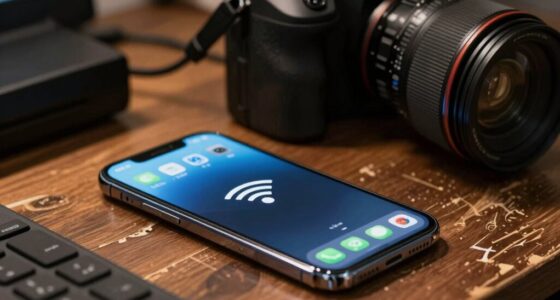
hardware wallet with biometric security
As an affiliate, we earn on qualifying purchases.
As an affiliate, we earn on qualifying purchases.
Recent Trends in AI and Cybersecurity Vulnerabilities
Over the past decade, cybersecurity has increasingly incorporated AI for threat detection and automated responses. Yet, vulnerabilities in hardware and firmware remain a persistent challenge, often overlooked until exploited. The recent hack is notable not only for its scale but also for the fact that the flaw existed undetected for over five years, despite prior audits. The incident coincides with rapid advancements in AI models, such as open-source frontier models, which may have facilitated the attackers' ability to quickly generate and test private keys, raising concerns about AI’s dual role in security.
"This is the sober reality of a new AI paradigm, where AI-assisted code review can surface latent bugs faster than the industry's most seasoned experts."
— Rodolfo Novak, CEO of Coinkite
As an affiliate, we earn on qualifying purchases.
Unresolved Questions About AI’s Exact Role in the Breach
There is no public proof that AI directly discovered or executed the attack. It remains unclear whether AI was involved in the tooling, discovery, or just the rapid analysis process. The hypothesis that AI facilitated the attack is based on timing and pattern analysis, not confirmed evidence.
As an affiliate, we earn on qualifying purchases.
Next Steps for Industry and Security Researchers
Security firms and hardware manufacturers are expected to review and enhance firmware auditing processes, increasingly integrating AI tools for vulnerability detection. Industry leaders will likely debate the role of AI in cybersecurity, emphasizing the need for robust safeguards against AI-assisted threats. Ongoing investigations aim to clarify AI’s precise involvement and develop strategies to prevent similar breaches.
As an affiliate, we earn on qualifying purchases.
Key Questions
Could AI have prevented this hardware wallet breach?
While AI-assisted audits might improve vulnerability detection, the breach resulted from a specific engineering error that AI failed to catch during testing. AI's role in prevention is promising but not infallible.
Is AI likely to be used by attackers in future cyber breaches?
Experts suggest that attackers may increasingly leverage AI for rapid vulnerability discovery and automation, making AI both a tool for defense and a potential weapon in offensive strategies.
What can users do to protect themselves against similar vulnerabilities?
Users should stay informed about firmware updates, choose hardware with proven security track records, and consider multi-layered security approaches, including hardware and software safeguards.
Will AI help improve security in hardware wallets and other devices?
Yes, AI can enhance security by automating vulnerability detection and testing, but it must be integrated carefully, with ongoing oversight to avoid new risks.
Source: ThorstenMeyerAI.com
Halloween Picks
halloween
As an affiliate, we earn on qualifying purchases.