
TL;DR
Q.ANT demonstrated its NPU Gen 2+ photonic processor working with an AMD GPU to run a language model at SC26 in Chicago. The company says the photonic chip performed a Fourier-based operation in place of a computationally intensive attention layer; performance, energy use and model-quality results were not provided in the source report.
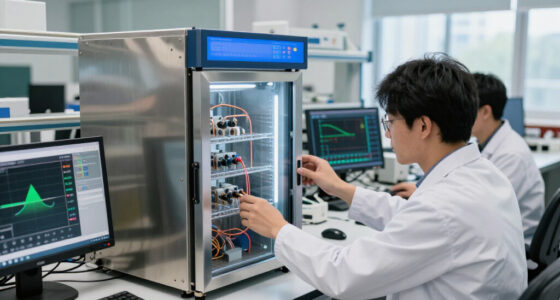
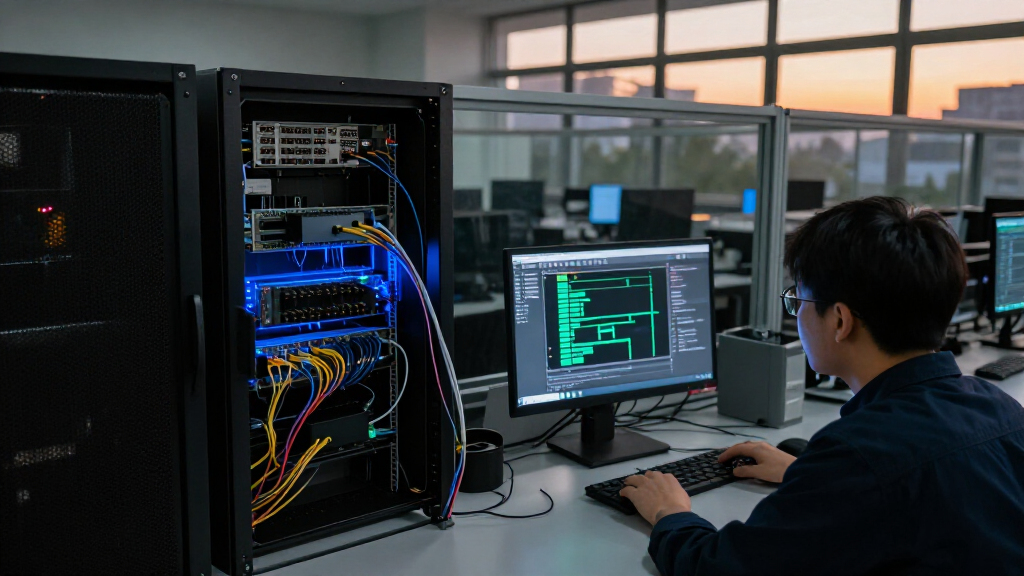
Q.ANT demonstrated a language model running on a hybrid system that paired its new NPU Gen 2+ photonic processor with an AMD GPU at the SC26 conference in Chicago. The company said the photonic chip used optical Discrete Fourier Transforms (DFTs) to replace a computationally intensive attention layer, showing how light-based processing could work as a co-processor alongside conventional hardware.

Get the latest gadgets delivered free with Prime
- Fast, free delivery on millions of items
- Prime Video, Amazon Music and more included
- Member-only deals all year
The demonstration accompanied Q.ANT’s unveiling of the NPU Gen 2+, which adds hardware for performing DFTs directly in light. DFTs are mathematical operations used in areas including signal and image processing, simulations and data analysis. Q.ANT says the new capability extends its photonic processor beyond the matrix multiplication and nonlinear operations associated with its earlier NPU Gen 2.
According to the company, the hybrid setup used the photonic processor for calculations associated with a language-model attention layer while an AMD GPU supplied conventional computing. Attention mechanisms help language models represent relationships between tokens, but can require substantial computation. Q.ANT described the demonstration as a way to explore replacing part of that work with a Fourier-based approach; the source report does not provide independent test results or a detailed account of the model and workload.
Q.ANT said its software development kit is being extended to support Gen 2+ functions, including Fourier-based algorithms. The SDK, launched in September 2026, includes C and Python APIs, examples, documentation and a CPU-based simulation environment. The company also cited a photonic pilot with IONOS as a route for developers to access physical hardware. It plans to offer commercial systems combining Gen 2 and Gen 2+ in the second half of 2027.
A Co-Processor for AI Workloads
The demonstration matters because it presents photonic computing as a possible complement to GPUs, rather than as a replacement for existing digital systems. If optical processors can handle selected mathematical operations efficiently while GPUs manage other parts of a workload, developers could have another way to distribute computation in AI and high-performance computing.
Q.ANT argues that performing DFTs in light could reduce the need for sequences of electronic calculations and help developers design models with fewer parameters or less data. Those are company claims about potential, not measured outcomes established by the demonstration details provided. No benchmark, power measurement, comparison with a GPU-only system, or model-quality result was reported in the source material, so the practical benefit for operators and users is not yet quantified.
Products Worth Considering

Samsung 27-Inch Odyssey OLED G5 QHD Gaming Monitor (G50SF)

LG UltraGear 27-inch QHD OLED Gaming Monitor, 240Hz, 0.03ms, G-SYNC Compatible, FreeSync Premium Pro, HDR True Black 400

Jackery Explorer 300 Portable Power Station, 292Wh
As an affiliate, we earn on qualifying purchases.
From Gen 2 to Optical DFTs
The Gen 2+ builds on Q.ANT’s NPU Gen 2, launched in 2025 with a focus on matrix multiplication and nonlinear operations. The new generation adds an optical component designed to perform DFTs natively on the chip. In Q.ANT’s description, light carries out the operation in one pass, while conventional digital hardware performs it through electronic calculations.
The company has also been building software and access around the hardware. Its September 2026 SDK release lets developers test photonic applications in a CPU-based simulation environment without direct access to an optical processor. Q.ANT says its IONOS pilot provides access to real hardware. The SC26 language-model demonstration is presented as an early example of how these tools might support algorithms designed around optical operations, rather than simply translating existing GPU code.
“With Gen 2+, we’re opening the door to software that uses what light does naturally.”
— Michael Förtsch, Q.ANT chief executive
Performance Data Still Missing
The source report does not state the language model’s name or size, the hardware configuration beyond the NPU Gen 2+ and an AMD GPU, or how much of the attention layer was replaced. It also gives no latency, throughput, energy-use or cost figures, and does not compare the hybrid system with a GPU-only baseline.
It is also unclear whether the demonstrated approach preserves model quality across tasks or can be applied broadly to other language models. Q.ANT’s claims about leaner models and lower operating costs remain prospective in the available material. The announcement establishes that the company showed a hybrid system at SC26, but not that it has demonstrated a general performance or efficiency advantage.
SDK Work and 2027 Systems
Q.ANT says it is extending its SDK so developers can experiment with the Gen 2+ DFT functions and Fourier-based algorithms. The next evidence to watch for includes technical details on the language-model implementation, reproducible comparisons with conventional processing, and measurements of power use and model performance.
The company plans to offer systems combining NPU Gen 2 and Gen 2+ processors in the second half of 2027. That schedule is a stated plan, not a confirmed delivery date. The source material does not specify pricing, system availability, or which developers and data-center customers will be able to access commercial products.
Key Questions
What did Q.ANT demonstrate at SC26?
Q.ANT said it ran a language model on a system combining its NPU Gen 2+ photonic processor with an AMD GPU. The company said the photonic processor handled a Fourier-based operation used to replace a computationally intensive attention layer.
What is new in the NPU Gen 2+?
The Gen 2+ adds optical Discrete Fourier Transforms, which Q.ANT says the processor performs directly in light. The company says this expands the mathematical operations available on its photonic hardware.
Did Q.ANT report that the hybrid system is faster or more energy efficient?
The source report provides no benchmark or energy-use measurements. Q.ANT described potential performance and efficiency benefits, but their size has not been established by the information provided.
When could commercial systems become available?
Q.ANT said it plans to offer commercial systems combining Gen 2 and Gen 2+ processors in the second half of 2027. Pricing and availability details were not included.
Source: thequantuminsider.com