
The best plug-in home energy storage systems pair useful battery capacity with enough output for the appliances you need to run and a setup that fits your home. My best overall pick is the EF ECOFLOW DELTA Pro, which combines a 3,600Wh battery with 3,600W AC output; the Jackery HomePower 3000 stands out for a larger 3,072Wh portable format, while the ECO-WORTHY PowerMega suits buyers seeking a more involved 48V system with a hybrid inverter. The main tradeoff is between portability and capacity, with whole-home integration often requiring more planning than a plug-in power station. Output limits, expansion options, solar compatibility, and installation needs also separate these systems. Read on for my ranking, buying advice, and guidance on matching a system to your backup priorities.

Get the latest gadgets delivered free with Prime
- Fast, free delivery on millions of items
- Prime Video, Amazon Music and more included
- Member-only deals all year
Complete the kit


Key Takeaways
- Capacity alone does not determine backup capability: the 2,048Wh ECOFLOW DELTA 3 Max offers 2,400W output, while the 2,010Wh Anker SOLIX S2000 is rated for 1,500W, a meaningful difference for simultaneous appliance use.
- The lineup spans very different installation approaches: most picks are portable power stations, while the ECO-WORTHY PowerMega is a 48V system with a hybrid inverter and the Anker SOLIX E10 is presented as a whole-home backup system with a smart inlet box.
- Several Jackery models target different capacity and output needs: the HomePower 3000 has 3,072Wh, the HomePower 3600 models have 3,584Wh, and the HomePower 3600 Plus lists 3,600W output; buyers should compare the exact model rather than assume the names indicate identical capabilities.
- Solar bundles suit buyers who want a ready-made charging path: the Jackery Solar Generator 1000 v2 includes a 200W solar panel, but its 1,024Wh capacity makes it a different fit from the larger systems intended for longer backup windows.
- Whole-home ambitions call for more planning than portable backup: the ECOFLOW TITAN with Smart Home Panel 10 and Anker SOLIX E10 offer a path toward home integration, but their setup and circuit needs differ from simply plugging appliances into a power station.
| Jackery HomePower 3000 Portable Power Station, 3072Wh |  | Best for High-Output Portable Backup | Capacity: 3,072Wh | Running output: 3,600W | Surge output: 7,200W | VIEW LATEST PRICE | See Our Full Breakdown |
| ECO-WORTHY PowerMega 48V 314Ah LiFePO4 Energy Storage System with 10kW Hybrid Inverter |  | Best for Higher-Capacity Home Backup | Usable energy: 16.1kWh | Battery capacity: 314Ah | Battery voltage: 51.2V | VIEW LATEST PRICE | See Our Full Breakdown |
| DABBSSON 2000L Portable Power Station, 2048Wh LiFePO4 Battery, 2200W Output |  | Best for Compact, Multi-Use Backup | Battery capacity: 2,048Wh | Battery chemistry: Semi-solid LiFePO4 | Continuous output: 2,200W | VIEW LATEST PRICE | See Our Full Breakdown |
| Jackery HomePower 2000 Plus v2 Portable Power Station, 2048Wh |  | Best for Expandable Portable Storage | Battery capacity: 2,048Wh | Expandable capacity: Up to 12kWh | AC output: 2,400W | VIEW LATEST PRICE | See Our Full Breakdown |
| EF ECOFLOW DELTA 3 Max Portable Power Station, 2048Wh LiFePO4 Battery, 2400W Output |  | Best for Fast Recharge and UPS Backup | Battery capacity: 2,048Wh | Battery chemistry: LiFePO4 | Standard output: 2,400W | VIEW LATEST PRICE | See Our Full Breakdown |
| EF ECOFLOW TITAN 5017Wh Portable Power Station with Smart Home Panel 10 |  | Best for Circuit-Level Home Backup | Battery capacity: 5,017Wh | Expandable capacity: Up to 30kWh | Continuous output: 7,200W | VIEW LATEST PRICE | See Our Full Breakdown |
| Jackery HomePower 3600 Pro Max Portable Power Station, 3584Wh |  | Best for Quiet, Expandable Backup | Battery capacity: 3,584Wh (3.6kWh) | Expandable capacity: Up to 43kWh | Output wattage: 4,000W | VIEW LATEST PRICE | See Our Full Breakdown |
| Anker SOLIX S2000 Portable Power Station, 2,010Wh, 1,500W |  | Best Compact Everyday Backup | Battery capacity: 2,010Wh | Battery chemistry: LiFePO4 (LFP) | Continuous output: 1,500W | VIEW LATEST PRICE | See Our Full Breakdown |
| Jackery HomePower 3600 Plus Portable Power Station, 3584Wh, 3600W |  | Best for Wheeled, High-Capacity Portability | Battery capacity: 3,584Wh | AC output: 3,600W | Voltage: 120V; 240V in parallel | VIEW LATEST PRICE | See Our Full Breakdown |
| Jackery Solar Generator 1000 v2 with 200W Solar Panel, 1024Wh LiFePO4 Battery |  | Best Starter Solar Backup Bundle | Battery capacity: 1,024Wh | Battery type: LiFePO4 (LFP) | AC output: 1,500W | VIEW LATEST PRICE | See Our Full Breakdown |
| Anker SOLIX E10 Whole-Home Backup System with Smart Inlet Box and Two B6000 Batteries |  | Best for Whole-Home Backup | Battery capacity: 12 kWh with two B6000 modules | Expandable capacity: Up to 30 kWh | Continuous output: 7.6 kW | VIEW LATEST PRICE | See Our Full Breakdown |
| EF ECOFLOW DELTA Pro Portable Power Station, 3600Wh, 3600W AC Output | 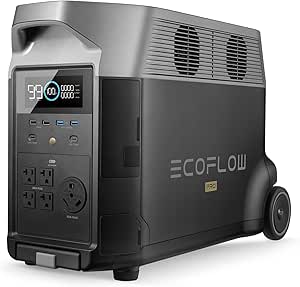 | Best Portable, Expandable Power Station | Battery capacity: 3,600Wh | Running wattage: 3,600W | Starting wattage: 7,200W | VIEW LATEST PRICE | See Our Full Breakdown |
| plug-in home energy storage system | Battery capacity | Battery chemistry | Weight | Expandable capacity |
|---|---|---|---|---|
| Jackery HomePower 3000 Portabl | — | LiFePO4 | 59.5 lbs | — |
| ECO-WORTHY PowerMega 48V 314Ah | 314Ah | LiFePO4 | — | — |
| DABBSSON 2000L Portable Power | 2,048Wh | Semi-solid LiFePO4 | — | — |
| Jackery HomePower 2000 Plus v2 | 2,048Wh | — | 40.6 lbs | Up to 12kWh |
| EF ECOFLOW DELTA 3 Max Portabl | 2,048Wh | LiFePO4 | — | — |
| EF ECOFLOW TITAN 5017Wh Portab | 5,017Wh | Lithium iron phosphate (LFP) | 119 lbs | Up to 30kWh |
| Jackery HomePower 3600 Pro Max | 3,584Wh (3.6kWh) | LFP | 74 lbs | Up to 43kWh |
| Anker SOLIX S2000 Portable Pow | 2,010Wh | LiFePO4 (LFP) | 35.7 lbs | — |
| Jackery HomePower 3600 Plus Po | 3,584Wh | — | 77.2 lbs | Up to 21kWh per unit or 43kWh with multiple units |
| Jackery Solar Generator 1000 v | 1,024Wh | — | 23.4 lbs | — |
| Anker SOLIX E10 Whole-Home Bac | 12 kWh with two B6000 modules | LFP | — | Up to 30 kWh |
| EF ECOFLOW DELTA Pro Portable | 3,600Wh | — | 99 lbs | Up to 25 kWh |
More Details on Our Top Picks
Jackery HomePower 3000 Portable Power Station, 3072Wh
The Jackery HomePower 3000 is the strongest fit here for buyers who want a portable battery that can handle more than light device charging. Its 3,600W running output and 3,072Wh capacity give it more headroom than the 2,048Wh DABBSSON 2000L and the 2,400W Jackery HomePower 2000 Plus v2, which makes it a better match for several household essentials or RV loads. A 20ms-or-less UPS transfer can help keep connected equipment running during an outage, while AC, solar, car, hybrid, and generator charging offer useful ways to replenish it. The tradeoff is its 59.5-pound weight: it is portable in the broad sense, but not an easy unit to move frequently. Solar panels are also sold separately, and its capacity is below the much larger ECO-WORTHY system.
Pros:- 3,072Wh capacity and 3,600W running output offer more power headroom than the 2,048Wh portable models in this group.
- UPS transfer time of 20ms or less supports backup for connected equipment.
- AC, hybrid, solar, car, and gas-generator charging provide multiple replenishment paths.
- LiFePO4 battery is rated for 4,000 cycles while retaining 70% capacity.
Cons:- At 59.5 pounds, it is cumbersome for frequent carrying or stair transport.
- Solar panels are optional, adding a separate purchase for solar charging.
- Its 120V output does not match the ECO-WORTHY system’s 240V split-phase capability.
Best for: Households or RV owners who need substantial 120V output, outage switching, and several charging options in one portable battery.
Not ideal for: Buyers who need a lightweight unit to carry often, or those seeking a fixed, high-capacity system with 240V output.
- Capacity:3,072Wh
- Running output:3,600W
- Surge output:7,200W
- Battery chemistry:LiFePO4
- Battery cycle life:4,000 cycles to 70% capacity
- UPS transfer time:20ms or less
- AC charging time:2.2 hours
- Weight:59.5 lbs
Our verdict“Choose the HomePower 3000 if you want high output and flexible charging in a portable package and can manage its weight.”
ECO-WORTHY PowerMega 48V 314Ah LiFePO4 Energy Storage System with 10kW Hybrid Inverter
The ECO-WORTHY PowerMega is the clear capacity leader among these picks: its 16.1kWh usable battery and 10kW hybrid inverter suit a more substantial home-backup or off-grid setup than the portable Jackery HomePower 3000. It also supplies both 120V single-phase and 240V split-phase, a meaningful distinction for buyers whose planned loads require split-phase service. Active balancing, a built-in breaker, fire suppression, and multiple monitoring and communications options add system-level features that the compact power stations do not offer. This is not the choice for someone seeking a grab-and-go plug-in battery, though; it is a larger installation-oriented package, and the listing includes only one battery and inverter. Parallel connection cables are not included, and truck-freight delivery requires a suitable receiving location.
Pros:- 16.1kWh usable energy provides much more storage than the portable units in this roundup.
- 10kW inverter supports 120V single-phase and 240V split-phase output.
- Active-balancing BMS, built-in breaker, and aerosol fire suppression add built-in safety provisions.
- WiFi, Bluetooth, RS485, CAN, and RS232 support monitoring and system communication.
Cons:- Parallel connection cables are not included with the single-battery package.
- Truck-freight delivery requires an address that can accommodate the shipment.
- Its larger system format is less suited to buyers who want a portable plug-in backup unit.
Best for: Homeowners planning substantial backup or off-grid storage who need 240V split-phase output, monitoring options, and a large usable battery.
Not ideal for: Renters or buyers seeking a portable, ready-to-move power station; this system is a larger package delivered by truck freight, with expansion cables not included.
- Usable energy:16.1kWh
- Battery capacity:314Ah
- Battery voltage:51.2V
- Inverter output power:10,000W
- Output voltage:120V single-phase / 240V split-phase
- Battery chemistry:LiFePO4
- Cycle life:9,000+ cycles at 80% depth of discharge
- Warranty:10 years
Our verdict“Pick the PowerMega for higher-capacity stationary-style backup and split-phase output, not for portable convenience.”
DABBSSON 2000L Portable Power Station, 2048Wh LiFePO4 Battery, 2200W Output
The DABBSSON 2000L is a practical middle ground for buyers who want a portable battery for home outages, camping, or job sites without stepping up to the heavier Jackery HomePower 3000. At 41 pounds, it is easier to move than that 59.5-pound Jackery, while its 2,048Wh capacity and 2,200W continuous output still cover a useful range of devices and appliances. Six AC outlets help when several items need power at once, and the under-15ms EPS switch is faster than the Jackery’s stated transfer time. Its one-hour AC charge and up-to-800W solar input give it flexible replenishment options, though panels are not included. The tradeoff is lower capacity and output than the HomePower 3000, and its 41-pound body is still a load for frequent long-distance carrying.
Pros:- 2,048Wh capacity and 2,200W continuous output balance home backup with portable use.
- Six AC outlets make it easier to power several devices at the same time.
- EPS switch time under 15ms supports rapid backup switching for connected equipment.
- AC, solar, car, and hybrid charging offer flexible ways to recharge.
Cons:- Its 2,048Wh capacity and 2,200W output are below the Jackery HomePower 3000.
- At 41 pounds, it can still be awkward to carry over long distances.
- Solar panels are optional and are not included in the listed package.
Best for: Campers, RV users, and homeowners who want a relatively movable backup battery with multiple AC outlets and several charging methods.
Not ideal for: Buyers who need the highest output or longer reserves for multiple household loads; the Jackery HomePower 3000 offers more capacity and running power.
- Battery capacity:2,048Wh
- Battery chemistry:Semi-solid LiFePO4
- Continuous output:2,200W
- Power boost:3,300W
- AC outlets:6
- AC charging time:1 hour
- Solar input:Up to 800W MPPT
- EPS switch time:Less than 15ms
Our verdict“Choose the DABBSSON 2000L if you want a more manageable multi-use battery and can work within its midrange capacity and output.”
Jackery HomePower 2000 Plus v2 Portable Power Station, 2048Wh
The Jackery HomePower 2000 Plus v2 makes the most sense for buyers who want to start with a manageable 2,048Wh unit and retain a path to more capacity. Its stated expansion to up to 12kWh gives it a longer-term role than the fixed-capacity DABBSSON 2000L, while its 2,400W AC output is slightly above the DABBSSON’s 2,200W continuous rating. The more-than-6,000-cycle LFP battery is another strong point for owners expecting regular use. Smart priority routing can help direct available power to essential circuits, although this is still a 120V portable station rather than a 10kW split-phase setup like the ECO-WORTHY PowerMega. At 40.6 pounds, it is not weightless, and solar panels are optional; the listed package includes only the power station.
Pros:- Expandable capacity up to 12kWh offers a growth path beyond its initial 2,048Wh.
- 2,400W AC output exceeds the DABBSSON 2000L’s 2,200W continuous output.
- LFP battery is rated for more than 6,000 cycles.
- Smart priority routing and 140W USB-C output add useful power-management and device-charging options.
Cons:- At 40.6 pounds, it is still a substantial load to move regularly.
- Solar panels are optional rather than included.
- Its 120V AC output does not provide the split-phase capability of the ECO-WORTHY system.
Best for: Homeowners who want a portable 2,048Wh starting point with a stated expansion path for increasing backup capacity later.
Not ideal for: Buyers who need 240V split-phase output or a high-capacity system out of the box; the ECO-WORTHY PowerMega is better aligned with those needs.
- Battery capacity:2,048Wh
- Expandable capacity:Up to 12kWh
- AC output:2,400W
- Battery type:LFP
- Battery cycle life:More than 6,000 cycles
- USB-C output:140W
- Voltage:120V AC
- Weight:40.6 lbs
Our verdict“Choose the HomePower 2000 Plus v2 if expandable capacity matters more than having a complete high-output system from the start.”
EF ECOFLOW DELTA 3 Max Portable Power Station, 2048Wh LiFePO4 Battery, 2400W Output
The EF ECOFLOW DELTA 3 Max stands out for buyers who value quick recharge and rapid backup switching more than expandability. Its 2,048Wh battery and 2,400W standard output put it in the same capacity class as the Jackery HomePower 2000 Plus v2, but EcoFlow lists a charge to 80% in about 1.13 hours and a transfer time under 10ms. That makes it a strong fit for outage readiness when there is limited time to recharge between events or when connected equipment needs a quick handoff. X-Boost can support compatible appliances up to 3,400W, but that figure is not the standard output rating, so buyers should check appliance compatibility. Unlike the Jackery, this listing does not provide an expansion figure, and its solar panel is not included.
Pros:- Reaches 80% charge in about 1.13 hours, reducing recharge downtime.
- Transfer time under 10ms supports rapid backup switching.
- 2,400W standard output and 3,400W X-Boost for compatible appliances offer useful output flexibility.
- App control supports energy monitoring and charging schedules.
Cons:- The 3,400W X-Boost figure is not the standard 2,400W output and applies to compatible appliances.
- Solar panels are optional and not included.
- Unlike the Jackery HomePower 2000 Plus v2, the listed product data provides no expandable-capacity figure.
Best for: Homeowners or campers who need a 2,048Wh portable battery that can recharge quickly and switch to backup power in under 10ms.
Not ideal for: Buyers who want a documented expansion path or need 3,400W as continuous standard output; the X-Boost figure applies only to compatible appliances.
- Battery capacity:2,048Wh
- Battery chemistry:LiFePO4
- Standard output:2,400W
- X-Boost output:Up to 3,400W for compatible appliances
- Charging time:0–80% in about 1.13 hours
- Transfer time:Less than 10ms
- Warranty:5 years
- Dimensions:9.4 × 12 × 19.44 inches
Our verdict“Pick the DELTA 3 Max if fast recharge and a sub-10ms transfer time matter more to you than a stated capacity-expansion path.”
EF ECOFLOW TITAN 5017Wh Portable Power Station with Smart Home Panel 10
The TITAN is the strongest fit here for buyers who want a portable battery tied into selected home circuits, rather than a station mainly used by plugging in individual appliances. Its Smart Home Panel 10 supports backup for up to 10 circuits, while 7,200W of 120V/240V split-phase output and a 5,017Wh battery give it more starting capacity and output than the Jackery HomePower 3600 Pro Max. Expansion to 30kWh also offers a path to longer outages. The tradeoff is a 119-pound unit plus panel installation that needs integration with the home’s electrical system; this is not a grab-and-go setup. With AC, solar, and generator charging, LFP cells, and UL 9540 certification, I’d rank it ahead for installed circuit backup, but not for buyers seeking simple portability.
Pros:- Smart Home Panel 10 supports backup for up to 10 home circuits.
- 7,200W split-phase output supplies both 120V and 240V loads.
- Capacity can expand from 5,017Wh to 30kWh.
- Supports AC, solar, and generator charging, with LFP chemistry and UL 9540 certification.
Cons:- At 119 pounds, it is difficult to move without help.
- Using the backup panel requires integration with household electrical circuits.
- Its size and circuit-panel setup are excessive for buyers who only need portable power for a few devices.
Best for: Homeowners who want a professionally integrated battery backup for as many as 10 selected circuits and expect to expand capacity.
Not ideal for: Renters or buyers who need a light, ready-to-move station, since the unit weighs 119 pounds and the Smart Home Panel needs electrical installation.
- Battery capacity:5,017Wh
- Expandable capacity:Up to 30kWh
- Continuous output:7,200W
- Output voltage:120V/240V split-phase
- Battery chemistry:Lithium iron phosphate (LFP)
- Maximum solar input:4kW
- Backup panel:Smart Home Panel 10; supports up to 10 circuits
- Weight:119 lbs
- Safety certification:UL 9540; tested to UL 9540A
Our verdict“Choose the TITAN if circuit-level backup and substantial expansion matter more than easy setup or portability.”
Jackery HomePower 3600 Pro Max Portable Power Station, 3584Wh
The HomePower 3600 Pro Max suits buyers who want substantial battery capacity with 120V/240V output and room to grow, but don’t need the EcoFlow TITAN’s included circuit panel. Its 3.6kWh starting capacity expands to up to 43kWh, the largest stated expansion figure among these five products. A sub-10ms UPS switch can help keep compatible equipment powered through an interruption, and operation below 30dB is a useful advantage when a backup unit sits near living areas. At 74 pounds, it is lighter than the TITAN, though still not a lightweight carry. Home installation requires a manual transfer switch, and solar panels are optional, so the setup takes more planning than the Jackery Solar Generator 1000 v2 bundle. I’d favor it for expandable household backup, not for circuit-panel integration out of the box.
Pros:- Expandable capacity reaches up to 43kWh.
- Provides 120V/240V output with 4,000W output wattage.
- UPS switching is under 10ms, and operating noise is specified below 30dB.
- LFP battery is rated for 6,000 cycles and the unit includes an emergency shutoff.
Cons:- Home backup installation requires a manual transfer switch.
- Solar panels are optional rather than included.
- At 74 pounds, it is not convenient to carry frequently.
Best for: Households seeking a quiet 120V/240V battery system with substantial expansion headroom and a transfer-switch installation.
Not ideal for: Buyers who want a complete solar bundle or an included home circuit panel; solar is optional and a manual transfer switch is needed for home backup.
- Battery capacity:3,584Wh (3.6kWh)
- Expandable capacity:Up to 43kWh
- Output wattage:4,000W
- Output voltage:120V/240V
- Battery chemistry:LFP
- Battery cycle life:6,000 cycles
- UPS switching time:Under 10ms
- Noise level:Under 30dB
- Weight:74 lbs
Our verdict“Pick the HomePower 3600 Pro Max for quiet operation and high expansion potential if you can arrange the transfer-switch installation.”
Anker SOLIX S2000 Portable Power Station, 2,010Wh, 1,500W
The SOLIX S2000 is the practical middle ground for buyers who want more than a small emergency battery without moving up to a 3.5kWh-class unit. At 2,010Wh and 35.7 pounds, it is much easier to reposition than either Jackery HomePower 3600 model, and its eight outlets make it convenient for several household devices. The under-10ms UPS switchover adds a backup role for compatible equipment, while six charging methods give it flexibility for home, vehicle, and solar replenishment. Its 1,500W continuous output is the main limit: compared with the TITAN or HomePower 3600 Pro Max, it is not the pick for higher-demand 240V loads. Solar input tops out at 400W, and there is no 12V DC port. I’d choose it for compact, multi-device backup, not whole-home ambitions.
Pros:- 35.7-pound weight and compact dimensions make it easier to move than the larger Jackery and EcoFlow systems.
- Eight outlets support several devices at once.
- UPS switchover is under 10ms.
- Supports six charging methods and up to 400W solar input.
Cons:- 1,500W continuous output is below the larger home-backup systems in this lineup.
- Solar input is limited to 400W.
- No 12V DC port is provided.
Best for: Apartment dwellers and homeowners who need a movable battery for several electronics and modest appliances, with quick UPS switchover.
Not ideal for: Buyers who need 240V output, high-wattage appliance support, or rapid solar replenishment; this model is limited to 1,500W continuous output and 400W solar input.
- Battery capacity:2,010Wh
- Battery chemistry:LiFePO4 (LFP)
- Continuous output:1,500W
- Peak output:3,000W
- Solar input:Up to 400W
- Outlets:8
- UPS switchover:Less than 10ms
- Weight:35.7 lbs
- Warranty:5 years
Our verdict“Choose the SOLIX S2000 for portable, multi-device backup when a compact footprint matters more than high output or whole-home expansion.”
Jackery HomePower 3600 Plus Portable Power Station, 3584Wh, 3600W
The HomePower 3600 Plus puts a large battery and 3,600W output in a wheeled format, making it a better match for buyers who need to move substantial backup power around a home or garage. Its 3,584Wh capacity can expand to 21kWh per unit, or up to 43kWh with multiple units; parallel operation also enables 7,200W and 240V. That makes it more adaptable for larger loads than the Anker SOLIX S2000, though the Anker is far easier to lift and offers more outlets. Here, only two outlets are specified, and the unit still weighs 77.2 pounds despite its wheels. Charging options include AC, solar, gas generator, and hybrid AC+DC, with stated hybrid recharge time of two hours. Unlike the EcoFlow TITAN, it does not list an included circuit backup panel, so I’d see it as a movable high-capacity station rather than a ready-made circuit-level system.
Pros:- 3,584Wh capacity and 3,600W AC output support larger loads than compact stations such as the Anker SOLIX S2000.
- Wheels and a telescopic handle simplify movement across level surfaces.
- Parallel operation supports 7,200W output and 240V.
- Accepts AC, solar, gas-generator, and hybrid AC+DC charging.
Cons:- At 77.2 pounds, it remains difficult to lift, even with wheels.
- Only two outlets are specified.
- 240V output requires parallel operation with another unit.
Best for: Homeowners who need high-capacity power that can roll between storage and use locations, with the option to add units for 240V output.
Not ideal for: Buyers who need a lightweight carry, numerous AC outlets, or an included circuit-level backup panel.
- Battery capacity:3,584Wh
- AC output:3,600W
- Voltage:120V; 240V in parallel
- Expandable capacity:Up to 21kWh per unit or 43kWh with multiple units
- Battery type:LFP
- Battery cycle life:6,000 cycles
- Charging options:Hybrid AC+DC, AC, solar, and gas generator
- Outlets:2
- Weight:77.2 lbs
Our verdict“Choose the HomePower 3600 Plus if you want a large, rollable power station and can work around its limited outlet count.”
Jackery Solar Generator 1000 v2 with 200W Solar Panel, 1024Wh LiFePO4 Battery
The Solar Generator 1000 v2 is the easiest entry point here for someone who wants a modest battery and a solar panel in one package. Its 1,024Wh capacity and 1,500W AC output suit phones, networking gear, lights, and some smaller appliances, while the included 200W solar panel gives buyers a way to recharge without sourcing a panel separately. Two pure sine wave outlets and USB ports cover common devices, and app-controlled charging modes let users choose emergency fast charging or quieter overnight operation. This is a much smaller, more portable setup than the Jackery HomePower 3600 Plus, but it cannot match that model’s capacity or high-load potential. The panel and generator ship separately, and emergency fast charge must be enabled in the app. I’d pick it for occasional outages and outdoor use, not extended household backup.
Pros:- Includes a 200W solar panel, unlike the larger Jackery HomePower 3600 Pro Max, which lists solar panels as optional.
- 1,500W AC output and a 3,000W peak support a range of smaller appliances.
- USB-C, USB-A, car, and AC ports allow simultaneous device charging.
- App offers emergency fast-charge, quiet, and energy-efficiency modes.
Cons:- 1,024Wh capacity is limited for extended home backup.
- Emergency fast charging must be enabled through the app.
- The generator and solar panel ship separately.
Best for: First-time buyers who want a portable, solar-equipped station for essential electronics, lighting, and short outages.
Not ideal for: Households seeking multi-day backup, 240V power, or support for several high-draw appliances; its battery is just 1,024Wh and it has two AC outlets.
- Battery capacity:1,024Wh
- Battery type:LiFePO4 (LFP)
- AC output:1,500W
- Peak output:3,000W
- UPS switchover:10ms
- Solar panel:200W included
- AC outlets:2 pure sine wave
- Weight:23.4 lbs
- Warranty:5 years
Our verdict“Choose the Solar Generator 1000 v2 for portable, small-scale backup with a solar panel included, not for powering a home through a long outage.”
Anker SOLIX E10 Whole-Home Backup System with Smart Inlet Box and Two B6000 Batteries
The Anker SOLIX E10 is the most home-integrated option here: its included Smart Inlet Box and 7.6 kW continuous output suit backup circuits better than a portable station designed mainly for plugging in individual appliances. Two B6000 modules provide 12 kWh of storage, with room to expand to 30 kWh, so households can add capacity as backup needs grow. Its support for up to 9 kW of solar input also makes it a stronger fit for pairing with a substantial solar setup than the portable EcoFlow DELTA Pro. The tradeoff is installation: professional setup may be needed, and the E10 and inlet box may arrive separately. Choose it for a more fixed, scalable home backup arrangement; skip it if you want a system you can move and use without installation work.
Pros:- Includes 12 kWh of battery storage and supports expansion up to 30 kWh.
- 7.6 kW continuous output is suited to broader home backup needs than a small portable station.
- Supports up to 9 kW of solar input per unit and can work with existing solar systems.
- Weather-resistant design supports outdoor installation, with wall- or floor-mount options.
Cons:- Professional installation may be needed, making setup less straightforward than with a portable power station.
- The E10 and Smart Inlet Box may be dispatched separately.
- Its fixed-installation design is less useful for buyers who want to move power between locations.
Best for: Homeowners seeking a fixed backup system with substantial solar input, expandable battery capacity, and an inlet for household backup circuits.
Not ideal for: Renters or buyers who need a portable, plug-and-play power station and want to avoid professional installation.
- Battery capacity:12 kWh with two B6000 modules
- Expandable capacity:Up to 30 kWh
- Continuous output:7.6 kW
- Maximum output:10 kW
- Solar input:Up to 9 kW per unit
- Battery chemistry:LFP
- Mounting:Wall or floor
- Operating temperature:-4°F to 131°F
Our verdict“Choose the E10 for expandable, solar-ready home backup with an inlet-based setup, but pick a portable station if mobility and simple setup matter more.”
EF ECOFLOW DELTA Pro Portable Power Station, 3600Wh, 3600W AC Output
The EcoFlow DELTA Pro is the better fit for buyers who want high output and multiple charging options without committing to a fixed home installation. It supplies 3,600Wh of capacity and 3,600W running output, with expansion up to 25 kWh using compatible batteries or smart generators. That gives it a flexible path from portable backup toward a larger reserve, though its starting capacity is far below the Anker SOLIX E10’s 12 kWh. Fifteen output connections and charging from solar, an EV station, a wall outlet, a generator, or a car make it adaptable across home and travel use. Its 99-pound weight works against frequent carrying, and solar charging speed depends on the panels and conditions. Choose it for mobility and input flexibility, not for a ready-made whole-home inlet system.
Pros:- 3,600Wh battery capacity and 3,600W running output support a wide range of devices.
- Expandable to 25 kWh with compatible extra batteries or smart generators.
- Can charge from solar, EV charging stations, wall outlets, smart generators, or a car outlet.
- Fifteen output connections and Wi-Fi/Bluetooth app control support flexible use and monitoring.
Cons:- At 99 pounds, it is difficult to move often or carry over long distances.
- Its 3,600Wh base capacity is much smaller than the Anker SOLIX E10’s included 12 kWh.
- Solar charging time depends on compatible panels and available conditions.
Best for: Homeowners or RV users who want a high-output portable station, varied charging sources, and the option to expand storage over time.
Not ideal for: Buyers seeking a fixed whole-home backup installation or a lightweight unit they can carry frequently.
- Battery capacity:3,600Wh
- Running wattage:3,600W
- Starting wattage:7,200W
- Maximum output:4,500W with X-Boost
- Expandable capacity:Up to 25 kWh
- Output connections:15
- Charging methods:EV station, solar, wall outlet, smart generator, or car outlet
- Weight:99 lbs
- App control:Wi-Fi and Bluetooth
Our verdict“Pick the DELTA Pro if you want a portable, expandable station with flexible charging, but choose the Anker SOLIX E10 for higher included capacity and home-inlet integration.”
How We Picked
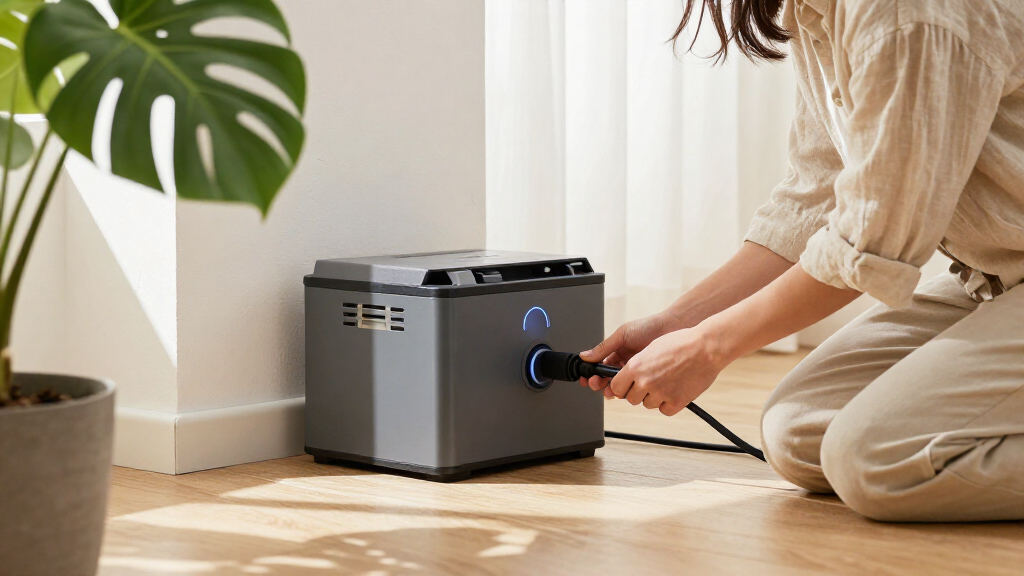
I compared the 12 systems on the details that shape real backup decisions: listed battery capacity, AC output, portability, expansion or integration options, charging setup, and intended scale. I also separated portable power stations from systems designed around a hybrid inverter or home connection, since their setup demands and use cases are not interchangeable. Where a product listing did not provide a particular specification, I did not assume it.
The ranking favors systems that make a strong match between usable capacity, output, and practical flexibility for home backup. Models with higher output or more direct home-integration features earn a stronger place for buyers seeking broader backup, while compact or lower-capacity options rank better for limited loads, portability, or simpler entry. Value here means fit and capability, not price; I also weigh complexity as a tradeoff, since a system that can serve more circuits may require more planning than a portable unit.
| plug-in home energy storage system | Battery chemistry | Expandable capacity |
|---|---|---|
| Jackery HomePower 3000 Portabl | LiFePO4 | — |
| ECO-WORTHY PowerMega 48V 314Ah | LiFePO4 | — |
| DABBSSON 2000L Portable Power | Semi-solid LiFePO4 | — |
| Jackery HomePower 2000 Plus v2 | — | Up to 12kWh |
| EF ECOFLOW DELTA 3 Max Portabl | LiFePO4 | — |
| EF ECOFLOW TITAN 5017Wh Portab | Lithium iron phosphate (LFP) | Up to 30kWh |
| Jackery HomePower 3600 Pro Max | LFP | Up to 43kWh |
| Anker SOLIX S2000 Portable Pow | LiFePO4 (LFP) | — |
| Jackery HomePower 3600 Plus Po | — | Up to 21kWh per unit or 43kWh with multiple units |
| Jackery Solar Generator 1000 v | — | — |
| Anker SOLIX E10 Whole-Home Bac | LFP | Up to 30 kWh |
| EF ECOFLOW DELTA Pro Portable | — | Up to 25 kWh |
Factors to Consider When Choosing Best Plug-in Home Energy Storage Systems
Before choosing a unit, I would define what “backup” means in your home: keeping a few devices running, supporting essential appliances, or connecting selected circuits. These distinctions affect capacity, output, installation, and whether portability matters more than integration. Use the factors below to avoid paying for capabilities you will not use—or buying a battery that cannot handle the loads you care about.
Choose Loads Before Choosing Battery Capacity
Make a short list of the appliances you want to power, then check both their running watts and any startup surge. A large battery may store plenty of energy yet still be unable to start a motor-driven appliance if its inverter output is too low. Add up the loads you expect to run at the same time, not every appliance in the house. For longer outages, estimate how many hours each load will operate and prioritize essentials such as communications, refrigeration, or medical equipment. Avoid treating a watt-hour figure as a promise of whole-home runtime; conversion losses and appliance cycling affect what you can actually use.
Separate Runtime From Power Delivery
Capacity, usually listed in watt-hours, describes stored energy; inverter output, listed in watts, describes how much power the system can provide at once. Buyers often compare only battery size and overlook output, which can lead to a system that runs one appliance well but cannot support several together. Check continuous output and surge handling in the exact model documentation, especially for refrigerators, pumps, and other equipment with motors. If your plan includes several high-demand loads, map which ones can run together and which can take turns. A modest capacity increase will not solve an output bottleneck.
Decide Whether You Need Portability or Circuit Backup
A portable power station is easiest to use when you can plug individual appliances directly into it, but that approach may not power fixed household circuits. A smart panel or inlet-based system can connect backup power to selected circuits, though it brings questions about wiring, compatibility, and installation. Do not assume that “home backup” means automatic power for the entire house; confirm which circuits are supported and how the system is connected. Renters and buyers who want a unit they can move between rooms may prefer a portable format. Homeowners planning circuit-level backup should review the electrical setup before choosing a battery.
Check Expansion and Charging Around Your Use Case
Expansion can extend runtime, but only if the system supports compatible batteries and the added capacity makes sense for your loads. Confirm which expansion components are approved for the exact model; similar product names do not guarantee interchangeable accessories. Solar charging can help during a prolonged outage, yet panel wattage, sunlight, placement, and charging limits determine how useful it will be. A bundled panel is convenient, but it may be too small to replenish a large battery quickly in limited sun. Compare the charging paths you can actually use at home rather than relying on a headline recharge claim.
Match System Complexity to Your Installation Comfort
Plug-in operation does not mean every system is equally simple to set up. A portable unit generally needs a suitable location and careful load management, while a hybrid inverter or smart-panel arrangement may call for electrical work and a review of local rules. Ask who can install the system, whether permits or utility coordination apply, and how the equipment behaves when grid power returns. If you want a straightforward backup routine, favor clear controls and direct appliance connections over features you will not configure. Buyers seeking broader circuit coverage should budget time for planning alongside the hardware choice.
Plan for Safe Placement and Long-Term Ownership
Battery systems need a dry, stable location with the clearances and temperature range specified by the manufacturer. Measure doorways, storage areas, and the route to the intended backup location before choosing a heavier unit; portability is only useful if you can move it safely. Review battery chemistry, warranty terms, service support, and any maintenance guidance in the manufacturer documentation. Keep cables and ventilation needs in mind, particularly if the unit will remain installed rather than stored between outages. A tidy, accessible setup can matter more during an outage than a small difference in advertised capacity.
Frequently Asked Questions
Can a plug-in power station run my whole house?
Most portable power stations are designed to run selected appliances directly, not every household circuit at once. Whole-home or circuit-level backup depends on the inverter output, available battery capacity, electrical connection, and the loads you choose to support. Systems such as the ECOFLOW TITAN with Smart Home Panel 10 and Anker SOLIX E10 are aimed at home integration, but their connection requirements still need review. Ask an electrician to confirm which circuits can be backed up and whether your planned loads fit the system. For many homes, backing up essentials is more practical than trying to power everything.
How do I estimate how long a battery will run my appliances?
Start with each appliance’s average power use and the number of hours you expect to run it, then add those energy needs together. Compare that estimate with the battery’s listed watt-hours, allowing for conversion losses and the fact that real appliances may cycle or draw more during startup. A refrigerator, for example, does not necessarily draw its rated running power every minute, while a heater may run at a steady high load. Use manufacturer runtime guidance as a rough reference, not a guarantee for your exact home. A small load plan helps reveal whether you need more capacity or simply need to reduce simultaneous use.
Do I need an electrician to use a plug-in home battery?
For a portable unit powering appliances through its outlets, setup may be as simple as placing it correctly and following the manual. Connecting a battery to household circuits through an inlet, smart panel, or hybrid inverter is a different matter and may require a qualified electrician, permits, or other local approvals. Never feed power into a household outlet or improvise a connection to the home wiring. Before buying a system designed for circuit backup, ask the manufacturer and a licensed electrician what installation it requires. That check can prevent a mismatch between the product and your home’s electrical setup.
Is a solar panel bundle worth choosing over a battery-only system?
A bundle can be useful if you want a compatible panel and a clear starting point for recharging during an outage. It does not mean the panel can refill the battery quickly: output varies with sunlight, season, panel angle, and the unit’s charging limits. For a small system such as the 1,024Wh Jackery Solar Generator 1000 v2, a 200W panel provides a more proportionate entry point than it would for a much larger battery. If you already own compatible panels, check input limits and connector requirements before paying for another bundle. Choose based on realistic charging conditions at your property, not the panel’s maximum rating alone.
Should I choose a larger battery or a higher-output inverter?
Choose based on the problem you are trying to solve: more capacity extends runtime, while more inverter output lets you run higher-demand appliances or more loads together. If an appliance exceeds the inverter’s output limit, extra battery capacity will not make it start. If your loads fit the output limit but need to run for many hours, a larger battery is the more useful upgrade. For mixed needs, list the appliances, their startup demands, and expected run time before comparing models. The lineup’s 2,048Wh systems with different listed outputs show why capacity and output should be checked separately.
Conclusion
For a balanced portable backup choice, I recommend the EF ECOFLOW DELTA Pro as best overall, pairing 3,600Wh with 3,600W AC output. The Jackery HomePower 3000 is a strong alternative for buyers who want substantial capacity in a portable format, while the ECO-WORTHY PowerMega is the best fit for shoppers seeking a 48V system with a hybrid inverter and who are prepared for a more involved setup. For home-integration needs, compare the ECOFLOW TITAN with Smart Home Panel 10 and Anker SOLIX E10 against your circuit plan and installation requirements. Beginners or buyers with modest loads may prefer the bundled Jackery Solar Generator 1000 v2, while those prioritizing a lower-output, roughly 2kWh portable option can look at the Anker SOLIX S2000. My final advice: choose by the appliances and circuits you need to support, then confirm output, runtime, charging, and installation fit before committing.