🔍 Read the full analysis: A Closer Look At 8 OLED Gaming Monitors For Fast Play In 2027 on ThorstenMeyerAI.com

Get the latest gadgets delivered free with Prime
- Fast, free delivery on millions of items
- Prime Video, Amazon Music and more included
- Member-only deals all year
TL;DR
The supplied comparison names eight OLED gaming monitors for different priorities, including competitive refresh rates, ultrawide immersion and a simpler QHD option. Its top overall pick is the ASUS ROG Strix XG27ACDNG, but the material does not provide prices, independent test results or a publication date confirming these models’ 2027 availability.
A buyer’s guide from ThorstenMeyerAI.com compares eight OLED gaming monitors, the original analysis ranking the ASUS ROG Strix XG27ACDNG first for its stated QHD resolution and 360Hz refresh rate. The comparison also highlights an Alienware ultrawide for immersion and several 240Hz QHD alternatives, while stressing that screen format, device compatibility and OLED care matter alongside speed.
The list groups monitors around different uses rather than treating the highest refresh rate as the right choice for everyone, a distinction also relevant when choosing among high-refresh gaming monitors. The ASUS XG27ACDNG is the guide’s competitive-play pick; its 27-inch QHD QD-OLED panel is listed at 360Hz. The source says most 27-inch models in its comparison reach 240Hz, but provides no independent testing to establish how the monitors perform in practice.
The Alienware AW3425DW is singled out for a different reason: its 34.2-inch curved ultrawide format is intended for a broader, more immersive view, a feature also considered in this OLED monitor roundup. The guide describes the LG 27GX704A-B as a 240Hz model with broad adaptive-sync support and lists HDMI 2.1 and DisplayPort. It also identifies Acer, AOC, ASUS and Samsung G6 models among the QHD 240Hz choices, without giving their full model names or detailed specifications in the supplied material.
The eighth entry is not fully identifiable from the text: the source mentions a Samsung G5 as a simpler QHD OLED choice, but gives no model number or refresh-rate figure. It says that model lacks the named high-refresh emphasis of the faster picks. The guide’s selection criteria include resolution, refresh rate, screen size and shape, adaptive sync and listed connections; it does not include prices, measured results or a detailed head-to-head test.
The 8 picks
- 1
 Alienware AW3425DW 34.2-inch Curved QD-OLED Gaming MonitorView on Amazon →
- 2
 ASUS ROG Strix XG27ACDNG 26.5-Inch QHD QD-OLED Gaming Monitor, 360HzView on Amazon →
- 3
 ASUS ROG Strix XG27AQDMGR 27-Inch QHD 240Hz OLED Gaming MonitorView on Amazon →
- 4
 Samsung 27-inch Odyssey OLED G6 QD-OLED QHD Gaming Monitor (G61SH)View on Amazon →
- 5
 AOC Q27GAZDV 27-Inch QHD 240Hz QD-OLED Gaming MonitorView on Amazon →
- 6
 LG 27GX704A-B 27-inch Ultragear QHD (2650×1440) OLED Gaming Monitor 240Hz, 0….View on Amazon →
- 7
 Samsung 27-Inch Odyssey OLED G5 QHD Gaming Monitor (G50SF)View on Amazon →
- 8
 Acer Predator 26.5-inch QHD 2560×1440 QD-OLED Gaming Monitor X27U W1View on Amazon →
Choosing Speed, Size and Compatibility
The comparison matters because an OLED label or a high refresh-rate number does not by itself settle which display fits a setup. A 360Hz ceiling is most relevant to players whose computer can deliver high frame rates in their chosen games. It is not a guarantee that games will run at 360 frames per second. For other players, a 240Hz display, a larger ultrawide panel or compatible connections may be more useful.
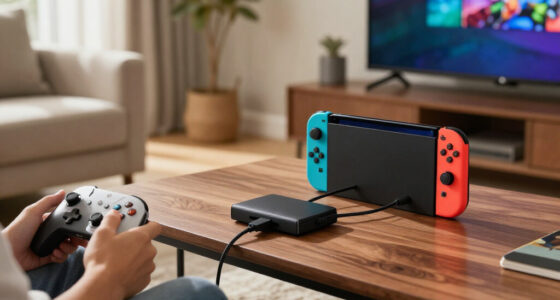
Format brings practical tradeoffs. Standard QHD at a conventional 16:9 aspect ratio may fit more desks and games, while ultrawide requires more horizontal space and may not be supported consistently across titles. The source also advises checking ports and output modes for PCs and consoles, since the display, connection and device all affect which resolution and refresh rate are available.
OLED ownership also involves care considerations. The guide advises managing long sessions with static desktop elements and using a monitor’s care features where available. It does not establish a particular risk level or compare longevity across these eight models, so buyers should check the manufacturers’ guidance for the specific display.
Products Worth Considering

Apple iPad 11-inch (A16), 128GB, Wi-Fi, Silver

Logitech MX Keys S Combo Wireless Keyboard and Mouse, Graphite

LG UltraGear 27G810A-B 27-Inch 4K UHD IPS Gaming Monitor
As an affiliate, we earn on qualifying purchases.
How the Eight Picks Differ
The source frames the roundup as a set of choices for competitive play, general QHD gaming, ultrawide immersion and less demanding use. The ASUS is ranked first for the combination of a familiar 27-inch QHD format and the lineup’s highest stated refresh rate. The Alienware is placed in a more specialized role because of its wider curved screen, not because the source says it beats the other monitors in measured image quality.
Several listed monitors share QHD resolution and a 240Hz rating, including products from Acer, AOC, ASUS, LG and Samsung. The guide says buyers should compare features and intended use when headline specifications overlap. It also cautions that OLED and QD-OLED are not interchangeable model specifications: exact screen behavior, including reflections and brightness in a bright room, should be checked for each product rather than inferred from the panel label.
“The ASUS XG27ACDNG ranks highest for its 360Hz ceiling in a familiar 27-inch QHD format.”
— ThorstenMeyerAI.com buyer’s guide
Missing Models, Prices and Test Results
The supplied text does not give a complete, unambiguous list of eight exact model names. It identifies the ASUS, Alienware and LG by full model name, and refers to Acer, AOC, ASUS and Samsung G6 240Hz options without specifying each model. The Samsung G5 is also mentioned, but without a model number. The roundup’s promised eight picks therefore cannot be fully checked against the available details.
No prices, release dates, regional availability or independent measurements are provided. The source does not report side-by-side tests of brightness, color, response time, reflections, input lag or durability. Its ranking and descriptions should be read as a buyer’s guide assessment based on stated features, not as verified test findings. The guide’s 2027 framing does not establish that all the products will be available in 2027.
Verify Availability Before Buying
Readers considering a purchase should check the manufacturers’ current product pages for the exact model number, price, ports, supported refresh rates and warranty terms. This is especially relevant for the unnamed Acer, AOC, ASUS and Samsung G6 entries, and for the Samsung G5, whose detailed specifications are not included in the source material.
Before choosing, compare the monitor’s supported modes with the games and devices in the setup, and check whether ultrawide is supported in the titles that matter. Independent reviews and measurements can help answer questions the guide leaves open, including performance in bright rooms and differences between panel implementations. No later announcement or follow-up test is included in the supplied material.
Key Questions
Which monitor does the guide rank first?
It ranks the ASUS ROG Strix XG27ACDNG first overall, citing its stated QHD QD-OLED panel and 360Hz refresh rate. That ranking is the guide’s assessment, not an independent test result.
Which pick is aimed at ultrawide gaming?
The guide identifies the Alienware AW3425DW, with a 34.2-inch curved ultrawide format, as the option for players seeking a wider, more immersive screen. Buyers should check whether their games support ultrawide ratios.
Does a 360Hz monitor guarantee 360 frames per second?
No. The guide describes 360Hz as the monitor’s refresh-rate ceiling. The frame rate a player sees depends on the game and the computer’s ability to render frames.
Does the source identify all eight models?
No. It names the ASUS XG27ACDNG, Alienware AW3425DW and LG 27GX704A-B, but refers to other Acer, AOC, ASUS and Samsung G6 options without full model names. It also mentions a Samsung G5 without a model number.
What should buyers check before choosing an OLED gaming monitor?
Check the exact model’s price, connections, supported resolution and refresh rate with the intended PC or console. Also consider game compatibility, desk space and the manufacturer’s OLED care guidance.
Source: ThorstenMeyerAI.com