TL;DR
A report on blog.nozomi.space describes modifying the firmware in a €40 Cable Matters USB-C hub so it can respond to Nintendo Switch 2 dock-negotiation messages. The author says the work enabled TV output, but the supplied report ends during testing and does not establish broad compatibility, long-term reliability or whether other hubs can be adapted.
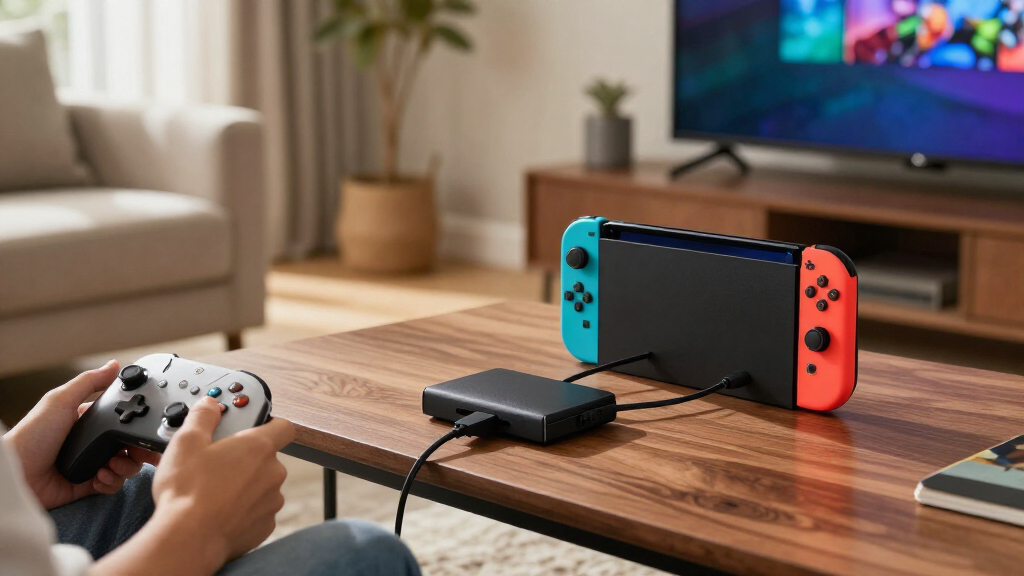
A hardware tinkerer says they modified the firmware in a €40 Cable Matters USB-C hub to answer Nintendo Switch 2 dock-negotiation messages, addressing a barrier that kept the hub from producing TV output despite supporting USB-C DisplayPort. The report describes a single hub and a custom firmware patch; it does not establish a general method for turning ordinary USB-C hubs into Switch 2 docks.

Get the latest gadgets delivered free with Prime
- Fast, free delivery on millions of items
- Prime Video, Amazon Music and more included
- Member-only deals all year
The author began with a Cable Matters 7-in-1 triple-display hub, which supports DisplayPort, HDMI and VGA and supplies up to 60 watts of power. With its original firmware, the Switch 2 charged, negotiated USB Power Delivery and entered DisplayPort Alternate Mode. The hub also acknowledged a DisplayPort pin configuration, but the console did not enter TV mode and no image appeared.
Using a USB-PD sniffer, the author compared traffic from the hub with traffic from an official Nintendo dock. The official dock advertises both the DisplayPort service identifier and Nintendo’s own vendor identifier, and the console exchanges Nintendo-specific messages before and after DisplayPort setup. The author concluded that standard power and video negotiation were not enough: the hub also needed to respond to Nintendo’s separate handshake.
The hub contains a VL103 power-delivery controller with an 8051 microcontroller. The author used existing firmware tools to dump and flash the controller, then added roughly 540 bytes of 8051 code to reply to Nintendo messages while leaving the original firmware’s other behavior in place. The source describes changing one response at a time, but the supplied report cuts off during the results table, so it does not provide a complete account of the final test outcomes.
The Missing Dock Handshake
The report points to a compatibility problem that is not solved simply by buying a hub with the right connectors. A device may support USB-C power delivery and DisplayPort video yet still fail to trigger the Switch 2’s TV mode if it does not perform the console’s Nintendo-specific exchange. That distinction matters to owners looking for a smaller travel setup than the official dock.
For readers, the practical takeaway is limited but useful: the author’s work suggests that at least one hub’s controller firmware can be altered to handle the missing messages. It does not show that the same patch works on other models, or that the modification is safe or straightforward for typical users. The procedure involves firmware extraction and flashing, with a risk of making the hub unusable if something goes wrong. The source does not report testing device safety, warranty effects or extended reliability.
Products Worth Considering

Bose QuietComfort Ultra Earbuds (2nd Gen), Wireless Noise-Cancelling Earbuds with Immersive Audio and Wireless Charging Case, Black

Apple Watch SE 3 GPS 44mm Smartwatch

LG UltraGear 32-Inch QHD 180Hz Curved Gaming Monitor
As an affiliate, we earn on qualifying purchases.
Why the Hub Stalled
The author says the official Switch 2 dock is bulky and feels fragile for travel, while the USB-C hub already worked with other devices. Nintendo’s dock uses USB-C DisplayPort Alternate Mode, but the author found that matching this standard alone did not reproduce the official dock’s behavior.
Captures of the official dock showed it identifying itself as a Nintendo peripheral and advertising Nintendo’s vendor-defined messages alongside DisplayPort. The Switch 2 entered Nintendo mode as well as DisplayPort mode, then exchanged a sequence of commands and replies. The author could identify some apparent version records but said the meaning of most messages was unknown. The source also credits AI tools with helping analyze and patch the firmware, alongside Ghidra, an 8051 assembler and a simulator.
““The Switch already charges with the hub, so it must use standard USB-PD.””
— The report’s author
Compatibility and Test Results
The supplied source stops partway through a table listing firmware changes and results. It therefore does not fully document which patch version produced working video, the conditions of any successful test, or whether the hub continued to work reliably over time. The report also provides no independent replication or confirmation from Nintendo or the hub maker.
It remains unclear whether the approach applies to other USB-C hubs, including models with different power-delivery controllers or firmware layouts. The author says most Nintendo messages were not understood, leaving open whether additional commands, hardware features or future console updates could affect compatibility. The source does not specify whether the modified setup meets all relevant electrical or thermal safety requirements.
Further Testing Needed
The next useful step would be a complete publication of the firmware changes and test results, followed by independent tests on the same hub. Replication would help establish whether the reported behavior is repeatable and clarify which firmware version and connection setup are required.
Tests on other hub models would be needed before readers could treat this as a general workaround. Until then, the report is best read as a demonstration involving one specific device, not a plug-and-play dock recommendation. The source does not announce a product, a public installer or a timeline for further testing.
Key Questions
Did the USB-C hub work with the Switch 2 before the modification?
It charged the console and negotiated USB-PD and DisplayPort Alternate Mode, according to the author, but did not produce TV output on its original firmware.
What did the firmware patch change?
The author added about 540 bytes of 8051 code to the hub’s VL103 power-delivery controller so it could respond to Nintendo-specific messages. The source does not provide a complete final patch description.
Can any €40 USB-C hub be made into a Switch 2 dock?
No broad compatibility is established. The report concerns one Cable Matters hub, and other models may use different controllers, firmware or hardware.
Is the modification ready for ordinary users?
The report describes firmware dumping, analysis and flashing rather than a simple setup process. It does not provide enough information to establish ease of use, reliability, warranty impact or safety for general use.
Source: blog.nozomi.space