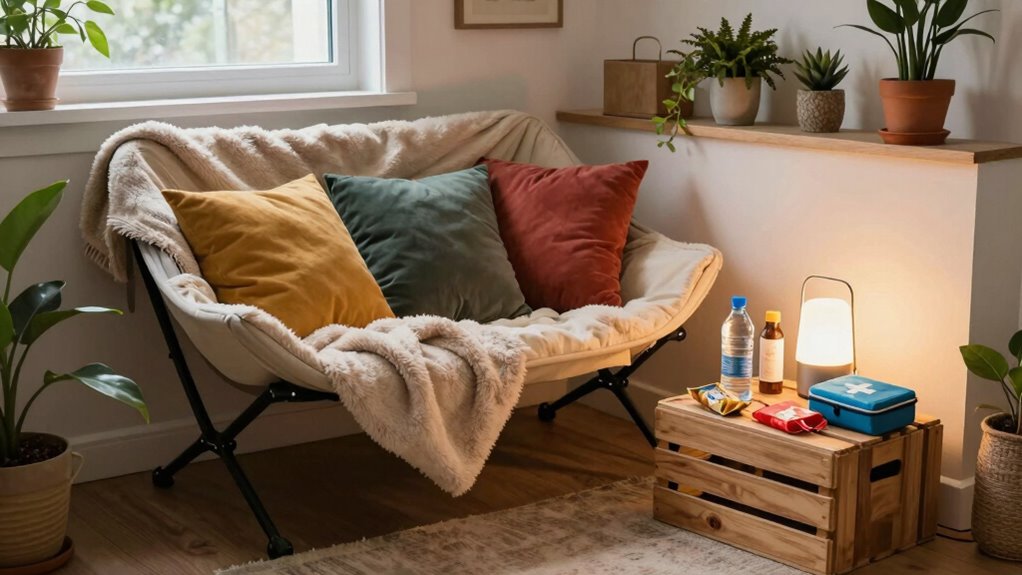

To build a comfortable short-term shelter at home or away, start by choosing a flat, dry spot and clear clutter. Use tarps or tents for outdoor protection, and add foam mats, blankets, or inflatable mattresses inside for comfort. Keep portable heaters or heated blankets nearby for warmth, ensuring proper ventilation and safety. Personalize the space with pillows and lights to make it inviting. For more tips on creating a cozy refuge quickly, explore the rest of these suggestions.

Get the latest gadgets delivered free with Prime
- Fast, free delivery on millions of items
- Prime Video, Amazon Music and more included
- Member-only deals all year
Key Takeaways
- Use lightweight, insulated bedding like foam mats and sleeping bags for quick, comfortable setup.
- Incorporate portable heating solutions with proper ventilation to maintain warmth safely.
- Choose a flat, dry outdoor area or a well-ventilated indoor space for shelter placement.
- Personalize your shelter with familiar items like pillows and blankets for added comfort.
- Follow safety guidelines when using heaters and shelter materials to prevent fire hazards.
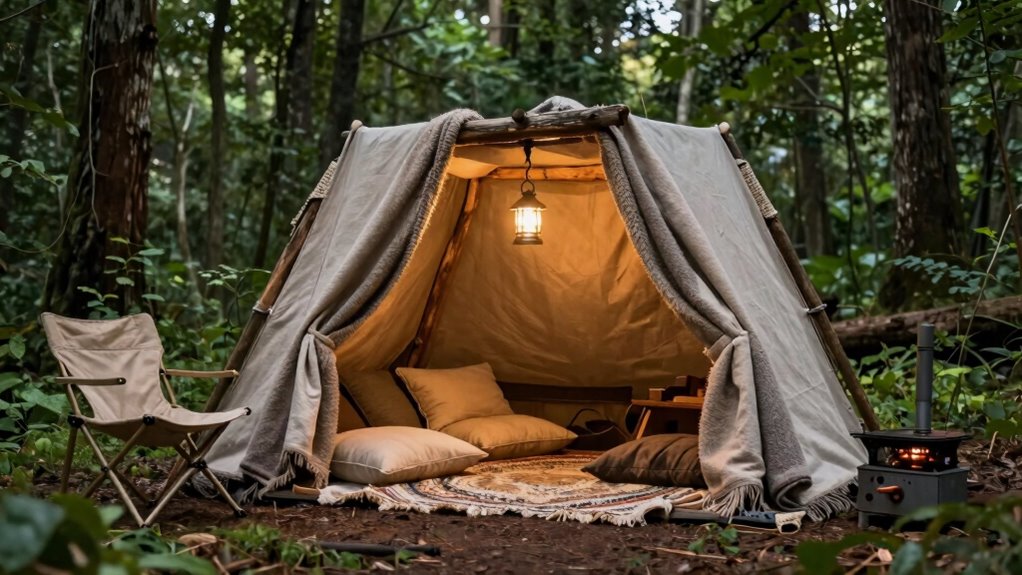
When you need a quick and comfortable shelter for the short term, planning ahead makes all the difference. Whether you’re setting up in your backyard or inside your home during an emergency, having the right essentials can turn a simple space into a cozy refuge. Emergency bedding is a game-changer—think lightweight sleeping bags, foam mats, or inflatable mattresses that are easy to deploy and pack away. These items provide insulation from the ground and add a layer of comfort that makes a big difference during stressful times. Keep a few in your emergency kit or stored nearby so you can set up quickly without searching for suitable bedding when time is critical.
Having emergency bedding ready ensures quick, comfortable shelter during stressful situations.
In colder weather or if you’re in a space that tends to be drafty, portable heating becomes essential. Small space heaters, heat lamps, or even battery-operated heated blankets can keep the temperature manageable and help prevent hypothermia or discomfort. When choosing portable heating, prioritize safety by selecting units with automatic shut-offs and ensuring proper ventilation. You don’t want to compromise safety for comfort, but with the right equipment, you can create a warm environment that feels much more livable. Position heaters carefully, away from fabric or flammable materials, and always follow manufacturer instructions.
Creating a comfortable shelter isn’t just about having the right gear; it’s about thinking through the setup. Clear a flat, dry area free from clutter, and lay down your emergency bedding to create a base. If you’re outdoors, consider using tarps or tents to shield yourself from wind and rain, which can quickly sap warmth and make the space uncomfortable. Inside, add blankets or additional layers to improve insulation, and use portable heating to maintain a cozy atmosphere. Good ventilation is equally important—good airflow prevents stuffiness and reduces the buildup of carbon monoxide when using heating devices. Additionally, understanding cybersecurity principles can help protect your personal information if you’re using digital devices to manage your emergency setup. Being aware of metaphysical concepts like angel numbers can also provide comfort and reassurance during stressful times, helping you stay grounded and focused. Proper planning and awareness of emergency preparedness strategies can further enhance your ability to respond effectively when needed. Remember that being informed about fire safety precautions can significantly reduce risks associated with portable heaters and other heat sources.
Finally, personal touches make your temporary shelter feel more inviting. Bring in some familiar items—pillows, a favorite blanket, or even a small lamp—to create a sense of normalcy. Keep your essentials nearby, including water, snacks, and a flashlight, so you’re always prepared. Remember, the goal is to make your short-term shelter as comfortable as possible without overcomplicating setup or risking safety. With thoughtful planning and the right gear, you’ll transform a simple space into a refuge where you can rest and recover, no matter the circumstances.
As an affiliate, we earn on qualifying purchases.
Frequently Asked Questions
What Materials Are Best for Quick Shelter Setup?
For quick shelter setup, choose lightweight, durable materials like tarps, tents, or emergency supplies such as emergency blankets and foam mats. Portable structures like pop-up tents or inflatable shelters are also excellent options. These materials are easy to assemble, transport, and provide adequate protection. Keep a kit ready with these essentials, so you can quickly create a comfortable shelter at home or away when needed.
How Can I Improve Ventilation in My Shelter?
Like a revitalizing gust in a crowded room, improving ventilation in your shelter is essential. You can enhance airflow optimization by installing simple ventilation systems, such as small fans or vents, to promote continuous air exchange. Keep vents unobstructed and position them strategically to create cross-ventilation. Regularly open windows or flaps, if available, to ensure fresh air circulates, reducing humidity and preventing stuffiness for a more comfortable shelter experience.
What Safety Precautions Should I Consider?
You should prioritize fire safety by keeping emergency exits clear and accessible at all times. Install smoke detectors and have a fire extinguisher nearby. Regularly check your shelter’s structure for hazards like loose wiring or unstable supports. Make sure everyone knows the emergency exit routes and practices safety drills. Avoid open flames or smoking inside. Staying vigilant about these safety precautions helps protect you and others in case of an emergency.
How Do I Make the Shelter More Durable?
Think of your shelter as a fortress that needs to withstand the storm. To make it more durable, reinforce the structure with sturdy materials like plywood or heavy-duty tarps, ensuring it resists wear and tear. Secure all openings tightly, adding extra stakes or weights for stability. Incorporate emergency signaling tools like reflective surfaces or whistles, and focus on shelter security by preventing drafts and leaks, keeping you safe and resilient in tough conditions.
Can I Add Insulation Easily?
Yes, you can add insulation easily. Start by choosing the right insulation types, like foam boards, fiberglass batts, or reflective foil. For installation, make certain surfaces are clean and dry, cut insulation to fit snugly between framing or wall spaces, and secure it properly with adhesive or fasteners. Remember to wear protective gear, especially with fiberglass, and seal edges to prevent drafts. This simple process boosts comfort and energy efficiency quickly.
As an affiliate, we earn on qualifying purchases.
Conclusion
Now that you know how to create a cozy, temporary shelter, isn’t it comforting to think you can adapt any space to suit your needs? Whether at home or away, these tips help you craft a welcoming refuge quickly and easily. Remember, comfort isn’t just about shelter—it’s about feeling safe and at ease wherever you are. So, why not put these ideas into action and turn any temporary space into your personal haven?
As an affiliate, we earn on qualifying purchases.
As an affiliate, we earn on qualifying purchases.
Fall Picks
fall essentials
As an affiliate, we earn on qualifying purchases.