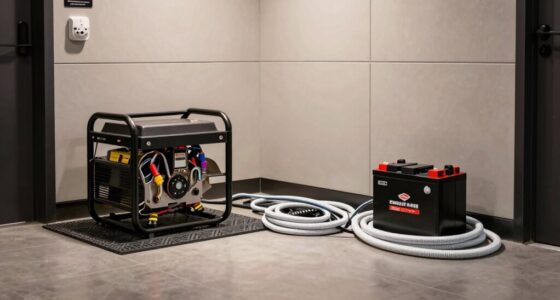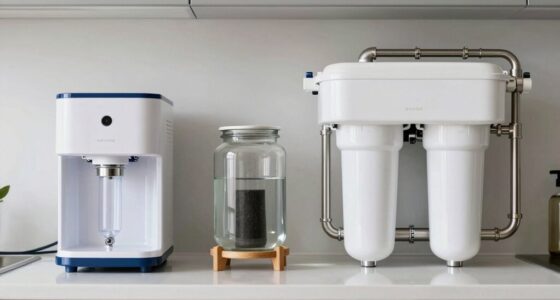

Water storage and water filtration are not the same because storage focuses on holding water safely until you need it, preventing contamination and ensuring enough supply. Filtration, on the other hand, actively removes impurities, bacteria, and chemicals to make water safe to drink. Both work together but serve different roles—storage protects water from external contamination, while filtration cleans it internally. To discover how these systems complement each other, explore further.

Get the latest gadgets delivered free — and shop member deals
- Fast, free delivery on millions of items
- Access to Prime Big Deal Days deals on October 6–7
- Prime Video, Amazon Music and more included
Key Takeaways
- Water storage holds water safely over time, while filtration actively removes contaminants from water.
- Storage prevents external contamination; filtration eliminates impurities within the water.
- Storage preserves water quality during delays; filtration ensures the water is safe to drink.
- Proper storage prevents recontamination; filtration does not address storage-related contamination.
- Both systems work together but serve distinct roles in ensuring water safety and quality.
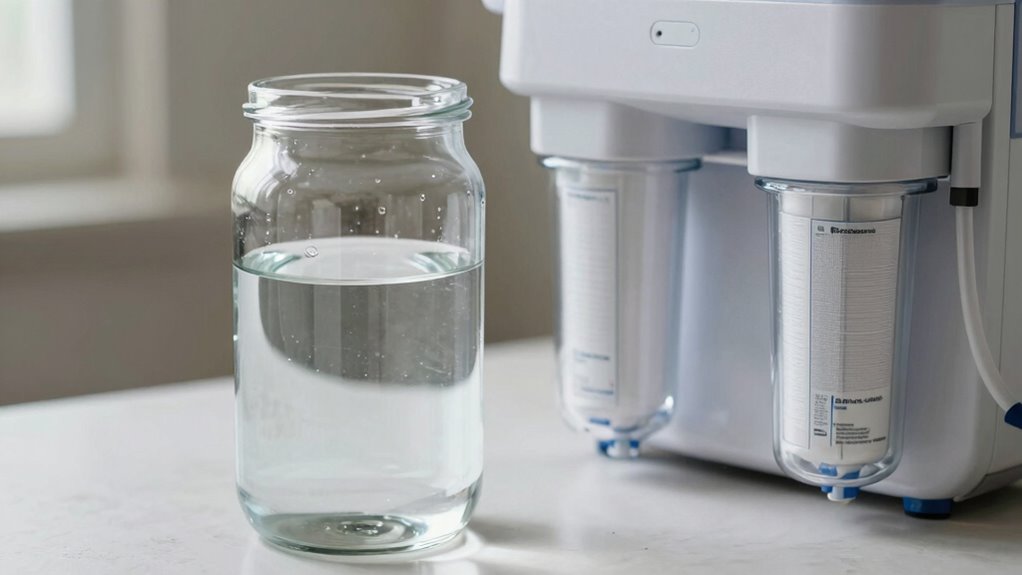
Have you ever considered how essential proper water storage and filtration are for ensuring safe, clean water? Many people confuse these two processes, but they serve distinct roles in maintaining water quality. Storage focuses on holding water safely until it’s needed, while filtration ensures the water itself is free from contaminants. Understanding their differences is key to creating an effective water management system that guarantees safe drinking water.
Proper water storage holds water safely, while filtration ensures the water itself is free from contaminants.
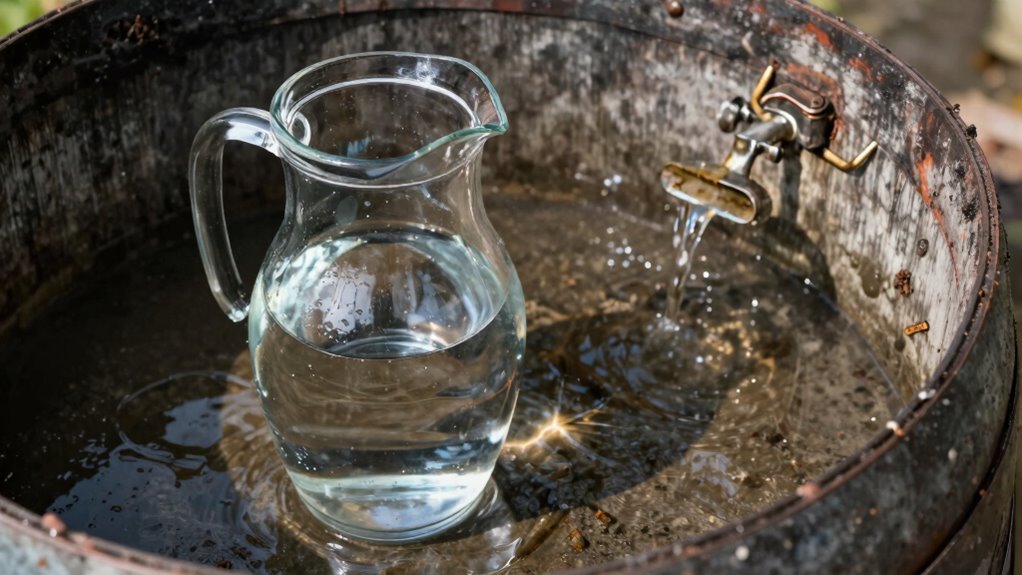
When you think about water storage, the primary concern is your storage capacity. You need enough space to hold an adequate supply of water, especially during emergencies or shortages. Proper storage tanks or containers prevent contamination and preserve water quality over time. The materials used—such as food-grade plastics or stainless steel—are crucial because they won’t leach harmful substances into the water. Additionally, your storage setup should be sealed tightly to prevent dirt, insects, or bacteria from entering. Regular cleaning and maintenance help keep the stored water fresh and safe, but storage alone doesn’t eliminate microorganisms or chemicals that might already be present in the water. Its main purpose is to keep water available and protected from external contaminants. Water quality maintenance is essential to ensure that stored water remains safe for use over extended periods. Incorporating proper sanitation practices into your storage routine can further reduce the risk of contamination. Moreover, understanding water safety standards can guide you in selecting the right storage solutions. To extend the longevity and safety of stored water, some systems incorporate treatment methods that complement storage and filtration. Additionally, understanding contaminant sources can help you implement better preventative measures in your water management system.
Filtration, on the other hand, is about the water itself. It involves removing impurities, bacteria, viruses, chemicals, and sediments that can compromise water quality. Filters come in various forms—activated carbon, reverse osmosis, UV purifiers—and each targets specific contaminants. When you filter water, you actively improve its safety, making it suitable for drinking and daily use. Filtration systems are designed to treat water before or after storage, but they do not replace the need for a proper storage system. Without good filtration, stored water might look clean but still harbor harmful pathogens or dissolved chemicals. Conversely, even the best filtration system won’t be effective if the water is stored improperly, leading to recontamination.
In essence, storage capacity ensures you have enough safe water on hand, maintaining its quality over time, while filtration directly enhances the water’s purity by removing dangerous contaminants. They are interconnected but serve different purposes. To truly safeguard your water supply, you need both—adequate storage to hold clean water and effective filtration to ensure that water is truly safe for consumption. Recognizing this distinction helps you make smarter decisions about how to set up your water system, whether for home use, emergency preparedness, or outdoor activities. When you understand their roles, you can better prioritize investments and maintenance, ensuring you always have access to safe, clean water.
As an affiliate, we earn on qualifying purchases.
Frequently Asked Questions
Can Water Storage Systems Also Filter Water?
Yes, water storage systems can include filtration technology to improve water quality. Many storage tanks incorporate filters that remove sediments, bacteria, or odors, guaranteeing cleaner water for your use. However, not all storage tanks have filtration built-in. If maintaining high water quality is important, look for systems specifically designed with filtration features or add external filters to your existing storage to ensure safe, clean water.
What Are the Costs Associated With Water Filtration?
Like the careful alchemy of a master, water filtration costs vary based on your needs. You might spend on initial equipment, installation, or maintenance, impacting overall expenses. Higher water quality and filtration efficiency often mean higher costs, but they guarantee better purity. Budgeting for replacement filters and system upgrades is essential. Ultimately, investing in quality filtration safeguards your health, making the expense worthwhile for clean, safe water.
How Often Should Water Filters Be Replaced?
You should replace your water filter regularly to maintain effective water filter maintenance and guarantee your storage system durability. Typically, filters last about 2 to 6 months, depending on usage and water quality. Check manufacturer guidelines for specific recommendations. Regular replacements prevent buildup of contaminants, keep your water tasting fresh, and protect your storage system from damage caused by sediment or bacteria. Staying on top of filter changes is essential for safe, clean water.
Is Water Storage Necessary if I Have a Filtration System?
Imagine a household with a premium filtration system, yet no water storage. During a power outage or disaster, they run out of clean water quickly. Water storage becomes essential for emergency preparedness, ensuring access when filtration isn’t enough. Plus, it supports water conservation by reducing unnecessary drain on the main supply. So, even with filtration, having stored water provides an extra safety net in critical situations.
What Contaminants Do Water Filters Typically Remove?
Water filters typically remove chemical contaminants like chlorine, lead, and pesticides, as well as biological pollutants such as bacteria, viruses, and protozoa. They improve water taste and safety by targeting these harmful substances. Depending on the filter type, some also reduce heavy metals and organic compounds. You should choose a filter designed for your specific water quality issues to guarantee effective removal of both chemical contaminants and biological pollutants.
water filtration system for home
As an affiliate, we earn on qualifying purchases.
As an affiliate, we earn on qualifying purchases.
Conclusion
In the end, understanding that water storage and water filtration are two sides of the same coin helps you make smarter choices. Think of storage as a sturdy reservoir holding potential, while filtration is the fine-tuned filter that turns raw water into a crystal-clear stream. Without proper filtration, your stored water might be a hidden wolf in sheep’s clothing—dangerous and unfit for use. Treat them as partners, not rivals, to keep your water safe and pure.
emergency water storage containers
As an affiliate, we earn on qualifying purchases.
As an affiliate, we earn on qualifying purchases.
As an affiliate, we earn on qualifying purchases.
Fall Picks
fall essentials
As an affiliate, we earn on qualifying purchases.