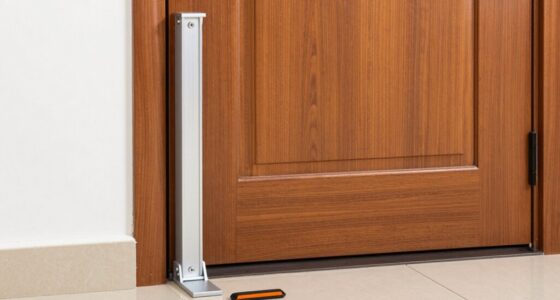
When comparing door sensors, motion sensors, and glass break sensors, focus on their functions, placement, and compatibility. Door sensors work best for entrances, detecting when a door opens. Motion sensors cover larger areas and detect movement, but watch out for false alarms from pets or heat sources. Glass break sensors add security near windows by detecting sounds or vibrations. To choose the right setup, consider your space, existing systems, and how each sensor type works together—more details follow.
Key Takeaways
- Evaluate sensor types based on their detection method and specific security needs, such as entry points or large areas.
- Compare compatibility with existing alarm or smart home systems, including protocols like Wi-Fi, Z-Wave, or Zigbee.
- Consider placement and installation requirements to ensure optimal coverage and minimize false alarms.
- Assess detection range, sensitivity, and pet immunity features for accurate and reliable performance.
- Review manufacturer specifications for integration, power sources, and system restrictions.
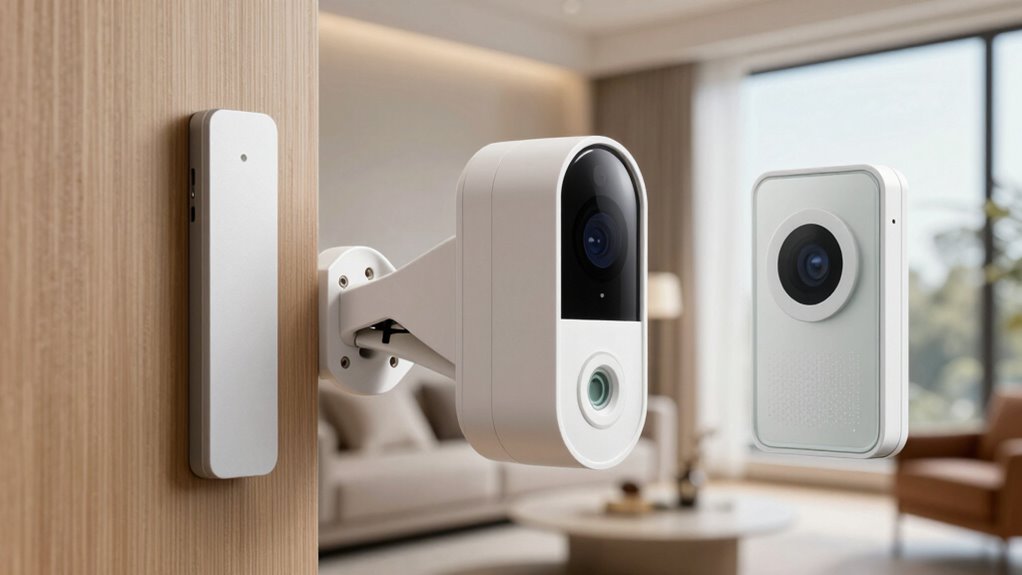
When choosing security sensors for your home, understanding the differences between door sensors, motion sensors, and glass break sensors is vital. Each type offers unique advantages and plays a specific role in your overall security system. To make the best choice, you need to contemplate installation tips and compatibility considerations carefully. Door sensors are typically magnetic, consisting of two parts: one attached to the door or window and the other to the frame. When the door or window opens, the circuit breaks, triggering an alert. Installing these sensors is straightforward—just guarantee they align properly and are placed where the door or window moves freely without obstruction. Compatibility considerations involve checking if the sensor matches your existing alarm system or smart home platform. Some sensors are designed for specific brands or systems, so verifying compatibility ensures seamless integration. Additionally, understanding sensor protocols can help you select devices that work well together within your security ecosystem. It’s also beneficial to consider wireless connectivity options, as they can influence installation flexibility and system reliability. Motion sensors detect movement within a designated area and are ideal for covering larger spaces like hallways, living rooms, or entry points. When comparing motion sensors, focus on their detection range, field of view, and sensitivity settings. Proper installation tips include placing motion sensors at a height where they can effectively monitor the intended zone without false alarms caused by pets or passing cars. Avoid pointing them directly at heat sources or windows that might cause false triggers. Compatibility considerations involve ensuring the motion sensor communicates properly with your security hub or alarm system. Some models connect via Wi-Fi, Z-Wave, or Zigbee, so confirming these protocols align with your existing setup prevents connectivity issues later. Knowing sensor placement is also crucial to maximize detection efficiency and reduce blind spots. It’s worth noting that pet immunity features in some motion sensors can help prevent false alarms caused by household animals. Glass break sensors add another layer of security by detecting the sound or vibration caused by breaking glass. These sensors are most effective when installed near windows or glass doors. When comparing glass break sensors, pay attention to their sound detection range and sensitivity. Proper installation tips include mounting them at the right height and distance from the glass to maximize their effectiveness. They should be placed where they can clearly pick up the sound of breaking glass without interference from external noise. Compatibility considerations involve verifying whether the sensor can integrate with your current security system, especially if you’re using a central hub or smart home platform. Some sensors require specific protocols or apps, so double-checking compatibility ensures you don’t encounter integration issues after installation.

WiFi Door Alarm System, Wireless DIY Smart Home Security System, with Phone APP Alert, 8 Pieces-Kit (Alarm Siren, Door Window Sensor, Remote), Work with Alexa, for House, Apartment, by tolviviov
WIFI Network: WIFI connection, Only works on 2.4GHz WiFi network, does NOT support 5GHz WiFi networks.
As an affiliate, we earn on qualifying purchases.
As an affiliate, we earn on qualifying purchases.
Frequently Asked Questions
Which Sensor Type Is Best for Outdoor Security?
For outdoor security, motion sensors are your best choice due to their outdoor durability and weather resistance. They detect movement effectively and are built to withstand rain, wind, and temperature changes. Door sensors are less suitable outside, and glass break sensors are more specific to indoor security. Opt for weather-resistant motion sensors to guarantee reliable protection around your property, regardless of the weather conditions.
How Do Sensors Handle False Alarms?
Sensors handle false alarms through advanced detection technology and smart sensitivity settings, improving sensor reliability. You can adjust sensitivity levels to reduce false alarms caused by pets, weather, or other disturbances. Many sensors also feature tamper alerts and intelligent algorithms that distinguish between genuine threats and false triggers. Regular maintenance and proper placement further enhance reliability, ensuring your security system responds accurately without unnecessary alerts.
Are There Wireless Options Available for All Sensors?
Yes, wireless options are available for all sensors, including door, motion, and glass break types. These sensors use wireless connectivity to easily integrate into your security system without complex wiring. Keep in mind, battery life varies depending on the sensor and usage, so choose models with long-lasting batteries for reliable, maintenance-free operation. Wireless sensors offer flexibility and convenience, making your security setup more adaptable and easier to manage.
What Is the Typical Lifespan of These Sensors?
You can expect the typical lifespan of these sensors to be around 5 to 10 years, depending on sensor durability and usage. Regular maintenance and environmental factors influence their replacement frequency. Wireless options often have similar durability, but batteries may need replacing more frequently. To guarantee maximum security, monitor sensor performance and replace them when you notice signs of wear or decreased effectiveness.
Can Sensors Be Integrated With Existing Home Automation Systems?
Think of sensors as the keys to your smart home kingdom—they can often be integrated with your existing home automation systems. You just need to check sensor integration options and compatibility concerns beforehand. Many sensors are designed to be compatible with popular platforms like Alexa, Google Home, or SmartThings. However, always verify compatibility to avoid surprises, ensuring your sensors work seamlessly with your current setup and enhance your home’s security effortlessly.
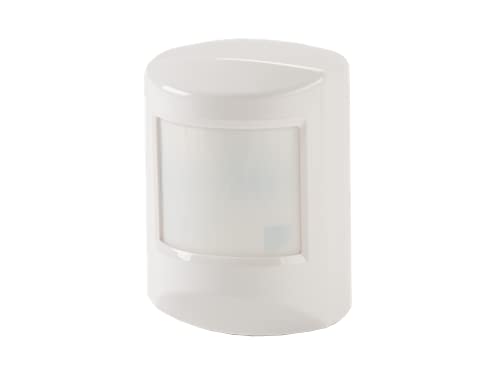
Ecolink Z-Wave PIR Motion Detector Pet Immune, White (PIRZWAVE2.5-ECO)
COMPATIBILITY: The Ecolink Door/Window is manufacturer tested to be compatible with the following ZWAVE Plus Home Automation HUBs…
As an affiliate, we earn on qualifying purchases.
As an affiliate, we earn on qualifying purchases.
Conclusion
When choosing between door, motion, and glass break sensors, think of it like selecting the right tools to protect your home’s heartbeat. Each sensor type plays an essential role, like a guardian watching over your space. By understanding their differences, you can craft a security system that feels as reassuring as a warm hug on a cold night. Trust your instincts, and you’ll create a safer haven that’s as comforting as family.

EVA LOGIK Modern Ultra-Thin Window Alarm with Loud 120dB Sound and Vibration Sensors Compatible with Virtually Any Window, Glass Break Alarm Perfect for Home, Office, Dorm Room- 8 Pack
Vibration Window Alarm: Built-in vibration sensor that activates a loud alarm when vibrations are detected, offering reliable security…
As an affiliate, we earn on qualifying purchases.
As an affiliate, we earn on qualifying purchases.
WiFi Door Alarm System, Wireless DIY Smart Home Security System, with Phone APP Alert, 8 Pieces-Kit (Alarm Siren, Door Window Sensor, Remote), Work with Alexa, for House, Apartment, by tolviviov
WIFI Network: WIFI connection, Only works on 2.4GHz WiFi network, does NOT support 5GHz WiFi networks.
As an affiliate, we earn on qualifying purchases.
As an affiliate, we earn on qualifying purchases.