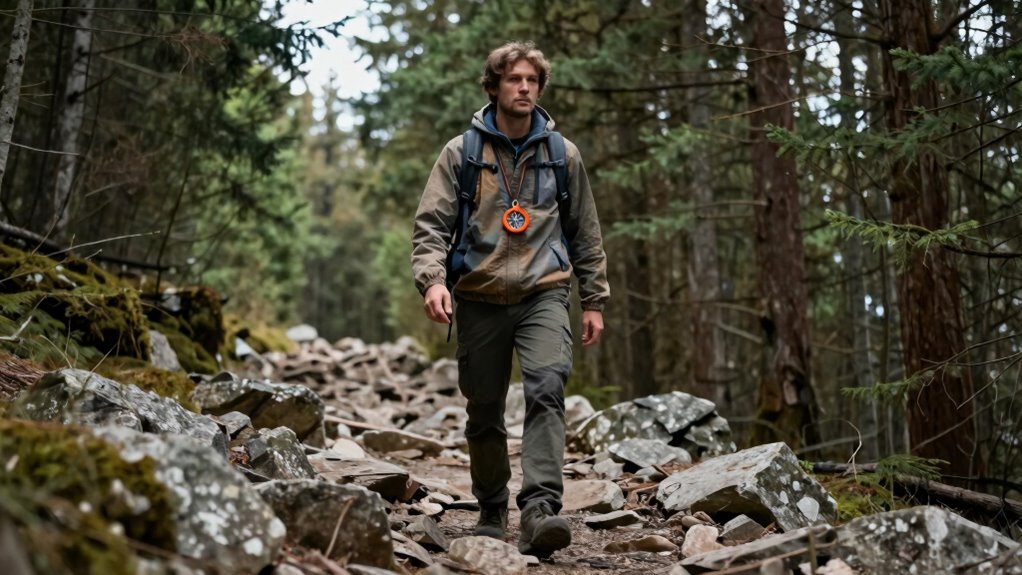
When outdoor plans change quickly, stay calm and use your navigation skills to reorient yourself. Rely on your map and compass to find landmarks and pinpoint your location, even if electronic devices fail. Keep track of your movements and environmental cues to avoid going in circles. Mark your position and plan a new route if needed. Preparing beforehand and practicing these skills will boost your confidence—continue exploring how to improve your navigation strategies for safety.
Key Takeaways
- Use landmarks and natural features to quickly reorient yourself in changing environments.
- Keep calm, assess your surroundings, and update your position on your map or GPS.
- Track your movements and note prominent features to prevent disorientation.
- Develop and practice navigation skills regularly to build confidence for unexpected changes.
- Carry and know how to effectively use essential navigational tools like a compass and offline maps.

When outdoor plans change suddenly, staying oriented can feel overwhelming, but with the right approach, you can navigate the shift smoothly. The key is to rely on your navigational tools and be prepared for emergencies. Whether you’re lost on a trail, caught in bad weather, or your route is blocked, knowing how to adapt quickly keeps you safe and confident.
Start by assessing what tools you have at your disposal. A map and compass are essential, especially if your electronic devices fail or lose signal. Practice reading topographical maps and using a compass before heading out. This knowledge becomes invaluable when your environment shifts unexpectedly, helping you determine your location and find a new course. If you’re using a GPS device or smartphone app, ensure they’re fully charged and have offline maps downloaded. Technology can be a huge advantage, but don’t rely solely on it—batteries die, and signals drop. Being familiar with traditional navigation skills can be a lifesaver when technology fails.
Emergency preparedness is critical when plans change fast. Always carry basic survival gear: a whistle, flashlight, first aid kit, extra food, and water. These items can buy you time and help you signal for assistance if needed. Knowing how to use your navigational tools under stress is part of this preparedness. For example, if you’re disoriented, a compass can help you find true north and orient yourself to your surroundings, guiding you in the right direction. Developing your navigation skills through practice can significantly reduce your chances of becoming lost. Additionally, understanding the principles of environmental awareness can help you recognize natural cues and features that support your navigation efforts.
When your route is disrupted, stay calm and avoid panic. Stop, take a breath, and evaluate your situation. Use your navigational tools to pinpoint your location and identify landmarks or features that can help you reorient. Keep track of your movements on your map or device to avoid going in circles. If you’re in unfamiliar terrain, mark your position or note prominent features to prevent future disorientation. Understanding the importance of orienting yourself with maps and compasses can significantly improve your chances of finding your way.
In emergencies, staying calm and organized makes all the difference. Use your knowledge of navigational tools to plan a new route or signal for help if needed. Remember, being prepared for sudden changes isn’t just about having the right gear; it’s about knowing how to use it effectively. With practice and a clear mindset, you’ll manage unexpected twists in your outdoor plans with confidence and safety.
As an affiliate, we earn on qualifying purchases.
Frequently Asked Questions
What Essential Items Should I Carry for Quick Orientation?
You should carry a reliable map and a compass to stay oriented quickly. Practice map reading and compass skills beforehand so you can navigate accurately even when plans change suddenly. Keep these items easily accessible, like in a pocket or backpack compartment. Also, consider a GPS device as a backup, but don’t rely solely on technology. Mastering basic navigation tools helps you stay confident and safe in unpredictable outdoor situations.
How Can I Identify Landmarks in Unfamiliar Terrain?
Imagine hiking and noticing a unique rock formation or a distinctive tree. To identify landmarks in unfamiliar terrain, look for natural landmarks like prominent cliffs, rivers, or unusual terrain features that stand out. Use these features to create mental markers, and compare them to your map or GPS if available. Recognizing these landmarks helps you stay oriented and confidently navigate, even when your plans suddenly change.
What Apps Are Best for Offline Navigation?
You should try apps like Gaia GPS or AllTrails for offline navigation, as they use GPS technology to keep you on track even without cell service. These apps often include trail markers, helping you recognize your surroundings and stay oriented. Before heading out, download maps and trail data, so you can rely on GPS technology and trail markers to navigate confidently, even when your plans change fast.
How Do Weather Changes Affect Navigation Accuracy?
Weather unpredictability can considerably impact navigation accuracy, especially during sudden changes like fog, rain, or snow. These conditions can obscure landmarks and reduce visibility, making it harder to rely on visual cues. To counter this, you should regularly calibrate your compass and use reliable GPS apps. Staying aware of weather forecasts helps you anticipate shifts, allowing you to adjust your route and maintain orientation despite changing conditions.
What Are Common Signs of Disorientation Outdoors?
When you’re outdoors and start feeling disoriented, you might notice mental fog clouding your thoughts, making it hard to focus or remember your surroundings. You could also struggle with visual cues, like familiar landmarks seeming unfamiliar or disappearing altogether. These signs indicate you’re losing your sense of direction. If this happens, pause, check your map or compass, and look for landmarks to realign yourself and regain confidence in your navigation.
As an affiliate, we earn on qualifying purchases.
Conclusion
So, when your outdoor plans shift suddenly, remember that your sense of direction is your guiding star. Stay calm, trust your instincts, and adapt quickly—like a skilled sailor steering through stormy seas. With these tips, you’ll navigate any change with confidence, turning unexpected detours into new adventures. After all, isn’t it the unpredictable moments that often lead to the most memorable journeys? Keep your compass ready, and let the adventure continue.
outdoor survival kit with compass
As an affiliate, we earn on qualifying purchases.
As an affiliate, we earn on qualifying purchases.
As an affiliate, we earn on qualifying purchases.