
📊 Full opportunity report: Which GLP-1 Doses Are Available? Check The Pharmacy Index on IdeaNavigator AI — validation score, market gap, and execution plan.

Get the latest gadgets delivered free with Prime
- Fast, free delivery on millions of items
- Prime Video, Amazon Music and more included
- Member-only deals all year
TL;DR
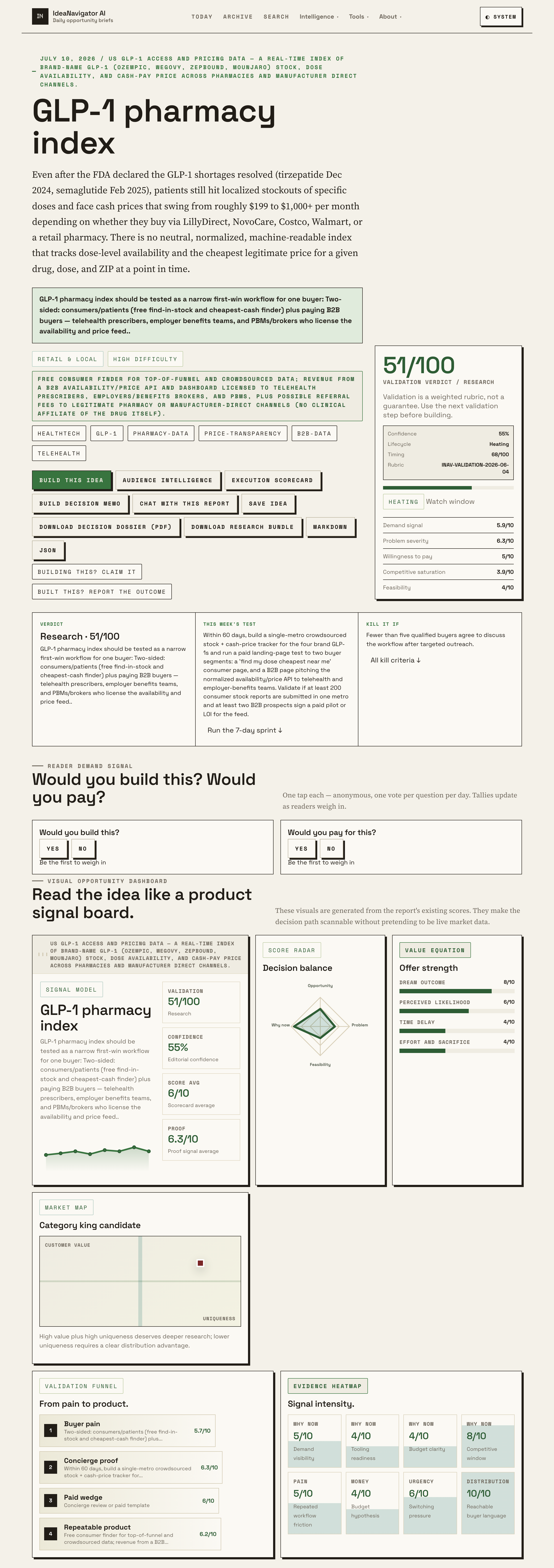
IdeaNavigator AI proposes a pharmacy index that would show where four brand-name GLP-1 drugs are reported in stock and compare cash prices by dose and ZIP code. The proposal describes a possible consumer finder and paid data feed, but it is an idea to test, not a launched service; its coverage and accuracy have not been established.
IdeaNavigator AI’s proposal describes a pharmacy index that would track reported stock and cash prices for four brand-name GLP-1 drugs by dose and ZIP code. The concept aims to help patients find a specific dose and give telehealth providers, employers and pharmacy benefit managers access to a normalized availability and price feed, but the proposal identifies no operating index or validated dataset.
According to IdeaNavigator AI, the proposed consumer tool would cover Ozempic, Wegovy, Zepbound and Mounjaro. Patients could search for a drug and dose nearby, compare cash prices, and potentially receive alerts when a dose becomes available. The proposal says initial data could combine crowdsourced stock reports with public prices from manufacturer direct channels, Costco, Walmart and pharmacy price-comparison services.
IdeaNavigator AI describes a two-sided business model: a free finder for consumers and a paid availability and pricing feed for telehealth prescribers, employer benefits teams, brokers and pharmacy benefit managers. It also raises referral fees from legitimate pharmacies or manufacturer-direct channels as a possibility. These are proposed revenue streams, not reported customer agreements or existing services.
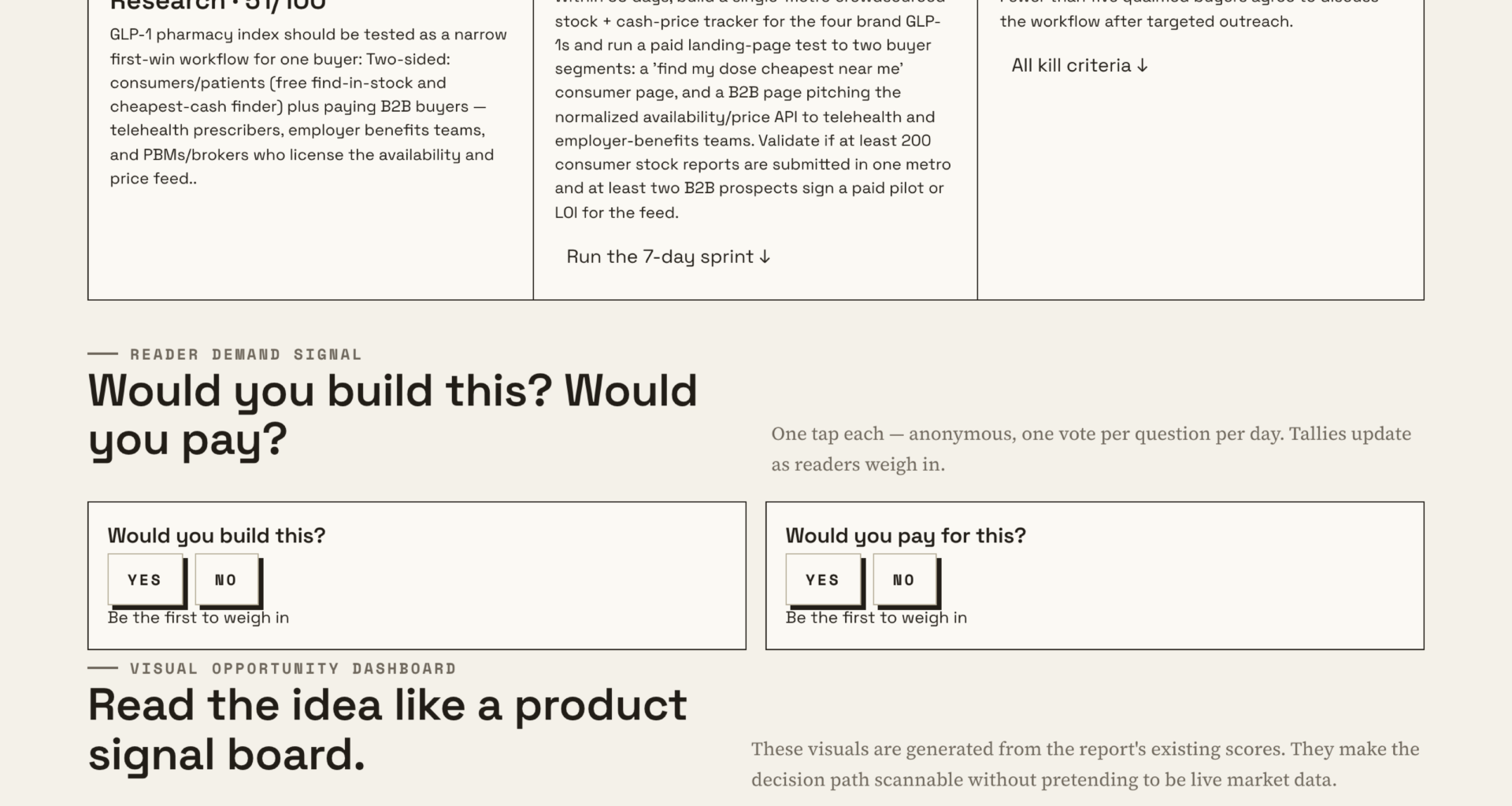
The proposal’s validation plan is to build a tracker in one metropolitan area within 60 days, then test consumer and business demand. Its proposed thresholds are at least 200 consumer stock reports in that metro and paid pilots or letters of intent from at least two business prospects. IdeaNavigator AI does not identify a metro or launch date, or report completed test results.
Dose Gaps After Shortage Listings
IdeaNavigator AI frames the proposal around a practical access issue: a drug may no longer appear on a federal shortage list while patients still have trouble finding a specific dose at a nearby pharmacy. A location-level index could help distinguish that local availability question from the broader status of a medicine’s supply.
The proposal gives a broad cash-price range of roughly $199 to more than $1,000 per month, depending on the product and purchase channel, but provides no dates, dose-by-dose figures or comparison methodology. If a reliable index could normalize the listings it proposes to gather, consumers and organizations purchasing pharmacy benefits might find it easier to compare options. That potential depends on the data being current and comparable.
For business buyers, the proposed feed could support access and cost decisions. However, IdeaNavigator AI reports no employer, prescriber, broker or pharmacy benefit manager as a buyer or adopter. The claimed need therefore remains an opportunity to test rather than evidence of established demand.
From Shortage Lists to Local Supply
IdeaNavigator AI’s proposal says federal shortage designations for tirzepatide and semaglutide were resolved in December 2024 and February 2025, respectively. It argues that access challenges have since become more fragmented, with availability varying by dose and location and cash prices differing among pharmacies and direct-purchase programs.
The proposal also cites the end of compounding-related transition periods and the growth of manufacturer and retail cash-pay channels, including LillyDirect, NovoCare, Costco and Walmart. It mentions a TrumpRx portal in February 2026, but provides no independent documentation or detail about how the index would capture prices and stock from each channel.
IdeaNavigator AI says employers report GLP-1 medicines account for about 20% of pharmacy spending, but gives no survey, date range or definition of the employer group behind that figure. It is a claim in the proposal, not a universal measure of employer spending.
Coverage and Accuracy Remain Open
IdeaNavigator AI identifies no launch, operating partner, live inventory connection or verified price database. The proposal does not explain how often listings would be refreshed, how crowdsourced reports would be checked, or how the index would label a pharmacy’s stock when availability changes quickly. It also does not explain how it would distinguish a listed cash price from the final amount a patient pays.
The proposal provides no underlying dates or methods for its price range and employer-spending figure, limiting direct comparison. It is also unclear which doses and package formats would be included, how ZIP-level searches would handle nearby locations, or how rankings would remain neutral if the service receives referral fees. IdeaNavigator AI reports no consumer submissions, paid pilots or letters of intent.
A Metro Pilot Would Test Demand
IdeaNavigator AI outlines a single-metro pilot covering the four named drugs, using crowdsourced stock reports and gathered cash-price listings. The proposed 60-day test would seek at least 200 consumer reports and commitments from two business prospects through paid pilots or letters of intent.
The proposed milestones could indicate whether patients will contribute useful reports and whether business buyers will pay for a normalized feed. Until the test is completed and methods are disclosed, the index’s reach, accuracy, commercial demand and effect on patients’ ability to obtain medication remain unknown.
Source: IdeaNavigator AI
Key Questions
Is the GLP-1 pharmacy index available now?
IdeaNavigator AI describes a proposed index and a possible metro pilot. Its material does not say that a consumer tool or data feed has launched.
Which medicines would it cover?
The proposal’s initial coverage is Ozempic, Wegovy, Zepbound and Mounjaro, searched by drug, dose and ZIP code.
Would the index guarantee a dose is in stock?
No guarantee is described in IdeaNavigator AI’s proposal. The concept relies partly on stock reports, and it does not specify verification or update procedures for changing pharmacy inventory.
How would the proposed service make money?
IdeaNavigator AI proposes licensing availability and price data to business buyers, with possible referral fees from legitimate pharmacy or manufacturer-direct channels. These are potential revenue sources, not confirmed deals.
Source: IdeaNavigator AI
Halloween Picks
halloween
As an affiliate, we earn on qualifying purchases.