
📊 Full opportunity report: Electric Code Calculator on IdeaNavigator AI — validation score, market gap, and execution plan.

Get the latest gadgets delivered free with Prime
- Fast, free delivery on millions of items
- Prime Video, Amazon Music and more included
- Member-only deals all year
TL;DR
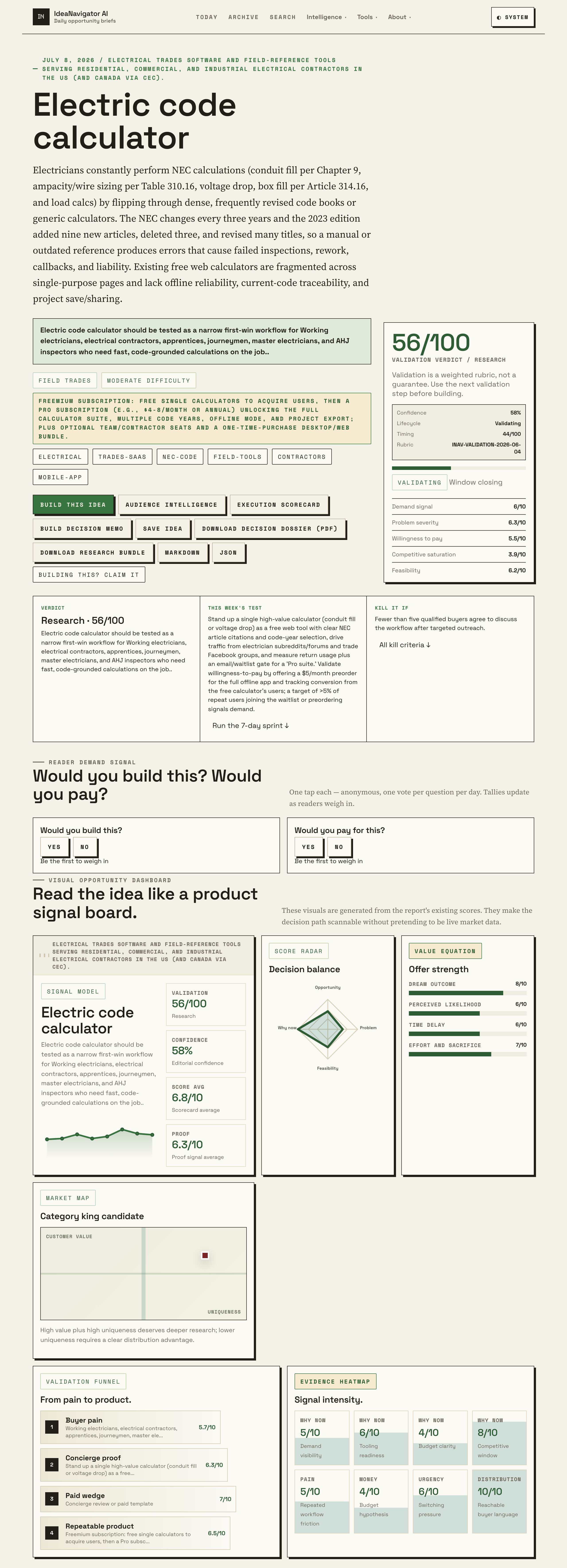
A new electric code calculator is being developed to help electricians perform NEC calculations quickly and accurately offline. It targets contractors, apprentices, and inspectors, aiming to reduce errors and improve workflow amid recent code revisions.
A new electric code calculator is being developed to provide electricians, contractors, and inspectors with a fast, offline tool for NEC calculations. This tool aims to address longstanding issues with manual referencing and fragmented online calculators, especially as the 2023 NEC update introduces significant changes. The project is currently in the prototype stage, with plans to launch a freemium mobile and web app.
The calculator will focus on high-use NEC calculations such as conduit fill, wire ampacity, voltage drop, box fill, and load calculations, each citing specific articles and tables. It will support multiple code years (2017, 2020, 2023) and operate fully offline, allowing users to save and share project data. The initial MVP will offer a free tier with core calculators, with a paid Pro tier providing full access, code-year switching, and project export capabilities.
This development responds to the growing demand for reliable, up-to-date tools amid a booming electrical trades market. You can learn more about Search as Code and its implications. The U.S. Bureau of Labor Statistics projects a 9% employment growth for electricians from 2024 to 2034, with many nearing retirement and an increasing need for skilled workers in electrification projects like EV charging, solar, and data centers. The 2023 NEC revision, which added nine new articles and revised many existing ones, underscores the necessity for current, easy-to-use calculation tools.
Why a Digital NEC Calculator Matters Now
This tool could significantly reduce errors caused by manual calculations or outdated references, which often lead to failed inspections, rework, and liability for electricians. By providing a reliable, offline, and current reference, it supports safer, more compliant installations. Additionally, it aims to streamline workflows for apprentices and experienced electricians alike, addressing the skills gap exacerbated by the upcoming wave of retirements and the rapid pace of code changes.
Products Worth Considering

Jackery Explorer 2000 v2 Portable Power Station with Two 200W Solar Panels

Samsung 32-Inch Odyssey OLED G8 (G80SH) 4K Gaming Monitor

Bose QuietComfort Ultra Earbuds (2nd Gen), Deep Plum
As an affiliate, we earn on qualifying purchases.
Recent Changes in NEC and Market Demand Drive Need
The National Electrical Code (NEC) updates every three years, with the 2023 edition introducing nine new articles and several revisions, complicating manual referencing. Existing online calculators are often fragmented, lack offline capability, and do not always reflect the latest code. Meanwhile, the electrical industry faces a surge in demand driven by electrification initiatives, with data centers, EV infrastructure, and solar projects expanding rapidly. This environment amplifies the need for efficient, accurate calculation tools that are easy to use on-site.
“Our goal is to create a reliable, offline calculator that keeps up with the latest NEC changes, helping electricians avoid costly errors.”
— an anonymous developer
Uncertainties About User Adoption and Feature Scope
It is not yet clear how quickly electricians and contractors will adopt the new calculator or whether the initial MVP will meet all user needs. Additionally, questions remain about the full feature set, pricing model, and how well the tool will integrate with existing workflows and software.
Next Steps for Development and Validation
The team plans to launch a prototype with a high-value calculator, such as conduit fill or voltage drop, to gather user feedback through targeted outreach on electrician forums and trade groups. They will measure engagement, willingness to pay, and user retention to validate demand. Based on this feedback, further development will focus on expanding features, refining usability, and preparing for a broader rollout.
Key Questions
Will the calculator support all NEC calculations?
The initial version will focus on the most commonly used calculations like conduit fill, wire sizing, and voltage drop, with plans to expand based on user feedback.
Is the calculator available offline?
Yes, offline operation is a core feature, allowing users to perform calculations without internet access.
Will it support multiple NEC code years?
Yes, users will be able to select between 2017, 2020, and 2023 code editions.
How will the pricing work?
The tool will offer a free tier with basic calculators and a paid Pro subscription for full features, offline access, and project sharing, with monthly or annual options.
When will the full version be available?
Development is ongoing, with initial MVP testing expected soon. A full release is anticipated after user validation and feedback collection.
Source: IdeaNavigator AI