A pure sine wave power inverter for emergencies converts battery power into AC power for household devices when the grid is down. My best overall pick is the BELTTT 1000W, a middle-ground option for modest backup loads; the BESTEK 300W suits small electronics, while the BELTTT 3000W is aimed at larger loads and a more capable battery setup. The main tradeoff is output versus battery demand: a high-wattage inverter can handle more equipment, but it also calls for heavier wiring and a battery that can supply substantial current. Output ports, protections, remote controls, and installation needs also separate these models. Read on for the full breakdown and guidance on matching an inverter to your emergency plan.

Get the latest gadgets delivered free with Prime
- Fast, free delivery on millions of items
- Prime Video, Amazon Music and more included
- Member-only deals all year
Complete the kit



Key Takeaways
- The 1000W models are the most balanced class in this lineup: BELTTT and VOLTWORKS offer a step up from compact electronics inverters without jumping to the current demands of 2000W and 3000W units.
- Small loads favor modest output: BESTEK‘s 300W and 500W options and OLTEANP‘s 600W model are better matched to phones, small electronics, and other limited loads than to household appliances.
- High wattage brings system requirements with it: The BELTTT and LANDERPOW 2000W and 3000W models, plus the 5000W model, need a battery, cabling, and installation suited to high DC current.
- Similar wattage does not mean identical usability: The 2000W model listing remote control, an LCD, four AC outlets, USB, and Type-C emphasizes access and monitoring, while several named-brand alternatives foreground rated output.
- Emergency readiness depends on runtime as well as inverter size: None of the listed wattage figures tells a buyer how long a battery will run a load; plan around battery capacity, device consumption, and conversion losses.


| pure sine wave power inverter for emergencie | Waveform | Continuous output | Connections | Peak output |
|---|---|---|---|---|
| OLTEANP 600W Pure Sine Wave Po | Pure sine wave | 600W | 2 AC outlets, 2 USB ports | 1200W |
| BELTTT 3000W Pure Sine Wave In | Pure sine wave | 3000W | Dual AC sockets, 20A outlet, USB, hardwire port | 6000W |
| BESTEK 500W Pure Sine Wave 12V | Pure sine wave | — | 2 AC outlets, 2 USB ports | — |
| LANDERPOW 3000W Pure Sine Wave | Pure sine wave | 3000W | 3 AC outlets, USB-A, 30W USB-C PD | 6000W |
| BELTTT 1000W Pure Sine Wave In | Pure sine wave | 1000W | — | 2000W |
| BESTEK 300W Pure Sine Wave Pow | Pure sine wave | 300W | 2 AC outlets; 2 USB ports, up to 2.4A per port and 4.8A total | 700W |
| BELTTT 2000W Pure Sine Wave In | Pure sine wave | 2000W | 3 outlets, including a 20A outlet; USB 5V/2.1A; hardwire port | — |
| 2000 Watts Pure Sine Wave Inve | — | 2000W | 4 AC outlets, USB, and Type-C | 4000W |
| 1000 Watt Pure Sine Wave Power | Pure sine wave | — | 3 AC outlets; 2 USB ports, 2.4A each | — |
| LANDERPOW 2000W Pure Sine Wave | Pure sine wave | 2000W | 3 AC outlets, hardwired terminal, USB 5V/3.1A, and 30W USB-C PD | 4000W |
| 5000 Watt Pure Sine Wave Power | Pure sine wave | 5,000 watts | — | 10,000 watts |
More Details on Our Top Picks
OLTEANP 600W Pure Sine Wave Power Inverter 12V DC to 120V AC with 2 Outlets and USB Ports
I’d choose the OLTEANP 600W when an emergency setup needs clean AC for electronics and modest loads, without moving up to a large inverter. Its LCD status display, two AC outlets, and USB ports make it easier to keep several small devices powered and check operating status at a glance. Compared with the BESTEK 500W, it offers a little more continuous capacity, which can give a small appliance or multiple devices more headroom. That still does not make it a choice for high-demand appliances: the 600W limit is far below the 3000W BELTTT and LANDERPOW models. It also needs a separate 12V battery, so it supplies conversion rather than stored emergency power, and its cooling fans may be audible during operation.
Pros:- Pure sine wave output is suited to sensitive electronics.
- 600W continuous output provides slightly more capacity than the BESTEK 500W.
- Two AC outlets and USB ports allow several devices to connect.
- LCD shows real-time operating status, with multiple listed protection features.
Cons:- Requires an external 12V power source and does not store energy itself.
- 600W continuous capacity rules out many high-power appliances.
- Cooling fans may create noise during use.
Best for: Drivers or households with a 12V battery who need emergency power for laptops, phones, and other modest loads.
Not ideal for: Buyers planning to run high-wattage appliances or seeking an all-in-one backup unit with its own battery.
- Continuous output:600W
- Peak output:1200W
- Input voltage:12V DC
- Output voltage:120V AC
- Waveform:Pure sine wave
- Connections:2 AC outlets, 2 USB ports
- Display:LCD showing real-time status
- Protection:Low voltage, overvoltage, overheating, overload, and short circuit
Our verdict“Pick the OLTEANP for straightforward emergency charging from a 12V battery, but choose a larger model for appliance-level loads.”
BELTTT 3000W Pure Sine Wave Inverter, 12V DC to 120V AC, 6000W Peak
For a battery bank sized to support it, the BELTTT 3000W offers the most continuous output among these five picks, making it the clearest fit for emergency setups with demanding loads or startup surges. Its 6000W peak rating, 20A outlet, hardwire port, and remote control give it more installation flexibility than the OLTEANP 600W or BESTEK 500W. The 23-foot remote cable can also put status and controls within reach when the inverter is installed away from the living area. The tradeoff is that a 12V system supplying this much power needs suitable batteries, cabling, and installation; the inverter does not provide stored energy. Compared with the LANDERPOW 3000W, the BELTTT adds a 20A outlet and longer remote cable, but it is heavier at 9.9 pounds and has fewer standard AC sockets.
Pros:- 3000W continuous and 6000W peak output suit heavier loads and startup surges.
- 20A outlet and hardwire port support more installation options than small plug-in models.
- 23-foot wired remote offers flexible placement and access to controls.
- LCD and listed safety protections help monitor the inverter and its operating conditions.
Cons:- Requires a 12V battery system capable of supplying high current; it has no built-in battery.
- At 9.9 pounds, it is heavier than the LANDERPOW 3000W.
- Only two standard AC sockets are listed, fewer than the LANDERPOW’s three.
Best for: RV owners and off-grid households with a properly sized 12V battery system who need high continuous output, surge capacity, and remote operation.
Not ideal for: People with small vehicle batteries, light charging needs, or no experience setting up high-current battery connections.
- Model:BAP3000A
- Continuous output:3000W
- Peak output:6000W
- Input voltage:12V DC
- Output voltage:110/120V AC
- Waveform:Pure sine wave
- Efficiency:Greater than 93%
- Connections:Dual AC sockets, 20A outlet, USB, hardwire port
- Remote cable:23 ft
Our verdict“Choose the BELTTT 3000W for high-load emergency use when your battery system and installation can support its substantial power demand.”
BESTEK 500W Pure Sine Wave 12V DC to 110V AC Power Inverter
The BESTEK 500W makes the most sense when compact size and flexible vehicle connections matter more than high output. At 2.2 pounds, it is easier to keep in a vehicle emergency kit than either 3000W inverter, and it includes both a cigarette lighter cable and battery clamps. The lighter connection is limited to loads under 150W, so the clamps are the practical route for using more of its rated capacity. That distinction matters during an outage: the 500W rating does not mean a dashboard socket can safely supply 500W. Compared with the OLTEANP 600W, this BESTEK has slightly less maximum output but adds ETL certification and a stated 4.2A combined USB capacity. Its overload shutdown also requires a manual off-and-on reset.
Pros:- Compact 2.2-pound body is practical for vehicle storage.
- Pure sine wave output is suitable for sensitive electronics.
- Includes both cigarette lighter cable and battery clamps.
- Two USB ports provide up to 4.2A combined output, and the unit is ETL certified.
Cons:- Cigarette lighter connection is recommended only for loads under 150W.
- 500W maximum output is less than the OLTEANP 600W and unsuitable for larger appliances.
- After an overload shutdown, the inverter must be switched off and on to reset.
Best for: Drivers who want a lightweight inverter for phones, laptops, and other modest emergency loads, with a battery-clamp option for higher draw.
Not ideal for: Buyers needing more than 500W continuous output or expecting to run near full capacity through a vehicle cigarette lighter socket.
- Maximum output:500W
- Input voltage:12V DC
- Output voltage:110V AC
- Waveform:Pure sine wave
- Frequency:60Hz
- Connections:2 AC outlets, 2 USB ports
- USB output:Up to 2.4A per port, 4.2A combined
- Dimensions:8.7 × 4.3 × 2.4 in
- Weight and certification:2.2 lb; ETL
Our verdict“Choose the BESTEK for a compact vehicle kit and moderate device charging, using the battery clamps rather than the lighter plug for loads above 150W.”
LANDERPOW 3000W Pure Sine Wave Inverter, 12V DC to 120V AC
The LANDERPOW 3000W is the more connection-friendly of the two 3000W options here. It pairs three AC outlets with USB-A and 30W USB-C PD, making it easier to power mixed devices without relying on adapters. Its wired remote has an LED display for battery level, output, and error information, while the 15-foot cable offers less reach than the BELTTT 3000W’s 23-foot lead. Both list 3000W continuous and 6000W peak output, but the LANDERPOW weighs 7.5 pounds and includes a three-year warranty. Its listed efficiency is over 91%, compared with the BELTTT’s over 93%, and either model still demands a robust 12V battery setup. This is not a portable battery station; it converts power from a separate source.
Pros:- Three AC outlets provide more direct connections than the BELTTT 3000W’s two standard sockets.
- 30W USB-C PD adds a useful charging option for compatible devices.
- Remote LED display reports battery level, output, and errors.
- Includes two copper battery cables and lists a three-year warranty.
Cons:- Requires a separate 12V battery or solar power source.
- Listed efficiency is over 91%, lower than the BELTTT 3000W’s stated over 93%.
- 15-foot remote cable is shorter than the BELTTT model’s 23-foot cable.
Best for: RV users or emergency-prepared households with a capable 12V battery system who need several AC connections plus USB-C charging.
Not ideal for: Buyers seeking a self-contained battery backup, a very long remote cable, or the highest listed conversion efficiency among the two 3000W picks.
- Continuous output:3000W
- Peak output:6000W
- Input voltage:12V DC
- Output voltage and frequency:120V AC, 60Hz
- Waveform:Pure sine wave
- Efficiency:Greater than 91%
- Connections:3 AC outlets, USB-A, 30W USB-C PD
- Remote cable:15 ft
- Weight and warranty:7.5 lb; 3 years
Our verdict“Pick the LANDERPOW 3000W when three AC outlets and USB-C charging matter more than the BELTTT’s longer remote cable and higher stated efficiency.”
BELTTT 1000W Pure Sine Wave Inverter, 12V DC to 120V AC, 2000W Peak
The BELTTT 1000W fills the gap between compact charging inverters and the 3000W models: its 1000W continuous output gives more room for moderate loads than the OLTEANP 600W or BESTEK 500W, without stepping up to the BELTTT 3000W’s much larger capacity. The LCD display reports input and output voltage, battery, and load status, which helps users keep an eye on a 12V emergency setup. Two AC outlets and a USB port cover basic connections, while the listed protections include reverse connection and temperature safeguards. The tradeoff is that it has no 20A outlet or hardwire port like the larger BELTTT model, and its output is described as both 110V and 120V across the supplied information. Check appliance voltage needs before relying on it.
Pros:- 1000W continuous output provides more headroom than the OLTEANP 600W and BESTEK 500W.
- LCD reports input and output voltage, battery, and load status.
- Includes two AC outlets and a USB port.
- Lists multiple safeguards, including undervoltage, overload, overheating, and reverse connection protection.
Cons:- Requires a separate 12V battery and does not store power.
- Lacks the 20A outlet and hardwire port found on the BELTTT 3000W.
- Supplied product details list output as both 110V and 120V, so appliance compatibility needs checking.
Best for: RV owners and households with a 12V battery who need more capacity than a small electronics inverter for moderate emergency loads.
Not ideal for: People running high-demand appliances, needing a 20A or hardwired connection, or wanting an inverter with its own battery.
- Model:BAP1000A
- Continuous output:1000W
- Peak output:2000W
- Input voltage:12V DC
- Output voltage:110V AC (product details also state 120V)
- Waveform:Pure sine wave
- Efficiency:Greater than 90%
- Connections and display:2 AC outlets, USB 5V/2.1A, LCD
- Dimensions and weight:11 × 6.36 × 3.49 in; 4.4 lb
Our verdict“Choose the BELTTT 1000W for moderate emergency loads when small inverters lack capacity but a 3000W installation would be excessive.”
BESTEK 300W Pure Sine Wave Power Inverter
For emergency use that means charging and running small, compatible devices from a vehicle, this BESTEK is the most compact fit in this group. Its cigarette-lighter connection avoids setting up a separate battery bank, while pure sine wave output, two AC outlets, and two USB ports cover several modest loads at once. That convenience comes with a firm ceiling: 300W continuous output is far below the BELTTT and LANDERPOW 2000W models, so this is not the choice for larger appliances or demanding backup loads. Its listed protections and 40A fuse add useful safeguards, but the car socket requirement narrows where it can help during an outage. I’d choose it for mobile essentials, not as a substitute for a battery-connected home backup inverter.
Pros:- Pure sine wave output suits compatible sensitive electronics.
- Cigarette-lighter connection makes vehicle use straightforward.
- Two AC outlets and two USB ports support several small devices.
- Built-in protection features and a 40A fuse provide safeguards.
Cons:- 300W continuous output rules out many higher-demand emergency loads.
- Requires a vehicle cigarette-lighter socket rather than a direct battery connection.
Best for: Drivers who want to power or charge a few low-wattage devices from a compatible 12V vehicle socket during travel or a brief emergency.
Not ideal for: Households needing to run appliances from a dedicated battery bank, or anyone whose planned load exceeds 300W continuous.
- Continuous output:300W
- Peak output:700W
- Input:11–17V DC
- Output:120V AC
- Waveform:Pure sine wave
- Connections:2 AC outlets; 2 USB ports, up to 2.4A per port and 4.8A total
- Dimensions and weight:8.1 × 5.3 × 2.6 in; 1.4 lb
- Protection:Overheating, under/overvoltage, short circuit, overload, and overcharging
- Certifications and warranty:ETL, RoHS, FCC; 18 months
Our verdict“Choose this BESTEK for modest, vehicle-powered emergency charging; move to the VOLTWORKS 1000W or a 2000W model for larger loads.”
BELTTT 2000W Pure Sine Wave Inverter, 12V DC to 120V AC
The BELTTT stands out for emergency setups where I want substantial output and a readable status display in the same unit. Its 2000W continuous rating and 4000W surge capacity put it in a different class from the BESTEK 300W and VOLTWORKS 1000W, making it better suited to heavier loads when the battery system and wiring can support them. The graphical LCD reports battery, input, output, and load status, while three outlet types and a remote controller make it easier to check a setup from a distance. The tradeoff is that it still needs a suitable 12V battery source, and its display and output adjustments are limited. I’d favor it over the LANDERPOW 2000W when monitoring information matters more than lower weight.
Pros:- 2000W continuous output and 4000W surge capacity support heavier loads than the smaller inverters here.
- Graphical LCD shows input and output voltage, battery status, and load status.
- Three outlet types, a hardwire port, and remote control offer flexible setup options.
- Protection covers undervoltage, overvoltage, overload, overtemperature, short circuit, and reverse connection.
Cons:- Requires a suitable 12V battery and compatible wiring; it cannot plug directly into a household outlet.
- Output voltage and display adjustments are limited to a small range.
- At 7.7 lb, it is less convenient to carry than the BESTEK 300W.
Best for: RV, truck, and off-grid users with a correctly sized 12V battery system who want a high-output inverter with visible operating and load information.
Not ideal for: Buyers seeking a plug-in household backup, a lightweight carry-along inverter, or broad adjustment options for output and display.
- Continuous output:2000W
- Peak surge output:4000W
- Input and output:12V DC to 120V AC
- Waveform:Pure sine wave
- Conversion efficiency:Greater than 93%
- Connections:3 outlets, including a 20A outlet; USB 5V/2.1A; hardwire port
- Display and remote:Graphical LCD; remote cable length 23 ft
- Dimensions and weight:14.8 × 7.7 × 3.9 in; 7.7 lb
- Protection:Undervoltage, overvoltage, overload, overtemperature, short circuit, and reverse connection
Our verdict“Pick the BELTTT if emergency loads call for 2000W capacity and you value live status monitoring over adjustment flexibility.”
2000 Watts Pure Sine Wave Inverter 12V DC to 110V/120V AC Converter, 4000W Peak, LCD Remote Control, 4 AC Outlets, USB & Type-C for RV, Truck, Off-Grid Solar, Emergency Power Backup
When an emergency setup needs to serve several AC devices at once, this inverter’s four AC outlets give it a practical connection advantage over the three-outlet BELTTT and LANDERPOW 2000W models. It pairs that outlet count with 2000W continuous and 4000W peak output, plus USB and Type-C ports, so fewer devices need separate charging hardware. A remote LCD helps keep status visible when the inverter is installed out of reach. The tradeoff is not extra capacity: it remains a 12V-only, 2000W unit, and its 8.2-pound weight and cooling-fan ventilation needs make it less appealing for frequent portable use. I’d choose it for a fixed or semi-fixed battery setup with many devices, but not for anyone expecting a light, self-contained emergency power source.
Pros:- Four AC outlets provide more direct connections than the three on the BELTTT and LANDERPOW 2000W models.
- 2000W continuous and 4000W peak output support a broader load range than smaller inverters.
- USB and Type-C ports add charging options without occupying AC outlets.
- LCD remote supports monitoring from a more accessible location.
Cons:- Limited to 12V battery systems.
- At 8.2 lb, it is relatively heavy for portable emergency use.
- Cooling fans require adequate ventilation around the unit.
Best for: RV and off-grid users with a compatible 12V battery bank who need four AC outlets for several emergency devices.
Not ideal for: People who need a portable power station, use a battery system above 12V, or cannot provide airflow around a fan-cooled inverter.
- Continuous output:2000W
- Peak output:4000W
- Input and output:12V DC to 120V AC
- Waveform and frequency:Pure sine wave; 60Hz
- Connections:4 AC outlets, USB, and Type-C
- Remote:LCD remote with 14.76 ft cable
- Compatible batteries:Lithium, AGM, deep-cycle, and lead-acid
- Dimensions and weight:11.93 × 7.87 × 4.33 in; 8.2 lb
- Protection:Overload, overvoltage, low voltage, overtemperature, and short circuit
Our verdict“Choose this model when four AC outlets matter more than minimizing weight or expanding beyond a 12V battery setup.”
1000 Watt Pure Sine Wave Power Inverter ETL UL458 12V DC to 110V/120V AC by VOLTWORKS
The VOLTWORKS fills the useful gap between the vehicle-focused BESTEK 300W and the 2000W inverters: 1000W of pure sine wave output gives an emergency battery setup more room for moderate loads without moving to the larger models’ power class. Three AC outlets and two USB ports make it practical for powering several smaller devices, and its LCD monitoring helps track voltage, load, and protection modes. ETL UL458 certification and a 36-month warranty are useful differentiators in this lineup, though they do not change the inverter’s capacity limit. Compared with the BELTTT 2000W, this is the more restrained choice, but it cannot handle the same load demands. It also needs a 12V DC source; it does not supply power on its own.
Pros:- 1000W continuous output offers a middle ground between the BESTEK 300W and 2000W models.
- Three AC outlets and two 2.4A USB ports support several devices.
- LCD shows voltage, load, and protection information.
- ETL UL458 certification and a 36-month warranty are specified.
Cons:- Its 1000W rating excludes many high-demand appliances and loads.
- Requires a 12V DC source and does not include a battery or solar panel in the supplied product details.
Best for: People building a 12V emergency battery setup for moderate loads who want multiple outlets and a display without stepping up to a 2000W inverter.
Not ideal for: Households planning to run high-demand appliances, or buyers who need an inverter that works without a separate 12V power source.
- Power:1000W
- Input and output:12V DC to 110V/120V AC
- Waveform:Pure sine wave
- Connections:3 AC outlets; 2 USB ports, 2.4A each
- Display:LCD for voltage, load, and protection modes
- Protection:Short circuit, overvoltage, undervoltage, overload, overcurrent, and overtemperature
- Certifications:ETL UL458
- Warranty:36 months
Our verdict“Choose the VOLTWORKS for moderate 12V emergency loads and useful monitoring, but step up to a 2000W inverter for heavier appliances.”
LANDERPOW 2000W Pure Sine Wave Power Inverter, 12V DC to 120V AC
Among the 2000W choices here, the LANDERPOW is the lightest listed option at 6.3 pounds, making it a stronger fit for an RV or vehicle installation that may need to be moved. It still offers 2000W continuous output and 4000W surge capacity, three AC outlets, a hardwired terminal, and both USB-A and 30W USB-C PD charging. Its 15-foot wired remote shows battery, output, and error information, which helps when the inverter sits away from the controls. Compared with the BELTTT 2000W, its lower stated weight and USB-C charging stand out; compared with the four-outlet 2000W model in this roundup, it provides fewer AC connections. It requires a 12V source, and its listed efficiency is above 91%.
Pros:- 2000W continuous output and 4000W surge capacity suit heavier emergency loads than the VOLTWORKS 1000W.
- At 6.3 lb, it is lighter than the BELTTT and four-outlet 2000W model listed here.
- 30W USB-C PD and USB-A ports offer direct charging options.
- 15-foot remote reports battery, output, and error information.
Cons:- Requires a 12V battery or power source.
- Three AC outlets are fewer than the four on the other 2000W inverter in this lineup.
Best for: RV and vehicle owners who need 2000W-class emergency output, USB-C charging, and a lighter inverter with a remote display.
Not ideal for: Buyers with higher-voltage battery banks or anyone who needs four AC outlets rather than three.
- Continuous output:2000W
- Peak output:4000W
- Input and output:12V DC to 120V AC
- Waveform:Pure sine wave
- Conversion efficiency:Greater than 91%
- Connections:3 AC outlets, hardwired terminal, USB 5V/3.1A, and 30W USB-C PD
- Battery cables:Two 2 AWG, 2 ft cables
- Remote:15 ft wired remote with LED screen
- Dimensions, weight, and warranty:13.38 × 7.04 × 3.34 in; 6.3 lb; 3 years
Our verdict“Choose the LANDERPOW for 2000W-class emergency power when lower listed weight, USB-C, and a long remote cable matter more than a fourth AC outlet.”
5000 Watt Pure Sine Wave Power Inverter, 12V DC to 110V/120V AC Converter with Remote, LCD, 4 Outlets & USB, for Car, Truck, RV, Camping, Solar
For emergency setups that need more than a few small devices, this inverter offers the highest stated capacity in the roundup: 5,000 watts continuous and a 10,000-watt peak. Its pure sine wave output is intended for sensitive electronics, while four AC outlets, USB, an LCD, and a remote give users several ways to connect and monitor equipment. Compared with the BELTTT 3000W and the 2000W model with USB-C, this unit leaves more stated capacity for running multiple loads, but that headroom depends on a suitably capable 12V battery system and wiring. The tradeoff is substantial: it weighs 14.4 pounds, needs an external battery or solar source, and the remote does not include batteries. I’d choose it for a prepared backup setup, not as a ready-to-use standalone power station.
Pros:- Stated 5,000W output and 10,000W peak provide more capacity than the listed 3,000W and 2,000W alternatives.
- Pure sine wave output is suited to sensitive electronics.
- Four AC outlets, USB, LCD, and remote support flexible connections and monitoring.
- Listed protections cover overload, overheating, and short circuits; aluminum housing has cooling fins and an intelligent fan.
Cons:- Requires an external battery or solar source and a battery system capable of supporting its load.
- At 14.4 pounds, it is heavier than a compact emergency or camping option.
- Remote control batteries are not included.
Best for: RV owners and emergency-prepared households with a properly sized 12V battery bank who need to power several AC devices or higher-demand equipment.
Not ideal for: Buyers seeking a plug-and-play backup unit, a lightweight camping inverter, or a setup built around a small battery that cannot support high 12V current draw.
- Continuous output:5,000 watts
- Peak output:10,000 watts
- Input:12V DC
- Output:120V AC
- Waveform:Pure sine wave
- Frequency:60Hz
- Outlets and ports:4 AC outlets and USB port
- Dimensions:12.68 × 7.91 × 6.46 inches
- Weight:14.4 pounds
Our verdict“Choose this inverter for a substantial, properly powered 12V emergency setup; pick a lower-capacity model if portability or a modest battery is the priority.”
How We Picked
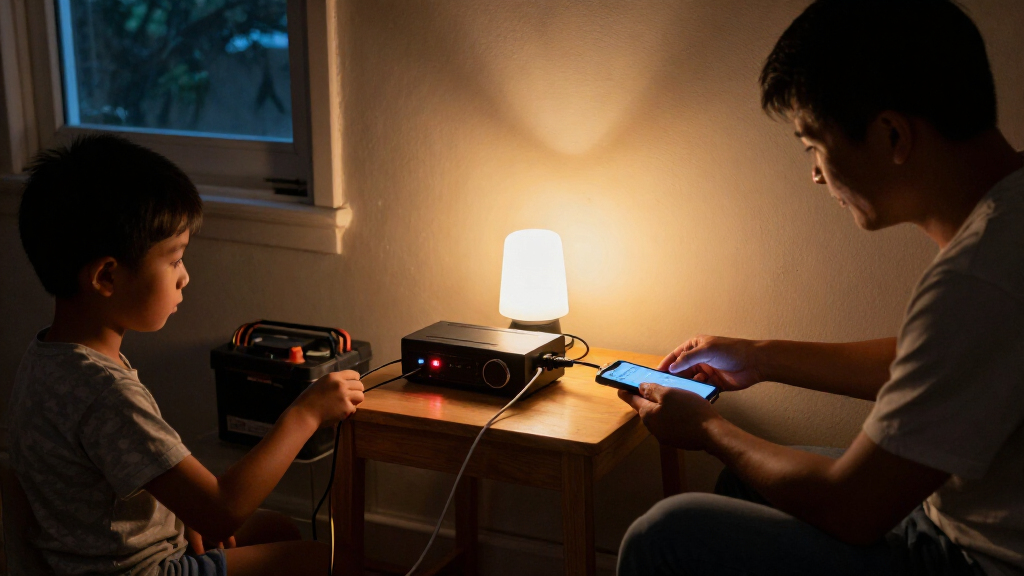
I compared the 11 listed models through the needs of an emergency-power buyer: continuous output, stated surge capacity, connection and monitoring features, and the demands each class places on the battery system. A pure sine wave label was a baseline, not a reason by itself to rank a model highly. I gave more weight to a useful fit for common backup loads and a clear role in the lineup than to the biggest wattage claim.
The order reflects the tradeoff between capability and practical setup. Midrange models rank ahead for readers seeking a flexible starting point; compact units suit lighter loads, and higher-output choices rise for buyers who already have a battery system and installation plan to support them. Where the product names provide limited detail about protections, wiring, or included accessories, I avoid treating those features as confirmed and recommend checking the manufacturer’s specifications before purchase.
Factors to Consider When Choosing Pure Sine Wave Power Inverter For Emergencies
Choosing an inverter for an outage starts with the devices you need to keep running, then works backward to the battery and installation. I would avoid buying by peak wattage alone: continuous output, startup demand, runtime, and DC current determine whether a setup will work safely and usefully.
Size for Continuous Load and Startup Surges
Write down the running watts of the devices you may use at the same time, then check whether any have a motor or compressor that draws extra power at startup. The inverter’s continuous rating needs to cover the combined running load, while its surge rating must handle the brief startup demand. Do not treat a peak figure as an amount the unit can provide for extended periods. If the equipment label lists amps rather than watts, use the rated voltage and current to estimate watts, then check the device manual for startup guidance. Leave headroom for devices you may add during an outage instead of planning to run every load right at the inverter limit. For uncertain or high-startup appliances, confirm compatibility with both the inverter maker and the appliance documentation.
Match the Inverter to the Battery, Not Just the Appliances
A 12V inverter draws substantial current from its battery as AC output rises, so large units can demand far more from the DC side than many buyers expect. Check the battery’s continuous discharge rating and the inverter’s recommended input range before choosing a high-wattage model. Battery capacity mainly affects how long equipment runs; it does not automatically mean the battery can supply the current an inverter demands. Cold conditions, battery age, and other loads on the same bank can also reduce practical runtime. Avoid assuming that a car starter battery is a suitable source for hours of backup power, since repeated deep discharge may shorten its service life. For sustained emergency use, compare the inverter requirements with a battery system designed for the expected load and duration.
Plan for Cable Size, Fusing, and Placement
High DC current makes cable length and gauge a performance and safety issue, not an afterthought. Follow the inverter manufacturer’s cable and fuse recommendations, and keep battery-to-inverter wiring as short as the installation allows to limit voltage drop. A fuse or breaker must be appropriate for the cable and equipment; do not select one by guesswork or simply install a larger fuse to stop nuisance trips. Put the inverter where it has the ventilation and clearance specified in its manual, away from moisture and heat sources. A remote control can make a unit easier to operate from a convenient location, but it does not remove the need for safe wiring or access to the inverter itself. If you are unsure about DC installation, use a qualified installer.
Calculate Runtime Before an Outage
Inverter wattage describes the load it can supply, not the length of time a battery will last. Estimate runtime from usable battery energy and the combined power draw of the devices, then allow for conversion losses and the battery’s recommended depth of discharge. Loads that cycle on and off can make real consumption differ from the wattage printed on the appliance, while always-on devices can drain a battery faster than expected. Decide which equipment matters most and set a priority order, such as communications first and larger comforts only when capacity allows. A smaller inverter paired with a suitable battery may serve a focused emergency plan better than a powerful inverter attached to a limited battery. Test the intended setup periodically so you can identify weak links before an outage.
Check Outlets, Controls, and Compatibility
Outlet count and USB ports matter only if they fit the devices you actually need to power. A model with USB or Type-C connections can reduce the need for separate adapters for small electronics, but those ports do not add to the AC output rating. An LCD or remote may make it easier to monitor or control an inverter in an RV or utility area, though buyers should confirm what information the display provides and what the remote can operate. Check that AC output voltage and frequency match your equipment, especially if appliances have strict input requirements. Also confirm whether cables, fuses, mounting hardware, and remotes are included rather than assuming the product name lists a complete installation kit. Review listed safety protections and certifications in the manufacturer’s documentation; do not infer them from wattage or branding.
Choose Output Headroom Without Overbuilding
Paying for more inverter capacity makes sense when your emergency plan includes several simultaneous loads or equipment with demanding startup surges. It is less useful when the battery cannot provide the required current or when you only need to keep small electronics running. Higher-capacity units can call for larger cables, stronger batteries, more space, and more involved installation, so their rated output is not a free upgrade. Conversely, a unit sized too close to the expected load can trip when another device starts or a load briefly rises. Compare the total cost and complexity of the whole power system, not just the inverter’s output rating. Pick a capacity that covers your planned loads with reasonable headroom and that your battery setup can safely support.
Frequently Asked Questions
Can I run a refrigerator from one of these 12V inverters during an outage?
Possibly, but the inverter’s running and surge ratings must both suit the refrigerator, and the battery must supply the required DC current. Check the appliance label or manual for running watts and startup demand rather than choosing by the inverter’s peak number alone. A refrigerator that starts successfully can still drain a small battery quickly as it cycles through the day. Confirm the inverter manufacturer’s guidance for motor loads and verify the installation’s cable and fuse requirements. If refrigeration is a priority, size the battery for the expected runtime as carefully as the inverter.
Is a 3000W or 5000W inverter a better emergency choice than a 1000W model?
Only if your planned loads need that much output and your battery system can support the resulting DC current. A 1000W inverter may be a more workable fit for a limited set of essentials, while higher-output models can support more or larger loads when paired with suitable batteries and wiring. The higher rating does not guarantee longer runtime; that depends largely on battery capacity and what you run. Before choosing a large unit, add up simultaneous loads and check appliance startup requirements. If you do not need the extra capacity, the added installation demands may outweigh its benefit.
Will a pure sine wave inverter run every household device?
No inverter should be treated as compatible with every device solely because it produces a pure sine wave. Check the equipment’s voltage, frequency, wattage, startup needs, and any manufacturer restrictions against the inverter’s specifications. Some devices may need more power at startup than their normal running draw suggests. Sensitive equipment may benefit from a clean AC waveform, but it still needs a compatible voltage and enough capacity. When an appliance has a strict power requirement, confirm compatibility with its manufacturer before relying on it for emergency use.
Can I connect an inverter to my home’s wiring to power circuits?
Do not connect an inverter to household wiring by plugging it into a wall outlet or improvising a connection. Backfeeding can expose utility workers and occupants to dangerous voltage and can damage equipment. Supplying home circuits requires an approved transfer switch or another code-compliant arrangement installed by a qualified electrician. Many portable inverters are intended to power appliances directly from their outlets, not serve as a whole-home backup system. Check the inverter manual and local electrical requirements before planning a fixed connection.
What should I prepare besides the inverter before an emergency?
Plan for a compatible battery, correctly sized DC cables and overcurrent protection, plus a safe place with the ventilation and clearance required by the manual. Work out which devices you will power and how long you need them to run, then check that the battery’s capacity and discharge rating meet those needs. Keep charging options in mind, since an inverter does not recharge its own battery unless the system includes suitable charging equipment. Store instructions where they can be found, and practice operating the setup before an outage. Never run an engine-powered generator indoors or in an enclosed area to charge or supply an inverter system.
Conclusion
For most buyers seeking a flexible emergency setup, I’d start with the BELTTT 1000W as the best overall, while the VOLTWORKS 1000W is a strong alternative for those who prioritize its stated ETL UL458 designation. My best value for lighter loads is the BESTEK 300W: it avoids the battery and wiring demands of the larger models if your needs are limited to small electronics. For beginners, the 300W or 500W BESTEK models are easier to match to a modest, clearly defined load plan than a 2000W or larger inverter, though every installation still needs proper protection. The best premium-capacity direction is the 5000W model for buyers with a battery system and installation built for high output; it is not a default choice for a basic outage kit. For RV or off-grid users who value monitoring and connections, consider the listed 2000W model with LCD remote, four AC outlets, USB, and Type-C. Choose the smallest model that covers your actual loads, startup surges, and battery limits rather than buying on wattage alone.