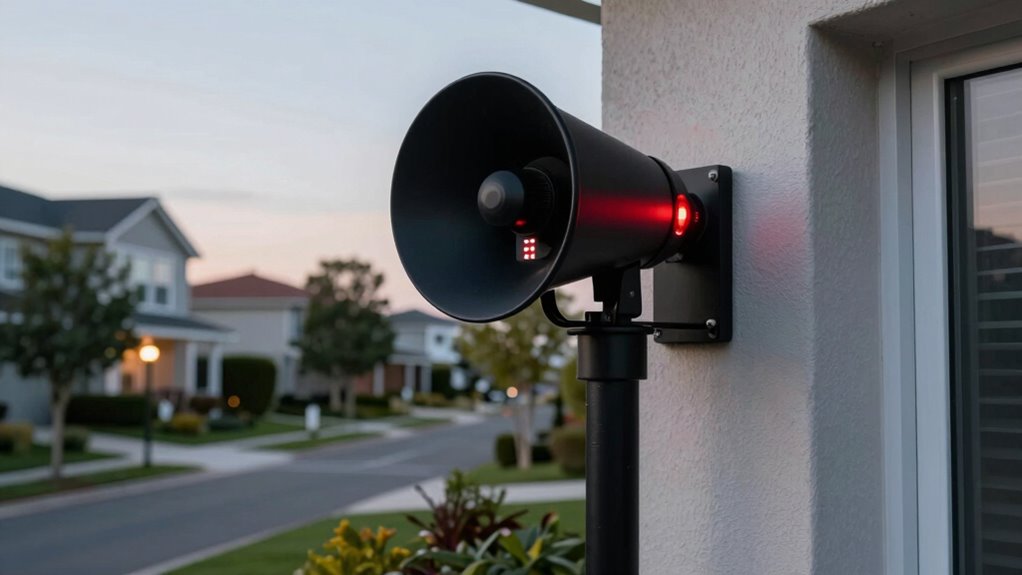

The YoLink X3 Outdoor Alarm Kit with Controller, 130 dB Siren, and Hub is my best overall pick for pairing a loud outdoor alert with a connected system. For a simpler all-in-one approach, the WiFi Home Security Alarm System with 120 dB Siren includes sensors and remote controls, while the 1/2 Mile Long Range Solar Wireless Driveway Alarm System suits properties where early driveway detection matters most. The main tradeoffs are standalone siren power versus whole-home coverage, and louder sound versus installation, weather exposure, and control needs. A siren’s advertised decibel figure alone does not tell you how well it will alert people across your property. Read on for the full breakdown and guidance on matching a system to your layout.

Get the latest gadgets delivered free with Prime
- Fast, free delivery on millions of items
- Prime Video, Amazon Music and more included
- Member-only deals all year
Complete the kit



Key Takeaways
- The YoLink X3 kit with hub stands out for buyers who want a controller, outdoor siren, and hub in one package; the two other YoLink listings differ in the equipment bundled, so check the exact kit before choosing.
- Complete Wi-Fi alarm kits bundle sensors and remote controls with a 120 dB siren, while standalone horns focus on sound output and may require a separate trigger or alarm panel.
- The 150 dB horn listing is not automatically the best fit. A very loud horn can create installation and neighbor concerns, and the listing alone does not establish how its sound compares at your intended listening distance.
- Wired 110V horns and battery- or wireless-oriented options involve different installation tradeoffs. Check power access, backup behavior, and wiring requirements before buying.
- The solar driveway kit serves a different purpose from a general home alarm. Its long-range motion detection can alert you to approach activity, but it is not a substitute for door and window sensors.
- Outdoor protection and triggering matter as much as loudness. Weather ratings, detection method, adjustable volume, and compatibility with other equipment separate the more specialized sirens from all-in-one kits.


| alarm system with loud outdoor siren | Power |
|---|---|
| WiFi Home Security Alarm Syste | — |
| Outdoor Siren Speaker with 150 | — |
| YoLink X3 Outdoor Alarm Kit: C | Built-in 12 VDC power supply |
| Nippon America 110V Outdoor Al | — |
| 30W Dual-Tone 130 dB Alarm Sir | 30 W |
| Motion Sensor Alarm with Human | Corded electric, 110 V AC |
| WiFi Wireless Home Security Al | — |
| YoLink Hub and Outdoor Securit | Battery-powered |
| Outdoor Indoor Wireless Waterp | — |
| YoLink X3 Outdoor Alarm Kit wi | Battery-powered, 12 V |
| Qinming 80W Outdoor Security S | 80 watts |
| HOAYVKJ WiFi Home Alarm System | — |
| 1/2 Mile Long Range Solar Wire | Solar with USB-C charging |
| Alarm Siren IP66 Waterproof Ou | 45 watts |
More Details on Our Top Picks
WiFi Home Security Alarm System with 120 dB Siren, Motion and Door/Window Sensors, and Remote Controls
This is the most self-contained choice here for buyers who want an alarm system, sensors, app alerts, and a loud siren in one package. Its hub produces a stated 120 dB alarm, while support for up to 30 wireless detectors leaves room to cover more doors and rooms later. Tuya app controls and phone alerts add remote awareness that standalone horns such as the 30W Dual-Tone 130 dB Alarm Siren do not provide on their own. The tradeoff is that the hub needs an outlet, and connectivity is limited to 2.4 GHz WiFi; it is not a self-contained outdoor siren installation. I’d choose this for a home that needs coordinated detection and alerts, but not for buyers whose main priority is a dedicated weather-exposed outdoor horn.
Pros:- Combines a 120 dB hub siren with motion and door/window sensors
- Tuya app provides controls, alerts, and door status checks
- Supports up to 30 wireless detectors and 20 remote controls
- Sensors can be attached with adhesive pads or screws
Cons:- The siren hub must stay plugged into an outlet
- WiFi support is limited to 2.4 GHz
- The supplied system is less suited to direct outdoor siren mounting than the YoLink X3 Outdoor Alarm Kit
Best for: Households seeking a DIY indoor alarm hub with app alerts, door and window coverage, and room to add sensors.
Not ideal for: Buyers who need a standalone, weather-rated siren mounted outdoors or an alarm that works without 2.4 GHz WiFi.
- Connectivity:2.4 GHz WiFi
- App:Tuya
- Siren volume:120 dB
- Sensor technology:Infrared (IR)
- Maximum wireless detectors:30
- Maximum remote controls:20
- Dimensions:6.3 x 1.18 x 4.33 inches
- Installation:Screw-in or self-adhesive sensors; siren hub plugs into an outlet
Our verdict“Choose this kit if you want a sensor-based home alarm with app alerts, rather than a dedicated outdoor horn.”
Outdoor Siren Speaker with 150dB Security Horn and Adjustable Angles for Home Security
This standalone horn is aimed at buyers who want a high-output sounder and already have an alarm or intercom capable of triggering it. Its listed 150 dB output is higher than the 120 dB Nippon America 110V Outdoor Alarm Security Siren and the 130 dB YoLink X3 Outdoor Alarm Kit, making the stated sound level its clearest distinction. The adjustable mounting angle can help direct the horn toward a driveway, yard, or entry point instead of a wall. Unlike the WiFi Home Security Alarm System in this lineup, it is not a complete alarm kit with sensors and app alerts. Installation may call for technical knowledge, and the description gives limited detail about weather resistance, so I would not treat its outdoor label as proof that every exposed location is suitable.
Pros:- Lists a 150 dB sound level, higher than the other sirens in this batch
- Adjustable angle helps aim the sound toward a chosen area
- Offers two sound options
- ABS construction is described as corrosion resistant
Cons:- May require technical knowledge to install and connect
- Weather-resistance details are limited
- Does not include the sensors and app-based alarm functions found in the WiFi Home Security Alarm System
Best for: Property owners with an existing compatible alarm or intercom who want a standalone, direction-adjustable outdoor sounder.
Not ideal for: Buyers seeking a complete alarm kit, app notifications, or clearly documented weather protection for a fully exposed mounting location.
- Sound level:150 dB
- Material:ABS
- Sound options:Two
- Mounting:Adjustable angle
- Net weight:1.98 pounds
- Listed size:19.5 x 11.9 x 22.5 mm
Our verdict“Pick this horn if your alarm system is already in place and its stated high output matters more than an all-in-one kit.”
YoLink X3 Outdoor Alarm Kit: Controller + 130 dB Siren
The YoLink X3 suits buyers who need a purpose-built outdoor alarm and do not want the siren to depend on WiFi or internet access. Its LoRa wireless connection, IP65 enclosure, and stated 130 dB output give it a stronger outdoor-use case than the outlet-powered WiFi Home Security Alarm System, which is designed around a hub and indoor sensors. The claimed 10-year battery life also reduces routine power maintenance, though actual results depend on use and conditions. This kit still requires a YoLink hub for full functionality, so it is not a complete standalone setup. It is also described as suitable for protected outdoor areas rather than direct exposure to moisture. Compared with the wired Nippon America siren, it offers more installation flexibility but relies on the YoLink ecosystem.
Pros:- 130 dB stated siren output
- LoRa operation does not rely on WiFi or internet
- IP65 enclosure is suited to protected outdoor installation
- Listed battery life is over 10 years
Cons:- Requires a YoLink hub for full functionality
- Not described as waterproof; it needs protection from moisture
- Its ecosystem requirement makes it less straightforward than a standalone wired siren
Best for: Property owners who want a battery-powered outdoor siren on a LoRa setup and can install it in a sheltered location with a YoLink hub.
Not ideal for: Buyers needing a complete hub-free alarm, direct rain exposure, or an outdoor horn powered from standard mains wiring.
- Siren volume:130 dB
- Wireless technology:LoRa
- Battery capacity:19,000 mAh
- Listed battery life:Over 10 years
- Power:Built-in 12 VDC power supply
- Compatibility:Requires YoLink hub for full functionality
Our verdict“Choose the YoLink X3 if you need a loud outdoor siren with LoRa connectivity and can provide a hub and sheltered mounting spot.”
Nippon America 110V Outdoor Alarm Security Siren (TC-S7545-110), 80W Wired Horn, 120dB, Wi-Fi Socket Included, Weather Resistant, 8ft Cable
For a permanent installation near a standard outlet, this Nippon America horn offers a practical mix of 120 dB sound, 80W output, and weather-resistant construction. Its included Wi-Fi socket supports remote activation, which is useful when the siren is connected to a compatible control setup. Compared with the battery-powered YoLink X3 Outdoor Alarm Kit, this model avoids battery-life planning but needs dependable 110V AC power at the mounting location. The 8-foot cable gives some placement flexibility, though not enough to solve every wiring layout. There is no built-in battery backup, so a power outage can leave it unavailable. I’d favor it over a bare wired horn when remote switching and weather resistance matter, but buyers wanting a sensor kit or off-grid operation should look elsewhere.
Pros:- 80W output with a stated 120 dB sound level
- Weather-resistant construction is intended for outdoor installation
- Included Wi-Fi socket supports remote activation
- 8-foot cable offers some placement flexibility
Cons:- Requires a 110V AC outlet
- No built-in battery backup for outages
- Installation may be more involved than setting up a wireless kit
Best for: Owners of homes or commercial sites with a nearby 110V outlet who want a fixed outdoor horn with Wi-Fi-enabled remote activation.
Not ideal for: Buyers without accessible mains power, those needing battery backup, or anyone seeking a complete alarm kit with included sensors.
- Power output:80 W
- Sound level:120 dB
- Operating voltage:110V AC
- Frequency range:250 Hz–8 kHz
- Impedance:5 Ω
- Dimensions:8 x 4.5 x 9.1 inches
- Cable length:8 feet
- Included control:Wi-Fi socket
Our verdict“Choose this fixed horn when you have mains power outdoors and want remote activation without relying on a battery-powered siren.”
30W Dual-Tone 130 dB Alarm Siren with Adjustable Bracket
This siren is a flexible component for a buyer who already has a compatible alarm panel, switch, or other trigger source. It offers warble and steady tones, plus a bracket adjustable up to 90 degrees so the sound can be aimed toward an entry or approach. The stated 130 dB output is specified at 12V and within 1 meter, so I would compare that figure carefully with products whose sound ratings may use different conditions. Unlike the Nippon America 110V Outdoor Alarm Security Siren, this model runs on 5–12V DC and does not include a Wi-Fi socket or a complete remote-control system. That makes it adaptable for custom low-voltage projects but less convenient for a plug-and-play installation. Wiring determines the tone, and a suitable power source is required.
Pros:- Provides warble and steady tone options
- Bracket adjusts up to 90 degrees for sound direction
- Works with compatible alarm systems, switches, and buttons
- Includes mounting bracket and screws
Cons:- Requires a 5–12V DC power source and wiring
- Tone selection depends on connecting the correct wire
- The 130 dB figure is specified at 12V within 1 meter, limiting direct comparisons with other ratings
Best for: DIY installers building a low-voltage alarm setup who want selectable tones and an adjustable sound direction.
Not ideal for: Buyers seeking a complete wireless alarm, a mains-powered outdoor unit, or a siren that can be installed without wiring knowledge.
- Power:30 W
- Operating voltage:5–12V DC
- Sound level:130 dB at 12V within 1 meter
- Sound types:Warble and steady
- Wiring:White: negative; red: warble positive; yellow: steady positive
- Mounting:Wall mount; bracket adjusts up to 90 degrees
- Dimensions:20 x 12.5 x 23 cm (7.9 x 4.9 x 9.1 inches)
- Included:Siren, bracket, and 6 screws
Our verdict“Pick this siren for a custom low-voltage alarm build where adjustable mounting and two tones matter more than plug-and-play controls.”
Motion Sensor Alarm with Human Detection, 120 dB Siren and LED Strobe
This pick combines human-sized motion detection with a stated 120 dB siren and flashing strobe, making it a direct option for alerting people nearby rather than managing a network of sensors. Compared with the YoLink X3 Outdoor Alarm Kit, it is simpler: there is no hub or app-led system described, but it also lacks that kit’s stated local operation during internet or AC outages. The zinc alloy construction is described as suitable for outdoor conditions, yet no weather-resistance rating is provided, so I would not treat it as ready for exposed installation. Its main practical constraint is the 110 V AC plug-in power; the outlet requirement may limit placement and leaves it dependent on mains power. Choose it for a focused alert point, not a whole-property system.
Pros:- Pairs a stated 120 dB siren with a flashing LED strobe.
- Designed to detect human-sized movement.
- Zinc alloy components are described as suitable for outdoor conditions.
- Plug-in setup avoids complex wiring.
Cons:- Requires access to a 110 V AC outlet.
- No detection range is specified.
- No weather-resistance rating is provided.
Best for: Property owners who want a plug-in motion-triggered siren and visible strobe near an accessible outdoor outlet.
Not ideal for: Buyers who need a documented weatherproof rating, specified detection range, battery backup, or app-based system control.
- Detection:Human-sized movement
- Audible alarm:120 dB
- Visual alert:Flashing LED strobe
- Material:Zinc alloy
- Power:Corded electric, 110 V AC
- Dimensions:5.9 × 3.9 × 12.2 in
Our verdict“I’d choose it for a simple motion-triggered sound-and-light alert where an outlet is available and the installation can be sheltered.”
WiFi Wireless Home Security Alarm System Kit with 120 dB Siren
This kit is a better fit than the standalone Motion Sensor Alarm with Human Detection for buyers who want door/window coverage alongside motion alerts. It includes a 120 dB siren, two sensors, two remotes, and Tuya app access, so a small home can start with several entry points rather than a single alarm trigger. Support for up to 30 detectors also leaves room to expand, though the siren’s outlet requirement still shapes where it can go. Unlike the battery-powered YoLink Hub and Outdoor Security Siren, this model depends on a 2.4 GHz WiFi connection for app functions and does not describe long-range LoRa operation. I’d favor it for connected indoor entry monitoring, but its outdoor siren credentials are less clear: no weather rating is given, and the included siren plugs into an outlet.
Pros:- Includes a 120 dB siren, door/window sensor, motion sensor, and two remotes.
- Tuya app supports alerts and settings over 2.4 GHz WiFi.
- Supports up to 30 wireless detectors and 20 remote controls.
- Sensors can be mounted with adhesive pads or screws.
Cons:- App connectivity relies on 2.4 GHz WiFi.
- The siren needs an outlet, limiting placement.
- No outdoor weather-resistance rating is stated.
Best for: Households seeking an app-controlled starter kit with door/window and motion coverage, remote controls, and room to add sensors.
Not ideal for: Buyers who need a weather-rated outdoor siren, operation independent of WiFi, or a fully battery-powered siren installation.
- Siren volume:120 dB
- Connectivity:2.4 GHz WiFi, wireless
- App compatibility:Tuya app
- Included sensors:One door/window sensor and one motion sensor
- Included controls:Two remote controls
- Maximum supported detectors:30
- Maximum supported remotes:20
- Installation:Screw-in or adhesive mounting
Our verdict“I’d pick this kit for connected, expandable home entry monitoring, but not as a confirmed weatherproof outdoor siren system.”
YoLink Hub and Outdoor Security Siren & Smart Alarm Controller Kit
The standout here is LoRa wireless range up to 1/4 mile, which gives this battery-powered kit more placement flexibility than the outlet-dependent WiFi Wireless Home Security Alarm System Kit. Its 110 dB outdoor-rated siren can suit a detached outbuilding or a property where running power is inconvenient, while app automation and Alexa, Google, IFTTT, and Home Assistant compatibility offer broad control options. The tradeoff is that this is not a complete sensor package as described: fuller automation requires additional YoLink products. Its 110 dB rating is also below the 130 dB output listed for the YoLink X3 Outdoor Alarm Kit, so buyers prioritizing the loudest listed alarm may prefer that model. Battery life and replacement details are not provided, and the outdoor installation may need added protection from the elements.
Pros:- Wireless range is listed up to 1/4 mile.
- Battery-powered installation avoids dependence on a nearby outlet.
- Outdoor-rated 110 dB siren.
- Works with Alexa, Google, IFTTT, and Home Assistant.
Cons:- Additional YoLink products are needed for fuller automation.
- Battery life and replacement details are not specified.
- Outdoor placement may need extra protection from the elements.
Best for: Owners of larger properties who need a battery-powered outdoor siren with long-range wireless communication and smart-home integrations.
Not ideal for: Buyers wanting a complete sensor kit, documented battery-life details, or the lineup’s highest stated siren output.
- Sound level:110 dB
- Wireless range:Up to 1/4 mile
- Power:Battery-powered
- Wireless protocol:LoRa
- Compatibility:Android, iOS, Alexa, Google, IFTTT, Home Assistant
Our verdict“I’d choose this for long-range, battery-powered outdoor coverage and smart-home links, provided I’m willing to build out the YoLink system.”
Outdoor Indoor Wireless Waterproof Alarm Siren with Remote Control and Adjustable Volume
For buyers focused on the siren itself, this model offers a useful combination of IP65-rated protection, adjustable output up to 120 dB, and 12 selectable tones. That makes it more clearly specified for outdoor exposure than the Motion Sensor Alarm with Human Detection, whose description gives no weather rating. The remote’s stated 2,000-meter range may help with distant activation, although obstacles can reduce effective reach. USB audio input is another differentiator: custom alerts can suit a yard, warehouse, or worksite where a standard tone is not the right signal. Unlike the YoLink X3 Outdoor Alarm Kit, this is not presented as a smart sensor-and-hub system, and it relies on AC power. I’d choose it for flexible local signaling, not for app alerts or backup operation during an outage.
Pros:- IP65 waterproof and dustproof rating is stated.
- Adjustable sound level reaches 120 dB, with 12 selectable tones.
- Remote control range is listed up to 2,000 meters.
- USB audio input supports custom alerts.
Cons:- Requires AC 110–120 V power.
- Remote needs a 9 V battery, which is not included.
- Obstacles may reduce the stated remote-control range.
Best for: Owners of yards, warehouses, or work areas who want a weather-rated siren with selectable tones, adjustable volume, and custom audio.
Not ideal for: Buyers who need battery backup, smart-home automation, or a siren that can operate without an AC outlet.
- Maximum sound level:120 dB
- Remote control range:Up to 2,000 meters
- Tones:12 switchable tones
- Power supply:AC 110–120 V
- Weather protection:IP65 waterproof and dustproof
- Custom audio:USB audio input
- Remote battery:9 V, not included
Our verdict“I’d pick it for a fixed, weather-rated alert point with customizable sound, but not for app-connected or backup-powered security.”
YoLink X3 Outdoor Alarm Kit with Controller, 130 dB Siren, and Hub
Among these five, this kit has the highest stated siren output at 130 dB and the strongest backup story: LoRa device-to-device pairing is described as supporting local operation during internet or AC power outages. Its IP65-rated enclosure and replaceable lithium batteries suit outdoor installation better than the outlet-powered WiFi Wireless Home Security Alarm System Kit, though the instructions still call for a protected location away from direct rain and excess moisture. The listed standby life exceeds 10 years, but that figure should not be confused with guaranteed service under every use pattern. The tradeoff is a more specialized YoLink setup, with compatible-device details centered on a motion detector, rather than the broader included entry-sensor mix of the WiFi kit. I’d favor it when loud output and local resilience matter more than a simple plug-in setup.
Pros:- Stated 130 dB siren output is the highest among these five products.
- IP65-rated enclosure is specified for outdoor use.
- Replaceable lithium batteries are listed with standby life over 10 years.
- LoRa device-to-device pairing supports local operation during internet or AC outages.
Cons:- Must be installed in a protected spot away from direct rain and excess moisture.
- Battery replacement may eventually be needed.
- Compatible-device information centers on a motion detector rather than a broad included sensor set.
Best for: Property owners who want a very loud outdoor alarm with battery backup and local device-to-device operation during internet or AC outages.
Not ideal for: Buyers who want a fully exposed, rainproof installation, a simple plug-in siren, or a broader set of included entry sensors.
- Alarm volume:130 dB
- Battery:Replaceable lithium batteries, 19,000 mAh
- Listed standby battery life:Over 10 years
- Power:Battery-powered, 12 V
- Wireless protocol:LoRa YoLink
- Maximum range:620 meters (up to 2,034 feet)
- Control methods:App and voice
- Mounting type:Tabletop mount
Our verdict“I’d choose this for a loud outdoor alarm with local battery-backed operation, as long as I can mount it in a sheltered location.”
Qinming 80W Outdoor Security Siren, 120 dB, Remote Activation
The Qinming pairs a 120 dB, 80-watt siren with a weather-resistant housing, making it a focused choice for buyers who already have an AC outlet near the mounting spot. Its rotating quick-mount base lets you aim the sound toward an approach or open area, while remote activation is possible through a separately purchased Wi-Fi adapter or smart plug. Compared with the HOAYVKJ WiFi Home Alarm System, Qinming is a standalone outdoor horn rather than a sensor kit, so it suits an existing alarm setup better than someone starting from scratch. The tradeoff is that its remote function is not ready out of the box, and the corded connection limits placement. Choose it for a straightforward wired siren; skip it if you need included sensors or battery-powered installation.
Pros:- 120 dB output and 80-watt power provide a strong audible alert.
- Weather-resistant housing is intended for outdoor installation.
- Rotating 90-degree quick-mount base helps direct the sound.
- Can be remotely activated with a separately sold Wi-Fi adapter or smart plug.
Cons:- Remote activation requires an additional device that is not included.
- AC power and a 6-foot cable restrict installation locations.
- It is a siren only, with no included sensors or alarm controller.
Best for: Homeowners with an outdoor AC outlet and an existing alarm or smart plug setup who want a high-output siren they can aim.
Not ideal for: Renters or buyers without a nearby AC connection, and anyone who expects remote control hardware or motion sensors in the box.
- Brand:Qinming
- Model:QM120-80W
- Sound level:120 dB
- Power:80 watts
- Power source:Corded electric, AC powered
- Voltage:100–240V AC
- Cable length:6 ft (1.8 m)
- Mounting:Wall mount; base rotates 90 degrees
- Dimensions:9 x 7.9 x 4.6 in
Our verdict“Choose the Qinming if you have an outdoor AC connection and want an aimable 120 dB siren to add to an existing system.”
HOAYVKJ WiFi Home Alarm System with 120 dB Siren and Motion Sensors
For a buyer who wants sensors and controls in one package, the HOAYVKJ is more approachable than the Qinming 80W Outdoor Security Siren, which is a wired siren rather than a complete alarm kit. This set includes four motion sensor alarms and two remotes, plus a Wi-Fi siren speaker that can be controlled by app or remote. Its IP65-rated siren is designed for outdoor use, and the 120 dB output gives the system a clear audible-alert focus. Motion detection reaches up to 26 feet, a shorter stated range than the 30-foot detection range of the solar driveway alarm in this lineup. That limits how much ground each sensor can cover, and additional sensors are sold separately. This makes sense for smaller areas and simple setup, not broad property monitoring.
Pros:- Includes four motion sensor alarms and two remote controls.
- 120 dB siren is paired with app and remote control.
- IP65-rated siren is designed for outdoor conditions.
- Wireless kit is described as tool-free to set up.
Cons:- Motion detection is limited to a stated 26 feet.
- Additional sensors are sold separately.
- The listed kit contents do not specify a dedicated outdoor siren mounting method.
Best for: First-time alarm buyers who want an app- or remote-controlled kit with several motion sensors for a home entrance, garage, or small yard.
Not ideal for: Owners of large yards or long driveways who need wider sensor coverage, or buyers who want to expand without purchasing extra sensors.
- Brand:HOAYVKJ
- Kit contents:4 motion sensor alarms, 2 remote controls, 1 Wi-Fi loud speaker, 1 power plug
- Siren volume:120 dB
- Motion detection range:Up to 26 ft
- Connectivity:2.4 GHz Wi-Fi, wireless
- Control methods:App and remote
- Siren weather resistance:IP65
- Power source:Battery powered
- Warranty:1 year
Our verdict“Pick the HOAYVKJ for a bundled, easy-entry alarm covering a modest area, but choose a longer-range option for a large property.”
1/2 Mile Long Range Solar Wireless Driveway Alarm System with IP65 Weatherproof Motion Detectors and 120dB Siren
This system is aimed at property owners who need to know when someone approaches from a distance, rather than buyers seeking the loudest standalone horn. Its strongest differentiator is the wireless range of up to 1/2 mile in open areas, paired with two solar-powered, IP65-rated sensors and a receiver. The sensors detect motion up to 30 feet away, slightly farther than the HOAYVKJ system’s 26-foot detection range, though the receiver’s 120 dB alarm is not a stated outdoor horn installation like the IP66-rated 130 dB model in this lineup. Solar power with USB-C charging cuts down on routine battery replacement, but charging still depends on sunlight. Hills, buildings, and other obstacles can also reduce the advertised wireless range. I’d favor it for driveway alerts over a fixed perimeter siren.
Pros:- Wireless range reaches up to 1/2 mile in open areas.
- Two IP65 weatherproof sensors are included.
- Solar power with USB-C charging reduces reliance on routine battery replacement.
- Offers multiple alert options for property monitoring.
Cons:- The maximum wireless range depends on open conditions and may fall around obstacles.
- Motion detection covers up to 30 feet, not the full wireless link distance.
- Solar charging may be less reliable in shaded locations.
Best for: Owners of long driveways, rural properties, or outbuildings who want a motion alert sent over a long open-area wireless link.
Not ideal for: Buyers who need a permanently mounted outdoor horn as the main deterrent, or whose sensors will sit in shaded locations or behind major obstacles.
- Wireless range:Up to 1/2 mile
- Motion detection range:Up to 30 ft
- Weatherproof grade:IP65
- Operating temperature:-4°F to +140°F (-20°C to +60°C)
- Power:Solar with USB-C charging
- Alarm sound level:120 dB
- Sensor quantity:2
- Receiver quantity:1
Our verdict“Choose this system to monitor a long, open driveway with solar-powered sensors, not as a replacement for a fixed outdoor siren.”
Alarm Siren IP66 Waterproof Outdoor 130dB Horn 45W Security Sirens for Ports, Docks, Factories, Schools, Homes AC 110V-120V
At a stated 130 dB, this horn has the highest listed sound level among these four products, making it the direct choice for buyers whose first priority is a forceful outdoor alert. Its IP66 shell adds dust and water protection, and the bright LED flash pairs a visual warning with the sound. Compared with the Qinming, this model claims a louder output and a higher ingress-protection rating, but it gives up the Qinming’s rotating base and described remote-activation compatibility. The 45-watt horn requires AC 110–120V wiring, so installation is less plug-and-play and may call for someone comfortable with electrical work. There is no listed app, remote, or included detection system. I’d choose it for a fixed wired site, not for flexible smart-home control.
Pros:- 130 dB is the highest stated sound level among the four products in this batch.
- IP66 protection is rated for dust and water exposure.
- Bright LED flashing light adds a visual alert.
- 45-watt AC horn is designed for fixed outdoor security use.
Cons:- AC 110–120V wiring requires installation knowledge.
- No remote control or connectivity features are specified.
- No sensors or alarm controller are included.
Best for: Facilities managers or homeowners with suitable AC wiring who need a fixed, weatherproof siren and visible LED alert for an outdoor area.
Not ideal for: Buyers who want wireless setup, app or remote activation, included sensors, or a siren that can be repositioned without rewiring.
- Sound level:130 dB
- Power:45 watts
- Voltage:AC 110–120V
- Protection level:IP66
- Material:Low carbon steel plate
- Visual alert:LED flashing light
- Installation:Wired
Our verdict“Choose this wired horn when listed loudness and IP66 protection matter more than remote control or a bundled alarm system.”

How We Picked
I ranked these 14 options by how well they match the specific need for a loud outdoor siren, then by how clearly the listing supports a useful, workable alarm setup. I looked at stated sound output, whether the product includes sensors, a controller, a hub, or only a horn, and what the listed power and connection approach imply for installation. I also weighed outdoor suitability, such as stated weather resistance or an IP rating, alongside usability features like remote activation, adjustable volume, and motion detection.
The order reflects system completeness and fit for different properties, not a simple contest of advertised decibel numbers. Complete kits rank ahead of standalone horns for most households because they offer a clearer route to detection and activation; specialized horns remain useful when a buyer already has compatible controls or needs a wired installation. I distinguish similar YoLink packages by the listed contents, and I treat high sound claims cautiously: the provided product details do not establish comparable measurement conditions, real-world range, or local noise-rule compliance.
Factors to Consider When Choosing Alarm System With Loud Outdoor Siren
Before choosing an alarm system with a loud outdoor siren, decide what needs to trigger the sound and who needs to hear it. A siren is only one part of the warning chain: detection, control, power, and placement all affect whether an alert is useful. These checks can help prevent a common mismatch—buying a powerful horn when what the property needs is broader sensor coverage or a simpler, complete kit.
Match the alarm to the area you need to protect
Start by sketching the approaches, doors, windows, and outbuildings you want covered rather than shopping from a decibel figure. A driveway motion alarm can give advance notice of arrivals, while contact sensors are better suited to doors and windows; neither replaces the other. A single outdoor horn may carry sound across an open yard but leave the house without useful detection. For a large or irregular property, think in zones and check whether the controller can accept the sensor types and number of devices you need. The tradeoff is between a focused alert for one entry point and a broader system that takes more planning to install.
Read sound-output claims with distance and placement in mind
Advertised decibel figures are not a reliable way to compare products unless the measurement distance and conditions are comparable. Sound drops with distance and can be blocked or redirected by walls, fences, buildings, and terrain. A horn aimed toward an open approach may be more useful than a higher-rated unit mounted behind an obstacle. Consider whether nearby occupants, neighbors, or animals could be affected, and check local noise rules before installing a very loud siren. Where the product offers adjustable volume or a strobe, those features can give you more control than choosing the highest stated output alone.
Check how detection actually activates the siren
Ask whether the siren is triggered by included sensors, a controller, an app, a remote, or a separate alarm panel. Listings that say a horn is loud do not necessarily show that it detects intrusions on its own. Before purchase, confirm that the sensor and controller connection method matches the siren and that the parts are included in the package you select. If you need alerts from several doors or zones, check how the system identifies each trigger and whether it supports the needed sensors. A complete kit can simplify setup, while a standalone siren can make more sense when you already own compatible equipment.
Plan power and backup before mounting outdoors
Outdoor sirens may depend on a fixed power connection, batteries, a wireless controller, or a combination, and each choice has maintenance implications. A wired 110V unit calls for a suitable power point and a safe installation plan; wireless designs avoid some cabling but still need attention to battery life and signal reliability. Ask what happens during an outage or loss of network connection, rather than assuming the siren will keep working as expected. For solar driveway sensors, check whether the placement gets adequate light and whether the siren itself has a separate power requirement. Ease of mounting matters, but dependable power is what keeps an alert available when it is needed.
Treat weather protection as a placement decision
Weather-resistant wording and IP ratings are useful clues, but they do not mean a device can be placed anywhere outdoors. Check the stated rating and installation directions for exposure to rain, dust, direct sun, and temperature changes. An eave or sheltered wall can reduce exposure, though it may also affect sound projection or sensor coverage. A product with an IP66 listing offers a more specific protection claim than a listing that only says weather resistant, but buyers should still follow the manufacturer’s mounting guidance. Also consider cable entry points and connectors, which can be vulnerable even when the main enclosure is protected.
Choose between a standalone horn and a connected kit
A standalone horn can be a sensible choice for a workshop, dock, or property with an existing alarm panel, but it leaves triggering and coordination to the rest of the setup. A connected kit usually bundles more of the alarm chain, which can help first-time buyers avoid compatibility guesswork. Smart or Wi-Fi features may add remote control, but they also introduce setup and network dependencies; check which functions work locally if the connection is unavailable. Compare the exact included components across similarly named kits, especially where a hub or controller appears in one package but not another. Paying for a more complete system is most worthwhile when it replaces separate components you would otherwise have to source and match.
Frequently Asked Questions
Is a 150 dB outdoor siren automatically louder or better than a 130 dB model?
Not necessarily. Advertised figures are hard to compare unless the maker specifies the same measurement distance and test conditions. Mounting height, direction, nearby structures, and background noise all affect what people hear at a distance. A lower-rated model with a suitable placement and working trigger may serve your property better than a higher-numbered horn that is difficult to install or control. Check the sound claim alongside the power, mounting, and activation details.
Can I buy an outdoor siren by itself and connect it to my existing alarm?
Possibly, but confirm compatibility before buying. Check whether your alarm panel supports the siren’s wired or wireless connection method, required power, and activation signal. A standalone horn may not include intrusion sensors or a controller, so those parts need to come from your current system or be purchased separately. Ask the manufacturer whether the specific devices work together rather than relying on a general claim that the siren is suitable for security use. If you cannot verify compatibility, a complete kit can reduce setup uncertainty.
Will a Wi-Fi outdoor alarm still sound if my internet goes down?
That depends on how the system handles local communication and power, and the product details do not establish the behavior of every kit. Some systems may let a sensor communicate directly with a controller or siren, while remote alerts and app control can depend on an internet connection. Look for explicit information about local triggering, backup power, and what happens during a router or power failure. If audible warning is your priority, do not assume that Wi-Fi means the siren will work offline—or that an outage will silence it. Ask the maker or consult the product instructions for the exact configuration.
Is a driveway motion alarm enough to protect a home?
A driveway alarm can alert you to movement approaching the property, but it does not usually provide the same coverage as sensors on doors and windows. Its usefulness depends on the detector’s placement, field of view, and ability to distinguish relevant movement from passing people, vehicles, or animals. It can be a helpful early-warning layer for a long approach, especially where you want to know someone is nearby before they reach the house. For entry detection, pair that function with suitable sensors or an alarm system that covers the access points you care about. Treat the driveway unit as a supplement, not a complete home alarm by default.
What should I verify before mounting a loud siren near neighbors?
Check local rules on alarm noise and outdoor sounders, and review any guidance from your property manager or homeowners association. Think about where the horn points, how close it is to neighboring windows, and whether the system has adjustable volume or a way to silence a false alarm promptly. A motion trigger can be affected by pets, passing traffic, or movement outside the intended area, so plan the detection zone carefully. Test the complete setup in a controlled way and make sure household members know how to disarm it. These steps help reduce nuisance alerts while preserving the warning function.
Conclusion
For most buyers seeking a connected outdoor warning system, I’d start with the YoLink X3 Outdoor Alarm Kit with Controller, 130 dB Siren, and Hub as the best overall: its listed bundle brings together more of the alarm chain than a standalone horn. My best-value direction is a complete 120 dB Wi-Fi kit when you need sensors and remote controls without buying each part separately; compare the included components before choosing among the similar listings. For a best premium or heavy-duty fit, consider a wired outdoor horn such as the Nippon America or IP66 130 dB model only if your site and power setup suit it. Beginners are better served by a kit with clearly included sensors and controls than by a horn that needs a separate panel. For long driveways, the solar wireless driveway alarm is the specialized pick; for an existing compatible alarm installation, a standalone siren may be the cleaner match. Choose by coverage, trigger compatibility, and placement first, then use sound output to narrow the options.