For students choosing wireless earbuds, the best pick in this lineup is the TAGRY Bluetooth Headphones, whose advertised 60-hour playback and charging case suit long stretches between outlets. The touchscreen model stands out for students who want active noise cancellation and transparency mode, while the lightweight TOZO A1 is a simpler option for everyday listening. The main tradeoffs are comfort versus battery features, straightforward controls versus extra functions, and advertised protection or playback claims that can vary by use. I compare all seven options by fit, campus usefulness, and feature balance below. Continue reading for the full breakdown and guidance on which compromises make sense for your routine.

Get the latest gadgets delivered free with Prime
- Fast, free delivery on millions of items
- Prime Video, Amazon Music and more included
- Member-only deals all year
Complete the kit


Key Takeaways
- TAGRY is the battery-focused pick: its stated 60-hour playback and wireless-charging case give it the clearest advantage for students who dislike frequent charging, though the claim is not a guarantee of real-world listening time.
- The touchscreen model is the feature-heavy choice: ANC and transparency mode are more relevant for studying in shared spaces than a long list of basic playback features, but buyers should check how those modes fit their needs.
- TOZO A1 and Kurdene S8 prioritize light, simple listening: they suit students who want compact earbuds without paying attention to a large feature set; the lineup does not provide enough detail to rank one as a clear comfort winner.
- Two listings emphasize protection and battery extras: the TAGRY and the Bluetooth 5.4 model with an IP7 claim and stated 48-hour battery advertise features suited to active routines, but water resistance does not make earbuds suitable for swimming.
- Similar model names make comparison harder: the two TOZO A1 listings and two Kurdene options should be checked by their exact listing details, since names alone do not establish meaningful differences in fit or performance.




| wireless earbuds for student | Bluetooth | Driver size | Water resistance |
|---|---|---|---|
| TAGRY Bluetooth Headphones Tru | — | 13 mm | IPX5 |
| TOZO A1 Wireless Earbuds Bluet | 5.3 | — | IPX5 |
| Wireless Earbuds with Bluetoot | 5.4 | 14.2 mm | — |
| Kurdene S8 True Wireless Bluet | 5.3 | 8 mm | — |
| TOZO A1 Wireless Earbuds with | 5.3 | — | IPX5 |
| Kurdene Wireless Earbuds Bluet | Version 5.3 | 8 mm | — |
| Wireless Earbuds with Bluetoot | Version 5.4 | 14.2 mm | IP7 |
More Details on Our Top Picks
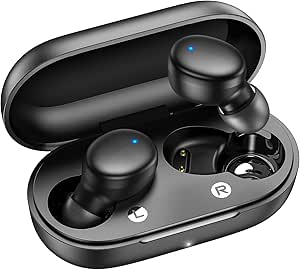
TAGRY Bluetooth Headphones True Wireless Earbuds with 60H Playback, LED Power Display, Wireless Charging Case, IPX5 Waterproof, In-Ear with Mic
The TAGRY’s main advantage for student routines is its up to 60 hours of total playback, which means fewer case-charging interruptions than the TOZO A1 models’ 32-hour total. That extra reserve suits commuters, campus days, and students who often forget to charge accessories. The case also supports wireless charging and USB-C, while IPX5 protection makes the earbuds a reasonable pick for sweaty workouts or light rain. They offer one-step pairing, mono or stereo listening, and multiple ear-tip sizes, so switching between a lecture recording and a call is straightforward. The tradeoff is that each earbud is rated for six hours per charge, shorter than the TOZO A1’s seven. The case is also comparatively substantial, and sensitive touch controls may interrupt listening if tapped accidentally.
Pros:- Up to 60 hours of combined playback reduces how often the case needs recharging.
- Wireless charging and USB-C provide two charging options.
- IPX5 water resistance suits sweat and light splashes.
- Multiple ear-tip sizes and mono or stereo modes support flexible everyday use.
Cons:- Six hours of playback per earbud is less than the seven hours listed for the TOZO A1.
- The charging case is relatively large for a pocket or small pencil pouch.
- Touch controls may respond to unintended taps.
Best for: Students who want to charge their earbuds and case less often, especially commuters with long days away from an outlet.
Not ideal for: Students prioritizing a tiny case or the longest uninterrupted listening session on a single earbud charge.
- Playback per earbud:6 hours
- Total playback:Up to 60 hours
- Case battery capacity:470 mAh
- Charging:Wireless charging and USB-C
- Water resistance:IPX5
- Earbud weight:0.14 oz
- Driver size:13 mm
- Microphone:Built-in microphone with CVC noise reduction
Our verdict“Choose the TAGRY if extended total battery life matters more than a compact case or a longer single-charge listening session.”
TOZO A1 Wireless Earbuds Bluetooth 5.3 Light Weight In-Ear Headphones
For students who find many in-ear earbuds bulky, the TOZO A1’s 3.7 g per-earbud weight and small-ear fit are its clearest reasons to make this list. Its seven-hour single-charge playback also edges out the TAGRY’s six hours, while the case brings total listening time to 32 hours—well below TAGRY’s 60-hour claim but enough for regular campus use between charges. Bluetooth 5.3 and IPX5 water resistance make it suitable for daily listening and workouts, not swimming. The TOZO app’s 32 EQ presets offer more sound adjustment than the Kurdene S8’s listed feature set, though customization requires downloading the app. Students who want the simplest setup may prefer to leave those settings alone; those who need a noise-cancelling study mode should look at the ANC-equipped touchscreen option instead.
Pros:- Lightweight 3.7 g design is aimed at comfortable wear in small ears.
- Seven hours per charge exceeds the TAGRY’s listed six hours.
- Up to 32 hours of playback with the case supports several days of typical listening.
- 32 EQ presets allow sound adjustments through the TOZO app.
Cons:- The 32-hour total is substantially less than the TAGRY’s up to 60 hours.
- EQ customization requires downloading the app.
- IPX5 protection covers sweat and light splashes, not swimming.
Best for: Students with small ears who want lightweight earbuds for lectures, daily travel, and workouts, plus optional app-based sound adjustments.
Not ideal for: Students who want active noise cancellation, dislike installing companion apps, or need earbuds for swimming.
- Weight:3.7 g per earbud
- Bluetooth:5.3
- Battery life per charge:7 hours
- Total battery life:32 hours with case
- Water resistance:IPX5
- EQ presets:32 via TOZO app
Our verdict“Pick this TOZO A1 if fit and low weight matter more than active noise cancellation or the TAGRY’s larger total battery reserve.”
Wireless Earbuds with Bluetooth 5.4, ANC, Transparency Mode, and Touch Screen
When a student regularly studies in a busy library, shared room, or on public transport, this model has the lineup’s clearest noise-control advantage: 45 dB active noise cancellation, plus a transparency mode for hearing nearby sounds without removing an earbud. The TAGRY focuses on longer total battery life, but this option pairs its noise features with up to 48 hours of total playback and a case touch screen for controls. Its five EQ modes and three included ear-tip sizes add useful ways to tailor sound and fit. That feature set comes with a learning curve: the earbuds have no direct volume control, and touch controls may take adjustment. The Kurdene S8 is a simpler alternative for students who mainly want basic listening and calls, while these are better suited to buyers who will make real use of ANC.
Pros:- 45 dB ANC is designed to reduce distracting ambient noise during study and travel.
- Transparency mode helps users hear their surroundings without removing the earbuds.
- Up to 48 hours of total playback and a 1.5-hour charging time support regular use.
- Three ear-tip sizes and five EQ modes provide fit and sound options.
Cons:- There is no direct volume control on the earbuds.
- Touch controls may require practice.
- The supplied product information gives limited detail on app customization.
Best for: Students who study or commute in noisy environments and want active noise cancellation with a transparency mode.
Not ideal for: Students seeking simple controls, direct earbud volume adjustment, or a product with detailed app-customization information.
- Bluetooth:5.4
- Total battery life:Up to 48 hours
- Charging time:1.5 hours
- Noise cancellation:45 dB ANC
- Modes:Active noise cancellation and transparency
- Driver size:14.2 mm
- EQ modes:5
- Ear-tip sizes:S, M, L
Our verdict“Choose this model over the simpler Kurdene S8 if noise cancellation and transparency mode will help you study or commute.”
Kurdene S8 True Wireless Bluetooth 5.3 Earbuds
The Kurdene S8 is a straightforward choice for students who want lightweight earbuds for music, calls, and workouts without paying for features they may not use. Its 3.8 g weight, three silicone ear-tip sizes, and Bluetooth 5.3 support a basic fit-and-connect routine; the AI call-noise algorithm is intended to make conversations clearer. Compared with the ANC touchscreen earbuds in this roundup, the S8 skips active noise cancellation and advanced case controls, so it is less suited to blocking library or bus noise. Its biggest practical compromise is 4.5 hours of stated battery life, shorter than either TOZO A1’s seven hours or TAGRY’s six hours per earbud. That makes it a better fit for shorter listening blocks than all-day use between charging opportunities.
Pros:- Lightweight 3.8 g earbuds are suited to everyday wear and workouts.
- Three silicone ear-tip sizes let students adjust the fit.
- Bluetooth 5.3 supports automatic pairing with compatible iOS and Android devices.
- AI microphone processing is designed to improve call clarity.
Cons:- The stated 4.5-hour battery life is shorter than the TOZO A1 and TAGRY per-charge figures.
- Active noise cancellation is not listed, so it offers less help in noisy study spaces.
- The product recommends a standard 5V/1A USB charger rather than a fast charger.
Best for: Students who want lightweight Bluetooth earbuds for shorter classes, casual listening, and workouts, with multiple tip sizes for fit adjustment.
Not ideal for: Students who need long uninterrupted listening, active noise cancellation, or a case with extensive battery-life information.
- Bluetooth:5.3
- Driver size:8 mm
- Weight:3.8 g
- Battery life:4.5 hours
- Fit:In-ear
- Ear-tip sizes:3
- Noise control:Call noise cancellation
- Recommended charger:5V/1A USB
Our verdict“Pick the Kurdene S8 for basic, lightweight listening if its shorter stated battery life fits your daily schedule.”
TOZO A1 Wireless Earbuds with Bluetooth 5.3
This TOZO A1 combines a compact, small-ear-friendly design with useful sound adjustments, making it a practical everyday pick for students who want more control than a basic pair provides. Its 32 EQ presets in the TOZO app let listeners tailor audio for music, videos, or spoken study material; the Kurdene S8 does not list comparable EQ options. Battery life is also competitive at up to seven hours per charge and 32 hours with the case, though it cannot match the TAGRY’s 60-hour total. IPX5 protection covers sweat and light splashes, but not swimming. This version lists two microphones with ENC and includes a USB-C A-to-C cable. Its value depends on whether students will use the app: buyers who want active noise cancellation should instead consider the touchscreen ANC model.
Pros:- Compact 3.7 g earbuds are designed for a secure fit, including in small ears.
- Up to seven hours per charge and 32 hours with the case support regular campus use.
- 32 app-based EQ presets offer more sound tailoring than the Kurdene S8 lists.
- Two microphones with ENC and IPX5 protection suit calls and sweaty workouts.
Cons:- Total playback is lower than the TAGRY’s up to 60 hours.
- EQ adjustments require the TOZO app.
- IPX5 protection covers sweat and light splashes, not swimming.
Best for: Students with small ears who want lightweight daily earbuds, adjustable sound profiles, and enough case battery for several days of typical listening.
Not ideal for: Students who want active noise cancellation, do not want to use an app for EQ, or need water protection for swimming.
- Bluetooth:5.3
- Weight per earbud:3.7 g
- Battery life per charge:Up to 7 hours
- Total battery life:Up to 32 hours with case
- Water resistance:IPX5
- Microphones:2 with ENC
- Equalizer:32 presets via TOZO app
- Included cable:USB-C (A-to-C), 20 cm
Our verdict“Choose this TOZO A1 if you want a small, lightweight fit and app-based EQ, but choose the ANC model if blocking study-space noise is your priority.”
Kurdene Wireless Earbuds Bluetooth 5.3 In-Ear Headphones, Deep Bass, Lightweight, Clear Calls, Sports Workout Purple
The Kurdene Wireless Earbuds suit students who want a light, straightforward pair for music between classes, calls, and workouts. Their 8 mm drivers are described as bass-focused, which makes them a better fit for energetic playlists than for listeners seeking a more neutral sound. Three silicone tip sizes give you a chance to find a secure fit, though the product data does not specify a water-resistance rating.
Compared with the Bluetooth 5.4 IP7 earbuds in this roundup, this Kurdene model is less compelling for outdoor workouts or long stretches away from a charger: its battery life is not specified, and fast charging is unsupported. In return, it keeps the feature set simple and pairs with both iOS and Android. I’d choose it for lightweight daily use, but skip it if confirmed endurance or sweat protection is a priority.
Pros:- Lightweight ergonomic design is suited to extended listening.
- Bass-focused sound suits energetic music and workout playlists.
- Three silicone tip sizes help users find a more secure fit.
- Bluetooth 5.3 pairs with iOS and Android devices.
Cons:- Battery life is not specified, making it harder to judge between charges.
- Fast chargers are not supported.
- No water- or sweat-resistance rating is provided.
Best for: Students who want lightweight, bass-forward earbuds for commuting, casual listening, and occasional workouts, and who do not need a stated battery-life figure.
Not ideal for: Students who exercise in wet conditions or need predictable all-day playback, since water resistance and battery life are not specified.
- Bluetooth:Version 5.3
- Driver size:8 mm
- Color:Purple
- Ear tip sizes:3 silicone sizes
- Compatibility:iOS and Android
- Fit and use:Ergonomic design for sports and workouts
- Microphones:Noise-canceling microphones for calls
Our verdict“Choose these Kurdene earbuds for lightweight, bass-forward everyday listening, but pick the Bluetooth 5.4 IP7 alternative if workout protection and stated battery endurance matter more.”
Wireless Earbuds with Bluetooth 5.4, Noise Cancelling Mic, IP7 Waterproof, 48H Battery, LED Display, HiFi Stereo
For students who need earbuds to last through classes, study sessions, and exercise, this model’s strongest case is its claimed 48-hour playback and IP7 waterproof rating. The charging case’s LED display gives a quick battery-status check, while the 3.7 g per-earbud weight and ergonomic design support daily wear. Bluetooth 5.4 and noise-canceling microphones add practical support for connections and calls, though the product description does not specify active noise cancellation for listening.
Compared with the Kurdene Bluetooth 5.3 model, this pair offers more clearly stated endurance and water protection, making it the more practical pick for active schedules. The tradeoffs are touch controls that may be overly sensitive and battery life that can vary with volume and use. Its 1.5-hour charging time is specified, but students who prefer physical buttons or want several color choices may want a different option.
Pros:- Up to 48 hours of playback is suited to extended use between charging sessions.
- IP7 waterproof rating supports use during sports and outdoor activities.
- LED display makes battery status easy to check.
- Bluetooth 5.4, noise-canceling microphones, and a 15-meter stated range support everyday connections and calls.
Cons:- Touch controls may be sensitive and take adjustment.
- Battery life varies with listening volume and usage.
- Color options are limited.
Best for: Students who move between classes and workouts and want stated long playback, a battery-status display, and an IP7 waterproof rating.
Not ideal for: Students who dislike touch controls or need battery performance to remain consistent at high volume, since the controls may be sensitive and playback varies with use.
- Bluetooth:Version 5.4
- Battery life:Up to 48 hours
- Charging time:1.5 hours
- Driver size:14.2 mm
- Weight per earbud:3.7 g
- Connectivity range:15 meters
- Water resistance:IP7
- Battery status:LED display
Our verdict“Pick this model over the Kurdene Bluetooth 5.3 earbuds if your student routine calls for stated long playback and waterproofing, provided you are comfortable with touch controls.”

How We Picked
I ranked these earbuds around student routines: listening between classes, studying around other people, commuting, taking calls, and charging without much planning. I gave more weight to stated battery capacity, weight or compactness, useful noise controls, water-resistance claims, and the effort required to manage everyday listening than to Bluetooth version numbers or feature counts on their own. I also treated seller-stated playback and protection figures as claims rather than verified outcomes.
That approach puts TAGRY first for its unusually high stated playback and wireless-charging case, then the touchscreen ANC model for study-focused noise control. The TOZO A1 and Kurdene models follow as simpler lightweight options, while the remaining models offer narrower advantages: deep-bass positioning, a second TOZO listing with limited distinguishing details, or a mix of advertised waterproofing and battery features. Product details supplied for this roundup do not establish sound measurements, fit across ears, or call quality, so I do not present those as proven strengths.
| wireless earbuds for student | Water resistance |
|---|---|
| TAGRY Bluetooth Headphones Tru | IPX5 |
| TOZO A1 Wireless Earbuds Bluet | IPX5 |
| Wireless Earbuds with Bluetoot | — |
| Kurdene S8 True Wireless Bluet | — |
| TOZO A1 Wireless Earbuds with | IPX5 |
| Kurdene Wireless Earbuds Bluet | — |
| Wireless Earbuds with Bluetoot | IP7 |
Factors to Consider When Choosing Wireless Earbuds For Students
Student earbuds need to work around a changing day, not just sound good in a quiet room. Before choosing, match the feature set to where you listen, how often you can charge, and whether you need to hear people nearby.
Match Noise Control to Where You Study
ANC can help reduce steady background sounds, such as the hum of a bus or library ventilation, but it will not make every voice disappear. Transparency mode serves the opposite purpose: it lets outside sound through when you need to hear an announcement or talk to someone without removing an earbud. For studying mostly at home or in quiet rooms, comfortable basic earbuds may be a better use of your budget than extra modes. Avoid assuming that a product labeled noise cancelling has ANC; noise reduction for calls and noise cancellation for listening are different functions. If you move between quiet study areas and busy commutes, look for clear controls that let you switch modes without fumbling through your phone.
Treat Battery Numbers as Estimates
Advertised total playback often includes charges from the case, so it does not mean the earbuds will run for that many hours in one sitting. Volume, call use, and features such as ANC can change how often you need to recharge. Think about your own charging routine: a student with a full schedule may value a larger case battery, while someone who charges nightly may prefer a smaller, lighter set. Check whether a listing states earbud-only playback separately from case-assisted total time. Wireless charging is a convenience, not a substitute for confirming that the case and cable setup work with your daily routine.
Prioritize Fit Before Extra Features
Earbuds that loosen during a walk between classes can be more frustrating than earbuds missing a secondary app feature. A lightweight design may reduce the feeling of pressure, but weight alone cannot predict whether a particular shape will stay secure in your ears. Check which ear-tip sizes are included and whether the seller describes the fit as in-ear or sports-oriented. If possible, buy from a retailer with a clear return policy, since comfort is individual and product titles rarely provide a reliable fit guarantee. For long study sessions, a stable seal and low irritation matter more than a dramatic bass claim.
Choose Water Protection for Your Actual Routine
Water-resistance ratings can be useful for sweat, rain, or accidental splashes, but the rating and its test conditions matter. IPX5 and IP7 are not interchangeable labels, and neither should be read as permission to swim with earbuds unless the manufacturer explicitly says so. Students who work out or walk outdoors may value some protection; students who mostly study indoors may get more from comfort or call controls. Check whether the rating applies to the earbuds, the case, or both, because listings may not make this distinction clear. After exposure to moisture, follow the maker’s care guidance before placing earbuds in a charging case.
Separate Call Noise Reduction From Listening ANC
Some listings advertise a noise-cancelling microphone, which is intended to help calls sound clearer to the person on the other end. That is not the same as ANC, which reduces some surrounding sound for the listener. If you attend online classes or make calls in busy places, microphone features may matter more than bass emphasis. Still, a feature label cannot confirm how natural your voice will sound, so look for specific microphone and call information rather than inferring quality from the wording alone. When calls are central to your routine, a headset with a boom microphone may suit you better than compact earbuds.
Compare Exact Listings, Not Just Model Names
This roundup includes two TOZO A1 listings and two Kurdene options, so the brand or family name alone does not tell you what differs. Check the exact product title, listed controls, included accessories, battery claims, and protection details before choosing between similar entries. Bluetooth version numbers can describe compatibility, but a higher version by itself does not prove better sound, comfort, or call performance. A long feature list also adds little if you will not use the functions. For students watching their spending, choose the simplest listing that clearly covers your needs rather than paying attention to features that are not described in enough detail.
Frequently Asked Questions
Which earbuds in this roundup are the best fit for studying in a shared space?
The Bluetooth 5.4 model with ANC and transparency mode is the clearest match for students who need listening noise control and a way to hear their surroundings when needed. ANC may reduce steady background noise, but it cannot guarantee silence around conversations or sudden sounds. For a quiet library, passive isolation from a comfortable in-ear fit may be enough. Compare the model’s controls and battery details before choosing it over the simpler TOZO A1 or Kurdene options.
Should I choose the TAGRY 60-hour claim or the model advertising 48 hours?
Start by checking whether each figure describes total playback with the case or earbud-only listening; the supplied titles do not spell out that distinction. TAGRY’s stated 60 hours gives it the strongest headline battery claim here, while the Bluetooth 5.4 model pairs a stated 48-hour figure with an IP7 claim and LED display. Actual runtime can vary with volume, calls, and listening modes. If you charge every night, comfort and controls may matter more than the gap between advertised totals.
Are the IPX5 or IP7 earbuds safe for swimming?
No swimming recommendation follows from these listing details alone. IPX5 and IP7 communicate different water-protection claims, and product listings may not specify whether a rating applies to the earbuds, case, or both. These features are more useful as a sign of possible resistance to sweat, rain, or splashes, subject to the maker’s instructions. Check the product documentation before exposing earbuds to water, and keep the charging case dry unless its own protection is clearly stated.
Is the TOZO A1 a better student choice than the Kurdene S8?
The information provided does not establish a clear performance winner between them. Both are positioned as straightforward Bluetooth earbuds, and the TOZO A1 is described as lightweight, which may appeal to students who wear earbuds for extended stretches. The Kurdene S8 listing does not offer enough detail here to claim better fit, battery life, or call quality. Compare the exact listings for included ear tips, controls, return terms, and battery information rather than relying on the model name alone.
Do I need ANC for online classes and video calls?
Not necessarily: ANC mainly affects what you hear, while microphone noise reduction is intended to affect what callers hear from you. The Bluetooth 5.4 model with a noise-cancelling mic is described around call pickup, whereas the touchscreen model explicitly lists ANC and transparency mode. Neither title provides enough evidence to guarantee classroom call quality. If you regularly join lessons in noisy places, prioritize specific microphone details and a quiet location; for classes at home, a comfortable basic pair may be sufficient.
Conclusion
Best overall: I would start with TAGRY if a long stated playback figure and wireless-charging case are your main campus conveniences. Best for studying around noise: choose the touchscreen Bluetooth 5.4 model for its listed ANC and transparency mode. Best value-style simple pick: the lightweight TOZO A1 makes sense if you want a basic, compact option without paying extra attention to advanced controls; check the exact listing because this roundup includes two A1 entries. Best for beginners: Kurdene S8 is a straightforward option to compare if you want uncomplicated wireless listening, though the listing details do not establish a performance edge. Best for active routines: consider the Bluetooth 5.4 model advertising IP7 protection and 48-hour battery, while verifying the rating and battery terms before buying. The Kurdene deep-bass model may suit listeners who favor that sound emphasis, but students who prioritize study controls or clearer evidence about fit should look first at the other picks.