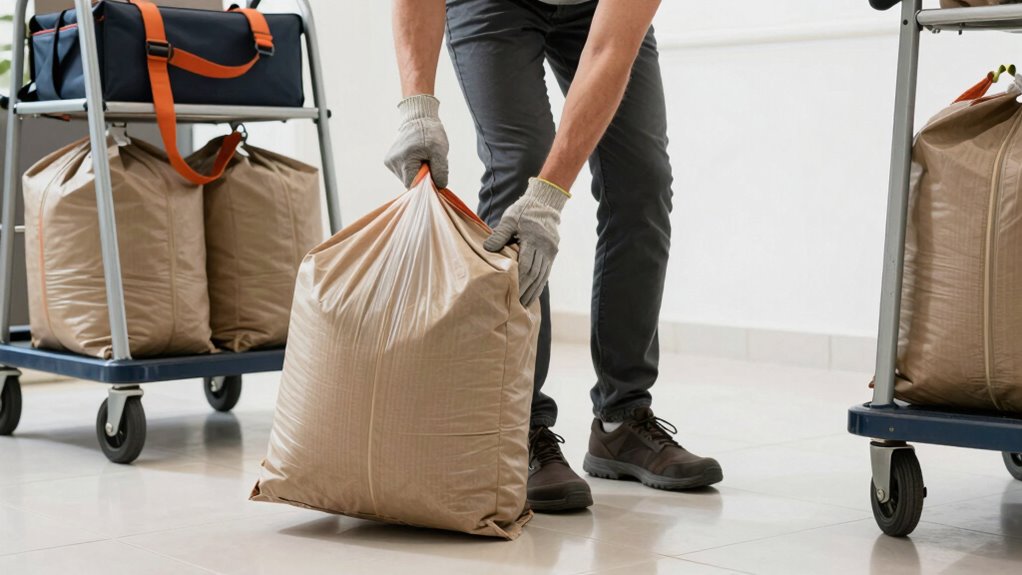

To reduce risks while loading groceries or luggage, always use proper lifting techniques, like bending at your hips and knees, keeping your back straight, and lifting with your legs. Wear supportive shoes with non-slip soles and consider gloves for a better grip. Secure loads with straps and clear your pathway of obstacles. Stay aware of your surroundings and use carts or dollies for heavy items. Keep safety in mind throughout, and you’ll discover more tips to protect yourself.

Get the latest gadgets delivered free with Prime
- Fast, free delivery on millions of items
- Prime Video, Amazon Music and more included
- Member-only deals all year
Key Takeaways
- Wear gloves and supportive footwear to enhance grip and prevent slips or injuries during loading.
- Use proper lifting techniques: bend knees, keep back straight, and lift with your legs to reduce strain.
- Secure loads with straps or bungee cords to prevent shifting and maintain stability during transport.
- Clear pathways and maintain awareness of surroundings to avoid tripping or collisions.
- Use carts or dollies for heavy or awkward items, minimizing physical strain and injury risk.

Loading groceries or luggage might seem straightforward, but it can pose risks if you’re not careful. The way you handle heavy or awkward items can lead to strains, sprains, or even more serious injuries. To protect yourself, start by using the right safety gear. Wearing gloves can improve your grip and prevent blisters, especially if you’re handling rough or wet packages. If you’re lifting heavy luggage or large grocery bags, consider wearing supportive shoes with non-slip soles to prevent slips and falls. In some cases, knee or back braces can offer extra support, especially if you’re dealing with frequent or particularly heavy loads.
Use proper safety gear like gloves and supportive shoes to prevent injuries when loading heavy or awkward items.
Proper lifting techniques are essential to reduce strain on your muscles and joints. Always start by evaluating the weight of the item before lifting. If it’s too heavy or awkward, don’t hesitate to ask for help or use a dolly or cart. When you lift, bend at your hips and knees, not your waist. Keep your back straight and engage your core muscles. This positioning distributes the weight more evenly and minimizes pressure on your spine. Grip the item firmly, ensuring your hands are secure before lifting. Lift with your legs, not your back, and move smoothly without jerking or twisting your torso. Twisting while lifting is a common mistake that can cause back injuries, so pivot your feet and turn your whole body if you need to change direction.
When placing the groceries or luggage down, use the same proper technique. Bend your knees and hips, keep your back straight, and set the item down gently. Avoid dropping or slamming objects into place, as this can damage the contents and increase the risk of losing control. If you’re stacking or organizing items in a vehicle or on a shelf, make sure heavier objects are placed at the bottom to maintain stability. Secure the load with straps or bungee cords if necessary, preventing shifting that could cause you to lose balance. Additionally, being mindful of proper handling techniques can significantly reduce the risk of injury during the process. Incorporating ergonomic considerations can further enhance safety and comfort during lifting and loading tasks. Paying attention to body mechanics can help prevent fatigue and injuries over time.
Throughout the process, stay mindful of your surroundings. Clear pathways to avoid tripping hazards and ensure there’s enough space to maneuver safely. Maintaining awareness and using appropriate safety gear, along with proper lifting techniques, markedly reduces your risk of injury. Taking these simple precautions might require a moment of extra effort, but they pay off by keeping you safe and comfortable as you load groceries or luggage.
supportive non-slip shoes for luggage handling
As an affiliate, we earn on qualifying purchases.
As an affiliate, we earn on qualifying purchases.
Frequently Asked Questions
What Are Common Mistakes People Make When Loading Groceries or Luggage?
You often make the mistake of overloading carts, which can cause them to become unstable or break. Additionally, you might use improper lifting techniques, like bending your back instead of your knees, risking injury. To avoid these mistakes, distribute weight evenly, don’t overload, and lift with your legs. Take your time, stay balanced, and be mindful of your posture to prevent accidents and make loading safer.
How Can I Tell if My Load Is Balanced Properly?
If you want to tell if your load is balanced, check the weight distribution and center of gravity. You should feel steady and in control when lifting or carrying. If one side feels heavier or pulls unevenly, adjust the items so weight is evenly spread. A balanced load keeps your center of gravity low and centered, reducing the risk of tipping or injury. When in doubt, test by gently tilting to see how it feels.
Are There Specific Tools to Help Reduce Injury Risk?
Yes, ergonomic tools and safety accessories can substantially reduce your injury risk. Use ergonomic dollies or carts to ease heavy loads, and consider grip pads or straps to improve control. Wearing supportive gloves or back braces offers extra protection. These tools and accessories help you maintain proper posture, minimize strain, and prevent slips or falls, making your loading process safer and more efficient. Always prioritize safety with the right equipment.
How Often Should I Inspect My Loading Equipment?
You should inspect your loading equipment regularly—at least once a month—to catch potential issues before they cause injury. Equipment maintenance is essential, and sticking to a consistent inspection frequency guarantees safety. Don’t wait for warning signs; a thorough check can reveal hidden faults. By staying vigilant and maintaining your gear diligently, you reduce the risk of accidents, keeping yourself and others safe during every load.
What Should I Do if I Experience Pain While Loading?
If you experience pain while loading, stop immediately and assess your posture. Use ergonomic techniques, like bending your knees and keeping your back straight, to reduce strain. Make sure you’re wearing proper footwear with good support to prevent slipping or imbalance. Take breaks if needed, and don’t push through pain—consult a healthcare professional if discomfort persists. Prioritizing proper form and footwear helps prevent injuries during loading tasks.
heavy duty cargo straps and bungee cords
As an affiliate, we earn on qualifying purchases.
As an affiliate, we earn on qualifying purchases.
Conclusion
By practicing proper posture, packing prudently, and prioritizing safety, you’ll prevent pain and potential problems. Keep your knees bent, lift with your legs, and load loads thoughtfully. Staying cautious and conscious can curb catastrophes and create a safer, smoother experience. Remember, mindful movement minimizes mishaps and maximizes your mobility. So, stay savvy, stay safe, and load with care—your body will thank you for it!
loading and unloading dolly for luggage
As an affiliate, we earn on qualifying purchases.
As an affiliate, we earn on qualifying purchases.
work gloves for lifting groceries
As an affiliate, we earn on qualifying purchases.
As an affiliate, we earn on qualifying purchases.
Halloween Picks
halloween
As an affiliate, we earn on qualifying purchases.