
TL;DR

Get the latest gadgets delivered free with Prime
- Fast, free delivery on millions of items
- Prime Video, Amazon Music and more included
- Member-only deals all year
A developer has released a BASIC interpreter that boots natively on UEFI systems. This allows running vintage-style BASIC programming environments on modern hardware without an OS. The project aims to preserve old-school programming and demonstrate low-level system capabilities.
A developer has created a BASIC interpreter that boots directly on UEFI firmware, enabling vintage programming environments on modern hardware without the need for an operating system. This project demonstrates the feasibility of running low-level interpreters directly on UEFI, which is the modern firmware interface replacing BIOS, and offers a new way to explore system programming and retro computing on current machines.
The project, named Thoreau BASIC, was shared on the Hacker News platform by the developer. It is designed to be a minimal, old-fashioned BASIC interpreter with features like line numbers, immediate mode, simple graphics, string handling, and arrays, reminiscent of early personal computing environments.
The developer states that the interpreter is implemented as a UEFI application, meaning it can be directly loaded and executed by the UEFI firmware during system startup, without requiring an operating system or bootloader. This approach allows users to run BASIC programs immediately after powering on their machine, provided it supports UEFI and the interpreter is properly installed on a FAT-formatted EFI partition.
The implementation is written in C, utilizing UEFI’s firmware interfaces to handle input/output, graphics, and memory management. The developer emphasizes that this project is both a technical proof-of-concept and a nostalgic tool aimed at hobbyists, educators, and retro computing enthusiasts.
Implications for Low-Level System Programming and Retro Computing
This development is significant because it demonstrates that modern firmware interfaces like UEFI can be used as a platform for running custom interpreters and environments, bypassing traditional OS layers. It opens possibilities for embedded systems, security research, and educational projects where direct hardware access is desirable.
For retro computing enthusiasts, this project offers a way to revive vintage programming environments on contemporary hardware, without needing emulators or dedicated vintage hardware. It also showcases the flexibility of UEFI as a development platform, which is increasingly used for custom boot environments and firmware-level applications.
Additionally, the project highlights the potential for minimal, self-contained systems that can operate independently of an OS, which could influence future firmware development and secure boot processes.
As an affiliate, we earn on qualifying purchases.
Background on UEFI and Vintage Programming Environments
UEFI (Unified Extensible Firmware Interface) has replaced BIOS as the standard firmware interface for most modern PCs, providing a more flexible and programmable environment during system startup. Unlike BIOS, UEFI supports applications and drivers that can run before an OS loads, often stored on EFI System Partitions formatted as FAT.
Historically, BASIC interpreters were common on early personal computers, offering a simple programming environment accessible to novices and hobbyists. These interpreters often ran directly on hardware or within minimal OS environments, with line-numbered code and immediate execution modes.
In recent years, there has been a niche interest in running vintage environments on modern hardware, either through emulators or dedicated hardware. However, running a BASIC interpreter directly on UEFI firmware is a new approach, combining low-level firmware programming with retro computing.
“My goal was to create a small, self-contained BASIC environment that could run directly on UEFI firmware, without needing an OS or bootloader.”
— the developer
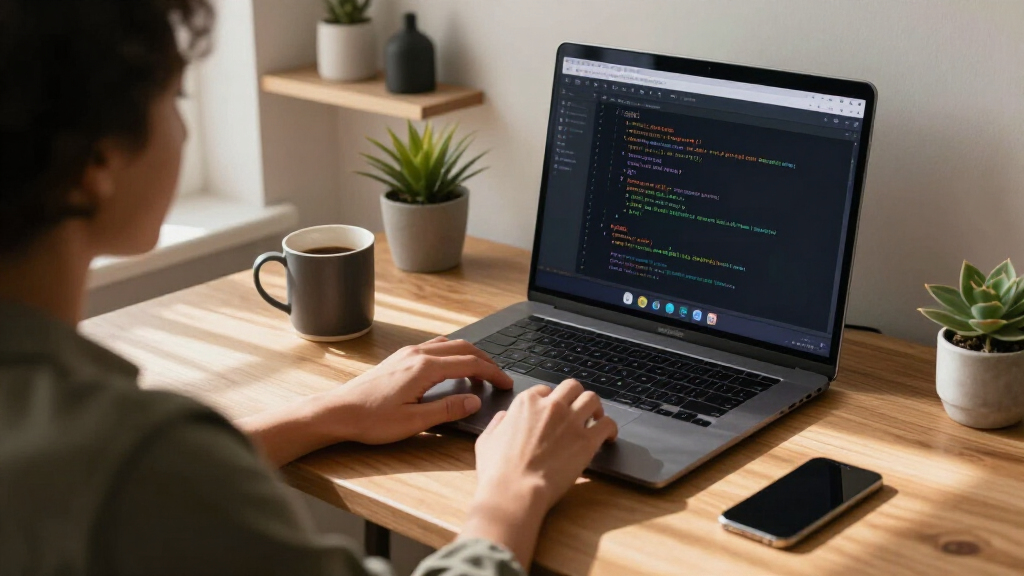
vintage BASIC programming environment
As an affiliate, we earn on qualifying purchases.
As an affiliate, we earn on qualifying purchases.
Technical Limitations and Compatibility Questions
It is not yet clear how widely compatible the interpreter is across different UEFI implementations or hardware architectures. The developer has tested on specific systems, but broader compatibility remains to be verified. Performance constraints and potential security implications of running custom firmware applications are also still being evaluated.As an affiliate, we earn on qualifying purchases.
Future Development and Community Engagement
The developer plans to improve the interpreter’s stability, expand its features, and document the installation process for broader adoption. They also intend to seek feedback from the community to identify hardware compatibility issues and explore porting the project to other firmware environments or architectures.
Further development may include adding support for more advanced graphics, sound, and extended BASIC features, as well as creating tutorials to help hobbyists and educators deploy similar firmware-level environments.
As an affiliate, we earn on qualifying purchases.
Key Questions
Can I run this BASIC interpreter on any UEFI-compatible PC?
The interpreter is designed to work on systems with UEFI firmware that support running applications from the EFI System Partition. Compatibility with specific hardware may vary, and the developer recommends testing on compatible systems with UEFI firmware that supports the required features.
Does this project require modifying my system firmware or BIOS?
No, the interpreter is distributed as a UEFI application that can be placed on an EFI System Partition. It does not require flashing or modifying the firmware itself, but users should be cautious and ensure they understand how to configure UEFI boot options properly.
What are the limitations of running a BASIC interpreter directly on UEFI?
Limitations include restricted hardware access compared to full operating systems, potential compatibility issues across different UEFI implementations, and performance constraints. Advanced features like networking or complex graphics may not be supported without additional development.
Is this project suitable for educational purposes?
Yes, it offers a unique platform for learning about low-level firmware programming, system architecture, and vintage computing environments. It serves as a practical example of how firmware can be used as a development platform beyond traditional boot functions.
Will the developer release source code or instructions for setup?
Yes, the developer has indicated plans to publish the source code and detailed setup instructions to facilitate community involvement and further experimentation.
Source: hn
Halloween Picks
halloween
As an affiliate, we earn on qualifying purchases.