🔍 Read the full analysis: Can Machine Learning Help Create A Map Of The Brain? on ThorstenMeyerAI.com

Get the latest gadgets delivered free with Prime
- Fast, free delivery on millions of items
- Prime Video, Amazon Music and more included
- Member-only deals all year
TL;DR
Google Research and the Stanford Accelerator for Learning launched Polar Peaks, a brain-mapping-themed game for students ages 11 to 14. It teaches AI research tasks such as cleaning data and testing models; Google says teacher training for the game is expected next month, but has not reported learning outcomes.
Google Research and the Stanford Accelerator for Learning launched Polar Peaks on Oct. 26, a new educational game that uses a fictional brain-mapping investigation to teach students ages 11 to 14 about AI and scientific research, as detailed in the original analysis. The third game in the partners’ AI Quests series has students clean data and test models, while a dedicated teacher training module is expected next month.
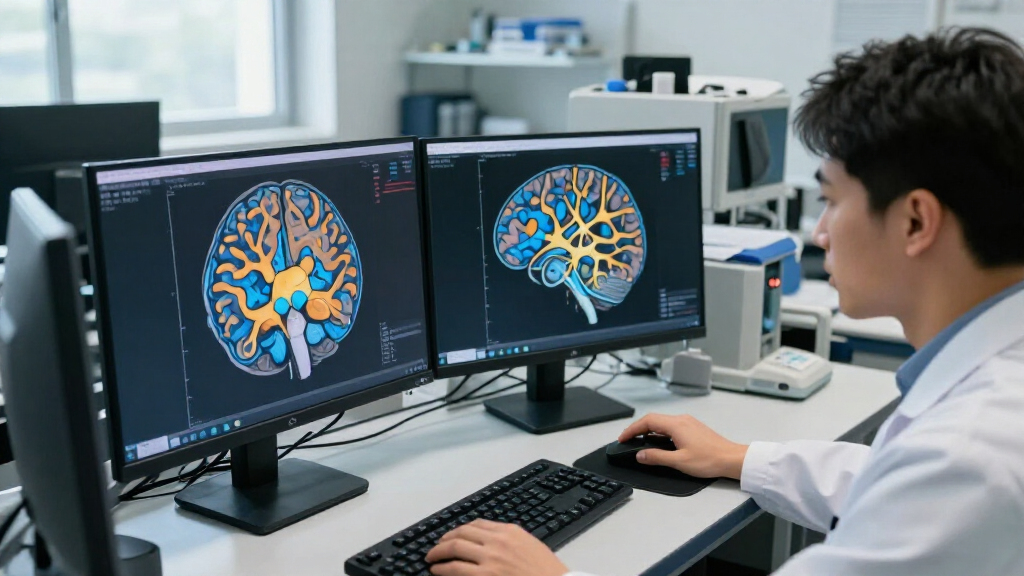
In Polar Peaks, players take the role of researchers investigating a game character’s memory loss. With help from in-game mentors, students scan and map neurons, then work through research tasks including data cleaning and model testing. Google says the activities are intended to build AI literacy and encourage students to think critically about the technology’s uses and limits.
The game draws on more than a decade of research in connectomics, the study of mapping neural networks in the brain. After completing the game, students hear from researchers involved in real-world advances, including the mapping of a complete fruit fly brain. Google describes that map as the largest by number of neurons to date; the announcement did not provide a neuron count or further methodological details. For context on ongoing memory-related AI research, see the continual learning research map.
Google also announced teacher training through its Google AI Educator Series. Training modules for the first two AI Quests are available, while the module for Polar Peaks is expected next month. The earlier games focus on flood forecasting and AI-assisted screening for diabetic retinopathy.
Teaching AI Through Research Tasks
Polar Peaks presents AI as part of a research process rather than only as a tool that returns answers. Students are asked to prepare data and test models as they pursue a scientific goal, activities that can make visible the work and judgment involved in using AI. Google says the game also addresses the technology’s limitations and the importance of human oversight.
That approach may give teachers a structured way to discuss how AI systems are used in science and why their outputs need scrutiny. But the announcement describes the game’s intended learning aims, not measured results. There is no reported evaluation showing whether playing Polar Peaks improves students’ AI knowledge or changes how they assess AI-generated results.
The distinction matters for schools considering digital learning products: a compelling research scenario and broad reach do not, by themselves, establish educational effectiveness. Evidence from classroom use would help educators judge whether the game supports learning beyond the activity itself.
Products Worth Considering

Samsung 27-inch Odyssey OLED G6 QD-OLED QHD Gaming Monitor

Samsung 27 Odyssey OLED G5 (G50SF) QHD QD-OLED Gaming Monitor

LG 34GX90SA-W 34-inch Ultragear WQHD OLED Curved Gaming Monitor
As an affiliate, we earn on qualifying purchases.
A Third Game in AI Quests
AI Quests is a collaboration between Google Research and the Stanford Accelerator for Learning. The series invites young people to take on research-inspired challenges, with earlier games covering flood forecasting and diabetic retinopathy screening. Polar Peaks shifts the focus to neuroscience and brain mapping.
Google reports that more than 400,000 quests have been completed across the series and that it is available in 10 languages. The company did not give a reporting period or comparison baseline for the completion figure, or break it down by individual game or language. It also said the series received a 2026 Webby Award for AI Education and an award for Best Global K–12 Learning Solution at the ETIH Innovation Awards.
The series is intended for students ages 11 to 14. Google says it plans to work with educators and partners to bring more quests into classrooms during the current school year, although it has not announced the next game’s subject or release date.
““AI Quests invites students ages 11 to 14 to step into the shoes of Google researchers to tackle some of humanity’s biggest challenges.””
— Google Research
Learning Results Still Unknown
The announcement does not report whether students who play Polar Peaks improve their AI literacy, retain what they learn, or apply the concepts outside the game. It also does not say how long the game takes to complete, how many students have played earlier quests, or which classrooms will use the new materials.
The figure of more than 400,000 completed quests applies to the series overall, but Google provided no date range, baseline, or breakdown by game. Details about the fruit fly brain map cited in the game—including its neuron total and the researchers’ methods—were not included. The announcement also does not identify the researchers featured in the game.
Teacher Module Due Next Month
Google says the Polar Peaks teacher training module is expected next month, following the modules for the first two games. The training is intended to support educators using the quest and discussing its subject matter in class.
The company says it plans to work with educators and partners to bring more AI Quests into classrooms during the current school year. It has not given a date or topic for another game. Evidence from classroom evaluations, if made available, would help show whether the activities produce learning gains beyond completion of the game.
Key Questions
Who created Polar Peaks?
Google Research and the Stanford Accelerator for Learning developed Polar Peaks as the third game in their AI Quests series.
What do students do in the game?
Students investigate a fictional character’s memory loss by scanning and mapping neurons, cleaning data, and testing models.
Who is Polar Peaks designed for?
The AI Quests series is intended for students ages 11 to 14.
When will teacher training for Polar Peaks be available?
Google says the dedicated training module is expected next month. Modules for the first two quests are already available.
Has Google reported whether the game improves learning?
No learning outcome data was reported in the announcement. It describes the game’s intended aims but does not provide an evaluation of students’ knowledge or skills after playing.
Primary source: Google AI · via ThorstenMeyerAI.com