
TL;DR
Telia Finland, Nokia and QMill demonstrated a proof of concept integrating QMill’s quantum-powered key exchange and quantum-generated random numbers with Nokia 5G base station software. The test used commercial equipment in Telia’s innovation environment and also incorporated the standardized ML-KEM post-quantum algorithm. The companies are exploring security-sensitive use cases, but have not announced a commercial deployment or independent security evaluation.
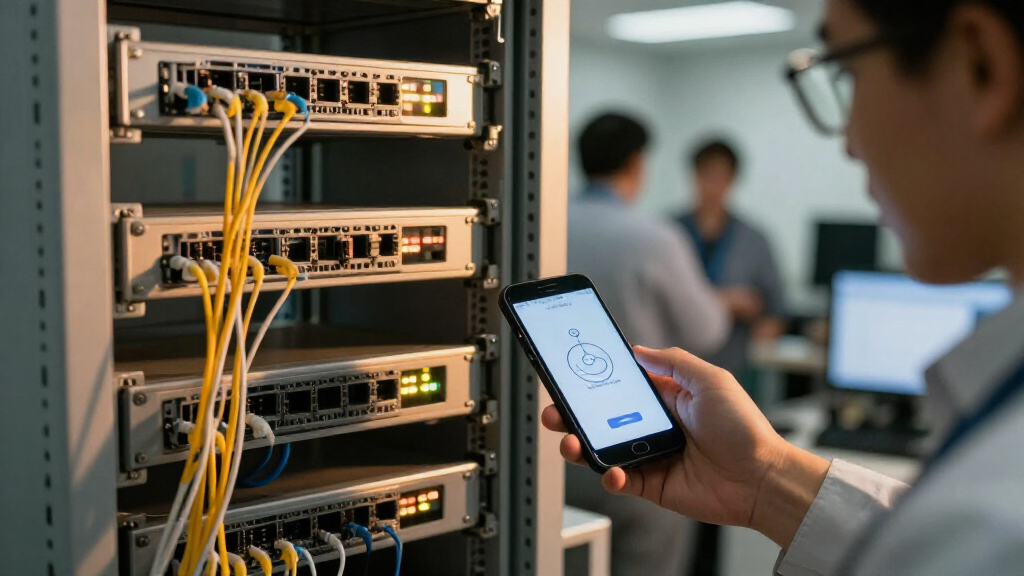
Telia Finland, Nokia and QMill have demonstrated a proof of concept that combines post-quantum cryptography with quantum-computer-powered key exchange in a 5G network. The partners say QMill’s solution was integrated into Nokia’s 5G base station software and tested with commercial equipment in Telia’s 5G innovation environment, connecting a base station to a network security gateway.

Get the latest gadgets delivered free with Prime
- Fast, free delivery on millions of items
- Prime Video, Amazon Music and more included
- Member-only deals all year
The system combines the standardized ML-KEM post-quantum key exchange algorithm with a new key-exchange method from QMill that uses quantum computation. The companies say the base station and its IPsec peer establish a shared encryption key using both components. QMill also supplies user-verifiable random numbers generated by a quantum computer to seed the exchange; those numbers are retrieved through its QMill Cloud service.
In the demonstration, the connection ran between a 5G base station and the network’s security gateway, which protects traffic headed to the operator’s core network. The partners describe the test as a proof of concept, not a commercial service. They say it used standard network equipment and did not require dedicated quantum hardware to be installed at the 5G site.
According to the companies, the work moved from concept to an end-to-end demonstration in less than 90 days. Telia, Nokia and QMill are now examining potential applications in security-sensitive sectors and say they are looking for concrete use cases that could support commercialization.
Adding Quantum Computing to 5G Security
The trial offers a practical test of how a quantum computer could be incorporated into a telecommunications security workflow, rather than serving only as a laboratory demonstration of a cryptographic idea. The connection involved commercial 5G equipment and a network gateway, making the integration relevant to operators assessing future security options.
The proposal is an additional layer alongside standardized post-quantum cryptography, not a replacement for it. ML-KEM remains part of the key exchange, while QMill’s quantum-powered method and random-number service provide extra components. Whether those additions improve security in operational conditions, and at what cost or performance trade-off, is not established by the proof of concept described in the announcement.
Telecommunications operators face the need to protect traffic and infrastructure as cryptographic standards and perceived threats evolve. The partners say the approach may be relevant as networks develop toward 6G, but the demonstration alone does not show that it is ready for deployment across live networks or that it addresses a specific threat better than existing methods.
Products Worth Considering

DJI Mini 4K Drone with 4K UHD Camera, Under 249 g

Amazon Kindle Scribe Colorsoft 64GB with Premium Pen

Samsung 32 Odyssey G5 QHD Gaming Monitor
As an affiliate, we earn on qualifying purchases.
From Earlier Mobile Encryption Work
The demonstration follows earlier work announced by Telia Finland and QMill in May 2026. At that time, the companies said they had developed a quantum-enhanced message-encryption method for mobile networks that could use local or cloud-based quantum computers. The new proof of concept adds Nokia and describes integration with 5G base station software.
Post-quantum cryptography is designed to protect against attacks from future quantum computers, using algorithms intended to resist both classical and quantum computing. The partners say their system uses ML-KEM, standardized by NIST, as part of its foundation. The quantum-powered components are presented as an additional security element, rather than as a substitute for that established algorithm.
The announcement is based on a company press release reported by The Quantum Insider on November 17, 2026. The claims about the demonstration, its novelty and the solution’s potential come from the participating companies; the supplied material does not include an independent test report.
“The solution combines standard ML-KEM post-quantum cryptography with QMill’s quantum-powered key exchange and user-verifiable quantum randomness.”
— Telia Finland, Nokia and QMill, in their announcement
Security and Deployment Questions Remain
The announcement does not provide technical measurements for latency, throughput, reliability, operating cost or the volume of traffic tested. It also does not describe a third-party security review, specify what threat model the added quantum-powered exchange is intended to address, or report comparative results against a system using ML-KEM alone.
It is not clear whether the demonstration ran on a production network or only within Telia’s innovation environment; the source describes the latter. The companies also have not named a customer, deployment date, pricing model or commercial product. Their description of the work as a world-first is a claim from the partners, and the supplied material does not provide an independent assessment of that claim.
Partners to Define Commercial Use Cases
Telia Finland, Nokia and QMill say they are examining specific applications in security-sensitive sectors. No further trial schedule or commercial launch date has been announced. The next evidence to watch for would include named use cases, results from tests under operational network conditions, independent security analysis and details on how the system would be integrated and supported at scale.
Until those details are available, the development remains a proof of concept. The partners’ announcement establishes that they demonstrated the integration in Telia’s innovation environment; it does not establish that operators have adopted the solution or that it is ready for routine use.
Key Questions
What did Telia, Nokia and QMill demonstrate?
They demonstrated a proof of concept integrating QMill’s quantum-powered key exchange and quantum-generated random numbers with Nokia 5G base station software, alongside the ML-KEM post-quantum algorithm.
Was the test conducted on a commercial 5G network?
The companies say they used commercial network equipment in Telia’s 5G innovation environment. The announcement does not say the system was deployed on a production network serving customers.
Does the demonstration replace standard post-quantum cryptography?
No. The partners describe ML-KEM as part of the system and present QMill’s quantum-powered components as an additional element.
Is the solution available to telecom operators?
No commercial availability has been announced. The companies say they are exploring concrete use cases, particularly in security-sensitive sectors.
What has not yet been established?
The announcement does not report independent security testing, operational performance measurements, deployment costs or a launch timetable. Those details are needed to judge readiness for wider use.
Source: thequantuminsider.com