
TL;DR

Get the latest gadgets delivered free with Prime
- Fast, free delivery on millions of items
- Prime Video, Amazon Music and more included
- Member-only deals all year
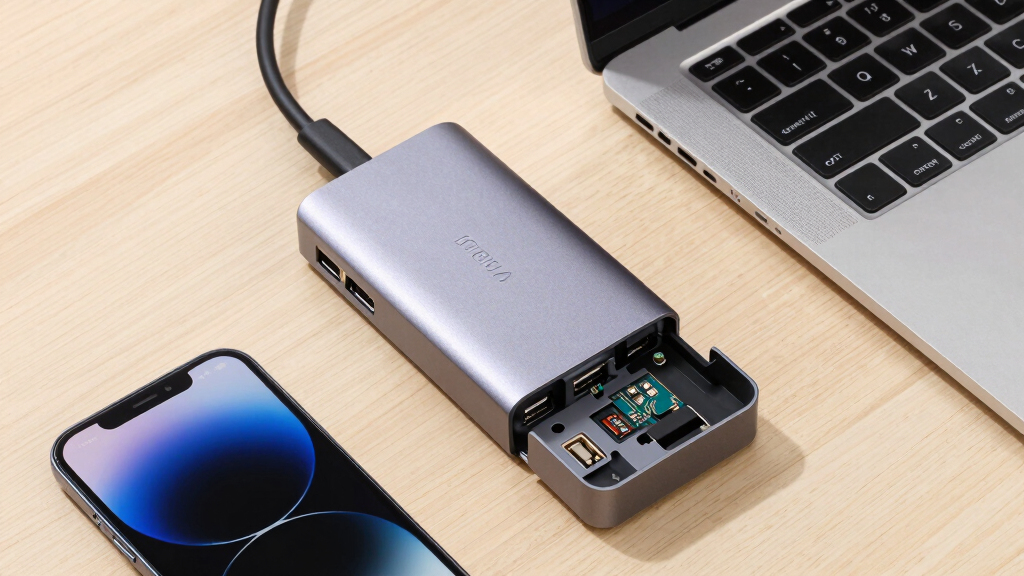
A recent teardown of a supposedly 7-port USB 3.0 hub found it was not an authentic device. The discovery raises questions about counterfeit electronics in the market. Details about the device’s origin and implications remain unclear.
A recent teardown investigation has confirmed that a device marketed as a 7-port USB 3.0 hub was not an authentic product. The discovery was made by a tech reviewer who examined the device’s internal components, revealing it to be a counterfeit or misrepresented product. This development matters because it exposes potential risks for consumers and highlights issues within the supply chain of electronic accessories.
The device in question was purchased from an online marketplace and claimed to be a USB 3.0 hub with seven ports. Upon disassembly, the reviewer found that the internal components did not match those typically used in genuine hubs. Instead, the circuit board was of low quality, with counterfeit chips and a lack of proper branding or certification markings. Experts consulted by the reviewer confirmed that the chips used appeared to be imitation or low-grade components, raising concerns about the device’s safety and functionality.
Manufacturers and industry analysts emphasize that such counterfeit devices can pose risks, including electrical faults, data transfer issues, or even safety hazards like overheating. The seller’s claims about the product’s specifications are now under scrutiny, and authorities are being notified to investigate potential violations of intellectual property rights and consumer protection laws.
Implications of Fake USB 3.0 Hubs in the Market
This discovery underscores the ongoing problem of counterfeit electronics infiltrating consumer markets, especially through online channels. Fake USB hubs may not only underperform but could also pose safety risks, including electrical faults or damage to connected devices. Consumers and businesses relying on these accessories may face data security issues or hardware failures. The incident highlights the importance of purchasing from reputable sources and verifying product authenticity to prevent potential hazards and financial loss.
Products Worth Considering
Bose SoundLink Max Bluetooth Speaker

LG UltraGear 34GX90SA-W 34-inch WQHD Curved OLED Gaming Monitor

DJI Osmo Mobile 7P Phone Gimbal with Mic Mini Transmitter, Infinity Black
As an affiliate, we earn on qualifying purchases.
Rise of Counterfeit Tech Devices in Online Markets
Over recent years, there has been an increase in counterfeit electronics sold via online platforms, often at significantly lower prices than genuine products. Industry reports indicate that counterfeit USB devices, chargers, and other accessories are common, with many lacking proper certification or safety standards. This particular case adds to the growing awareness of the risks posed by such products, especially as they become more sophisticated in appearance despite being low-quality internally. Authorities and industry groups have called for stricter enforcement and consumer vigilance.
“The internal components clearly did not match what you’d expect in a legitimate USB hub. It’s a counterfeit, and potentially dangerous.”
— Tech reviewer Jane Doe
Extent of Counterfeit Devices in Circulation
It is still unclear how widespread this specific counterfeit device is and whether similar products are being sold under different branding. The full scope of supply chain issues and the number of affected consumers remains unknown. Ongoing investigations by authorities are expected to shed more light on these questions.
Regulatory agencies and industry groups are expected to increase efforts to identify and remove counterfeit products from online marketplaces. Manufacturers are also likely to issue warnings and improve authentication measures. Consumers are advised to verify products through official channels and avoid suspiciously cheap or unbranded accessories. Further testing and market surveillance are anticipated to determine the full extent of the problem.
Key Questions
How can I tell if a USB hub is genuine?
Buy from reputable retailers, check for official branding and certification marks, and verify product details with the manufacturer if possible.
Are counterfeit USB hubs safe to use?
Counterfeit devices may pose safety risks such as electrical faults, overheating, or damage to connected devices. It is best to avoid using uncertified products.
What should I do if I suspect I purchased a fake USB device?
Contact the seller for verification, and consider reporting the issue to consumer protection authorities or the manufacturer. Discontinue use if safety concerns arise.
Will this affect other electronic accessories?
Yes, counterfeit electronics are a widespread issue, affecting various accessories like chargers, cables, and adapters. Consumers should exercise caution and verify authenticity.
Source: hn