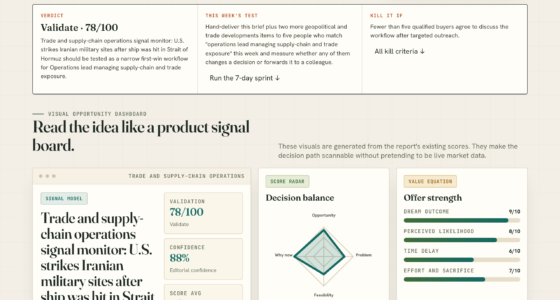

📊 Full opportunity report: Trade And Supply Chain Trends: The Canada-US Tariff Duel on IdeaNavigator AI — validation score, market gap, and execution plan.

Get the latest gadgets delivered free with Prime
- Fast, free delivery on millions of items
- Prime Video, Amazon Music and more included
- Member-only deals all year
TL;DR
Canada has announced it will retaliate against US tariffs by imposing equivalent tariffs of its own. This escalation follows a breakdown in trade negotiations, raising concerns for supply chain stability. The situation remains fluid, with further developments expected.
Canada has announced it will implement tariffs equivalent to those imposed by the United States, signaling a sharp escalation in trade tensions as negotiations between the two countries have broken down. This move is confirmed by Canadian officials and comes amid ongoing disputes over trade policies, affecting supply chain operations and international trade flows.
According to statements from Canadian trade officials, Canada will match US tariffs ‘dollar for dollar’ if the current trade negotiations do not resume successfully. The decision was made after the US announced new tariffs targeting specific Canadian goods, prompting Canada to prepare retaliatory measures. The Canadian government indicated this response is intended to protect its economic interests and maintain leverage in ongoing trade discussions.
Trade experts confirm that this escalation could significantly impact supply chains, especially in sectors heavily reliant on cross-border trade such as manufacturing, agriculture, and technology. The move has been described by analysts as a strategic response, but it also raises the risk of a trade war that could disrupt global supply networks.
Officials from both countries have yet to specify the timeline for implementing these tariffs or the exact sectors affected, and diplomatic talks are still ongoing. Market reactions have been cautious, with stock markets showing volatility and supply chain operators reassessing risk exposure.
Implications for Global Supply Chains and Trade Stability
This escalation matters because it signals a potential intensification of trade tensions between Canada and the US, two of the world’s largest trading partners. The move to match tariffs dollar-for-dollar could lead to increased costs for businesses, supply chain disruptions, and higher consumer prices. For companies managing international trade operations, this development underscores the importance of monitoring geopolitical signals closely and preparing contingency plans.
Furthermore, the situation may influence broader trade relations and set a precedent for retaliatory measures in future disputes, affecting global economic stability and trade policy negotiations.
Products Worth Considering

Apple iPad Air 13-inch (M4), 128GB, Wi-Fi 7, Space Gray

Amazon Kindle Paperwhite Signature Edition (12th Generation, 2024), 32 GB, Metallic Black

DJI Osmo Mobile 7P with Mic Mini TX (Infinity Black) Gimbal Stabilizer
As an affiliate, we earn on qualifying purchases.
Recent Trade Tensions and Negotiation Breakdown
Trade tensions between Canada and the US have escalated over the past year, with disputes centered on tariffs, trade policy, and market access. The US recently imposed tariffs on certain Canadian goods, citing unfair trade practices, prompting Canada to threaten retaliatory tariffs of its own. Negotiations aimed at resolving these issues have been ongoing but have recently stalled, leading to Canada’s announced plan to match US tariffs dollar-for-dollar.
This development follows a pattern of escalating trade disputes between the two nations, with previous tariffs and countermeasures affecting key sectors such as lumber, agriculture, and technology. The breakdown of talks signals a potential shift toward more confrontational trade policies, with uncertain consequences for bilateral relations and global markets.
Trade experts note that such escalation could influence other trade agreements and regional economic cooperation efforts, adding complexity to an already tense geopolitical environment.
Unclear Timelines and Sector-Specific Impacts
It is not yet clear when Canada will implement the retaliatory tariffs or which specific sectors will be most affected. Diplomatic efforts are ongoing, and the exact scope of the tariffs remains to be defined. Market reactions are cautious, but the full economic impact will depend on the duration and severity of the measures.
Next Steps in Diplomatic Negotiations and Market Responses
The immediate next step is for both countries to resume negotiations or clarify their positions. Market participants will likely continue monitoring official statements and trade policy updates. Businesses should prepare for potential supply chain disruptions and consider contingency strategies as the situation develops.
Further announcements regarding the implementation of tariffs and any new trade agreements are expected in the coming weeks, which will shape the trajectory of this trade dispute.
Key Questions
What prompted Canada to threaten matching US tariffs?
Canada’s move follows the US’s recent imposition of tariffs on Canadian goods, which Ottawa views as unfair and retaliatory. The Canadian government announced it would match these tariffs dollar-for-dollar if negotiations do not succeed.
How might this escalation affect supply chains?
The escalation could increase costs for cross-border trade, disrupt supply chains, and lead to delays or shortages in affected sectors such as manufacturing and agriculture.
Are there any signs of diplomatic resolution?
Diplomatic talks are ongoing, but no agreement has been reached yet. The situation remains fluid, and further negotiations are expected.
Could this lead to a broader trade war?
While currently focused on Canada-US tariffs, the escalation raises concerns about potential wider trade conflicts if tensions continue to rise.
What should businesses do in response?
Businesses managing international supply chains should monitor developments closely and consider contingency plans to mitigate potential disruptions.
Source: IdeaNavigator AI