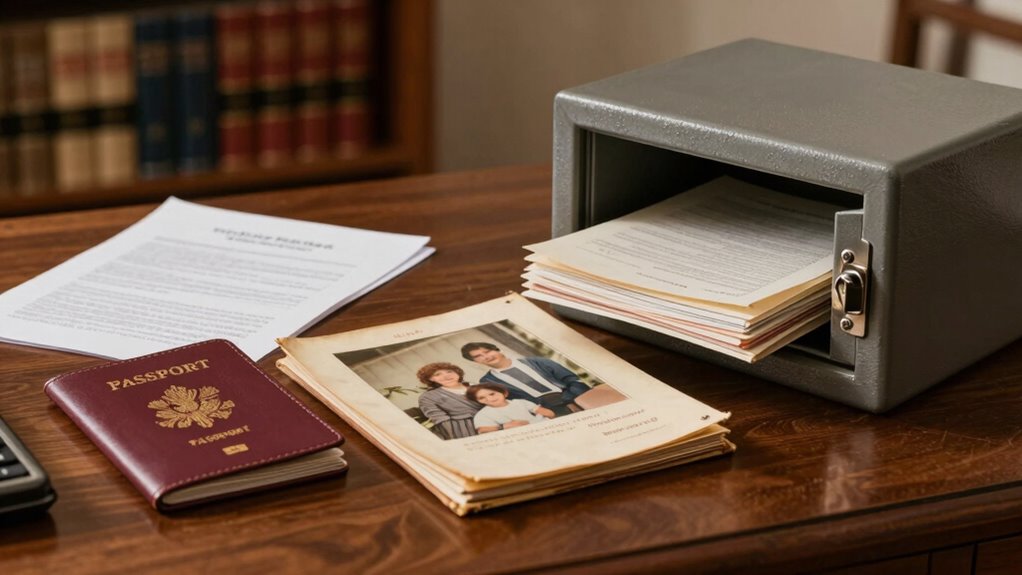

You should prioritize protecting personal identification documents like birth certificates, Social Security cards, and passports, which verify your identity and legal status. Keep important financial papers such as wills, property deeds, and tax records safe from damage or theft. Store family records like marriage licenses and medical insurance in secure safes or encrypted digital backups. Organizing and regularly updating these documents guarantees they’re accessible when needed, and there’s much more to contemplate for complete safety.
Key Takeaways
- Personal identification documents like birth certificates, passports, and driver’s licenses for proof of identity.
- Critical financial and legal papers such as wills, deeds, and tax records for legal and estate purposes.
- Family records including marriage licenses, medical records, and insurance policies to verify relationships and coverage.
- Digital copies of important documents stored securely to ensure quick access and redundancy in emergencies.
- Certification documents and professional credentials necessary for employment, legal processes, or benefits.
What Are the Most Important Personal Documents to Protect?
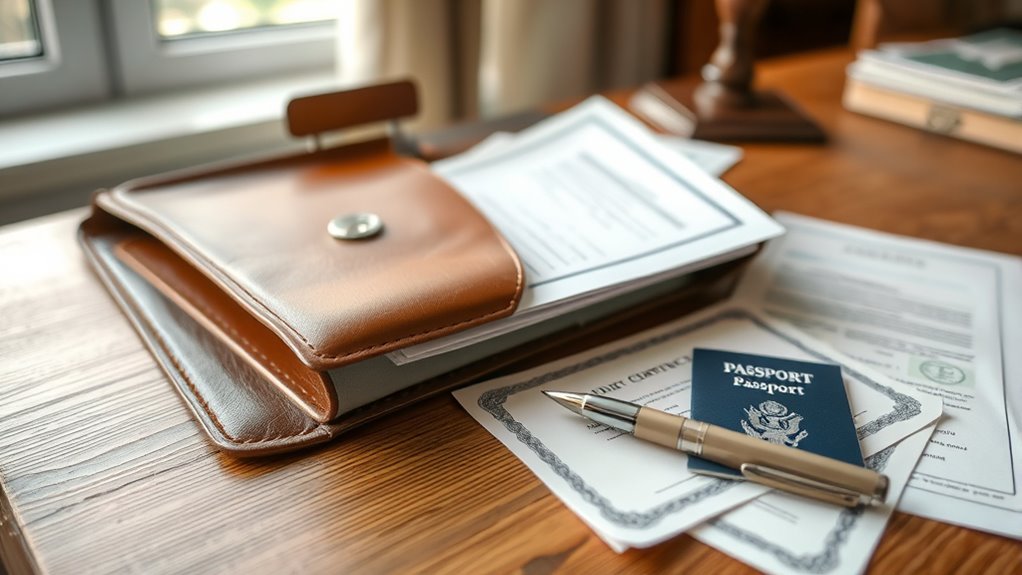
Have you ever thought about which personal documents are truly worth protecting? Your most crucial papers include birth certificates, Social Security cards, passports, and marriage licenses. Protecting these documents is essential for privacy preservation and ensuring they’re available when needed. Consider making document duplication—creating secure copies stored separately—so you’re not left vulnerable if originals are lost or stolen. Financial records like bank statements, investment papers, and tax returns also deserve safeguard, as they contain sensitive information. Keep these documents in a safe, organized location to prevent damage or unauthorized access. Additionally, understanding vetted storage options can help you choose the most secure and accessible places for your important papers. Using fireproof safes can provide extra protection against environmental hazards and theft. Properly labeling and cataloging your documents can also make retrieval easier during emergencies. Implementing secure storage methods that are resistant to environmental hazards and theft can further enhance your document safety. Being aware of document protection techniques can help you stay ahead of potential risks and ensure your papers remain secure. Prioritizing their protection helps you maintain privacy, streamline important transactions, and respond quickly during emergencies. Being proactive now can save you significant trouble down the line.
How to Identify and Prioritize Critical Financial and Legal Papers
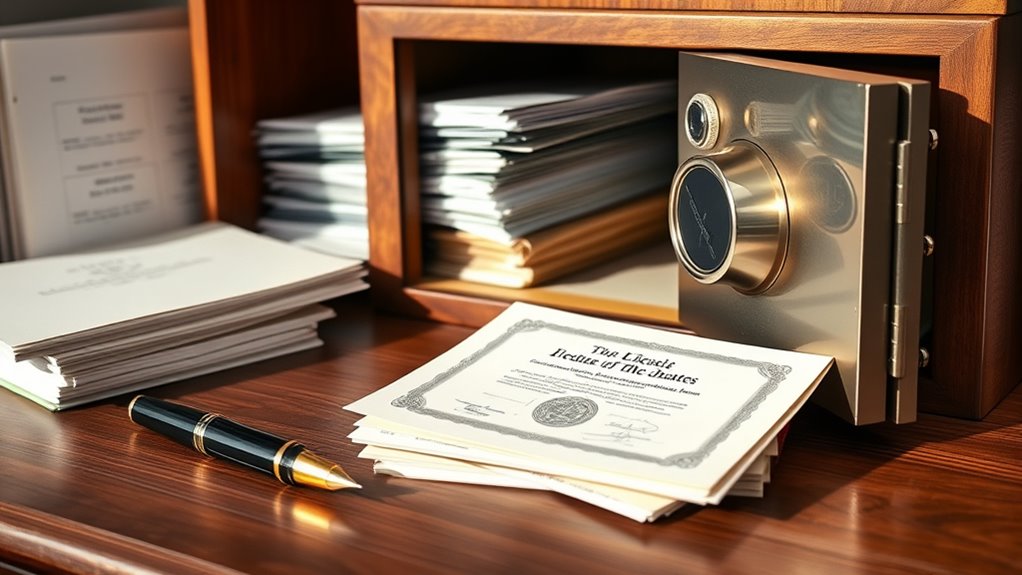
Start by reviewing your Essential Documents Checklist to identify what’s truly critical. Understand the legal and financial importance of each paper to determine which need immediate protection. Then, prioritize your protection measures based on their significance and potential impact if lost or damaged. Additionally, consider the security of your documents, ensuring they are stored safely and are accessible when needed. For example, knowing the horsepower of electric dirt bikes can help you assess the value and relevance of certain documents related to high-performance equipment or warranties. Recognizing the importance of document organization can also streamline your ability to locate vital papers quickly in an emergency or for routine reference, especially when using appropriate storage solutions that prevent damage and make retrieval easier. Maintaining proper document storage practices can further safeguard against environmental damage and unauthorized access, ensuring your critical papers remain intact and confidential.
Essential Documents Checklist
Creating an important documents checklist helps you quickly identify and prioritize the most critical financial and legal papers you need to protect. Start by listing key documents like birth certificates, Social Security cards, wills, and property deeds. When organizing these files, consider effective document archiving methods—both physical and digital—to keep everything accessible yet secure. Digital security is crucial; use strong passwords, encryption, and secure cloud storage to protect sensitive information. Review and update your checklist regularly to account for life changes or new documents. Incorporating innovative European cloud servers can further enhance the security and sustainability of your digital storage solutions. Ensuring your documents are stored in a waterproof and fire-resistant safe adds an extra layer of protection against physical damage. Properly document management also involves creating copies and maintaining an organized system for quick retrieval in emergencies. This proactive approach is especially important given the advancements in AI-powered solutions that can assist in digital organization and security. Prioritizing these papers ensures you’re prepared for emergencies, legal needs, or estate planning. A well-crafted checklist streamlines document management and reduces the risk of losing important papers, giving you peace of mind knowing your important documents are identified, organized, and protected. Additionally, understanding the importance of physical document protection helps prevent damage from unforeseen events.
Legal and Financial Importance
Understanding which documents are most critical can make all the difference during emergencies or legal processes. Your legal and financial papers, such as wills, power of attorney, tax records, and property titles, should be prioritized. These documents establish your rights and protect your assets, so secure them with strong digital security measures to prevent document theft and unauthorized access. Keep physical copies in a safe, fireproof location, and consider digital backups in encrypted storage. Regularly review and update these files to ensure they remain current. Proper document management is essential for maintaining your peace of mind and ensuring quick access when needed. Implementing a secure storage solution can further safeguard your most sensitive information against unforeseen events. Additionally, understanding the importance of document categorization can help you organize your files more effectively. Developing a comprehensive document inventory allows you to identify gaps and prioritize updates, ensuring all critical papers are accounted for. Recognizing the significance of credit scores and how they impact your financial stability can help you better prepare your documents related to loans or credit applications. By identifying and safeguarding your most important legal and financial documents, you minimize risks and ensure quick access when needed, reducing stress and potential legal complications during critical moments.
Prioritizing Protection Measures
To effectively protect your most vital legal and financial documents, you need to identify which ones are truly crucial. Start by reviewing your records and creating a list of essential papers. Then, prioritize these following steps:
- Digitize important documents through document scanning to create secure digital copies.
- Use digital encryption to protect sensitive information from unauthorized access.
- Store physical copies in a fireproof and waterproof safe, making sure only trusted individuals have access.
Which Identity and Certification Documents Should You Safeguard?
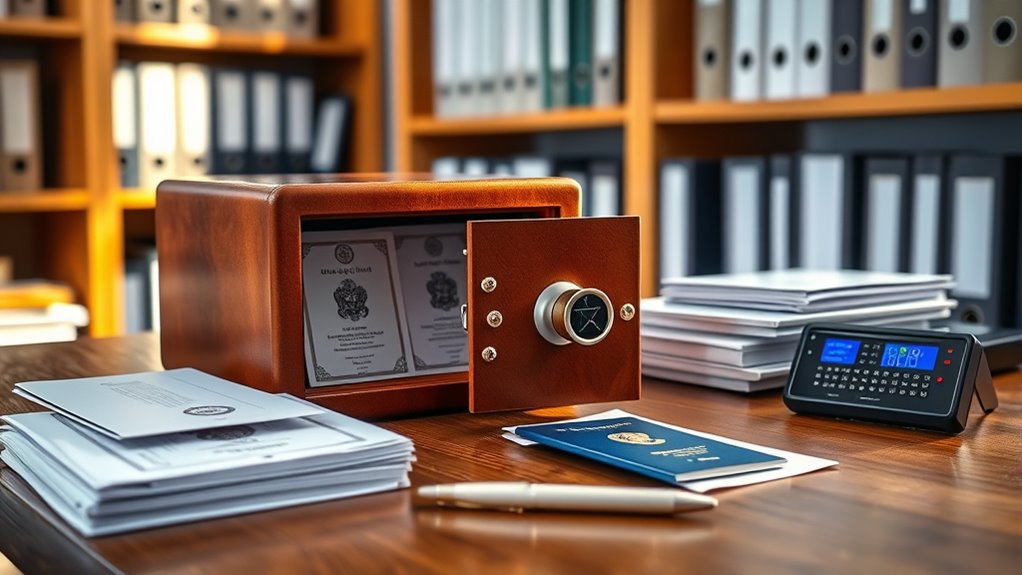
You need to safeguard essential personal IDs like your driver’s license, passport, and Social Security card, as they verify your identity. Important certification documents, such as birth certificates or marriage licenses, are also critical to protect. Keeping these items secure ensures you’re prepared for any situation that requires proof of identity or legal status. Additionally, understanding the importance of documentation can help you prioritize which items to safeguard effectively, especially considering the risks of loss or theft associated with unprotected records. Recognizing the value of secure storage can further help prevent unauthorized access and potential misuse of sensitive information. Being aware of potential scams targeting personal documents can also help you stay vigilant against identity theft.
Essential Personal IDs
Your most vital personal IDs are the documents that prove your identity and citizenship, and safeguarding them should be a top priority. These include essential documents like your birth certificate, Social Security card, and driver’s license. To protect them effectively, consider digital security measures such as encrypting digital copies and using strong passwords. Storing physical copies in a secure, fireproof safe is also imperative. Remember, document encryption helps prevent theft or unauthorized access if digital files are compromised. Keep these documents organized and only share them when absolutely necessary. Regularly review and update your protection strategies to guarantee your IDs remain safe from theft, loss, or damage. Utilizing proper storage methods can significantly reduce the risk of damage or loss. Additionally, being aware of air purifier maintenance dos and don’ts can help you maintain a safe environment that minimizes airborne hazards which could threaten important documents. Prioritizing these IDs ensures your identity remains secure in any situation.
Important Certification Documents
Which certification documents are crucial to safeguard at home? Important certification documents, like birth certificates, marriage licenses, and professional certifications, are essential for proof of identity and legal matters. To guarantee their digital security, store scanned copies securely online with strong passwords and encryption. Keep physical copies in a fireproof safe or another secure location to maintain document accessibility when needed. Protecting these documents prevents identity theft and simplifies future transactions, such as applying for loans or benefits. Regularly review and update your storage methods to adapt to new security standards. By safeguarding your certification documents, you ensure they’re accessible when required while minimizing the risk of loss or theft. Proper storage provides peace of mind and smooth access during critical moments.
Best Practices for Organizing and Storing Important Physical and Digital Documents

Organizing and storing important physical and digital documents effectively guarantees quick access and protection from loss or damage. Start by establishing a dedicated system:
Create a dedicated system for organizing and protecting your essential documents for quick access and safety.
- Use labeled folders or binders for paper organization, grouping documents by category such as insurance or legal papers.
- Invest in a fireproof, waterproof safe for critical physical documents to ensure digital security from environmental threats.
- Digitize essential papers and store them securely on encrypted cloud services or external drives, keeping backups in separate locations.
Regularly review and update your files to eliminate outdated documents. Maintain consistent naming conventions for easy searchability. Implementing these best practices guarantees your documents are both accessible and protected, reducing stress during emergencies.
Deciding Which Digital Files Need a Physical Backup
Deciding which digital files need a physical backup is crucial because not all data holds the same level of importance or risk. Critical files, such as legal documents, financial records, and personal identification, should always have a physical backup. Less vital files, like casual photos or temporary downloads, can rely on cloud storage alone. To help prioritize, consider this table:
| Essential Files | Non-Essential Files |
|---|---|
| Legal & financial documents | Casual photos |
| Personal ID & Passports | Downloaded media files |
| Tax records & Wills | Temporary work files |
Using digital backups, like external drives, paired with cloud storage, ensures your important data remains safe even if one method fails. Focus your physical backups on what truly matters.
How to Protect Your Family’s Medical and Insurance Records
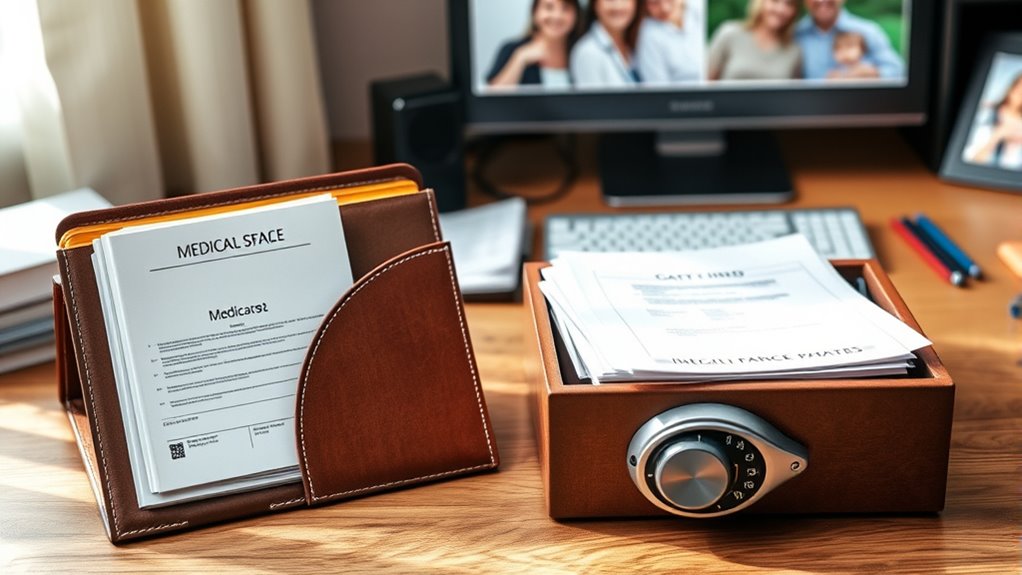
Protecting your family’s medical and insurance records is essential to guarantee quick access during emergencies and to prevent loss or theft. Medical privacy is crucial, so store sensitive documents securely. To do this effectively:
- Use a fireproof, waterproof safe to keep originals and copies safe from disasters.
- Create digital backups by scanning documents and storing them securely online or on an encrypted drive.
- Limit access to these records, sharing only with trusted family members or healthcare providers involved in insurance claims or medical emergencies.
Steps to Keep Your Documents Safe From Disasters

Disasters can strike unexpectedly, so taking proactive steps is crucial to safeguard your important documents. Start by creating digital copies and using document encryption to protect sensitive information from theft or damage. Store these encrypted files in secure cloud services or external drives kept in a fireproof, waterproof safe. Disaster preparedness also means organizing physical documents in a durable, waterproof container and keeping copies off-site or with a trusted family member. Regularly review and update your storage methods to guarantee they remain effective. By combining digital security measures like encryption with physical safeguards, you reduce the risk of losing vital documents during emergencies. Taking these steps helps you stay prepared and ensures your essential records are protected, no matter what disaster occurs.
Simple Tips for Maintaining and Updating Your Document Safety System

Once you’ve set up a system to safeguard your documents, it’s important to keep it current and effective. To do this, focus on regular updates and security awareness. First, review your documents periodically to identify any that need updating or replacement. Second, ensure your digital files are protected with strong document encryption to prevent unauthorized access. Third, stay informed about new security threats and adjust your safety measures accordingly. Keep your security awareness sharp by educating yourself on best practices, like using strong passwords and secure storage methods. Regularly updating your system helps prevent obsolescence and vulnerabilities, ensuring your important documents remain protected over time. Staying proactive guarantees your document safety system stays reliable and resilient.
Frequently Asked Questions
How Often Should I Review and Update My Protected Documents?
You should review your protected documents at least once a year to guarantee they’re current and accurate. Establish a regular update schedule, like annually or semi-annually, to keep track of any changes in your personal information or legal documents. During your document review, update any outdated details, add new information, and remove unnecessary papers. Staying consistent with your update schedule helps safeguard your important documents and prepares you for unforeseen events.
What Are the Best Methods for Securely Sharing Documents With Family?
Oh, sharing sensitive documents with family? What could possibly go wrong? Use digital encryption to keep files safe during transfer, ensuring only trusted eyes see them. For physical copies, opt for secure shredding before passing them along—no one wants Uncle Bob’s opinions on your financial details. Always double-check your methods; after all, you’re not just sharing a recipe, but your private info. Stay safe, stay smart.
Are There Specific Legal Requirements for Document Storage at Home?
You need to follow storage regulations and guarantee legal compliance when storing important documents at home. Keep essential records like birth certificates, wills, and property deeds in a secure, fireproof, and waterproof safe. Avoid leaving sensitive documents in easily accessible or unsecured areas. Regularly review and update your storage systems to meet legal standards, and consider digital backups for extra protection and quick access when necessary.
How Can I Tell if a Digital Backup Is Sufficiently Secure?
You wonder if your digital backup is secure enough. To find out, check if it uses strong digital encryption—this locks your data from prying eyes. Also, verify the cloud security measures, like multi-factor authentication and data encryption during transfer. Stay alert; these layers of protection make all the difference. Without them, your sensitive documents could be vulnerable, leaving you exposed to digital threats lurking in the shadows.
What Steps Should I Take if My Documents Are Lost or Stolen?
If your documents are lost or stolen, act quickly by reporting the theft to authorities and your bank or relevant institutions. Replace important items like IDs and insurance papers. Contact emergency contacts to inform them of the situation and monitor your accounts for suspicious activity. To prevent document theft, store copies separately, use secure safes, and keep emergency contacts handy for swift action if needed.
Conclusion
Protecting your documents is like building a fortress for your life’s most valuable treasures. By staying organized and proactive, you guarantee your important papers are safe from harm and easy to find when needed. Keep your digital files backed up, store key documents securely, and regularly update your safety system. Think of it as planting seeds today so your peace of mind can grow tomorrow—your future self will thank you for it.