
TL;DR
Watch Duty is using a Gemini-powered system to transcribe noisy firefighter radio traffic and flag possible incidents for its reporters. Google says it can send a signal in less than 30 seconds and was used during Washington’s July 2026 Railroad Fire, preceding the nonprofit’s first overnight Critical Alert.
Watch Duty is using a Gemini-powered tool to turn noisy fire-radio transmissions into searchable text and flag possible incidents to its reporters in less than 30 seconds, according to Google. The system was used when the Railroad Fire ignited in Washington in July 2026, helping the nonprofit verify the report and send its first nighttime Critical Alert.

Get the latest gadgets delivered free with Prime
- Fast, free delivery on millions of items
- Prime Video, Amazon Music and more included
- Member-only deals all year
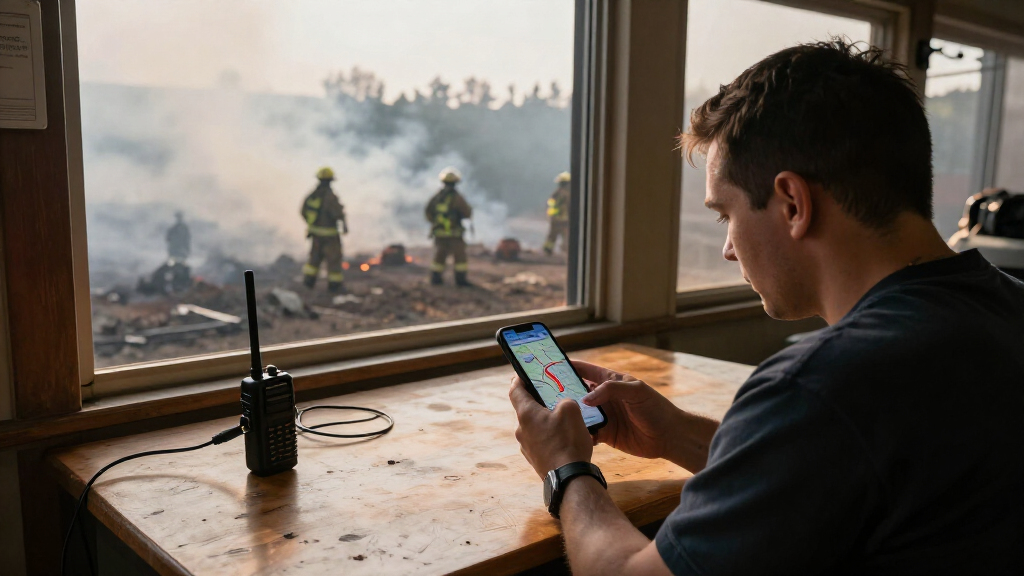
The tool processes analog VHF radio audio, which can be difficult to understand because of static, wind, engine noise and specialized firefighting language. Watch Duty reporters monitor radio feeds to detect possible fires; Google says the system is designed to reduce the time they spend deciphering audio so they can focus on checking reports and deciding whether an alert is warranted.
Google says engineers and researchers spent six months working full-time with Watch Duty through its Google.org Fellowship. They used more than 20,000 hours of historical radio recordings to build the system. Across Watch Duty’s network, the tool transcribes more than 200 hours of radio speech daily from about 400 active feeds, according to Google. The company says it has been designed and tested to handle more than 10,000 feeds at once.
Google reports that the tool reduced the word error rate on degraded VHF audio from 38% to 22.34%. It also says volunteer satisfaction with radio transcription tools rose from 35.3% to 92.3% after the collaboration. These figures are reported by Google; the source material does not provide an independent evaluation or details of the measurement methods.
Faster Detection Before Evacuation
The system matters because fire reports can arrive before other information is available, while people may be asleep or far from an official alert source. A faster transcript does not itself confirm a fire or order an evacuation, but it can give Watch Duty reporters an earlier lead to investigate and, where appropriate, share with users.
During the Railroad Fire, Google says the tool transcribed the first 911 dispatch from noisy radio audio and flagged it in under 30 seconds. Watch Duty then verified the incident and sent a Critical Alert that can break through do-not-disturb settings in urgent situations. Google says the alert helped residents evacuate before flames reached homes. That account illustrates the potential value of a quicker signal, but does not establish how much time the tool saved or what would have happened without it.
Watch Duty’s scale adds to the stakes: Google says the service had more than 16 million users last year. Faster detection may help reporters manage large volumes of radio traffic, while the alert system’s reach makes reliability and human verification important.
Products Worth Considering

Sony WH-1000XM4 Wireless Noise Cancelling Headphones (Silver)

Logitech MX Mechanical Wireless Illuminated Keyboard, Tactile Quiet, Graphite

Samsung 27-Inch Odyssey G5 QHD Gaming Monitor (G51F)
As an affiliate, we earn on qualifying purchases.
A Wider Watch Duty Partnership
The radio tool is one part of a broader collaboration between Google and Watch Duty. Google says that in 2024 it gave the nonprofit $2 million in funding and $300,000 in Google Cloud credits to support work compiling satellite, camera and radio data to validate new fires.
Google Search has also featured Watch Duty in wildfire SOS alerts alongside official emergency guidance during fires including the Palisades, Eaton, Hurst and Auto fires, according to the company. Watch Duty sends push notifications through Firebase Cloud Messaging; Google says it raised the service’s messaging limit from 600,000 to 1 million as the app’s audience grew.
The collaboration is part of the AI Collaborative: Wildfires, which Google describes as an effort to develop tools for agencies, communities and responders. The source presents the project as a way to support Watch Duty’s reporting operation, not as a replacement for official emergency services.
““The system removes the added strain of deciphering noisy audio so volunteers can focus on verifying incidents and getting alerts out.””
— Google, describing the tool’s role
Limits of the Reported Results
The source does not specify how the word error rate was calculated, how many recordings were used in that comparison, or whether an outside group assessed the results. It also does not provide a breakdown of false alarms, missed incidents, or performance across different radio conditions and regions.
Google says the tool flagged the Railroad Fire dispatch in under 30 seconds, but does not state the exact time from the original transmission to the alert, how much faster that was than Watch Duty’s previous process, or the precise interval before residents received the Critical Alert. The account also does not identify how many people received the warning or independently document its effect on evacuations.
The system supplies a signal for reporters to verify; the available material does not say that it automatically confirms a fire or sends alerts without human review. Its tested capacity is described as more than 10,000 feeds, but the source does not explain how that capacity was tested or whether Watch Duty currently operates at that scale.
Expanding Coverage and Verification
Watch Duty and Google say the aim is to use the tool to help reporters identify possible fires across more radio feeds and get verified information to communities sooner. The next practical test will be how it performs across additional incidents, different radio conditions and a wider range of regions.
The source does not announce a launch timetable for new areas, a plan to publish independent performance data, or a specific next technical milestone. For now, Google’s account describes an operating tool, its reported network use and one live-fire example. Further details on accuracy, alert timing and coverage expansion have not been provided.
Key Questions
What does Watch Duty’s Gemini tool do?
It transcribes noisy fire-radio audio into searchable text and flags possible incidents for Watch Duty reporters to review. Google says the tool can send a signal in less than 30 seconds.
Did the AI send the Railroad Fire alert by itself?
No. Google says the tool transcribed and flagged the radio dispatch, after which Watch Duty’s team verified the fire and sent the Critical Alert. The source does not describe automatic alerting without human review.
What results has Google reported?
Google reports a word error rate decrease from 38% to 22.34% on degraded VHF audio, transcription of more than 200 hours of radio speech daily across about 400 feeds, and higher volunteer satisfaction with transcription tools. The source does not provide independent validation or full measurement methods.
How many radio feeds can the system handle?
Google says the tool has been designed and tested to handle more than 10,000 feeds at once. The source does not say that Watch Duty currently uses that many feeds or describe the capacity test in detail.
Does Watch Duty replace official emergency alerts?
The source describes Watch Duty as a wildfire information service and says Google Search has shown it alongside official emergency guidance. It does not say Watch Duty replaces official emergency services or warnings.
Source: blog.google