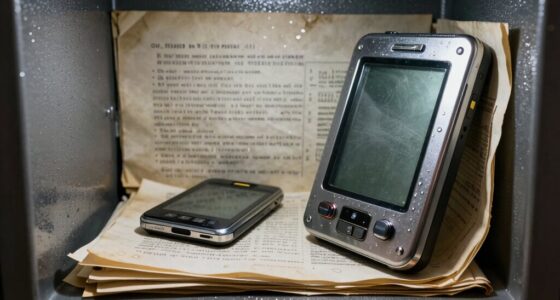
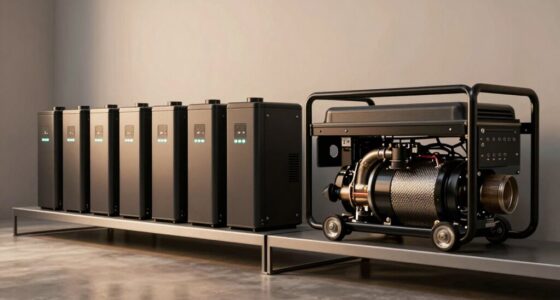
During a blackout, focus on powering essential devices like medical equipment, communication tools, and critical household appliances such as refrigerators and lights. Prioritize devices that keep you safe, healthy, and connected. Use backup power sources like solar panels, generators, or batteries to sustain these essentials. Avoid overloading systems and turn off non-critical electronics to conserve energy. If you keep these priorities in mind, you’ll be better prepared—and there’s more to contemplate for total readiness.
Key Takeaways
- Medical equipment like oxygen concentrators and ventilators for patient safety and health.
- Communication devices such as battery-powered radios and smartphones for alerts and coordination.
- Essential appliances like refrigerators and lights to preserve food and maintain safety at home.
- Backup power sources including solar panels, batteries, and generators to ensure continuous operation.
- Emergency lighting and portable power banks for safe navigation and device charging during outages.
How Do You Decide Which Devices to Power First During a Blackout?
When a blackout hits, deciding which devices to power first can make a significant difference in maintaining safety and comfort. Your priority should be essential devices like medical equipment or communication tools. If you have solar panels, use them to recharge batteries or power small devices during daylight hours, reducing reliance on other sources. Portable generators are invaluable for providing backup power, but you should start with appliances that keep you safe, such as lights or a refrigerator. Avoid overloading your generator by prioritizing critical devices. Remember to turn off non-essential electronics to conserve fuel and prevent damage. Understanding power management can help you make smarter decisions during outages. Additionally, knowing how to optimize home energy use helps extend the available power and ensures vital devices remain operational longer. Planning ahead and having a backup power plan in place ensures you maximize limited power, keeping your home safe and functional until the power is restored. Being aware of power sources like solar panels and generators can further enhance your preparedness. Being familiar with energy efficiency strategies can also help you conserve power during outages, making your resources last longer.
What Makes a Device Essential During an Emergency?
Choosing which devices to power during a blackout isn’t just about convenience; it’s about guaranteeing safety and well-being. An essential device must be reliable, durable, and capable of serving critical needs. Devices with high device durability withstand harsh conditions, making them indispensable during emergencies. Solar panels become pivotal by providing renewable energy, especially when traditional power sources fail. Your choices should include devices that support communication, navigation, and health. Consider how long a device can operate without power and its ability to endure physical stress. Ensuring you understand power management can help optimize your emergency setup. Properly managing your energy sources is crucial for maintaining essential device operation during extended outages. Additionally, selecting emergency-ready devices designed for unpredictable conditions can significantly enhance safety. Being aware of battery capacity helps you choose devices that will last through extended outages. Staying informed about device durability ensures your equipment remains functional when you need it most. Here’s a quick visual guide:
| Feature | Importance |
|---|---|
| Solar panels | Guarantee continuous energy supply |
| Device durability | Withstands environmental challenges |
| Battery life | Lasts through extended outages |
| Ease of use | Operates effectively during stress |
Which Backup Power Sources Are Best for Your Devices?
Selecting the right backup power sources guarantees your essential devices stay operational during outages. For a smart home, consider renewable energy options like solar panels or solar-powered batteries. These sustainable solutions can keep your Wi-Fi, security systems, and smart appliances running without relying solely on the grid. Portable power stations are also a practical choice, offering flexibility and quick setup during emergencies. They can charge phones, laptops, and small devices efficiently. If you want an automatic backup, invest in an uninterruptible power supply (UPS) that provides immediate power to critical devices. Power management systems can optimize energy use and extend backup runtimes. Incorporating renewable energy sources into your backup plan can further enhance your home’s resilience and eco-friendliness during blackouts. As technology advances, energy storage solutions are becoming more reliable and accessible for home use. Integrating smart grid technology can improve how your backup systems respond to outages, making your home more adaptable. Combining renewable energy with reliable backup systems ensures your smart home remains functional, eco-friendly, and resilient during blackouts. Design principles and the level of independence you desire should guide your choice based on your device needs, budget, and lifestyle.
How to Choose Reliable Flashlights and Emergency Lighting
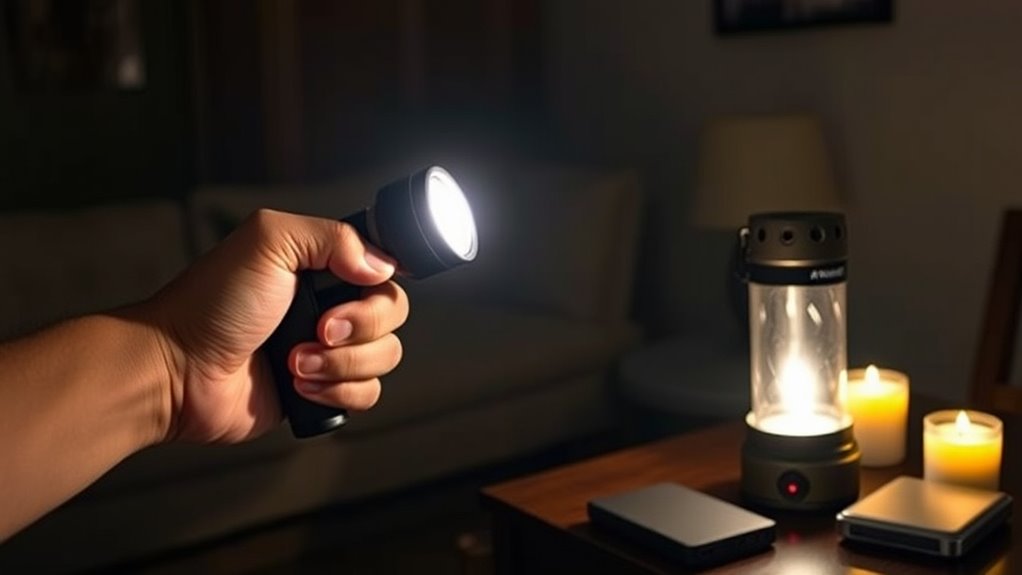
Reliable flashlights and emergency lighting are essential complements to your backup power setup, ensuring you can see clearly when the lights go out. When choosing these devices, consider options like hand crank flashlights, which don’t rely on batteries and can be powered manually. They’re perfect for long-term outages because they don’t depend on electricity or stored energy. Solar chargers are also valuable; they can recharge rechargeable flashlights and lanterns using sunlight, providing a sustainable power source during extended blackouts. Look for durability, brightness, and ease of use. LED lights are energy-efficient and long-lasting, making them ideal for emergency situations. Combining hand crank flashlights with solar-powered options creates a reliable, eco-friendly lighting system that keeps you safe and prepared. Additionally, understanding auditory processing can help you select devices that reduce noise sensitivity and improve overall communication during stressful situations. Incorporating energy-efficient lighting options can also help conserve power and ensure longer-lasting illumination during outages. Choosing devices with low power consumption can further extend battery life and reliability when power sources are limited, especially when combined with emergency preparedness practices. Incorporating water-resistant features can also be beneficial if devices are exposed to moisture or outdoor conditions during emergencies.
What Are the Best Portable Chargers and Power Banks for Critical Devices?
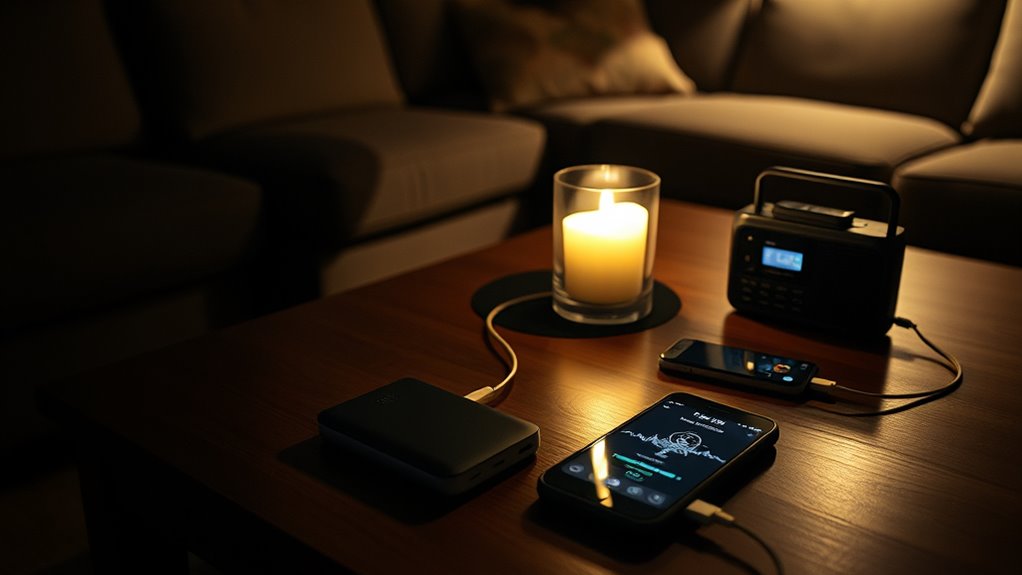
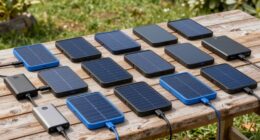
During a blackout, having the right portable chargers and power banks can be a lifesaver, guaranteeing your critical devices stay powered when the grid goes down. Look for portable power options with high capacity and fast charging capabilities. Solar charging-enabled power banks are especially useful, allowing you to recharge during daylight, making them ideal for extended outages. Consider models that support multiple devices simultaneously and offer USB-C or Qi wireless charging for convenience. Compact, lightweight designs make them easy to carry, while durability ensures they withstand tough conditions. A reliable portable power source can keep your phone, flashlight, and emergency radio operational, giving you peace of mind during emergencies. Investing in the best portable chargers enhances your preparedness for any blackout scenario. Additionally, understanding clean-home systems can help you maintain your environment more efficiently during extended outages, reducing the need for frequent device recharges. Being aware of power management strategies can further extend the usability of your devices during prolonged outages, especially when combined with energy-efficient appliances, and choosing models with battery capacity ensures longer-lasting power. Incorporating energy conservation techniques can maximize the efficiency of your power banks, making your backup power last even longer.
Which Appliances Should You Keep Running to Stay Safe and Comfortable?
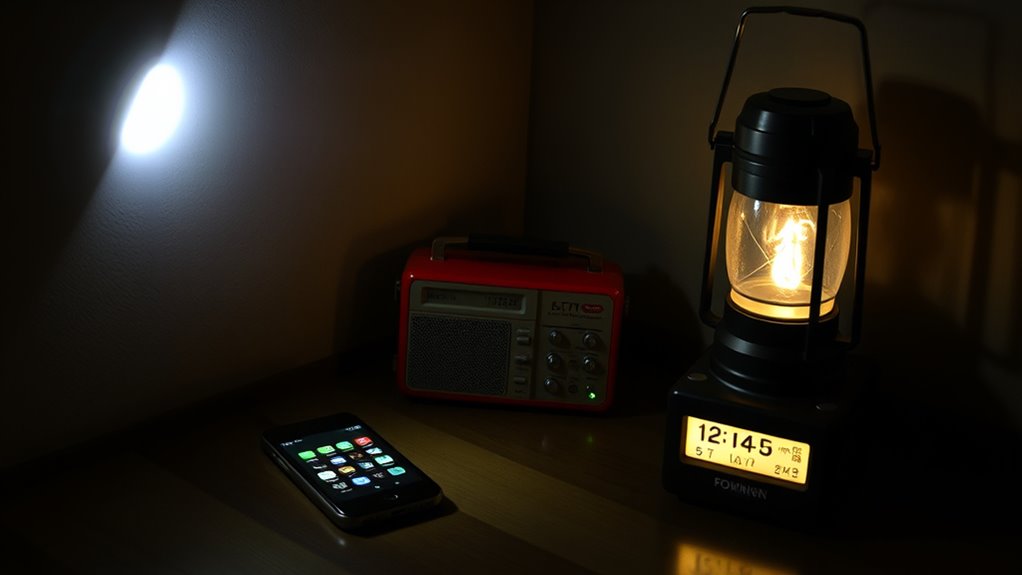
During a blackout, keeping essential communication devices like cell phones charged is vital for staying informed and connected. You should also guarantee critical medical equipment remains powered if needed for health reasons. Additionally, maintaining your refrigerator helps prevent food spoilage and keeps your supplies safe. Ensuring your essential devices are protected with backup power sources can make a significant difference in emergency situations.
Essential Communication Devices
When the power goes out, staying connected can be a matter of safety. Your smartphone becomes indispensable for communication, navigation, and emergency updates, so keep it charged. A portable power bank or solar panels can help maintain internet connectivity when grid power fails. Solar panels are especially valuable if you have a setup that can charge devices directly, guaranteeing you stay informed and connected without relying solely on the grid. Keep a backup communication device, like a battery-powered radio, to receive weather alerts and emergency broadcasts if internet access drops. Maintaining these devices ensures you can reach loved ones, access crucial information, and receive help when needed. Prioritize keeping your communication tools operational to stay safe and make informed decisions during a blackout.
Critical Medical Equipment
Ever wonder which medical devices are crucial to keep running during a blackout? Prioritizing your critical medical equipment is key to staying safe. Focus on devices like oxygen concentrators, ventilators, and infusion pumps, which support essential functions. Regular medical device maintenance ensures they operate reliably when power is out. Device prioritization helps you determine what must stay on and what can be turned off temporarily. Keep backup power sources, such as battery packs or generators, ready for these indispensable devices. Check their functionality regularly and ensure they’re fully charged. If you rely on medical equipment, coordinate with your healthcare provider for a clear plan. Staying prepared means knowing which devices are lifesavers and maintaining them so they’re ready when needed most.
Refrigerator and Food Storage
Have you considered which appliances are essential to keep running during a blackout to prevent food spoilage and maintain comfort? Your refrigerator is vital, especially if you have a smart home system connected to solar panels. Using solar energy can help keep your fridge cold longer, protecting perishable foods. If you’re prepared, portable solar generators can supplement your power, ensuring your food stays safe. Avoid opening the fridge too often to preserve its cool temperature. For long outages, consider using coolers with ice packs or dry ice. Investing in a solar-powered backup system can keep your food storage intact, reducing waste and stress. Prioritizing your refrigerator and food storage helps you stay safe and comfortable during extended power outages.
What Medical Devices Are Critical During Power Failures?

During a power failure, certain medical devices become crucial for maintaining your health and safety. Life-support systems like ventilators, insulin pumps, and oxygen concentrators rely on continuous power, making them indispensable during outages. To ensure they function properly, regular generator maintenance is essential so backup power is available when needed. Keep a detailed device inventory that includes all essential medical equipment, spare batteries, and backup power sources. Knowing exactly what you have helps you act quickly and prevents last-minute scrambling. If you depend on medical devices, consider investing in a generator capable of supporting your critical equipment. Proper planning, regular maintenance, and an organized device inventory ensure you’re prepared to manage health emergencies during blackouts.
Why You Need a Battery-Powered Radio and Weather Alerts
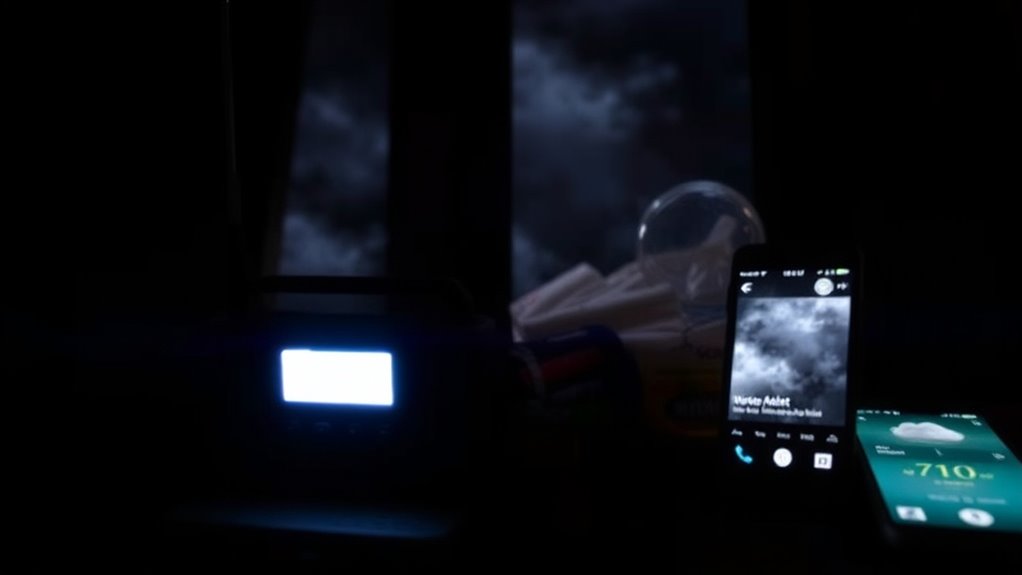
A battery-powered radio and weather alerts are essential tools to stay informed and safe when power outages strike. They keep you connected to critical updates, especially when other communication channels fail. A dependable battery-powered radio allows you to receive weather alerts directly, ensuring you’re aware of storms, floods, or emergencies in real-time. This device is simple to operate, requires minimal power, and works even when the grid is down. The table below highlights key features of weather alerts and battery-powered radios:
| Feature | Benefit | Why It Matters |
|---|---|---|
| Weather alerts | Real-time emergency info | Keeps you prepared |
| Battery lifespan | Long-lasting power | Ensures continuous use |
| Signal reach | Wide coverage | Alerts everyone nearby |
| Ease of use | User-friendly interface | Quick access during stress |
| Portability | Compact and lightweight | Take anywhere |
How to Organize and Maintain Your Emergency Device Kit
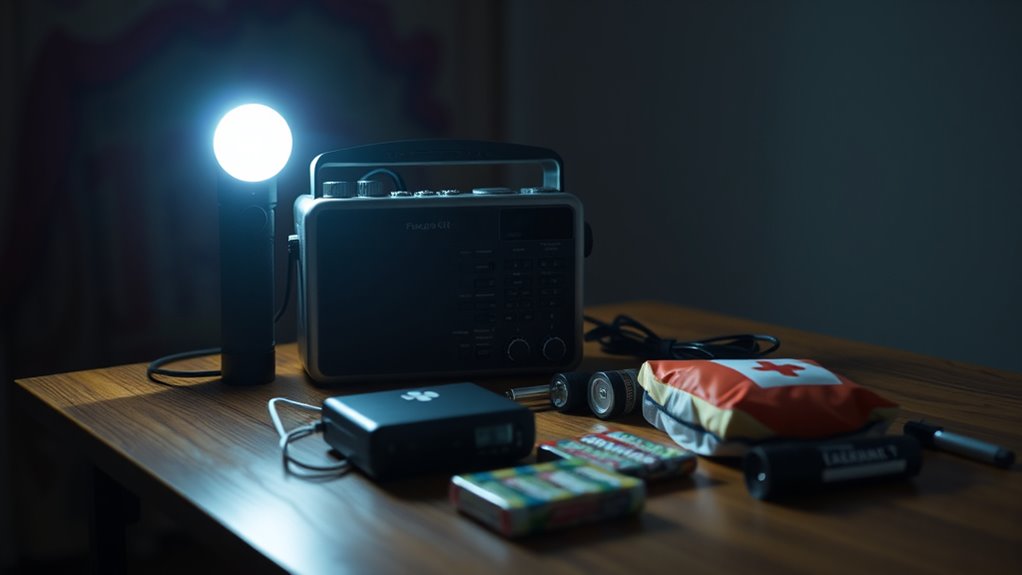
Organizing and maintaining your emergency device kit guarantees you’re always prepared when power outages happen. Start by prioritizing your devices based on importance and accessibility. Keep essentials like batteries, flashlights, and chargers in a designated, easy-to-reach spot. Regularly check and replace batteries to make sure your devices work when needed—battery maintenance is key. Label your kit clearly so you can quickly find what you need during an emergency. Rotate supplies periodically, testing devices to confirm they function properly. Keep a list of device priorities, so you know which items are critical and should be used first. Staying organized and diligent with maintenance ensures your kit remains reliable, giving you confidence and peace of mind during a blackout.
Common Mistakes to Avoid When Preparing Your Blackout Devices
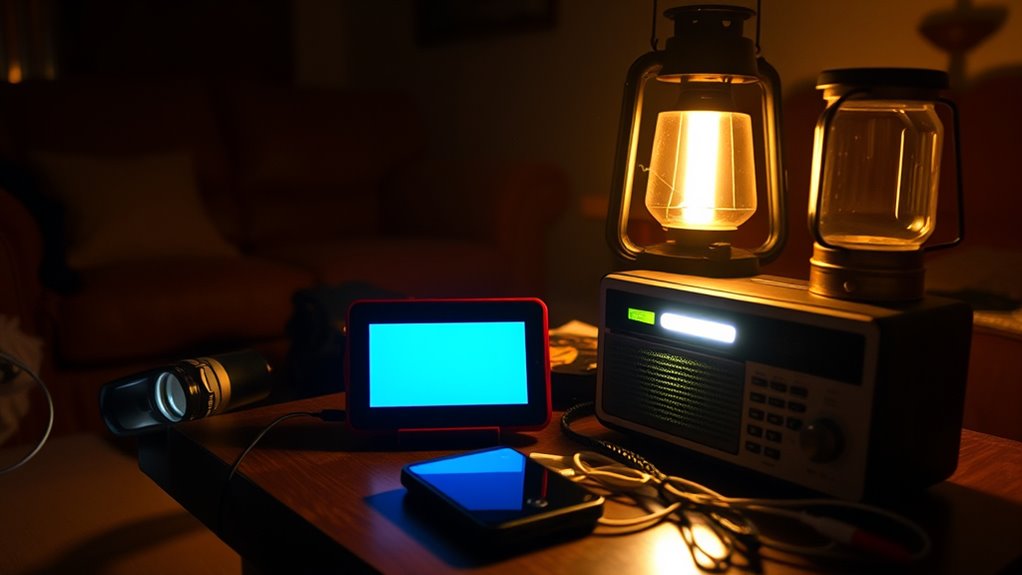
One common mistake is forgetting to include essential devices in your kit, which can leave you unprepared during a blackout. Ignoring the importance of power backup options can also leave you stranded when the power goes out unexpectedly. To stay ready, make sure you’ve covered all critical devices and have reliable backup power sources in place.
Overlooking Essential Devices
Failing to identify and prioritize essential blackout devices can leave you unprepared when disaster strikes. Many overlook key devices that keep you safe and connected. First, don’t forget your home automation systems—they can help manage lighting and security even during a blackout. Second, prioritize your essential entertainment gadgets, like portable radios or battery-powered chargers, to stay informed. Third, make sure you have reliable flashlights and extra batteries on hand. Finally, keep medical devices ready if anyone in your household depends on them. Neglecting these devices can disrupt your safety and comfort. By focusing on these essentials, you’ll avoid common mistakes and be better prepared to face any blackout scenario confidently.
Ignoring Power Backup
Many people overlook the importance of having reliable power backup options for their blackout devices. Ignoring this can lead to unnecessary disruptions during an outage. You should prioritize device selection based on critical needs, ensuring essential items stay powered. Regular generator maintenance is essential to prevent failures when you need backup power most. Without proper upkeep, your generator might fail or perform poorly during an emergency. Also, avoid neglecting your backup plan; test equipment periodically to confirm it works smoothly. By focusing on device prioritization and maintaining your generator, you reduce risks and ensure your blackout devices are ready to serve when required. Skipping these steps can leave you unprepared, making your blackout experience more stressful than it needs to be.
Frequently Asked Questions
How Can I Extend My Device Battery Life During a Blackout?
To extend your device battery life during a blackout, prioritize essential devices and enable power saving tips. Turn off unnecessary apps and features like Bluetooth and Wi-Fi. Lower screen brightness and activate battery saver mode. Limit background activity and avoid multitasking. By focusing on device prioritization, you conserve energy, ensuring your device lasts longer when you need it most. These simple steps make a big difference in emergency situations.
What Safety Precautions Should I Take When Using Backup Power Sources?
When using backup power sources, you should prioritize fire safety, electrical hazard prevention, and proper ventilation. Always keep fire extinguishers nearby, avoid overloading outlets, and guarantee cords are in good condition. Turn off devices when not in use, keep backup generators outdoors to prevent carbon monoxide buildup, and stay alert for sparks or smoke. These precautions protect you from electrical hazards and ensure safe operation during a blackout.
Are Solar Chargers Effective for Maintaining Device Power Long-Term?
Solar chargers can be effective for maintaining device power long-term, especially if they have high solar efficiency and a reliable battery system. You’ll want to choose models with durable batteries to improve longevity, ensuring they hold charge over extended periods. Keep in mind that sunlight availability impacts performance, so supplementing with backup power sources can help you stay connected during prolonged blackouts. Proper maintenance extends your solar charger’s usefulness.
How Often Should I Test My Emergency Devices and Backup Power?
You should test your emergency devices and backup power at least once every three to six months. Regular testing guarantees battery maintenance and confirms device readiness, so you’re prepared when needed. Check that batteries are charged, replace any that are weak, and verify all equipment functions properly. Staying proactive with these tests helps prevent surprises during an outage, giving you peace of mind knowing your devices will work when it matters most.
What Should I Include in a Blackout-Specific Emergency Communication Plan?
You should include a list of emergency contacts and clear communication channels in your blackout-specific plan. Studies show 80% of emergency responders rely on multiple channels during outages. Your plan must specify who to contact and how, such as cell phones, radios, or social media. Practice regularly, keep contact info updated, and make certain everyone knows how to reach each other even if power or internet fail.
Conclusion
When the lights go out and darkness swallows your home, having the right devices ready can be your lifeline. Picture a flickering flashlight illuminating a safe path, a charged power bank keeping your phone alive, and a radio broadcasting crucial weather alerts. By prioritizing these essentials, you create a beacon of safety amidst the shadows. Stay prepared, stay calm, and let your trusted devices be your guiding light through any blackout.