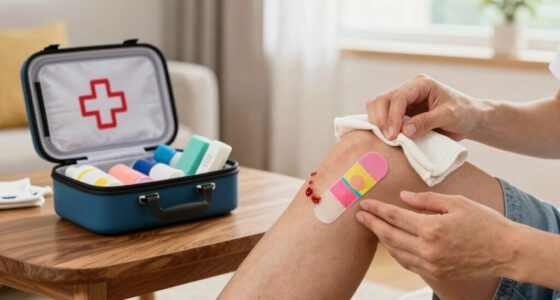
To effectively stop bleeding in emergencies, recognize signs like heavy or spurting blood, then apply firm pressure with a clean cloth or gauze. Elevate the limb, and only use a tourniquet if bleeding is severe and cannot be controlled otherwise. Pack deep wounds carefully, stay calm, and trust your skills. Proper supplies and training are essential. Keep learning how to respond confidently — the more you know, the better you’ll be prepared to act.
Key Takeaways
- Recognize signs of serious bleeding, such as rapid blood flow, pooling, and shock symptoms, and respond quickly.
- Use sterile gauze and direct pressure to control bleeding; apply a tourniquet only if necessary.
- Maintain calm, trust your training, and develop a mindset for effective emergency response.
- Stock first aid supplies like gauze, gloves, and scissors; regularly check and replenish them.
- Develop family and community emergency plans, including training and preparedness to handle bleeding incidents effectively.
Recognize Serious Bleeding and When to Act
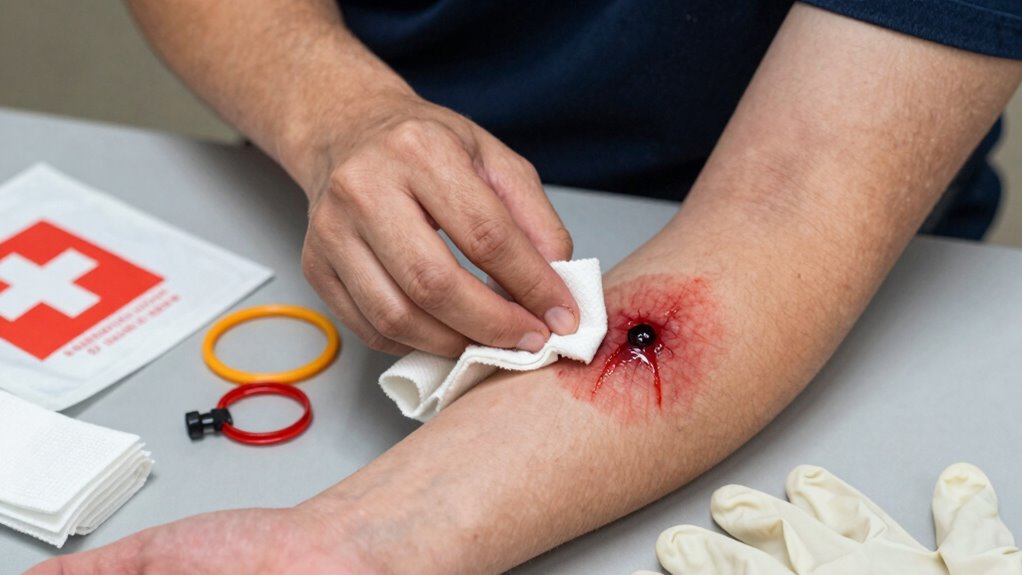
Recognizing serious bleeding is crucial because quick action can save lives. In first aid basics, understanding injury assessment helps you identify when bleeding is life-threatening. Look for signs like heavy blood flow that spurts or gushes, soaking through clothing or bandages rapidly. If blood pools quickly or accumulates to a large amount, it’s a clear indicator of severe bleeding. Pale, clammy skin, confusion, or weakness may also suggest shock from blood loss. When you see these signs, don’t hesitate—immediate action is essential. Knowing when to act means you can prioritize prompt intervention, such as applying pressure, to control bleeding and prevent further complications. Proper assessment techniques are vital to determine the severity of bleeding accurately. Additionally, understanding the signs of shock can help you recognize when medical emergency assistance is urgently needed. Quick recognition and response are key to effective first aid in serious bleeding situations, especially when proper bleeding control methods are employed swiftly. Being familiar with bleeding severity levels can improve your ability to assess situations accurately and respond appropriately, and knowing the importance of timely intervention can make the difference between life and death.
Essential Supplies for Bleeding Control
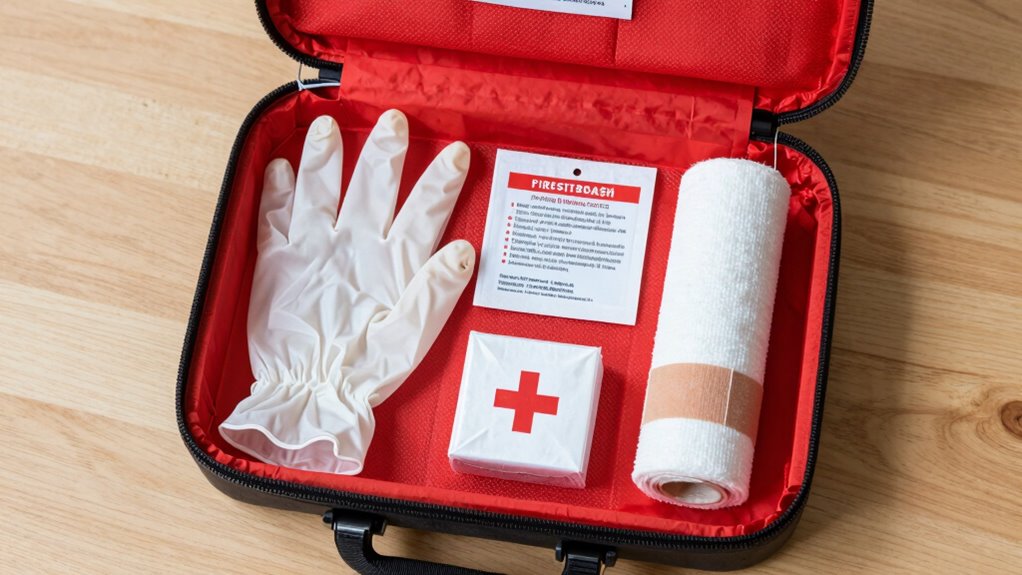
Having the right supplies on hand is vital for effectively controlling bleeding. A well-stocked first aid kit should include sterile gauze pads, adhesive bandages, and trauma dressings to quickly cover wounds. Safety gloves are essential to protect yourself from bloodborne pathogens and maintain hygiene while helping someone. Consider adding sterile gloves, antiseptic wipes, and tourniquets if available, as they can be lifesaving in severe bleeding cases. Keep these supplies organized and easily accessible, so you’re ready to respond promptly. Regularly check expiration dates and replenish supplies as needed. Being prepared with a thorough first aid kit and safety gloves ensures you can provide immediate assistance, reduce blood loss, and stabilize the injured person until professional help arrives. Incorporating essential supplies for bleeding control into your preparedness plan can make a crucial difference in emergency situations.
How to Apply Pressure to Stop Bleeding

When you need to stop bleeding quickly, applying direct pressure is the most effective method. Use a clean cloth or gauze and press firmly on the wound. Maintain steady pressure to help blood clot and slow bleeding. Proper pressure application techniques involve staying consistent without excessive force, which could cause further tissue damage. If blood soaks through, add more material on top without removing the initial dressing. Remember, tourniquet effectiveness depends on correct pressure application—firm enough to stop blood flow, but not so tight as to cut off circulation entirely. Keep pressing until bleeding slows or emergency help arrives. Stay calm, and avoid unnecessary probing or removing dressings, which can worsen the situation. Monitoring the pressure and understanding proper application techniques can improve your response in critical moments. Additionally, knowing how to check for signs of circulation can help ensure that your pressure is effective without causing additional harm. Being familiar with the signs of severe bleeding can help you decide when to seek advanced medical assistance promptly. Recognizing the importance of timely intervention can make a significant difference in outcomes during bleeding emergencies.
When and How to Use a Tourniquet to Control Bleeding?
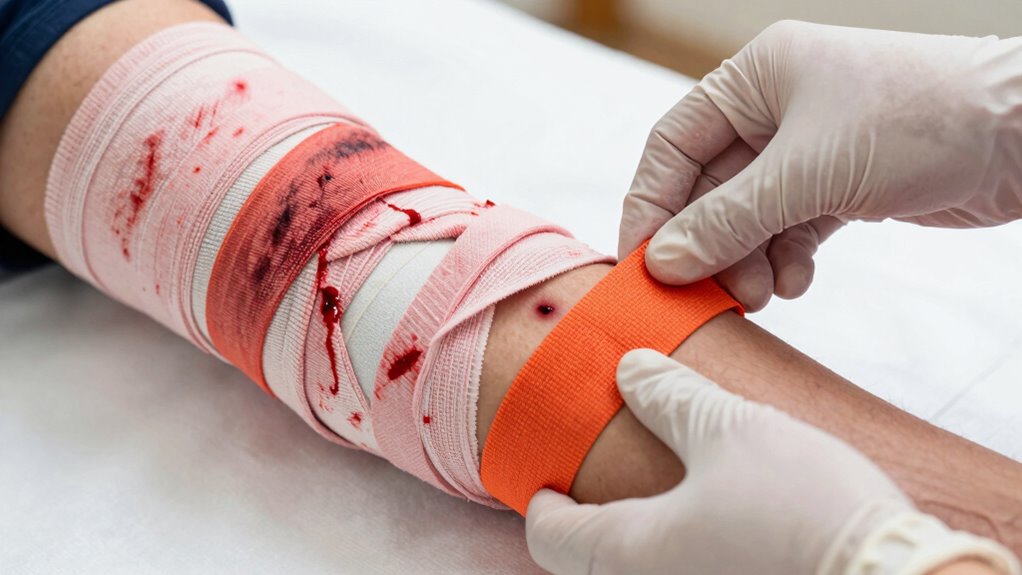
A tourniquet becomes necessary when direct pressure fails to control severe bleeding, especially from limbs. If bleeding escalates despite pressure, applying a tourniquet can be lifesaving. To do this effectively: 1. Place the tourniquet 2-3 inches above the bleeding site, avoiding joints. 2. Tighten until bleeding stops and no pulse is felt below the tourniquet. 3. Record the time of application to inform medical personnel later. Proper application techniques are crucial to prevent further injury and ensure effectiveness. Additionally, understanding vascular anatomy can help in applying the tourniquet more accurately. Be aware that proper application can also help prevent complications such as tissue damage.
How to Pack a Wound for Fast Bleeding Control
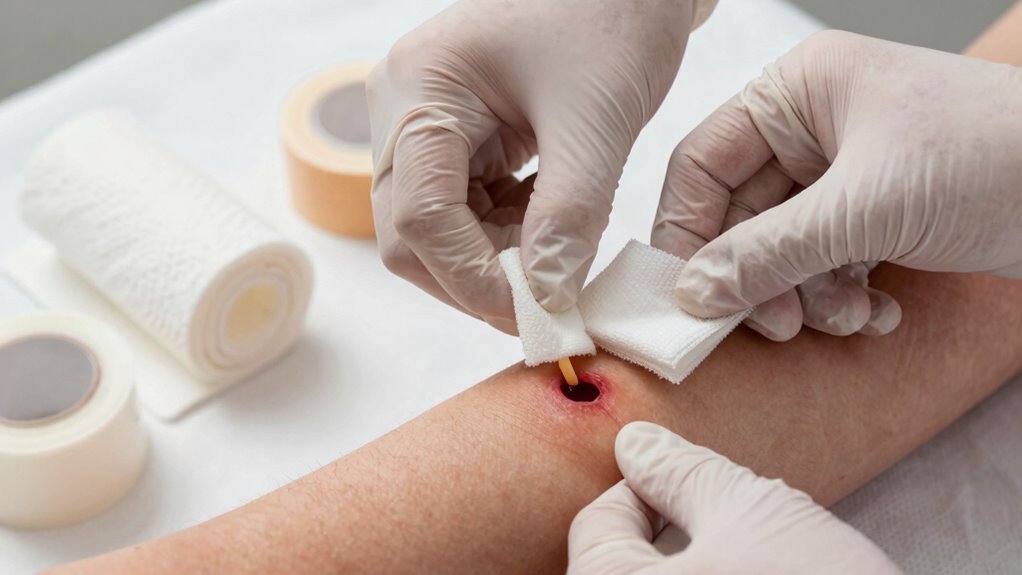
If direct pressure alone isn’t stopping heavy bleeding, packing the wound can quickly help control it. First, perform a bleeding assessment to determine how much bleeding there is and if additional measures are needed. Select a clean wound dressing or sterile gauze. Carefully insert the dressing into the wound cavity, filling the space without pushing debris further in. Apply firm, consistent pressure directly on the wound to help tamponade the bleeding. Keep packing until the bleeding slows or stops, but don’t overpack, as this can cause further tissue damage. Once bleeding is controlled, secure the dressing with a sterile bandage. Remember, quick and effective wound packing can be lifesaving, but always monitor for continued bleeding and be ready to escalate care if necessary. Additionally, ensure your supplies are sterile and safe to prevent infection or complications. Proper technique and timely action are essential components of bleeding control in emergency situations. It’s also important to understand that vetted supplies can significantly impact the effectiveness of the intervention. Using appropriate packing materials can help ensure the wound is effectively sealed without causing additional harm. Incorporating proper technique can further improve outcomes and reduce the risk of complications.
Common Mistakes When Controlling Bleeding and How to Avoid Them
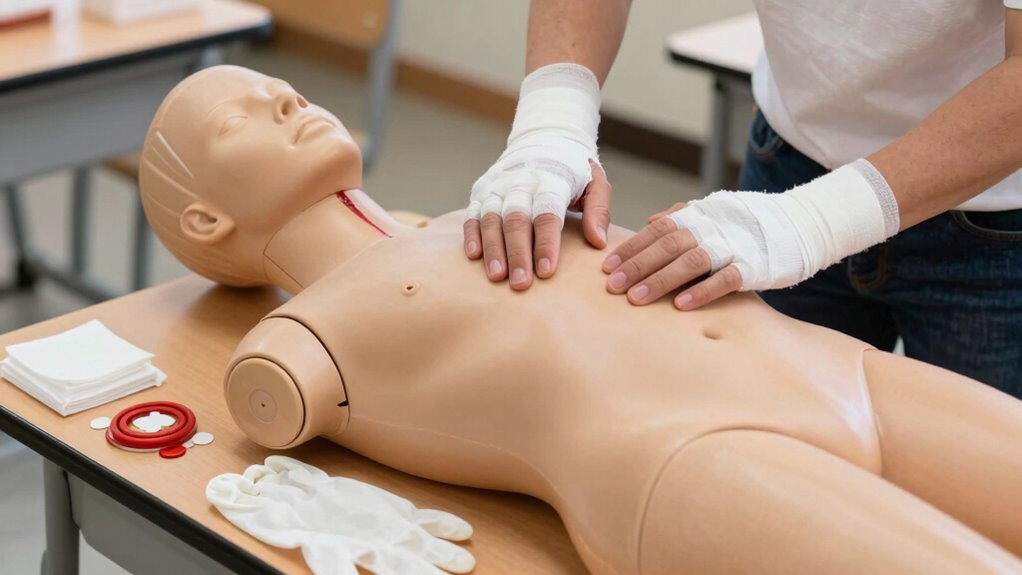
Many people make common mistakes when trying to control heavy bleeding, which can hinder their efforts and even worsen the situation. First, relying on bleeding myths, like removing a blood clot, can delay proper treatment. Second, applying a tourniquet incorrectly or too loosely risks ineffective control or tissue damage; always ensure it’s tight enough and positioned properly. Third, you might focus solely on bleeding and neglect other crucial steps, like calling for help or monitoring the victim’s condition. Be aware of tourniquet risks—using one improperly can cause nerve or tissue damage. Avoid these mistakes by staying informed, applying techniques correctly, and understanding that controlling bleeding isn’t about quick fixes but effective, cautious action.
Tips for Staying Calm and Acting Confident During Emergencies
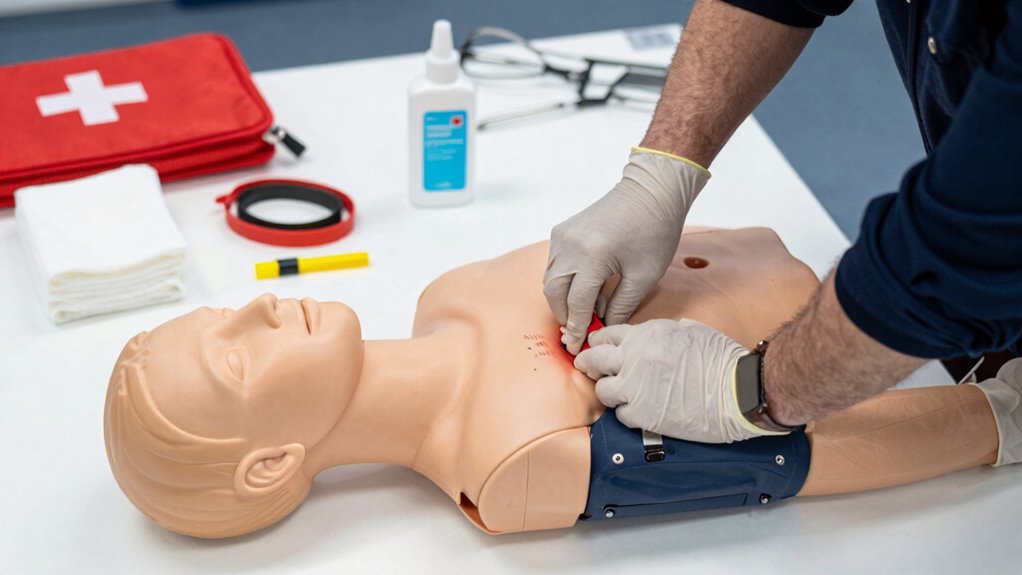
Ever wonder how staying calm can make a difference in emergency situations? Maintaining mental resilience helps you think clearly and act swiftly. Confidence comes from trusting your training and knowing you can handle the situation. Seek emotional support from bystanders or teammates; a reassuring presence boosts your composure. Focus on controlled breathing to stay centered, which reduces panic. Remember, your calmness can influence others to stay composed as well. Use this simple table to reinforce your mindset:
| Tip | Action | Benefit |
|---|---|---|
| Breathe Deeply | Take slow, deliberate breaths | Reduces panic |
| Trust Your Skills | Recall your training and knowledge | Builds confidence |
| Seek Support | Ask for help or reassurance | Strengthens mental resilience |
Additionally, understanding emergency preparedness and the importance of supporting others can help you feel more confident when faced with unexpected situations. Recognizing vehicle safety features can also empower you to respond more effectively during emergencies. Developing a calm mindset through regular practice can further enhance your ability to respond effectively in critical moments. Cultivating these skills and knowledge can improve your response in high-stress scenarios.
Training Resources to Learn Bleeding Control Skills
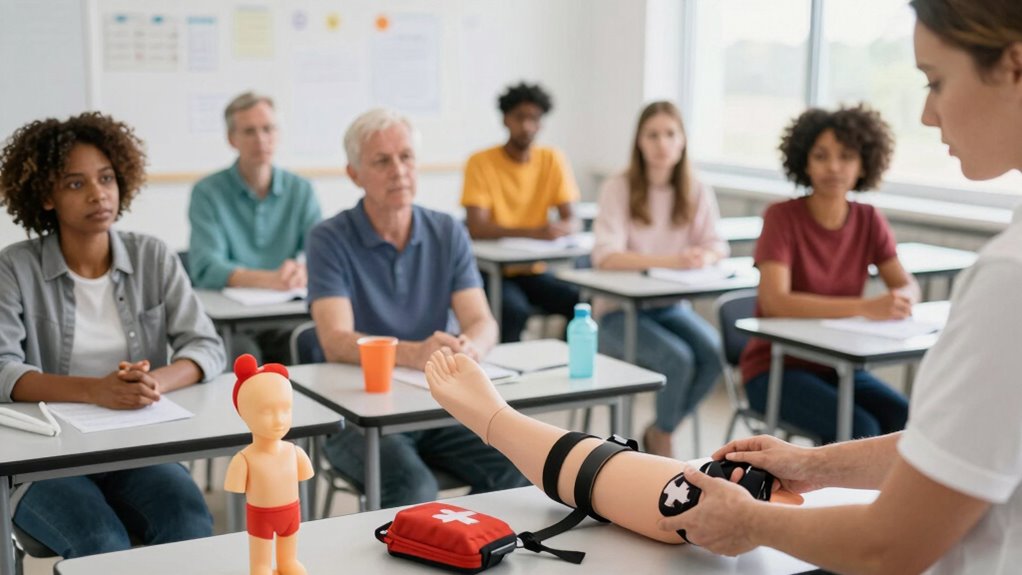
To effectively learn bleeding control skills, you can access a variety of training resources designed for both beginners and those seeking to refresh their knowledge. These resources often include hands-on courses and online modules covering essential first aid and CPR techniques. Consider these options: 1. Certified First Aid Courses – Offered by organizations like the Red Cross or OSHA, these provide practical bleeding control training alongside CPR techniques. 2. Online Training Platforms – Websites like Coursera or YouTube offer videos and interactive lessons to review bleeding control methods at your own pace. 3. Community Workshops – Local hospitals or fire departments often host in-person classes, giving you real-world practice in bleeding management and first aid response. These courses typically include basic safety protocols to ensure proper handling of bleeding injuries. These resources empower you to act confidently during emergencies, potentially saving lives.
Preparing Your Family and Community for Bleeding Incidents
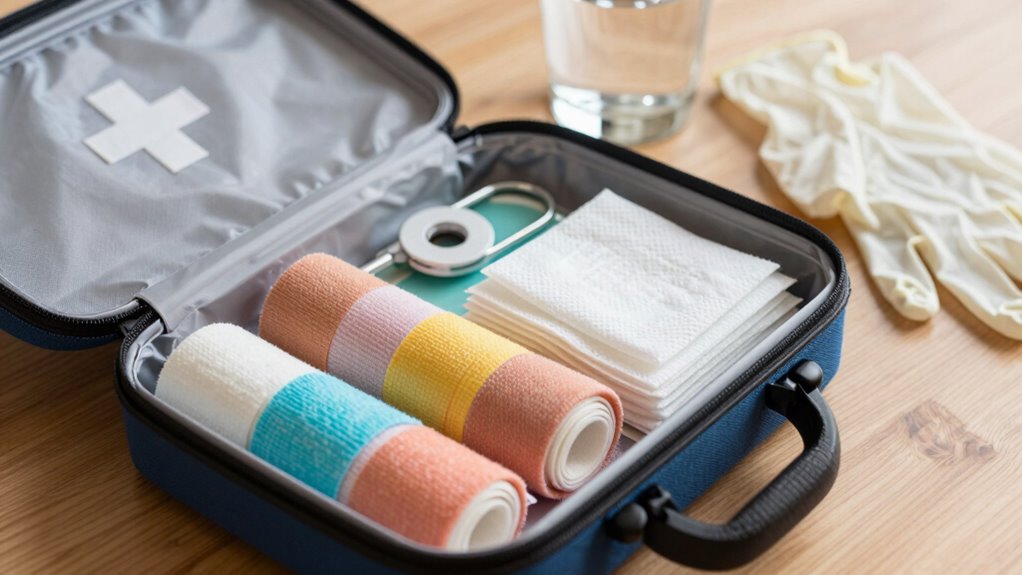
You can better protect your loved ones by creating a family emergency plan that includes bleeding incidents. Join community training sessions to learn how to respond quickly and effectively. Keep emergency supplies stocked so you’re always ready to act when seconds matter.
Family Emergency Plans
Preparing your family and community for bleeding incidents involves creating clear, actionable emergency plans that everyone understands. Start by establishing a family communication plan, so everyone knows how to stay in touch if separated. Next, verify your home safety measures are up to date, like securing sharp objects and maintaining a well-stocked first aid kit. Finally, educate your family on basic bleeding control techniques, so they’re prepared to act quickly. Here are three key steps:
- Develop a communication and evacuation plan.
- Regularly review and update your home safety protocols.
- Practice first aid skills, including bleeding control, with your family.
Community Training Sessions
Community training sessions are essential for equipping everyone with the skills needed to manage bleeding emergencies effectively. These sessions focus on basic first aid techniques, empowering you and your neighbors to respond confidently during a crisis. Through hands-on practice, you learn proper wound management, including how to apply pressure, use dressings, and control bleeding until professional help arrives. By participating in these trainings, you help create a safer environment where everyone knows what to do in an emergency. This preparedness reduces panic and delays in care, potentially saving lives. Whether you’re training family members, coworkers, or community members, your involvement strengthens the overall response to bleeding incidents. Ultimately, well-informed communities are better equipped to handle emergencies swiftly and effectively.
Stock Emergency Supplies
Have you ever considered how quickly a bleeding emergency can escalate without the right supplies on hand? To be prepared, you need to stock essential emergency supplies that can make a difference. First, ensure your *first aid kit* includes items like gauze, bandages, and sterile dressings to control bleeding effectively. Second, invest in quality *safety equipment* such as gloves and eye protection to prevent infection and protect yourself. Third, keep necessary tools like scissors and tweezers within easy reach for quick use. Regularly check and replenish these supplies to make sure they’re ready when needed. Properly stocked emergency supplies empower you to act swiftly, potentially saving lives during a bleeding incident in your family or community.
Quick Summary: Key Steps to Stop Bleeding Effectively
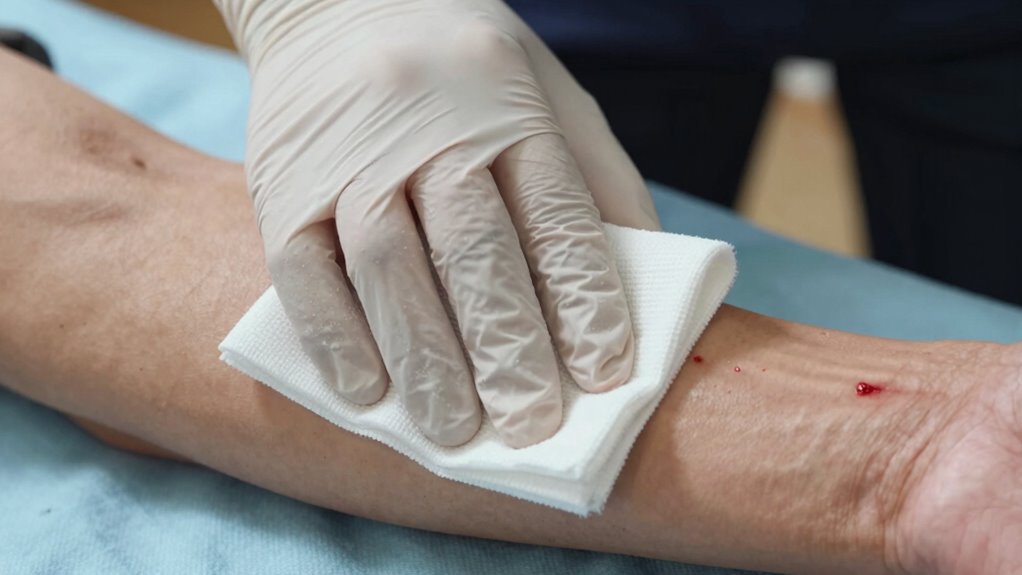
To stop bleeding effectively, you need to act quickly and follow a few key steps. First, apply direct pressure to the wound to control bleeding. If possible, elevate the injury above the heart level. Next, ensure wound hygiene by cleaning around the wound without disturbing clots. Use a clean cloth or sterile dressing to maintain bleeding prevention. If bleeding persists, consider applying a tourniquet above the wound, but only if necessary. Always monitor for shock and seek medical help promptly. Here’s a quick guide:
| Step | Action | Key Point |
|---|---|---|
| 1. Apply pressure | Use a clean cloth or dressing | Controls bleeding, promotes wound hygiene |
| 2. Elevate | Raise the limb if possible | Reduces blood flow to wound |
| 3. Clean wound | Gently clean around the wound | Prevents infection |
| 4. Use tourniquet | Only if bleeding is severe | Last resort, maintain bleeding prevention |
| 5. Seek help | Call emergency services | Ensures proper treatment |
Frequently Asked Questions
Can I Use Household Items as Makeshift Bleeding Control Supplies?
Yes, you can use household supplies as makeshift bleeding control supplies. Items like a belt, scarf, or towel can serve as improvised tourniquets or pressure dressings to help control severe bleeding. Just guarantee you apply firm, direct pressure first, and if needed, secure the improvised tourniquet tightly above the wound. Remember, these are temporary solutions until professional medical help arrives.
How Do I Identify Arterial Versus Venous Bleeding?
Think of your body’s blood flow like a river—arterial bleeding is rapid and forceful, with bright red blood spurting in rhythm with your pulse, showing strong arterial pulses. Venous bleeding flows steadily, darker and more even, reflecting venous flow. To identify, watch for pulsatile spurts indicating arteries, while steady, dark flow suggests veins. Act quickly, applying pressure to control both, but remember, arterial bleeding demands urgent action.
What Are Signs of Shock Following Severe Bleeding?
You’ll notice early signs of shock after severe bleeding include pale, clammy skin, rapid heartbeat, and dizziness. You might feel weak or confused, and your breathing could become shallow or quick. Recognizing these symptoms quickly is vital, as they indicate your body isn’t getting enough blood flow. Keep an eye on these signs and act fast by controlling bleeding and seeking emergency help to prevent worsening shock.
How Long Should I Apply Pressure Before Seeking Emergency Help?
You should apply pressure for at least 10 minutes continuously to control bleeding effectively. If the bleeding doesn’t slow or stop after this period, or if it’s severe, seek emergency help immediately. Keep applying firm pressure, and don’t remove the dressing to check the wound. When to seek help is vital—call emergency services if bleeding persists, worsens, or if the person shows signs of shock.
Is It Safe to Remove a Bleeding Wound Dressing to Check Progress?
It’s generally not safe to remove a bleeding wound dressing unless instructed by emergency personnel. About 80% of bleeding control occurs through direct pressure, so removing a dressing can disrupt clot formation and cause more bleeding. If you must check progress, do so carefully and minimally during initial care. Always seek emergency help promptly, and let professionals decide when it’s safe to inspect or change the dressing.
Conclusion
Remember, when it comes to bleeding, a stitch in time saves nine. Stay alert to serious bleeds, act quickly with the right supplies, and keep calm under pressure. Your confidence can make all the difference in saving a life. With the right knowledge and preparation, you can turn an emergency into a controlled situation. Don’t wait for a crisis—be ready, stay steady, and handle it like a pro.