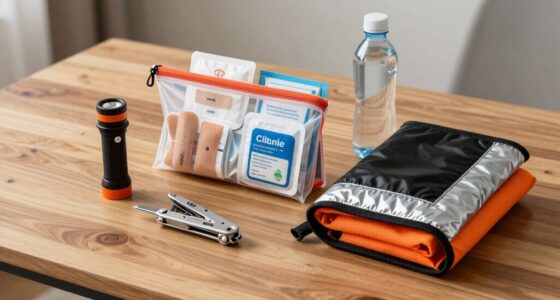
Knowing basic first aid helps you respond confidently to everyday injuries, from cuts and burns to choking and fractures. You should learn to recognize signs of bleeding, fractures, and choking, and know how to clean wounds, dress cuts, and cool burns. Staying calm and acting quickly can prevent injuries from worsening and even save lives. Keep familiar with simple techniques, as mastering these skills equips you to handle common emergencies effectively and safely.
Key Takeaways
- Recognize common emergencies like bleeding, fractures, and choking to respond effectively and confidently.
- Apply direct pressure and elevate to control bleeding, and use sterile dressings to prevent infection.
- Clean and dress minor wounds and burns promptly to promote healing and reduce infection risk.
- Perform Heimlich maneuver for choking and promote safe eating habits to prevent airway obstructions.
- Always seek professional medical help for severe injuries or if first aid measures are insufficient.
Why Basic First Aid Skills Matter

Having basic first aid skills can make the difference between a life-threatening situation and a manageable emergency. Many people fall for first aid myths, which can delay proper response or worsen the injury. Knowing the facts helps you act confidently and safely, following essential safety precautions. When you understand basic first aid, you’re better equipped to assess situations quickly and provide immediate help until professional help arrives. This knowledge can prevent minor injuries from escalating and reduce panic during emergencies. By learning the correct techniques and dispelling common myths, you ensure your actions are effective and safe for everyone involved. Ultimately, having these skills empowers you to protect yourself and others in everyday incidents. Recognizing the importance of first aid knowledge can also encourage more people to seek proper training and be prepared for emergencies. Additionally, understanding basic first aid procedures can help you respond swiftly to common injuries such as cuts, burns, or choking. Gaining familiarity with effective emergency response techniques can improve your confidence and effectiveness during critical moments.
Recognizing Common Injuries and Emergencies

When you see someone bleeding, look for obvious signs like blood spurting or soaking through clothing. Recognizing a fracture means noticing swelling, bruising, or an inability to move the affected limb. Being alert to these signs helps you respond quickly and get the right help. Developing a methodical approach to assessing injuries ensures thorough and effective first aid. Additionally, understanding basic first aid techniques can make a crucial difference in emergency situations. Incorporating proper sanitation practices can also prevent infection and promote faster recovery. Recognizing first aid essentials such as bandaging and CPR is vital for effective intervention. Being aware of spinal injury signs is also important, as mishandling these cases can worsen the injury.
Identifying Signs of Bleeding
Recognizing the signs of bleeding quickly can make all the difference in providing effective first aid. Pay attention to how blood flow appears from the injury; steady, bright red blood often indicates active bleeding, while slower or dark blood may suggest a different severity. Examine the wound appearance carefully—deep cuts, gashes, or punctures are clear signs of bleeding that need immediate attention. You might notice blood pooling or seeping through clothing or bandages. Also, watch for signs like discoloration around the injury or swelling, which can signal internal bleeding. Being able to identify these signs promptly helps you decide whether to apply pressure, elevate the limb, or seek urgent medical help. Proper awareness of air quality considerations can also help prevent complications from airborne pathogens. Additionally, understanding bleeding control techniques is essential for effective first aid response. Quick recognition is key to controlling bleeding and preventing further complications, and knowing how to assess injury severity can guide your response effectively. For example, youngster choice injuries such as minor abrasions may require different handling than more serious wounds.
Recognizing Fracture Symptoms
Fractures often present with clear signs that you need to act quickly. Recognizing fracture symptoms is vital for prompt first aid. Look for visible bone injury cues like deformity, swelling, or bruising around the area. The person may experience intense pain, especially when moving or touching the affected limb. You might notice a bone protruding through the skin, indicating an open fracture. Keep an eye out for difficulty or inability to move the injured area, along with unnatural positioning. Also, watch for a cracking or grinding sound at the moment of injury. These bone injury cues signal a fracture. React swiftly by immobilizing the limb and seeking professional medical help. Accurate identification helps prevent further damage and guarantees proper treatment. Being aware of common injuries can help you respond effectively in emergency situations.
How to Clean and Dress Minor Cuts and Scrapes
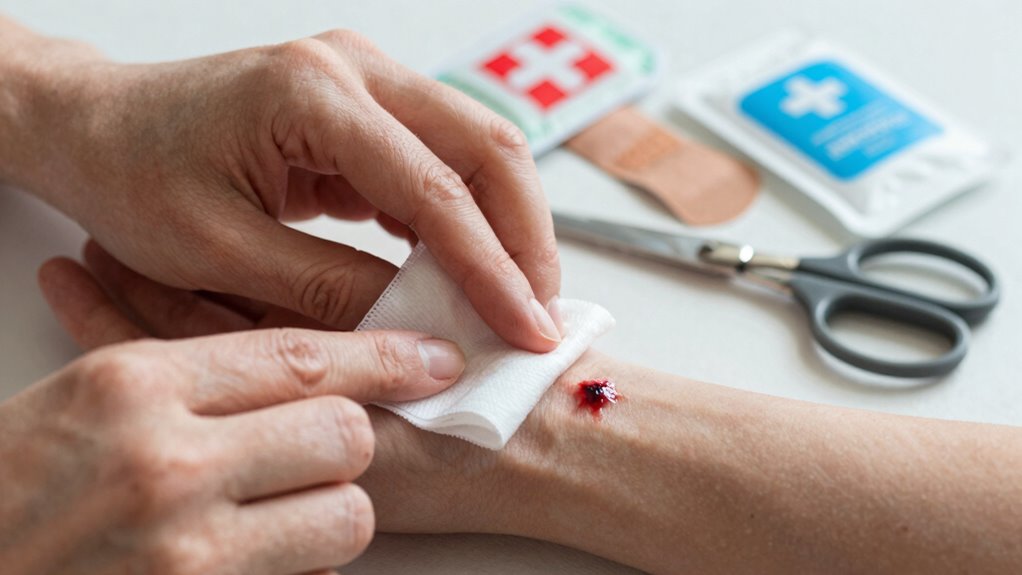
To properly clean and dress a minor cut or scrape, you need to gather your supplies quickly and guarantee everything is within reach. Use proper cleaning techniques to remove dirt and bacteria, then apply an effective dressing to protect the wound. Incorporating visual and auditory cues can aid in understanding the process better. Being aware of the Gold IRA markets and their reputable providers can also help you make informed decisions about your investments should you choose to diversify your financial portfolio. Additionally, understanding basic first aid concepts ensures you’re prepared to act confidently in everyday incidents. Recognizing common first aid supplies and their correct usage is essential for effective wound care, and familiarizing yourself with wound infection prevention can help prevent complications.
Gathering Supplies Quickly
When a minor cut or scrape happens, gathering supplies quickly can make all the difference in preventing infection and promoting healing. Keep a well-stocked first aid kit nearby, so you’re prepared for everyday incidents. Your supply checklist should include antiseptic wipes, sterile gauze, adhesive bandages, and antibiotic ointment. Act fast by retrieving these items without delay. Check that your first aid kit is organized and fully stocked regularly, replacing expired supplies. Having everything ready allows you to clean and dress minor wounds promptly, reducing the risk of infection. Being prepared with the right supplies saves time and helps you respond confidently. Quick access to your first aid kit ensures you can handle minor injuries efficiently and keep the situation under control. Additionally, understanding how to properly clean and dress minor cuts using appropriate antiseptics and dressings can significantly improve healing outcomes. Recognizing the importance of contingency plans like pet antics or weather mishaps can also help you stay calm and adapt quickly in unexpected situations. Properly managing Basic First Aid techniques can empower you to handle a variety of minor injuries effectively. Developing first aid skills through practice or training can further boost your confidence in emergency scenarios.
Proper Cleaning Techniques
Ever wonder how to properly clean and dress a minor cut or scrape? Start by washing your hands thoroughly to maintain hygienic practices. Gently rinse the wound under clean, running water to remove dirt and debris, avoiding harsh cleaning surfaces that could cause irritation. Use a soft cloth or sterile gauze to pat the area dry, preventing infection. If needed, apply an antiseptic to disinfect the skin around the cut. Be careful not to scrub or use strong chemicals that could damage tissue. Once cleaned, avoid touching the wound directly. Proper cleaning techniques help reduce bacteria and promote healing. Remember, thorough cleaning is key—never skip this step, even for minor injuries. Additionally, using the right cleaning appliances and systems can help ensure your first aid supplies stay hygienic and effective.
Effective Dressing Methods
After thoroughly cleaning a minor cut or scrape, the next step is to properly dress the wound to protect it from infection and promote healing. Start by selecting an appropriate wound dressing, such as sterile gauze or a waterproof bandage. Gently place the dressing directly over the wound, ensuring full coverage. When applying a bandage, secure it snugly but not too tight, so it stays in place without cutting off circulation. Proper bandage application helps keep the wound clean and prevents dirt and bacteria from entering. Regularly check the dressing for signs of dampness or dirt, and change it as needed. Effective dressing methods are essential for faster healing and reducing the risk of infection.
How to Treat Burns and Scalds at Home

Are you unsure how to respond quickly to a burn or scald? First, stop the source of heat and cool the burn with running cold water for at least 10 minutes. Then, follow these steps:
- Gently remove tight clothing or jewelry near the burn area before swelling occurs.
- Apply a sterile, non-stick dressing to protect the skin.
- Use home remedies like aloe vera gel to soothe minor burns.
- Keep the person comfortable and monitor for signs of shock.
What to Do When Someone Is Choking?

When someone is choking, immediate action is crucial to prevent suffocation. First, ask if they can breathe or cough. If they can’t, perform the Heimlich maneuver by standing behind them, wrapping your arms around their waist, and making quick, inward, and upward thrusts just above the navel. This force can dislodge the object blocking their airway. While choking prevention is key, stay calm and act quickly. If the Heimlich maneuver doesn’t work and the person becomes unconscious, call emergency services and begin CPR if trained. Always encourage safe eating habits, such as chewing thoroughly and avoiding talking with food in your mouth, to reduce choking risks. Acting swiftly can save a life and prevent serious injury.
How to Stop Bleeding and Prevent Infection
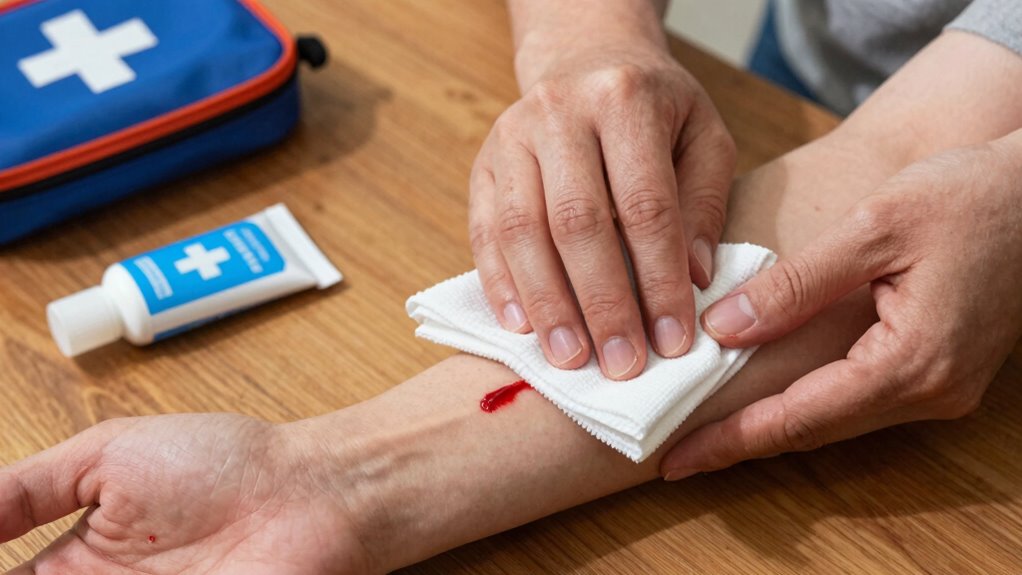
Ever wondered how to effectively stop bleeding and lower the risk of infection? To do this, focus on promoting blood clotting and infection control. First, apply direct pressure with a clean cloth or bandage to slow blood flow. Second, elevate the injured area above heart level to reduce blood flow. Third, keep the wound clean by rinsing with water and removing dirt or debris. Fourth, cover the wound with a sterile dressing to protect against germs. Avoid probing the wound or removing embedded objects. These steps help blood clotting occur naturally while preventing bacteria from entering. Always monitor for signs of infection, and seek medical help for severe bleeding or if infection develops. Proper first aid guarantees quicker healing and reduces complications.
How to Help With Sprains, Strains, and Fractures
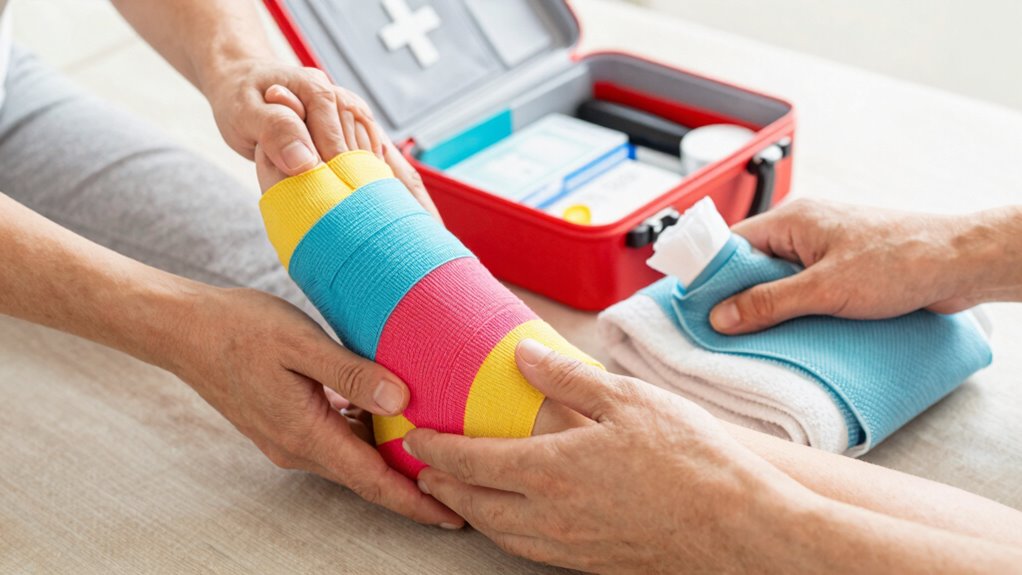
To help someone with a sprain, strain, or fracture, you should act quickly to minimize pain and prevent further injury. For a muscle strain or joint sprain, stop activity immediately and keep the affected area still. Apply a cold pack or ice wrapped in a cloth to reduce swelling and numb pain. Elevate the injured limb above heart level if possible, which helps decrease swelling. Do not try to realign a fracture; instead, stabilize the limb with a splint if necessary. Over-the-counter pain relievers can help, but avoid giving anything by mouth if severe injury is suspected. Remember, prompt and careful handling can prevent complications and provide comfort until professional medical help arrives.
How to Support Someone Who Is Fainting or Unconscious
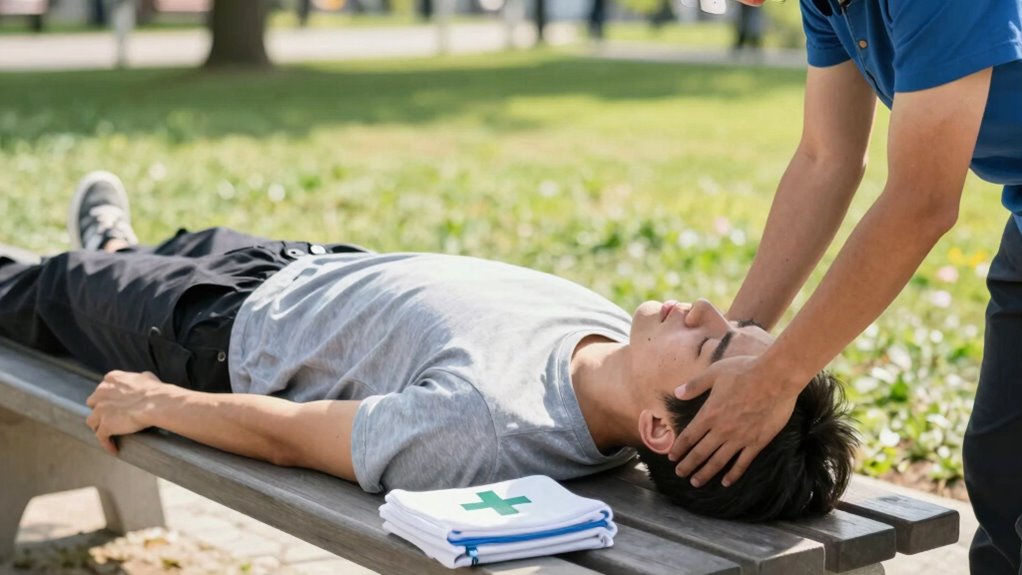
If you see someone faint, your priority is to keep them safe and prevent injury. Fainting causes can include dehydration, low blood sugar, or sudden shock. To support someone who is fainting or unconscious, follow these steps:
- Gently lay them on their back in an unconscious positioning, with legs slightly elevated to improve blood flow.
- Loosen tight clothing to help them breathe easier.
- Check their airway, breathing, and pulse. If they’re unresponsive, call for emergency help immediately.
- Keep them warm with a blanket or clothing, and monitor their condition until they regain consciousness or help arrives.
When and How to Seek Medical Help for Emergencies

Knowing when to seek medical help is vital during an emergency. If someone shows serious symptoms like chest pain, severe bleeding, or difficulty breathing, you need to call emergency services immediately. Acting quickly can make all the difference in ensuring proper care and safety.
Recognizing Serious Symptoms
Recognizing serious symptoms quickly is crucial because immediate action can save lives. Being aware of emergency signs helps you respond faster and seek help when needed. Keep an eye out for these key indicators:
- Sudden chest pain or pressure, especially if it radiates to your arm, neck, or jaw
- Unusual difficulty breathing or shortness of breath
- Signs of a stroke, such as sudden weakness, numbness, or slurred speech
- Severe bleeding or uncontrolled bleeding that doesn’t stop after applying pressure
These symptom awareness cues alert you to potential life-threatening situations. If you notice any of these emergency signs, don’t delay—seek medical help immediately. Recognizing serious symptoms saves lives by ensuring prompt treatment.
When to Call Emergency Services
When you notice signs of a serious medical emergency, acting quickly can make all the difference. Your emergency preparedness and first aid training help you recognize when professional help is needed. If someone is unresponsive, having difficulty breathing, experiencing severe chest pain, or bleeding heavily, call emergency services immediately. Don’t hesitate—timely intervention can save lives. Stay calm, provide clear information about the situation, and follow any instructions given by emergency responders. Remember, knowing when to seek professional help is a vital part of first aid. It’s better to call early than wait, especially if symptoms worsen. Being prepared and confident in these moments ensures you can respond effectively and get the help needed as fast as possible.
Staying Calm and Confident During First Aid Situations
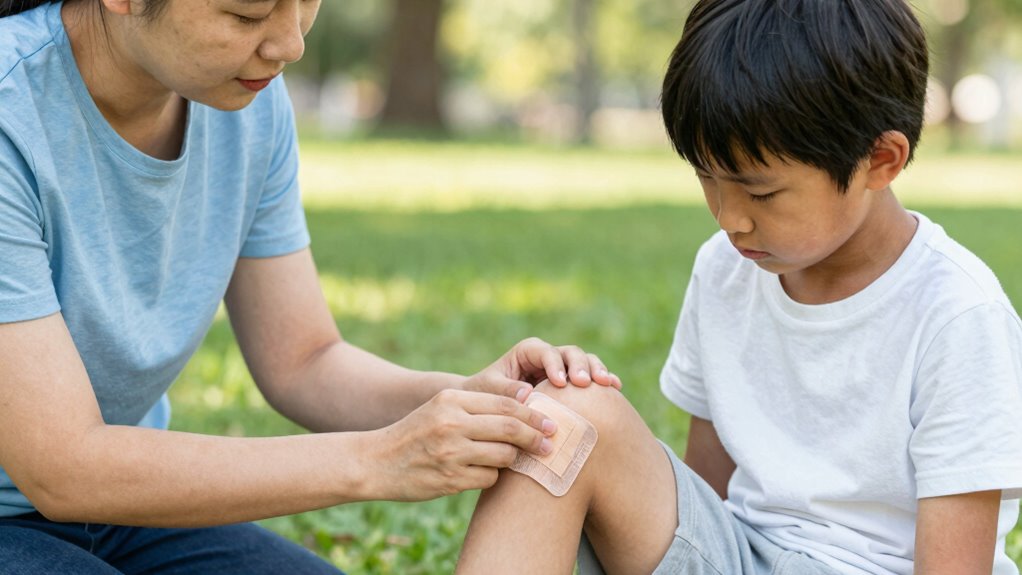
Staying calm and confident during a first aid situation is essential because your behavior can influence the victim’s response and overall outcome. Emotional preparedness helps you manage stress, allowing you to act effectively. Good communication skills enable you to provide clear instructions and reassurance. To maintain composure:
- Take deep breaths to calm your nerves.
- Focus on the immediate needs of the victim.
- Speak calmly and clearly to reassure them.
- Trust your training and stay present in the moment.
Frequently Asked Questions
How Can I Tell if a Wound Is Infected?
You can tell if a wound is infected by watching for signs of infection like increased redness, swelling, warmth, or pus. If the wound becomes more painful or if you notice a foul odor, these are also indicators. Proper wound care is essential—clean it regularly and keep it covered. If symptoms worsen or don’t improve, seek medical help promptly to prevent complications.
What Are the Signs of a Broken Bone?
If you suspect a broken bone, look for fracture symptoms like severe pain, bone swelling, or deformity. You might notice the area is tender, bruised, or feels warm. The person could have difficulty moving the injured limb or experience numbness. Sometimes, the bone may stick out through the skin. If you see any of these signs, seek medical help immediately and avoid moving the injured area unnecessarily.
How Do I Perform CPR on an Adult?
To perform CPR on an adult, start with scene safety, then check for responsiveness and breathing. Call emergency services immediately. Place your hands in the center of the chest, with one on top of the other, and press hard and fast at a rate of 100-120 compressions per minute. After 30 compressions, give two rescue breaths if you’re trained. Continue adult resuscitation until help arrives or the person recovers.
When Should I Use a Tourniquet?
You should use a tourniquet during emergency bleeding when direct pressure fails to control severe, life-threatening bleeding from a limb. Apply the tourniquet above the wound, tighten it until the bleeding stops, and note the time. Remember, tourniquet application is a last resort to prevent blood loss and shock. Always seek professional medical help immediately after applying a tourniquet to guarantee proper treatment.
How Can I Prevent Choking in Children?
Imagine a toddler coughing loudly after trying to grab a snack. You can prevent choking by implementing childproofing strategies and choking prevention tips. Always supervise children during meals, cut food into small, manageable pieces, and keep small objects out of their reach. Encourage them to sit down while eating, and teach them to chew slowly. These steps help reduce choking risks and keep your child safe during mealtime.
Conclusion
Knowing basic first aid is your shield in life’s unpredictable storm. With these simple skills, you’re the steady lighthouse guiding loved ones through moments of chaos and calm alike. Every quick action you take is like a gentle hand reaching out in the darkness, offering hope and healing. Arm yourself with confidence—because when emergencies strike, your calm response can be the key to turning fear into safety and recovery.