
📊 Full opportunity report: When One Agent Isn’t Enough: Claude Now Builds Its Own Team of Agents on the Fly on ThorstenMeyerAI.com — validation score, market gap, and execution plan.

Get the latest gadgets delivered free with Prime
- Fast, free delivery on millions of items
- Prime Video, Amazon Music and more included
- Member-only deals all year
TL;DR
Claude has introduced a new feature called dynamic workflows, enabling it to automatically assemble and manage teams of subagents tailored to complex tasks. This development aims to improve performance on high-value projects by overcoming limitations of single-agent approaches.
Claude has introduced a new capability called dynamic workflows, allowing it to automatically assemble and coordinate teams of subagents for complex tasks. This feature aims to address limitations in single-agent operation, especially on high-value or long-duration projects, by enabling more reliable, thorough, and scalable workflows. The development is part of Anthropic’s ongoing effort to enhance AI orchestration and task delegation.
According to Anthropic, the dynamic workflows feature enables Claude to generate custom orchestration scripts, akin to an organizational chart, that assign specific roles to subagents—such as dispatchers, specialists, reviewers, and judges—each with isolated contexts and focused briefs. These scripts are written in JavaScript and can dynamically adapt to the task at hand, including selecting appropriate models and managing parallel execution.
Anthropic emphasizes that this capability is designed for complex, high-value tasks rather than simple requests like fixing typos. The system can decide which subagent to spawn based on the task’s nature, and it can pause and resume workflows, making it suitable for long or multi-stage projects. The feature is triggered by asking for a workflow or using the keyword “ultracode.”
Under the hood, Claude’s dynamic workflows employ orchestration patterns such as classify-and-act, fan-out-and-synthesize, adversarial verification, generate-and-filter, tournaments, and loop-until-done. These are familiar structures in team management, now implemented within an AI model to improve reliability and output quality.
When one agent isn’t enough: Claude now builds its own team on the fly
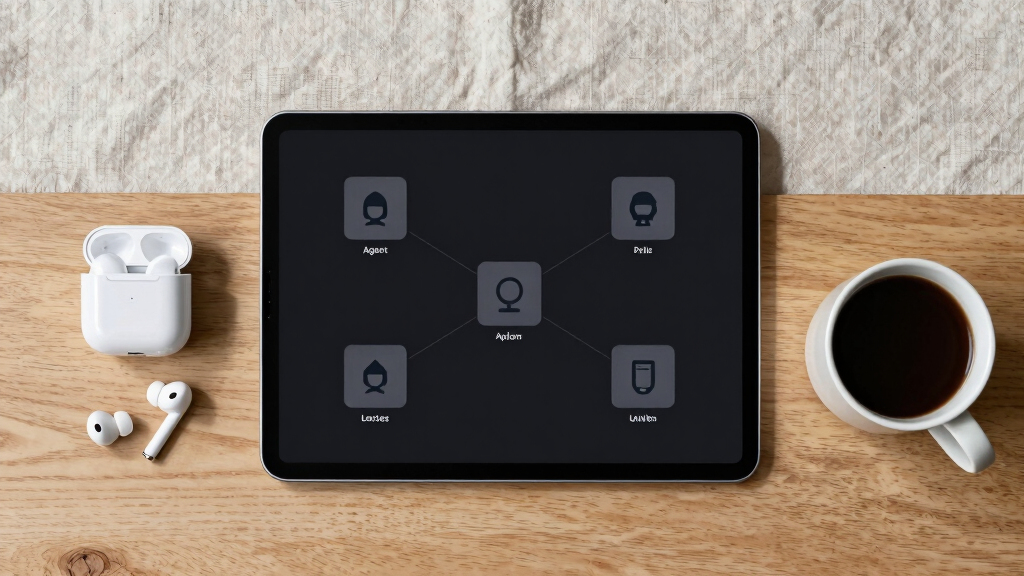
Skills package what you know; loops decide how far you delegate over time. Dynamic workflows are the third axis — within a single task, Claude writes its own harness and assembles a temporary team of subagents. Think of it as Claude drawing an org chart for one job.
The shift is from prompting a worker to commissioning a team — more output, more cost, and a manager’s judgment required. Reach for a workflow when a task is big, parallel, adversarial, or judgment-heavy — and when you can feel a single agent getting lazy, grading its own homework, or losing the plot. Bound it (token budgets, pilot first) — workflows can spawn hundreds of agents and burn far more tokens. For everything else, don’t hire five people to change a lightbulb.
Implications for AI Task Management and Reliability
This development represents a significant step in AI capabilities, enabling models like Claude to handle complex, multi-faceted projects more effectively by mimicking human team management strategies. It addresses core failure modes of single-agent operation—such as incomplete work, bias, and goal drift—by dividing tasks into focused subcomponents with independent oversight. For organizations, this could mean more dependable AI-driven workflows for research, verification, and large-scale automation, reducing the need for constant human oversight.
However, the feature’s reliance on more tokens and computational resources means it is best suited for high-value projects where accuracy and thoroughness outweigh costs. Its deployment could reshape how AI is integrated into enterprise workflows, especially in areas requiring rigorous validation and multi-step reasoning.
As an affiliate, we earn on qualifying purchases.
Evolution of AI Orchestration and Workflow Automation
Anthropic’s Claude has been evolving through a series of updates aimed at improving its skills and delegation capabilities. The recent addition of dynamic workflows completes a trilogy of features that enable more sophisticated orchestration, following skills packaging and looping controls. Previously, single-agent models faced limitations in long or complex tasks, often resulting in incomplete work, bias, or goal drift, which human managers typically mitigate through task division.
Prior to this, other AI systems relied on static workflows or manual orchestration. Claude’s new ability to generate tailored, on-the-fly harnesses marks a shift toward more autonomous, scalable AI management, aligning with broader trends in AI automation and multi-agent systems.
“Claude’s dynamic workflows allow it to build and manage teams of subagents tailored precisely to complex tasks, significantly enhancing reliability and scope.”
— Thorsten Meyer, AI researcher at Anthropic
As an affiliate, we earn on qualifying purchases.
Unanswered Questions About Workflow Scalability and Cost
It is not yet clear how well the dynamic workflows perform in real-world, large-scale deployments outside controlled environments. Details about the system’s scalability, cost-effectiveness, and robustness across diverse tasks remain under development. Additionally, the extent to which this feature can be integrated into existing enterprise workflows or customized for specific industries is still being explored.
As an affiliate, we earn on qualifying purchases.
Expected Next Steps for Adoption and Evaluation
Anthropic is likely to release more detailed case studies and performance metrics as users experiment with the feature. Further updates may include improved automation, broader model selection capabilities, and enhanced resumption features. Monitoring how organizations adopt and adapt this technology will be critical to understanding its long-term impact on AI-driven project management.
As an affiliate, we earn on qualifying purchases.
Key Questions
Can Claude build teams for any type of task?
Currently, the feature is optimized for complex, high-value projects. It is not intended for simple tasks like fixing typos or minor edits.
How does Claude decide which subagents to spawn?
Claude writes a JavaScript-based workflow that includes decision logic to select appropriate models and roles based on the task’s requirements.
Is this feature available for all users now?
As of the announcement, the feature is likely in limited access or testing phase, with broader availability expected after further evaluation.
What are the main limitations of this system?
The system uses more tokens and computational resources, making it more suitable for high-value projects. Its performance in large-scale, real-world deployments remains under assessment.
Source: ThorstenMeyerAI.com
Halloween Picks
halloween
As an affiliate, we earn on qualifying purchases.