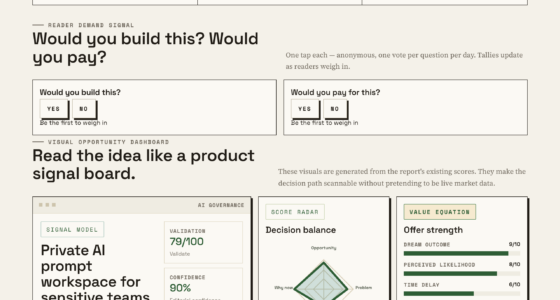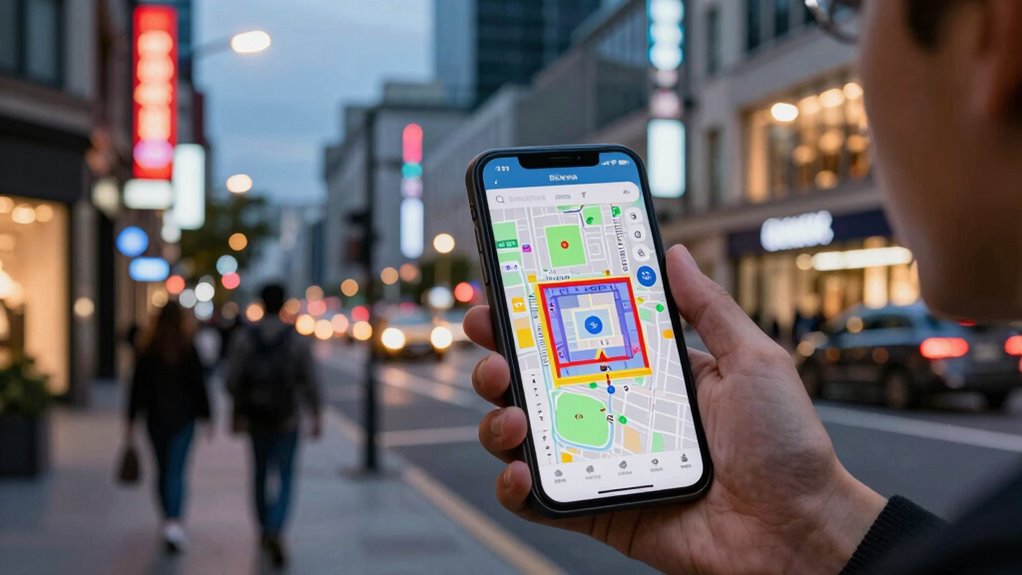

Geofencing alerts are commonly used to target customers with local offers, track employee or child whereabouts for safety, and monitor assets’ movements in real time. They trigger notifications whenever someone enters or leaves a designated zone, helping businesses boost engagement and organizations improve safety. However, there are privacy concerns and technical limitations to contemplate. To discover how you can optimize and responsibly implement geofencing alerts, explore the options available.

Get the latest gadgets delivered free with Prime
- Fast, free delivery on millions of items
- Prime Video, Amazon Music and more included
- Member-only deals all year
Key Takeaways
- Location-based marketing sends targeted promotions when users enter specific retail zones.
- Employers monitor employee movements for safety, accountability, and operational efficiency.
- Parents track children’s whereabouts to enhance safety and respond quickly in emergencies.
- Emergency services utilize geofencing for real-time incident response and resource deployment.
- Businesses use geofencing to trigger alerts for nearby customers, increasing engagement and sales.
As an affiliate, we earn on qualifying purchases.
How Geofencing Works and When Alerts Are Triggered
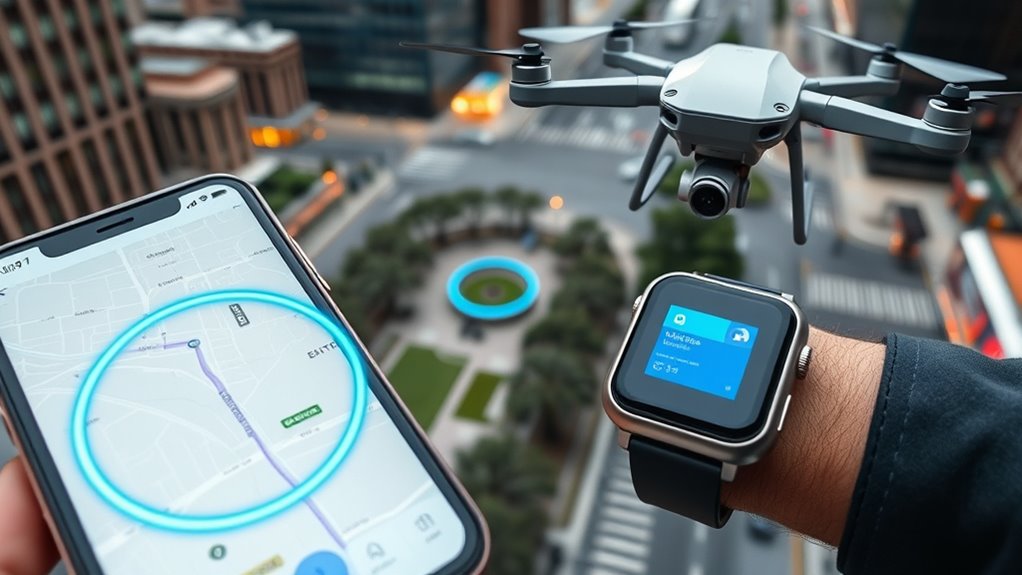
Geofencing works by creating a virtual boundary around a specific geographic area using GPS, RFID, Wi-Fi, or cellular data. This boundary customization allows you to set precise borders based on your needs. When a device enters or exits this designated zone, the system detects the movement through location tracking. The alert is triggered immediately once the boundary is crossed, enabling real-time notifications. You can customize these boundaries to be as small as a single building or as large as a city block, depending on your purpose. Additionally, location tracking helps improve the accuracy and reliability of the alerts. Incorporating real-time data updates can further enhance the responsiveness of geofencing alerts. Understanding the technology behind geofencing allows you to better tailor your alerts to your specific needs. By understanding how geofencing works, you gain control over when and where alerts happen, making it an effective tool for location-based monitoring and managing responses within your chosen area. For example, leveraging sensor accuracy can significantly reduce false alerts and improve system performance.
As an affiliate, we earn on qualifying purchases.
What Are the Main Use Cases for Geofencing Alerts?
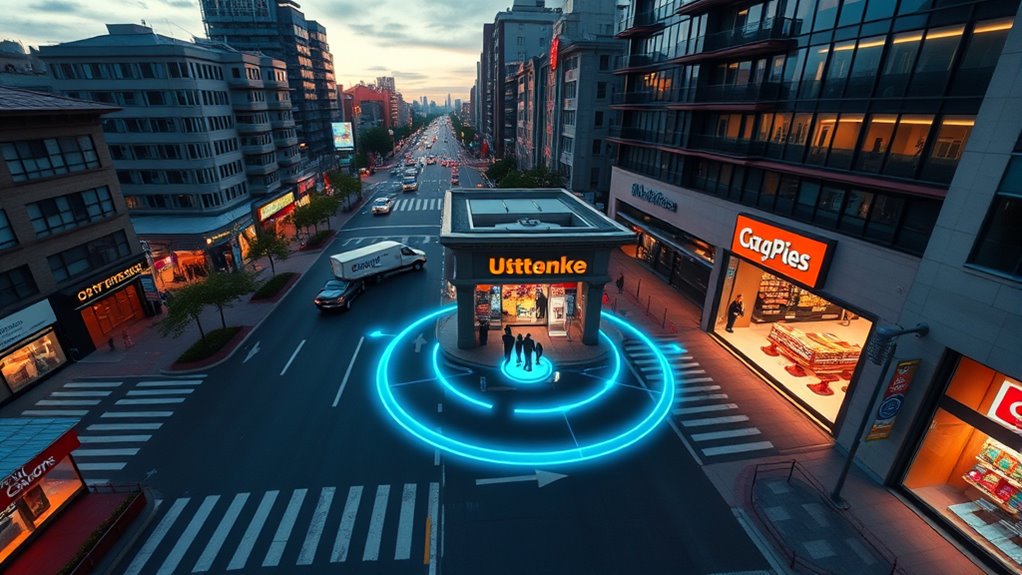
Knowing how geofencing creates virtual boundaries helps you understand its practical applications. One main use is location-based marketing, where businesses send targeted offers or promotions when customers enter specific areas. This boosts engagement and sales by reaching consumers at the right moment. Another key use is employee tracking, especially for companies with mobile staff or field workers. Geofencing alerts notify managers when employees arrive at or leave job sites, ensuring accountability and efficient scheduling. These alerts also help in monitoring compliance with safety protocols. Understanding geofencing technology further reveals its potential to create customized, dynamic boundary zones for diverse operational needs. For example, integrating with wellness sensors can enhance safety and health monitoring in work environments. Additionally, geofencing accuracy plays a critical role in ensuring the effectiveness of these applications. Precise geofencing can also support emergency response efforts by providing real-time location data during critical incidents. Overall, geofencing enhances business operations by providing real-time insights into customer behavior and employee movements, making it a versatile tool for improving marketing strategies and workforce management.
As an affiliate, we earn on qualifying purchases.
How Do Businesses and Parents Use Geofencing for Safety and Engagement?

How do businesses and parents leverage geofencing to enhance safety and foster engagement? They use it to send real-time alerts when someone enters or leaves a designated area, improving safety and encouraging interaction. For example, stores notify nearby customers about promotions, while parents monitor their children’s whereabouts. Additionally, support breakfast options can be promoted within geofenced zones to attract local customers. However, privacy concerns arise, as continuous tracking can feel intrusive. Additionally, technological limitations like weak signals or GPS inaccuracies may hinder effectiveness. To illustrate, consider the table below:
| Benefit | Limitation |
|---|---|
| Real-time engagement | Privacy concerns |
| Increased safety | Technological limitations |
| Personalized marketing | Data security risks |
| Parental monitoring | Battery consumption |
| Location-based alerts | Inaccurate geofencing zones |
Despite these challenges, when used responsibly, geofencing remains a valuable tool for safety and engagement. Understanding geofencing technology can help users make more informed decisions about its application.
As an affiliate, we earn on qualifying purchases.
How to Set Up and Optimize Geofencing Alerts

Setting up effective geofencing alerts begins with clearly defining the geographic boundaries you want to monitor. To optimize alerts, consider the following:
Define clear geographic boundaries and optimize triggers to ensure effective, reliable geofencing alerts.
- Choose precise boundaries to avoid unnecessary notifications
- Set relevant triggers based on your goals
- Address privacy concerns by informing users and securing data
- Be mindful of technological limitations like GPS accuracy
- Test your geofence to ensure reliable performance
- Understand the importance of clear, trustworthy information to ensure your geofencing setup aligns with accurate and practical data. Additionally, understanding geofence accuracy helps prevent false alerts and improves overall reliability. Incorporating reliable, well-researched information into your setup can further enhance trustworthiness and effectiveness. Paying attention to technological limitations can help you make informed adjustments to improve performance and reduce false positives. Recognizing location precision is essential for fine-tuning your boundaries and ensuring alerts are both meaningful and actionable.
Pros and Cons of Using Geofencing Alerts for Your Needs
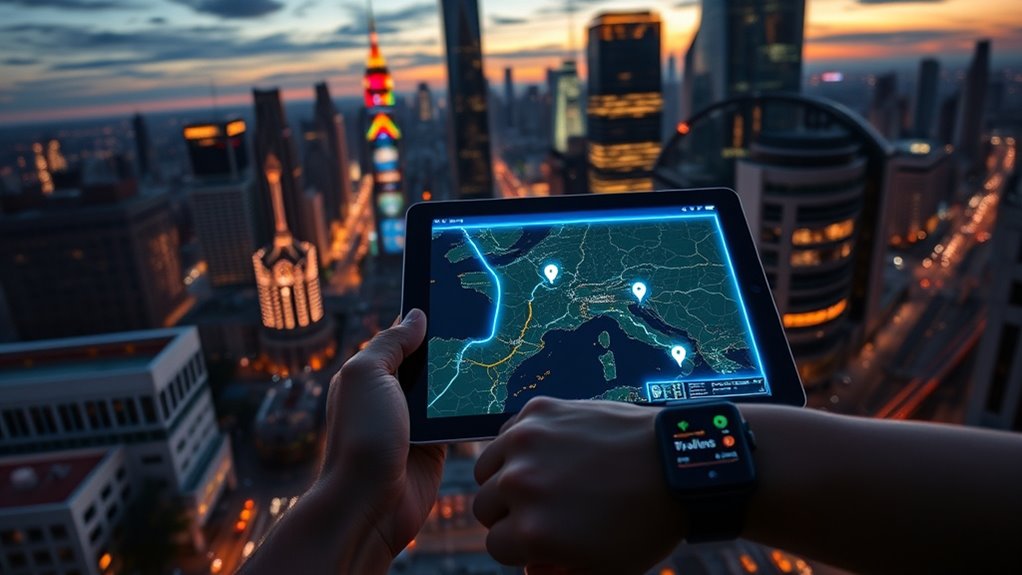
Using geofencing alerts can be highly effective for targeting specific locations and engaging users at just the right moment, but they also come with limitations you should consider. Privacy concerns are a major issue, as users may feel uncomfortable with constant location tracking or data collection. Additionally, false alarms can occur when the system triggers alerts outside the intended area, leading to annoyance or disengagement. While these alerts can boost marketing efforts and improve customer experience, they also come with the need for clear guidelines and best practices to ensure responsible use. They also require careful setup and ongoing management. Overusing notifications can result in users ignoring or disabling alerts altogether. Balancing the benefits of timely engagement with the risks of privacy invasion and false alarms is key to making geofencing work effectively for your needs. Moreover, accurate geofencing technology is essential to minimize errors and maximize user trust. Employing reliable location data can further enhance the precision and effectiveness of geofencing systems, reducing false positives and improving user satisfaction. Ensuring proper system calibration is crucial for maintaining the reliability of alerts over time.
Frequently Asked Questions
Can Geofencing Alerts Be Customized for Different Locations?
Yes, you can customize geofencing alerts for different locations. You set location-specific settings to tailor notifications based on where you are or want to be alerted. This allows you to create personalized notifications that are pertinent to each place, making your alerts more effective. By adjusting these settings, you guarantee you get timely updates that suit your needs, whether you’re at work, home, or elsewhere.
What Privacy Concerns Are Associated With Geofencing Alerts?
You should know that over 60% of users worry about privacy when geofencing alerts are involved. Data collection raises concerns because it tracks your location without always requiring your explicit consent. Companies must meet strict consent requirements to protect your privacy, but sometimes this isn’t clear or consistent. Be cautious about how your location data is utilized and ask about privacy policies to ensure your information stays secure.
How Accurate Are Geofencing Alerts in Various Environments?
Geofencing alerts are generally accurate, but your GPS accuracy depends on your environment. In open areas, signals are strong, and alerts are reliable. However, signal interference from tall buildings, dense forests, or underground locations can cause inaccuracies. You might experience delayed or missed alerts in these environments. To improve accuracy, make sure your device has a clear view of the sky and minimize interference when relying on geofencing alerts.
Are There Legal Restrictions on Using Geofencing Alerts?
Yes, there are legal restrictions on using geofencing alerts. You need to guarantee legal compliance by respecting privacy laws in your jurisdiction, which often require obtaining user consent before tracking their location. Failing to meet consent requirements can lead to legal issues. Always inform users clearly about how you’ll use geofencing alerts, and obtain their explicit permission to avoid violations and protect their privacy rights.
How Do Businesses Measure the Effectiveness of Geofencing Campaigns?
They say “what gets measured gets managed,” and that’s true for geofencing campaigns. To gauge effectiveness, you track conversion metrics like click-through rates, store visits, and sales. You also analyze customer engagement levels, such as time spent near your location or interaction with offers. By regularly reviewing these metrics, you can refine your strategies, ensuring your geofencing efforts truly drive results and boost your ROI.
Conclusion
Geofencing alerts are like digital fences that keep you connected and aware. Whether for safety, marketing, or engagement, they’re powerful tools that can transform how you interact with your environment. By understanding how they work and using them wisely, you can stay ahead of the curve. Just remember, like any tool, they’re most effective when used responsibly—turning the invisible fence into a bridge rather than a barrier.
Halloween Picks
halloween
As an affiliate, we earn on qualifying purchases.