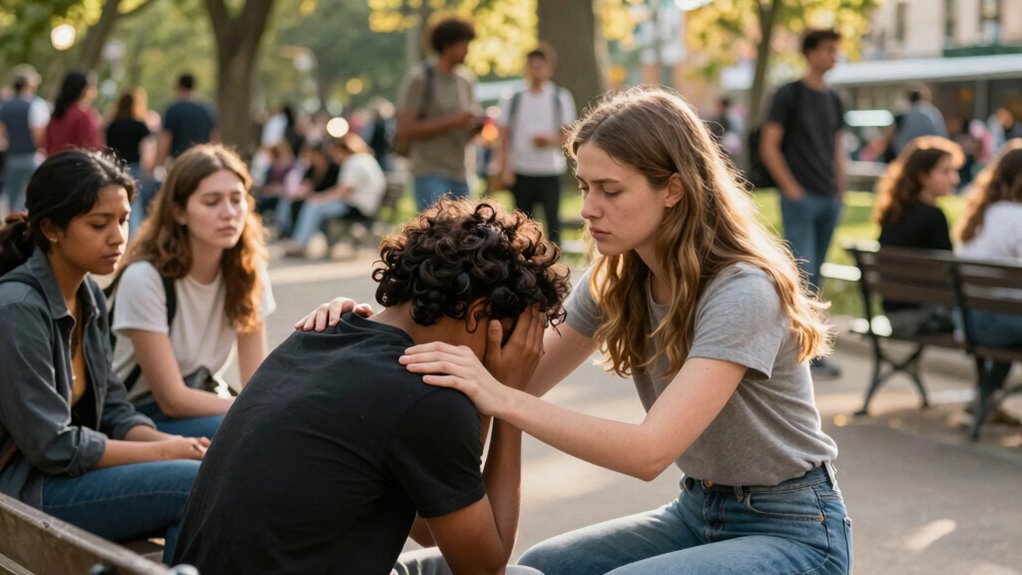

To be a better bystander without making things worse, stay calm and assess the situation carefully. Respect the person’s autonomy and social norms, offering help only if it’s safe and appropriate. Be aware of cultural influences and personal biases to respond sensitively. Use intervention strategies confidently, focusing on empathy and context. By understanding broader influences, you can act effectively and respectfully. Keep exploring to discover how to navigate tricky situations with confidence and care.

Get the latest gadgets delivered free with Prime
- Fast, free delivery on millions of items
- Prime Video, Amazon Music and more included
- Member-only deals all year
Key Takeaways
- Assess the situation calmly to determine the safest and most appropriate response before intervening.
- Respect the individual’s autonomy and social norms to avoid causing additional harm or offense.
- Offer support or assistance directly if safe, or call professional help if necessary.
- Be aware of cultural influences and personal biases to respond with sensitivity and objectivity.
- Use empathy and context-aware strategies to intervene confidently without escalating the situation.

Have you ever wondered how you can make a difference when someone is in trouble? It’s a question many people ask, especially in situations where stepping in feels complicated. Being a better bystander means more than just watching; it’s about knowing how to act effectively and responsibly. Your actions can influence the outcome, but understanding the broader context is just as important. Cultural influences shape how people interpret and respond to emergencies. In some cultures, helping strangers is seen as a moral obligation, while in others, personal boundaries or social norms might discourage interference. Recognizing these influences helps you approach situations with sensitivity and awareness, avoiding misunderstandings or unintended offense. Personal biases also play a significant role—your assumptions about a person’s identity or the context of the incident can cloud your judgment. For example, stereotypes about gender, age, or social status might cause you to underestimate someone’s need for help or overestimate the risks involved. Being conscious of your biases allows you to separate personal prejudices from the actual situation, enabling you to respond more objectively and compassionately.
When you witness someone in distress, instead of jumping to conclusions or hesitating, take a moment to assess the situation calmly. Ask yourself what the best course of action is, considering both the immediate safety and the potential impact of your response. Sometimes, your presence alone can be a powerful form of support—making the victim feel less isolated and more secure. If it’s safe, offer direct assistance by asking if they need help or if you can do something for them. If not, consider calling for professional help or alerting others nearby who might be better positioned to assist. Remember, your goal isn’t to be a hero but to prevent the situation from escalating or causing further harm. It’s also important to respect the person’s autonomy—sometimes they prefer to handle things on their own, and respecting their wishes is a key part of being a considerate bystander. Additionally, understanding social norms can help guide appropriate responses and avoid unintended offense. Being familiar with bystander intervention strategies can further empower you to act confidently and effectively when the situation calls for it. Being aware of the cultural influences that shape how people respond can also help you tailor your approach to different contexts. Recognizing the importance of contextual factors can make your response more effective and sensitive to the specific circumstances. Moreover, developing empathy allows you to better understand and connect with the person in need, which can influence how you choose to intervene.
bystander intervention training book
As an affiliate, we earn on qualifying purchases.
As an affiliate, we earn on qualifying purchases.
Frequently Asked Questions
How Do I Recognize Situations Needing Intervention?
You recognize situations needing intervention by cultivating a strong bystander mindset and honing your situational awareness. Stay alert to any signs of distress, conflict, or unsafe behavior around you. Notice body language, tone, and environment changes that indicate someone’s in trouble or uncomfortable. If something feels off or unusual, trust your instincts, and consider stepping in safely. Your awareness helps you identify when intervention is necessary to prevent escalation.
What if I Fear Retaliation?
Imagine you’re in a noir film, feeling the weight of retort and retaliation, yet still must act. Bystander courage means you prioritize safety, so if retaliation fears hold you back, consider indirect interventions or seeking help from authorities. Remember, your bravery can influence the scene without risking personal harm. Trust your instincts, weigh risks carefully, and know that even small actions can make a powerful difference while protecting yourself.
When Is It Better to Call Authorities Instead?
You should call authorities when the situation involves immediate danger, violence, or illegal activity, as community responsibility demands protecting those at risk. Ethical dilemmas arise if you’re unsure whether intervention might escalate the situation or put someone in more danger. Trust your judgment—if safety is compromised or you suspect serious harm, contacting authorities is the responsible choice, ensuring help arrives quickly while minimizing potential harm.
How Can I Support Victims After an Incident?
You can support victims by practicing empathy development, showing genuine concern and listening without judgment. Respect their personal boundaries by asking how they want to be supported and honoring their wishes. Offer ongoing reassurance, let them know they’re not alone, and encourage them to seek professional help if needed. Your empathetic presence and respect for boundaries can considerably aid their healing process and foster trust.
What Are Common Mistakes to Avoid as a Bystander?
You can’t afford to ignore your bystander responsibility or think intervention strategies are optional. Common mistakes to avoid include hesitating too long, which might escalate the situation, or intervening aggressively, risking harm. Don’t assume others will step in, and never dismiss what you see as insignificant. Instead, stay calm, assess the situation carefully, and act thoughtfully. Remember, your quick, responsible response can prevent harm and create a safer environment for everyone.
As an affiliate, we earn on qualifying purchases.
Conclusion
By stepping up, by speaking out, and by supporting others, you can make a real difference. Being a better bystander isn’t about stepping into every situation, but about knowing when to act, when to listen, and when to stand back. It’s about choosing compassion over apathy, courage over silence, and kindness over indifference. When you do these things, you don’t just change a moment—you change a life, you change a community, and you change yourself.
As an affiliate, we earn on qualifying purchases.
As an affiliate, we earn on qualifying purchases.
Halloween Picks
halloween
As an affiliate, we earn on qualifying purchases.