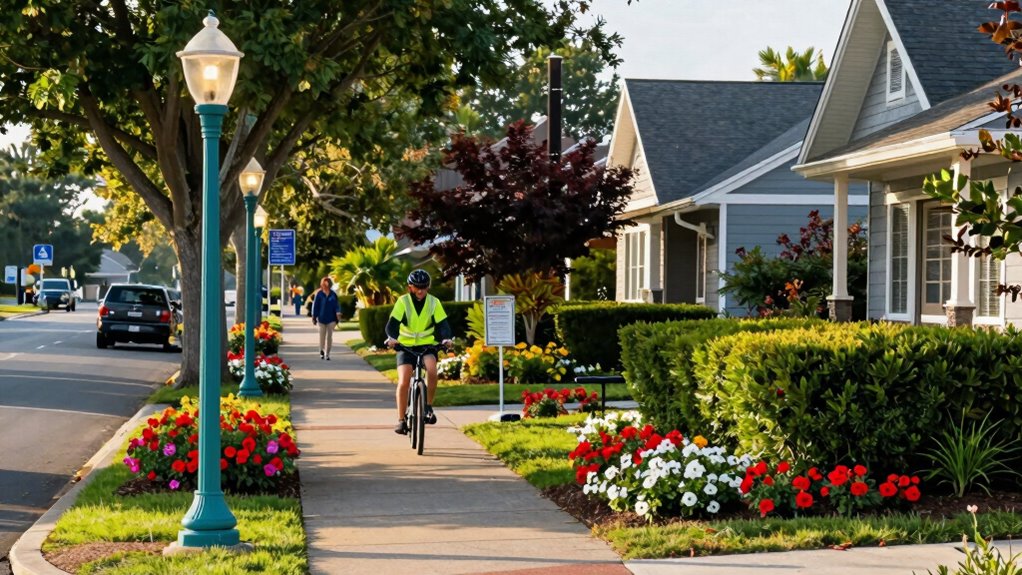

To make your neighborhood’s walking routes safer, focus on improving street lighting, fixing cracked sidewalks, and keeping paths clear of debris. Encourage neighbors and local authorities to address dark areas and damaged pavement. Adding reflective markers or glow-in-the-dark paint can boost visibility at night. Installing traffic calming measures and organizing community safety efforts also help reduce risks. If you want to discover more effective ways to create a secure walking environment, keep exploring these ideas.

Get the latest gadgets delivered free — and shop member deals
- Fast, free delivery on millions of items
- Access to Prime Big Deal Days deals on October 6–7
- Prime Video, Amazon Music and more included
Key Takeaways
- Improve street lighting with brighter, evenly spaced lights and reflective markers to enhance visibility at night.
- Maintain sidewalks by repairing cracks and clearing obstructions to prevent trips and falls.
- Implement traffic calming measures like speed bumps to slow down vehicles near pedestrian areas.
- Trim trees and bushes regularly to ensure they do not block lights or sidewalks.
- Encourage community involvement in safety initiatives, neighborhood watch programs, and reporting hazards.
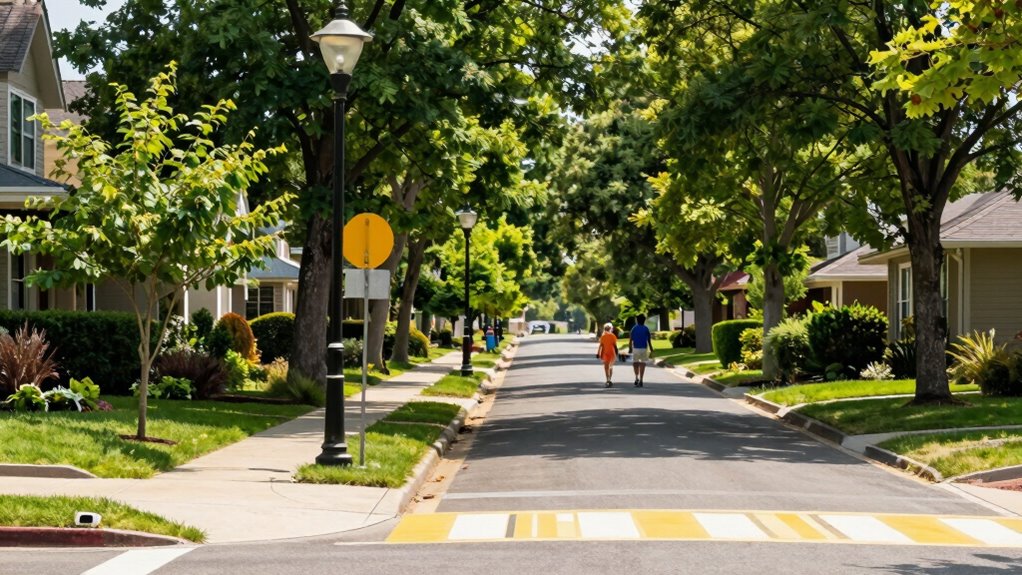
Are you looking for ways to guarantee your walking routes are safer? Improving safety in your neighborhood involves addressing key aspects like street lighting and sidewalk maintenance. Well-lit streets are essential because they make it easier to see potential hazards and deter criminal activity. When you notice dark patches along your walking routes, consider collaborating with neighbors or local authorities to advocate for better street lighting. Bright, evenly spaced lights along sidewalks and crosswalks can significantly increase visibility at night, helping you and others avoid tripping hazards or unexpected encounters with strangers. Consistent lighting also encourages more people to walk during evening hours, creating a natural sense of community watchfulness that further enhances safety.
Enhance neighborhood safety with better lighting, well-maintained sidewalks, and community efforts for a safer walking environment.
Sidewalk maintenance is equally important. Cracked, uneven, or obstructed sidewalks pose a real risk of falls and injuries. If you see damaged pavement or debris cluttering your walking paths, report it to your local government or neighborhood association. Regular sidewalk upkeep ensures a smooth surface that minimizes trip hazards and promotes confidence in walking routes. If repairs aren’t immediate, consider organizing community efforts to clear debris or temporarily patch unsafe sections. You can also encourage your neighbors to keep their yards tidy and free of obstructions, like overgrown bushes or parked bikes, which can force pedestrians onto the street and increase danger. Clear, well-maintained sidewalks not only protect pedestrians but also make the neighborhood more inviting for everyone. Promoting community involvement is key to sustaining these improvements over time.
Beyond infrastructure, lighting and sidewalk upkeep, think about adding features that promote safety. Installing reflective markers or glow-in-the-dark paint on crosswalks and sidewalk edges can improve visibility in low-light conditions. Planting trees and bushes responsibly, ensuring they don’t block streetlights or sidewalks, keeps the pathways open and safe. You might also work with local authorities to implement traffic calming measures—like speed bumps or narrowed lanes—that encourage drivers to slow down, especially near busy intersections or school zones. Ensuring proper street lighting is a fundamental step in creating a safer walking environment. Additionally, engaging in community safety initiatives can foster a collective effort to maintain and improve neighborhood safety standards. Regularly educating residents about public safety practices can further enhance overall neighborhood security.
As an affiliate, we earn on qualifying purchases.
Frequently Asked Questions
How Can I Encourage Neighbors to Join Safety Initiatives?
You can encourage neighbors to join safety initiatives by organizing community patrols and neighborhood watches, making safety a shared goal. Host a casual meeting to discuss concerns and ideas, emphasizing the benefits of working together. Offer clear roles and responsibilities, and highlight success stories. Use flyers or social media to spread the word, and invite everyone to participate. When neighbors see the positive impact, they’re more likely to get involved.
What Are Affordable Ways to Improve Street Lighting?
You can transform your neighborhood into a beacon of safety with affordable lighting solutions! Think beyond expensive fixtures—use solar-powered path lights, motion-activated bulbs, or reflective paint along sidewalks for a community illumination boost. These simple, cost-effective ideas make every street feel safer, night or day. By investing in affordable lighting, you create a welcoming atmosphere that encourages everyone to walk confidently, knowing their neighborhood is well-lit and secure.
How Do I Handle Unsafe Encounters During Walks?
When you encounter an unsafe situation during a walk, prioritize your personal safety by staying calm and avoiding confrontation. Trust your instincts and move toward well-lit, populated areas. Carry a whistle or personal alarm for emergency preparedness, and have your phone ready to call for help if needed. If possible, alert neighbors or authorities afterward, so they can address the issue and improve overall safety for everyone.
Are There Local Resources for Neighborhood Safety Assessments?
You can’t miss the powerhouse resources right in your neighborhood! Community patrols and neighborhood watch programs are your secret weapons, providing expert safety assessments that make your walks feel like a breeze. These groups often partner with local authorities, offering detailed safety evaluations and tips. Reach out to your local police station or community center—they’re enthusiastic to connect you with safety assessments, turning your neighborhood into a safer, more welcoming space for everyone.
How to Address Stray Animals on Walking Routes?
To address stray animals on your walking routes, start with stray animal management by contacting local animal control or shelters to report any issues. Enforce neighborhood pet policies by encouraging residents to keep pets secured and up-to-date on vaccinations. Consider organizing community efforts like leash laws or pet signage. These actions help reduce stray animals, making your routes safer and more comfortable for everyone.
As an affiliate, we earn on qualifying purchases.
Conclusion
Creating safe walking routes transforms your neighborhood into a welcoming space where everyone feels comfortable stepping outside. Think of it like planting a garden—tending to safety measures nurtures trust and community spirit. I once met a neighbor who started walking daily after improvements made her feel secure; now, her route blooms with friendly waves and shared smiles. When you prioritize safety, you’re not just making streets better—you’re cultivating a vibrant, connected neighborhood where everyone thrives.
glow-in-the-dark paint for sidewalks
As an affiliate, we earn on qualifying purchases.
As an affiliate, we earn on qualifying purchases.
As an affiliate, we earn on qualifying purchases.
Fall Picks
fall essentials
As an affiliate, we earn on qualifying purchases.