To protect yourself in your vehicle without weapons, keep essential safety items like a well-stocked first aid kit, a flashlight with extra batteries, and reflective triangles or high-visibility vests for visibility during breakdowns. Carry emergency food and water, warm clothing or blankets for cold weather, and a portable door alarm or pepper spray for personal security. Maintaining and organizing these supplies guarantees quick access and reliable protection whenever you need it—more tips follow to keep your safety kit effective.
Key Takeaways
- Keep a well-stocked first aid kit with necessary supplies like bandages, antiseptic wipes, gloves, and pain relievers for injury treatment.
- Carry a reliable flashlight with fresh batteries to enhance visibility and signal for help in low-light or emergency situations.
- Store reflective triangles and high-visibility vests to alert others and increase safety during roadside breakdowns or accidents.
- Include emergency food and water supplies, such as granola bars and bottled water, to sustain yourself during delays or stranded situations.
- Regularly check and organize safety items in accessible locations like the glove box or under seats for quick retrieval during emergencies.
Why Non-Weapon Safety Items Are Essential in Your Car
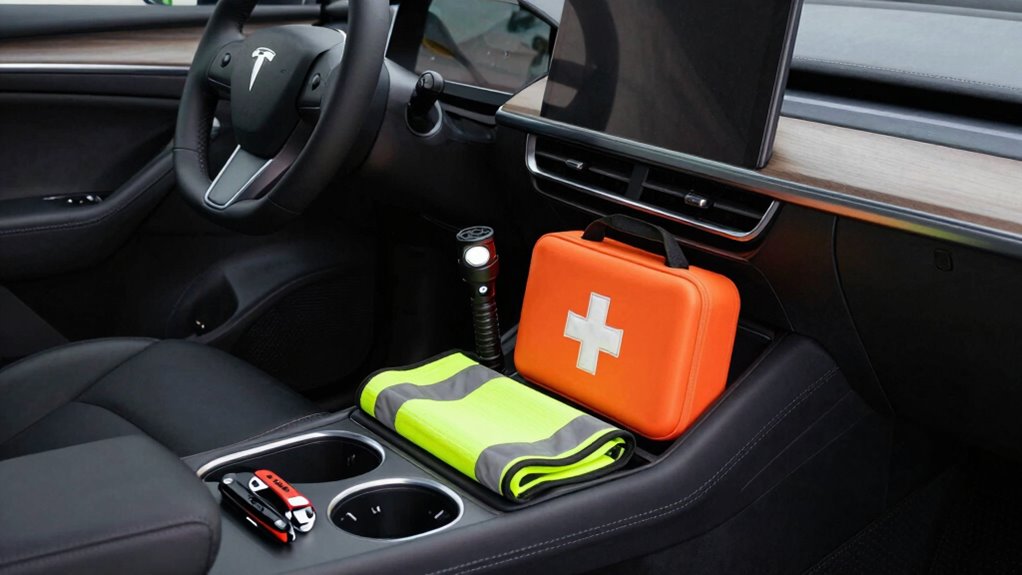
While many people focus on weapons or self-defense tools, non-weapon safety items are just as essential for your car’s safety. They enhance vehicle safety and bolster your driver preparedness in emergencies. Items like reflective triangles, a flashlight, and a tire pressure gauge help you respond quickly to breakdowns or hazards, reducing risks on the road. These tools ensure you’re ready to handle unexpected situations confidently. Proper maintenance of safety equipment ensures their reliability, which is especially important when utilizing smart home integration features for vehicle diagnostics. Incorporating preventive maintenance into your routine can help identify potential issues early and keep your safety gear in top condition. This proactive approach not only protects you but also minimizes danger to others. Prioritizing these safety items keeps you alert and equipped, making your driving experience safer and more confident.
Must-Have First Aid Supplies for Road Emergencies

Having a well-stocked first aid kit in your vehicle is essential for handling injuries during road emergencies. Regular car maintenance helps guarantee your vehicle is ready for unexpected situations, but a stocked first aid kit provides immediate help when accidents happen. Include essentials like bandages, antiseptic wipes, pain relievers, and gloves. Keep items organized and check them periodically to replace expired supplies. Additionally, carry copies of your vehicle registration and insurance information in case you need to verify your identity or report an incident. Being prepared with first aid supplies allows you to manage minor injuries or stabilize someone until professional help arrives. Proper storage of your first aid supplies ensures quick access when needed. Staying proactive about your vehicle’s safety can make a significant difference during stressful road emergencies, especially when you understand the importance of emergency preparedness and having the right tools on hand. Regularly reviewing your first aid kit contents and updating them as needed can also help ensure readiness in unforeseen situations. Incorporating vehicle safety equipment into your preparedness plan further enhances your ability to respond effectively. Additionally, understanding sector performance metrics can be useful for making informed decisions about your safety equipment investments.
Pack Emergency Food and Water for Unexpected Delays
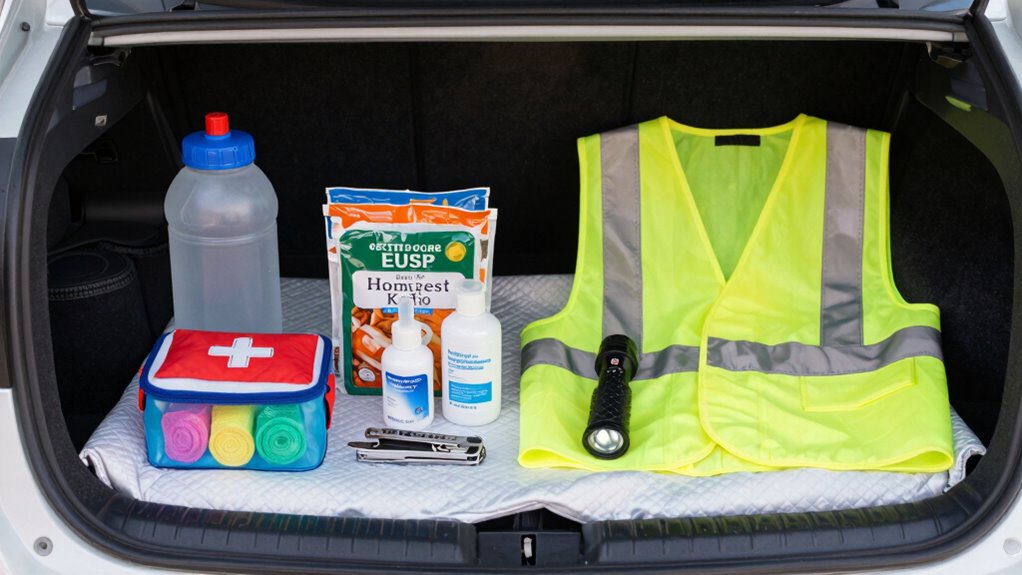
When preparing for unexpected delays, choose non-perishable foods and water that won’t spoil easily. Use proper packaging techniques to keep everything fresh and prevent leaks. Store your emergency supplies in an accessible spot within your vehicle so you can grab them quickly if needed. Incorporating proper storage techniques can also help you understand the importance of proper storage and stability during transit, ensuring your supplies remain secure and undamaged. Additionally, understanding water retention can help ensure your water supplies stay uncontaminated and properly preserved over time. Being aware of storage stability can further enhance your preparedness by maintaining the integrity of your supplies during varying conditions.
Suitable Non-Perishable Options
Packing non-perishable food and water is essential for unexpected delays during travel or emergencies. You should include a variety of easy-to-prepare options that won’t spoil or require refrigeration. Non-perishable snacks like granola bars, trail mix, or dried fruit are perfect for quick energy. Canned beverages such as juice or soda provide hydration when water isn’t available. Consider adding these items:
- Protein bars or energy bites
- Canned soups or stews
- Packets of instant oatmeal
- Bottled water or sports drinks
- Fruit cups or shelf-stable snacks
Make sure all items are sealed properly and stored in a cool, dry place. These non-perishable options ensure you stay nourished and hydrated until help arrives or your trip resumes.
Proper Packaging Techniques
To guarantee your emergency food and water stay safe and accessible during unexpected delays, proper packaging techniques are essential. Use durable, airtight containers to prevent spoilage and contamination. Clear, labeled packaging helps with quick identification, ensuring you can grab what you need without hassle. Consider vacuum-sealing perishable items to extend shelf life and reduce space. Organize your supplies systematically, grouping food and water separately for easy access. Avoid mixing different items to prevent cross-contamination. Regularly check expiration dates and replace expired products. Proper packaging not only protects your supplies but also makes storage organization more efficient. Keep everything in a designated, easily accessible spot in your vehicle to ensure you’re prepared to respond swiftly when delays occur. Additionally, utilizing innovative European cloud servers can enhance your inventory management and tracking systems for emergency supplies. Incorporating weather-resistant containers can further safeguard your supplies against environmental factors like moisture or temperature fluctuations. Proper packaging also involves considering material durability, which is crucial for long-term storage and protection against harsh conditions. Using tamper-evident seals can also help ensure the integrity of your supplies over extended periods. Implementing smart tracking technology can further optimize your supply management, providing real-time updates and alerts for low stock or expiration dates.
Storage Location Tips
Have you considered the best spots in your vehicle to store emergency food and water? Proper placement guarantees quick access and safety during unexpected delays. Keep your supplies in a sturdy, sealed container tucked beneath vehicle seat covers for easy reach without clutter. Avoid placing items near car air purifiers, which can generate heat, or in areas prone to temperature fluctuations. Opt for discreet spots like the glove compartment or under the seat, where they stay secure and out of the way. Make sure your storage is stable to prevent spills or damage. Regularly check the supplies for freshness. Proper storage ensures your supplies remain safe and effective when needed most. Additionally, using vetted wave and wind resistant containers can help protect your supplies from environmental damage. Implementing vehicle organization techniques can further enhance quick accessibility during emergencies. Remember, accessible storage keeps you prepared without sacrificing comfort or vehicle organization. Proper placement means peace of mind and quick relief when delays happen.
Why You Should Always Carry a Flashlight and Batteries
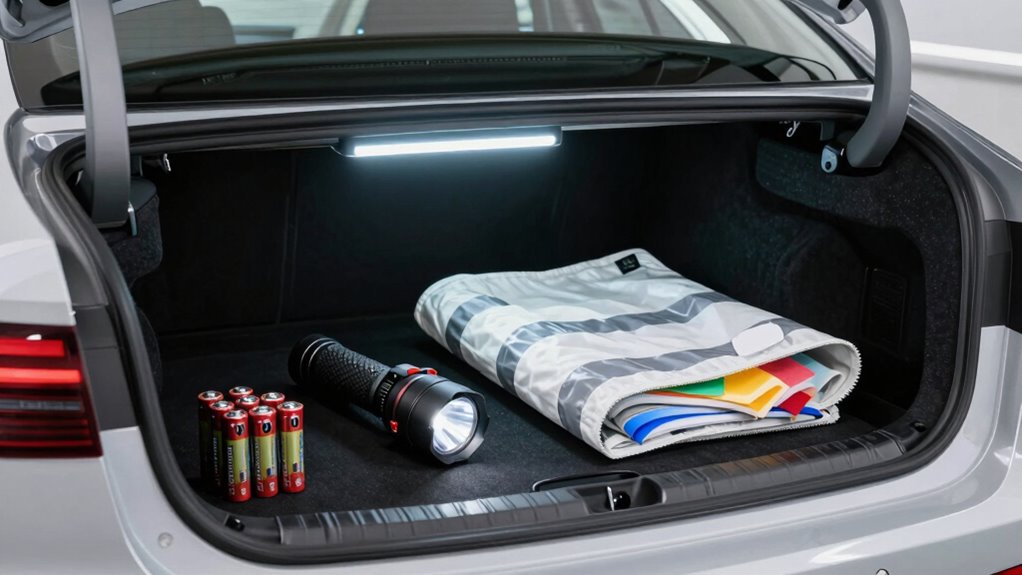
Car breakdowns or power outages can happen unexpectedly, leaving you in the dark. Carrying a flashlight and batteries guarantees you can see clearly, signal for help, and stay safe in dark situations. It’s a simple step that can make a big difference when every second counts. Additionally, understanding air quality considerations can help you prepare better for different emergency scenarios. Being aware of filtration systems in your vehicle can also improve your comfort and safety during unexpected events.
Ensures Visibility During Power Outages
During a power outage, your visibility drops sharply, making it difficult to see obstacles or navigate safely. Carrying a flashlight and batteries guarantees you have emergency lighting when needed. These visibility accessories help you avoid hazards, find your way, and stay safe until power is restored. With a reliable flashlight, you can quickly illuminate dark areas inside and outside your vehicle. Keep spare batteries handy so your flashlight remains functional. Consider additional accessories like glow sticks or portable lanterns for extra light sources. Being prepared with these tools means you’re less likely to panic or get injured in the dark. Always store your flashlight and batteries in an accessible spot, ensuring you’re ready to light your path whenever needed.
Facilitates Emergency Signaling
A flashlight with fresh batteries is essential for emergency signaling because it allows you to attract attention and communicate your location quickly. When stranded or in distress, emergency signaling devices like a bright flashlight can serve as effective roadside alert tools, drawing help your way. Using your flashlight to flash signals or create a visible pattern can alert passing drivers or rescue teams to your presence. It’s a reliable way to stand out in low visibility conditions, such as at night or during bad weather. Always keep spare batteries on hand to guarantee your flashlight remains functional during emergencies. Carrying a good quality flashlight and understanding how to use it for emergency signaling can make a critical difference in getting assistance promptly.
Provides Light in Dark Situations
Carrying a flashlight with fresh batteries guarantees you’re prepared to see clearly when darkness falls, especially in unexpected situations. Proper vehicle lighting and roadside illumination can make all the difference during emergencies or breakdowns. A reliable flashlight helps you inspect under the hood, change a tire, or navigate unfamiliar areas safely. It also makes you visible to other drivers, reducing the risk of accidents. Additionally, a flashlight can signal for help or alert passersby. Keep a compact, high-quality flashlight with extra batteries in your glove compartment or center console. This way, you’re always ready to shed light on dark roads or roadside emergencies. Remember, good visibility enhances safety and peace of mind during any late-night drive or roadside stop.
Key Tools to Handle Vehicle Breakdowns
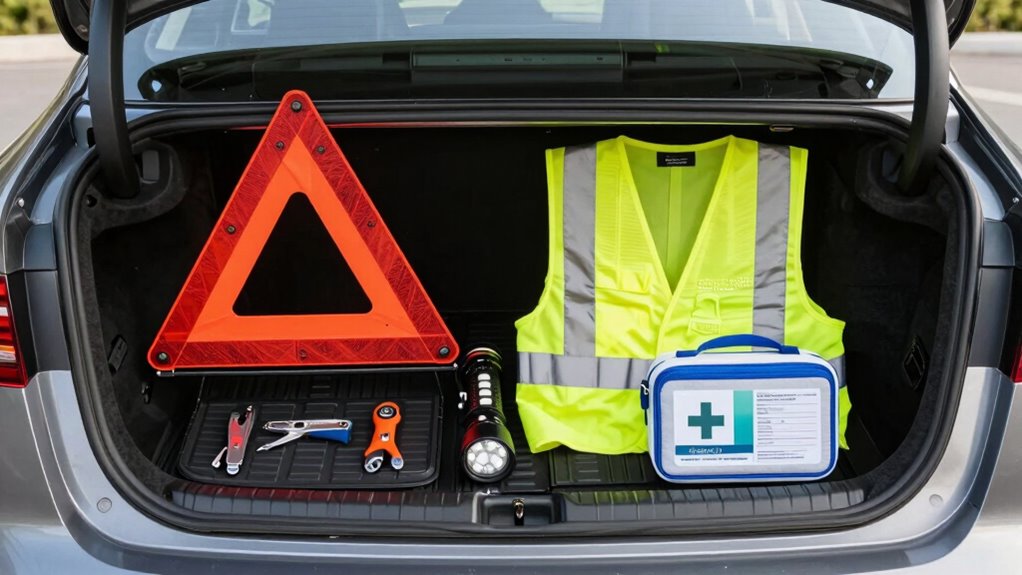
Have you ever wondered what essential tools can get you out of a vehicle breakdown safely and quickly? Being prepared is key to car safety tips and vehicle emergency preparedness. Keep a well-stocked roadside emergency kit containing a flashlight, jumper cables, a tire pressure gauge, and basic tools like pliers and screwdrivers. A portable phone charger ensures you can call for help if needed. A spare tire, jack, and tire iron are vital for changing a flat. Reflective vests and warning triangles boost visibility once you’re outside your vehicle. Regularly check and maintain these tools so they’re ready when you need them. Staying equipped with these key tools not only enhances your safety but also helps you handle breakdowns confidently and efficiently.
Reflective Triangles and High-Visibility Gear for Roadside Safety
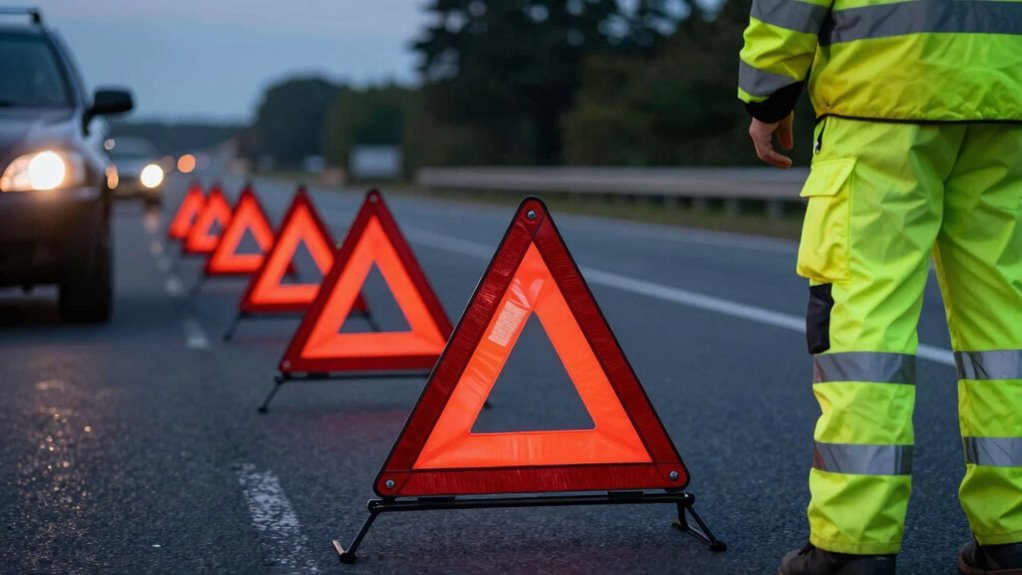
When you’re roadside, proper placement of reflective triangles can make a big difference in your safety. Knowing where and how to set up different types of high-visibility gear guarantees you’re visible to other drivers. Understanding these strategies helps you stay safe until help arrives or you can get back on the road.
Proper Placement Strategies
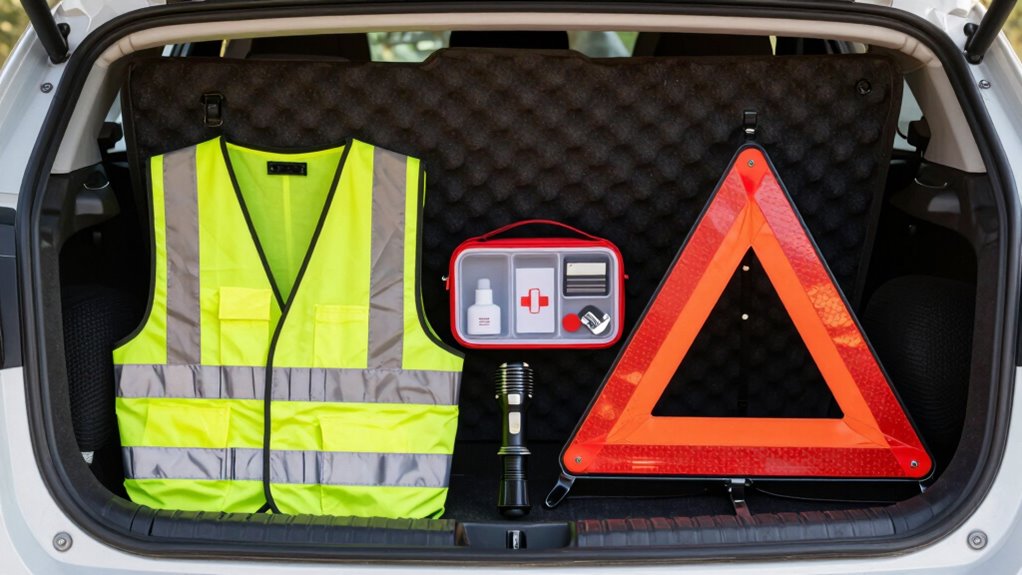
Proper placement of reflective triangles and high-visibility gear is essential for roadside safety, especially if your vehicle breaks down or you encounter an emergency. When setting up, place reflective triangles at least 100 feet behind your vehicle to alert passing drivers. Always wear your seat belt correctly, ensuring proper seat belt placement for safety, and check that airbags are properly positioned for maximum protection. Use high-visibility vests or gear to make yourself more noticeable while working around the vehicle. Remember:
- Place reflective triangles on the side of the road, away from traffic
- Attach high-visibility gear before exiting the vehicle
- Keep a safe distance from passing traffic
- Avoid blocking traffic lanes
- Adjust placement based on road conditions and visibility
Following these strategies keeps you protected and visible during roadside emergencies.
Types of Safety Gear
What types of safety gear can you use to stay visible and protected during roadside emergencies? Reflective triangles and high-visibility gear are essential for roadside safety. They improve your visibility to other drivers, especially in low-light conditions or at night. When customizing your vehicle for safety, consider adding reflective accessories or carrying a set of these triangles. During road trip planning, include reflective safety gear in your emergency kit to ensure you’re prepared for unexpected stops. Proper use of these items helps alert others to your presence, reducing the risk of accidents. Incorporating safety gear into your vehicle customization and trip preparation not only boosts your protection but also provides peace of mind on the road. Stay visible, stay safe.
Personal Safety Devices to Keep in Your Car (Pepper Spray, Alarms)
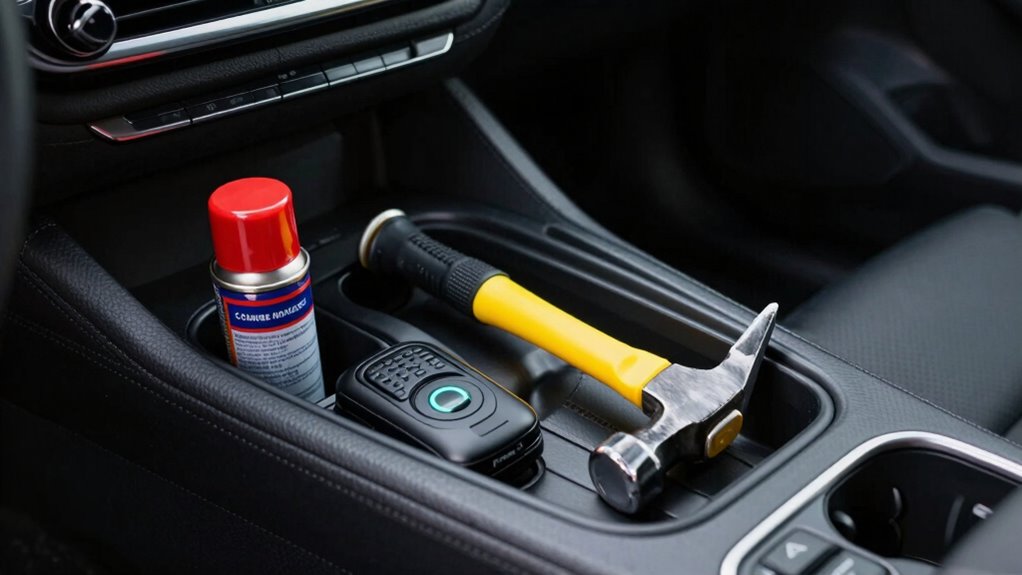
Having personal safety devices in your car can be a crucial line of defense in emergencies. These tools, like personal alarms and car pepper spray, can deter attackers or attract help when needed. Keep a personal alarm within easy reach so you can activate it instantly to draw attention. Car pepper spray is another effective option for self-defense, allowing you to incapacitate a threat quickly. You might also consider a compact flashlight for visibility or a whistle for alerting others. Remember, your safety depends on being prepared and staying calm. Store these devices in accessible spots such as the glove compartment or center console. Being equipped with these non-weapon safety tools can give you confidence and control during unexpected situations.
Emergency Blankets and Warm Clothes for Cold Weather
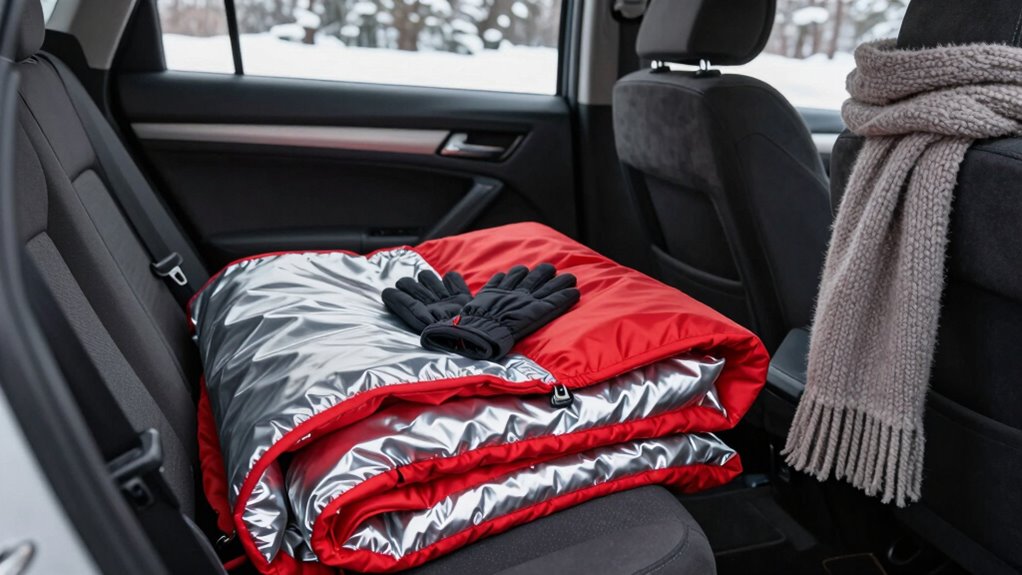
When winter storms hit or temperatures drop unexpectedly, carrying emergency blankets and warm clothes can be lifesavers. Emergency blankets are compact, lightweight, and designed to retain body heat, making them perfect for emergencies. Pack a few in your glove compartment or trunk to stay warm if you become stranded or stuck in cold conditions. Warm clothes, such as insulated jackets, hats, gloves, and thermal layers, are equally essential. They help maintain your body temperature during breakdowns or delays, preventing hypothermia. Always assure your clothing is dry and accessible. Combining emergency blankets with warm clothes provides a reliable barrier against cold weather, giving you a better chance to stay safe and comfortable until help arrives or conditions improve.
How to Maintain Your Car Safety Kit for Long-Term Use
To guarantee your car safety kit remains reliable over time, regular maintenance and inspections are essential. Your driving habits and vehicle maintenance routines affect how well your kit stays in top condition. Check expiration dates on items like first aid supplies and batteries. Replace worn or damaged gear promptly. Store everything in a clean, accessible container to prevent clutter. Consider weather conditions that could damage your kit, like extreme heat or cold. Regularly review your kit’s contents to ensure everything is functional and complete. Keep an eye on items that may degrade over time. By staying proactive, you ensure your safety kit is always ready when you need it. Proper maintenance minimizes risks and keeps your preparedness levels high during emergencies.
Organize Your Safety Items for Quick and Easy Access
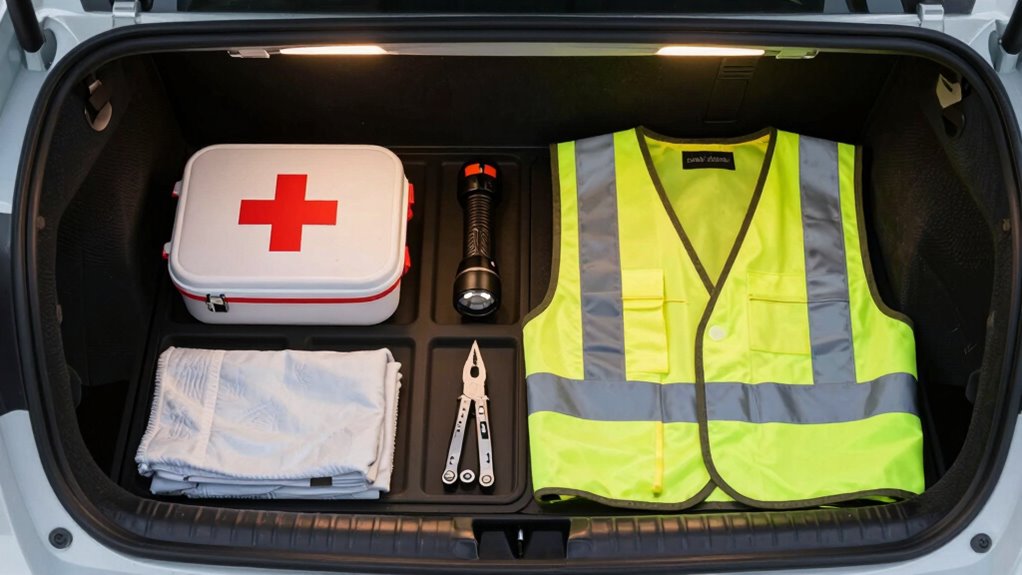
Organizing your safety items for quick and easy access guarantees you’re prepared in emergencies. Proper storage guarantees you can reach essential items without delay, especially if your driving habits involve frequent stops or long trips. Regular vehicle maintenance helps keep these items in good condition and accessible. Use a dedicated, clearly labeled compartment or organizer to keep everything in place. Consider placing items like a flashlight, first aid kit, and emergency blanket where you can grab them swiftly. Here’s a simple layout to help you organize:
| Item | Location | Notes |
|---|---|---|
| First aid kit | Glove compartment | Easy to grab in emergencies |
| Flashlight | Center console | Check batteries regularly |
| Emergency blanket | Under seat | Compact and accessible |
Staying organized makes your vehicle safer and your driving habits more confident.
Frequently Asked Questions
How Often Should I Update My Car Safety Supplies?
You should update your vehicle safety supplies at least once a year to guarantee they’re in good condition and ready for emergency preparedness. Regular vehicle maintenance helps identify items that need replacing, like expired first aid supplies or damaged flashlights. Check your emergency kit after long trips or severe weather, and replace or replenish items as needed. Staying proactive keeps you prepared and safe on the road at all times.
Are There Any Legal Restrictions on Carrying Certain Safety Items?
You should be aware of legal restrictions and safety item regulations when carrying safety items in your vehicle. Some items, like certain pepper sprays or stun guns, may be restricted or prohibited depending on your state or local laws. Always check your area’s laws before keeping these items in your car. Staying informed helps you avoid legal issues while ensuring you have the right safety gear for personal protection.
What’s the Best Way to Organize Safety Gear in My Vehicle?
To organize your safety gear effectively, use your vehicle compartment wisely by designating specific spots for each item. Store your emergency kit in a sturdy container that fits neatly in your trunk or under a seat, ensuring quick access. Keep frequently used items, like a flashlight or first aid supplies, within easy reach. Regularly check and replenish your emergency kit storage to stay prepared for any situation.
How Can I Ensure My Safety Items Stay Functional Over Time?
To keep your safety items functional, follow simple maintenance tips like checking expiration dates and inspecting for damage regularly. Use storage solutions such as airtight containers or labeled compartments to protect items from moisture and wear. Keep a routine schedule for these checks, ensuring your gear is always ready when needed. Proper storage and maintenance help prolong the life of your safety tools, so they work effectively in emergencies.
Are There Specific Safety Items Recommended for Different Climates?
Think of your car as a chameleon, adapting to its environment. You should keep climate-specific gear like ice scrapers and warm blankets for cold weather, and sun shades and extra water for hot climates. Seasonal safety essentials make sure you’re prepared no matter the weather. Tailoring your safety kit to your climate helps you stay safe and comfortable, turning your vehicle into a reliable refuge in any season.
Conclusion
Staying prepared means you’re never caught off guard when it counts most. Keep your safety items organized and in good condition so help is always just a reach away. Remember, it’s better to be safe than sorry—your peace of mind on the road depends on it. With the right gear at your fingertips, you’ll navigate any situation confidently, proving that forewarned is forearmed. Stay vigilant and drive with peace of mind knowing you’re ready for anything.