

🔍 Read the full analysis: Could An AI Chat Be Your First Stop For Health Questions? Apple Will Test It on ThorstenMeyerAI.com

Get the latest gadgets delivered free with Prime
- Fast, free delivery on millions of items
- Prime Video, Amazon Music and more included
- Member-only deals all year
TL;DR
Apple announced a U.S. research study and iPhone app on Nov. 15, 2026, to examine how people interact with conversational AI for health questions. The study, which uses answers from OpenEvidence, will explore trust, response quality, comprehension and health-related actions; Apple says it is not a diagnostic or treatment service and will not use study data to train AI models.
Apple announced the Apple Health AI Usage Study on Nov. 15, opening a virtual U.S. research project and iPhone app to study how people use conversational AI for health questions. The study will examine trust, response quality, comprehension and everyday health actions, using answers generated in collaboration with OpenEvidence. Apple says the app is for research and does not diagnose or treat conditions or replace medical professionals.
The study is open to up to 200,000 people in the United States who are at least 21 and have an Apple Intelligence-enabled iPhone—an iPhone 15 Pro or later—running iOS 26 or later. Apple describes the project as a virtual research study with an associated app, rather than a new Siri health feature. Participants can ask everyday health questions, explore medical information in plain language and view linked, peer-reviewed clinical citations.
Apple says the study’s answers are provided in collaboration with OpenEvidence, a clinical AI platform it describes as widely used by health professionals. Apple says the platform draws on established medical sources, including The New England Journal of Medicine, the Journal of the American Medical Association and Nature. The app listing describes possible uses such as understanding symptoms, putting personal Health data in context, preparing for a medical visit, and building an exercise or meal plan.
Apple says researchers will examine what shapes users’ trust, the quality of answers and whether people understand them. The study will also look at health-related actions and whether AI can help participants prepare for appointments with their own doctors. Sharing Health app information—such as resting heart rate, sleep data or lab results—is optional. Apple says study data will not be used to train AI models. CNET and MacRumors have reported that OpenEvidence deletes question-and-response data within 24 hours; that detail is not stated in the supplied account of Apple’s announcement.
Apple Health AI Usage Study · Nov 15, 2026
How a health question travels through Apple’s study app
From your iPhone to a cited answer and back, as Apple and reporting on its press briefing describe it.
The path of one question (schematic)
Six steps in the study app
- You askType an everyday health question; sharing Health data is optionalApple
- On the iPhoneTools remove details that could identify youas reported by CNET
- Study cloudA contractor’s environment delinks the question from your participant ID and screens it againas reported by CNET
- OpenEvidenceWrites the answer from clinical sources, with linked peer-reviewed citationsApple
- GuardrailCertain concerning questions: a suggestion to follow up with a provider or other resourcesApple; no live monitoring, CNET reports
- You rateRate each answer, plus a baseline survey and monthly surveysas reported by CNET
Source: Apple Newsroom, “Apple launches research study to explore the use of AI for health”, Nov 15, 2026; CNET and MacRumors reporting on Apple’s press briefing, Nov 15–16, 2026. Schematic, not the real app screen.
Graphic: Powered by Thorsten Meyer AI
Testing AI Before It Shapes Care
People already use chatbots to seek health information, but the consequences of an answer are not captured by its wording alone. Whether someone understands a response, trusts it too much or uses it to decide what to do next can affect how they approach a clinician or handle a health concern. Apple’s project is designed to study those user responses and actions, rather than simply promote an AI feature.
The scale could give researchers information about a range of everyday interactions, while the optional use of Health data lets the study examine whether personal context changes how relevant or understandable answers seem. That does not, by itself, establish that the tool improves health outcomes. The project is a study of people’s interactions with conversational health AI, and Apple says the service is not a substitute for professional care.
The topic has practical relevance beyond Apple’s products. A KFF poll published in March 2026 found that 32% of U.S. adults said they had used AI chatbots for health information in the previous year. That figure describes reported use during that survey’s time frame; it does not show that chatbot advice was accurate, helpful or acted upon. Apple’s study focuses on some of those unanswered questions.
Products Worth Considering
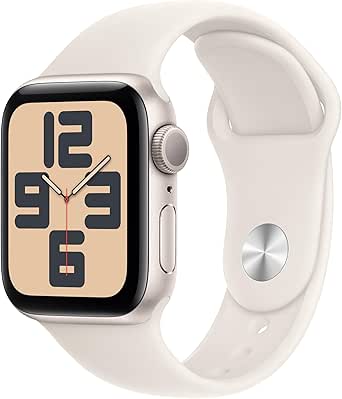
Apple Watch SE (2nd Generation) GPS 40mm Smartwatch with Starlight Aluminum Case and Starlight Sport Band (S/M)

Apple AirPods Pro 3 Wireless Earbuds with Active Noise Cancellation

Bose Smart Ultra Dolby Atmos Soundbar with Voice Control, HDMI eARC, Black
As an affiliate, we earn on qualifying purchases.
A Study, Not a Siri Launch
Apple’s announcement presents the initiative as research intended to inform the responsible design of health AI experiences for Apple and the wider industry. It also acknowledges a concern the study is meant to address: Apple says consumer health technologies powered by large language models can sometimes provide incomplete or unclear responses. The presence of citations may help users inspect sources, but the study is also set up to examine how people evaluate and understand the answers.
Apple’s health executive Sumbul Desai said a dedicated research study was the most thoughtful way to understand how people engage with, comprehend and evaluate health AI in everyday life. UCSF physician and department chair Robert M. Wachter pointed to a gap between patient and clinician use, saying the tools used by the two groups are being built and tested in separate worlds. Those statements frame the project as an effort to study consumer use, not as evidence that the answers are clinically effective.
Some operational details come from press-briefing reports rather than Apple’s announcement. CNET reported that participants rate responses and provide feedback, receive a baseline survey and monthly surveys, and may be asked additional questions around doctor visits. It also reported participation can last up to 12 months per participant. TechCrunch described Apple’s planned study as running for more than 12 months, which may refer to the overall project rather than each person’s participation.
“Conducting a dedicated research study is the most thoughtful way to understand how people engage with, comprehend, and evaluate health AI in everyday life.”
— Sumbul Desai, Apple vice president of Health and Fitness
Study Length and Safeguards
Apple’s announcement does not specify the overall study end date or give a full account of how participants will be recruited, how researchers will assess response accuracy, or what results will be published and when. Reports that participants may take monthly surveys and participate for up to 12 months come from CNET’s account of a press briefing; TechCrunch has described the overall study as lasting more than 12 months. The difference may reflect separate time frames, but Apple’s announcement does not resolve it.
Apple says Health data sharing is optional and study data will not train AI models. CNET and MacRumors report that OpenEvidence deletes questions and responses within 24 hours, but the source account does not provide Apple’s own confirmation of that retention detail. The available information also does not establish that cited responses will always be complete, correct or appropriate for an individual’s circumstances. Apple’s stated warning remains that the app is not intended to diagnose or treat and does not replace medical advice.
Enrollment and Research Findings
The next step is for eligible adults in the United States to join through the study app, subject to Apple’s participant and device requirements and the limit of up to 200,000 participants. Participants can then use the app and provide feedback through the study’s research activities. People considering it should review the app’s study information and decide whether to share any optional Health data.
Apple has not provided a date for findings or described a publication schedule in the supplied announcement. The key developments to watch are how the study measures comprehension and actions, whether Apple reports results from different participant groups, and whether those findings inform later health AI products. Until results are available, the study should be understood as research into how people use the tool—not proof that chatbot answers improve care.
Key Questions
What is Apple’s Health AI Usage Study?
It is a U.S. virtual research study and iPhone app launched to examine how people interact with conversational AI for health questions, including how they understand and use its answers.
Who can take part?
Apple says the study is open to up to 200,000 U.S. residents aged 21 or older with an Apple Intelligence-enabled iPhone—iPhone 15 Pro or later—running iOS 26 or later.
Does the app provide medical diagnosis or treatment?
No. Apple says the app is not meant to diagnose or treat any condition and does not replace advice from medical professionals.
Must participants share Apple Health data?
No. Apple says sharing Health app data, such as sleep, resting heart rate or lab results, is optional.
Will the study’s data train AI models?
Apple says study data will not be used to train AI models. Separate reports from CNET and MacRumors say OpenEvidence deletes question-and-response data within 24 hours, a detail not confirmed in the supplied account of Apple’s announcement.
Source: ThorstenMeyerAI.com